Troubleshooting Dull, Faded, or Damaged Carnelian Earrings
Learn how to troubleshoot common issues with carnelian earrings, including fading, chipping, dye bleeding, and safe cleaning methods for chalcedony.

Understanding Carnelian Vulnerabilities
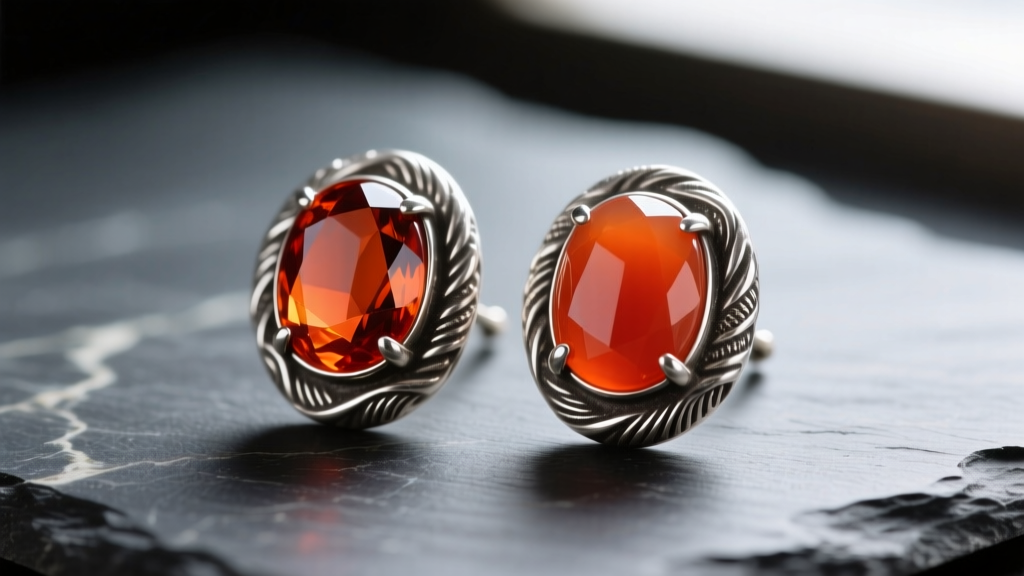
Carnelian earrings are highly sought after for their fiery, translucent orange-red hues. However, as a variety of microcrystalline quartz (chalcedony), carnelian presents unique maintenance challenges that many jewelry owners overlook. With a Mohs hardness of 6.5 to 7 and a specific gravity of 2.60, carnelian is durable enough for daily wear but remains susceptible to environmental degradation, improper cleaning, and structural setting failures. If your favorite pair has lost its luster, changed color, or suffered physical damage, this troubleshooting guide will help you diagnose and resolve the most common issues affecting carnelian earrings.
Problem 1: Color Fading and Sun Damage
The rich color of natural carnelian is caused by iron oxide (hematite) impurities dispersed within the silica structure. While generally stable, prolonged exposure to intense ultraviolet (UV) light and extreme heat can alter the oxidation state of these inclusions, leading to a washed-out or pale appearance.
Diagnosing UV Fading
If your carnelian earrings were once a deep, burnt orange but now appear pale yellow or chalky, UV damage is the likely culprit. This is particularly common in earrings worn frequently during outdoor summer activities or stored in direct sunlight on a vanity.
Solutions and Prevention
- Re-polishing: If the fading is superficial and accompanied by micro-scratches, a professional lapidary can re-polish the cabochon to remove the damaged outer layer, revealing the vibrant stone beneath.
- Storage Protocol: Always store carnelian earrings in a dark, fabric-lined jewelry box. Avoid leaving them on windowsills or in cars where UV exposure and heat fluctuations are extreme.
- Heat Treatment Awareness: According to the Gemological Institute of America (GIA), much of the carnelian on the market is heat-treated to enhance its red color. While heat treatment is stable, subsequent extreme thermal shock can cause internal fracturing, which scatters light and makes the stone look dull.
Problem 2: Identifying and Fixing Dyed Agate "Carnelian"
One of the most pervasive issues in the gemstone market is the misrepresentation of gray agate as carnelian. While traditional heat-treating with iron salts is an accepted and stable practice, modern cheap alternatives use organic red dyes that can bleed, stain your skin, and ruin the earring's metal settings.
The Acetone and Alcohol Swab Test
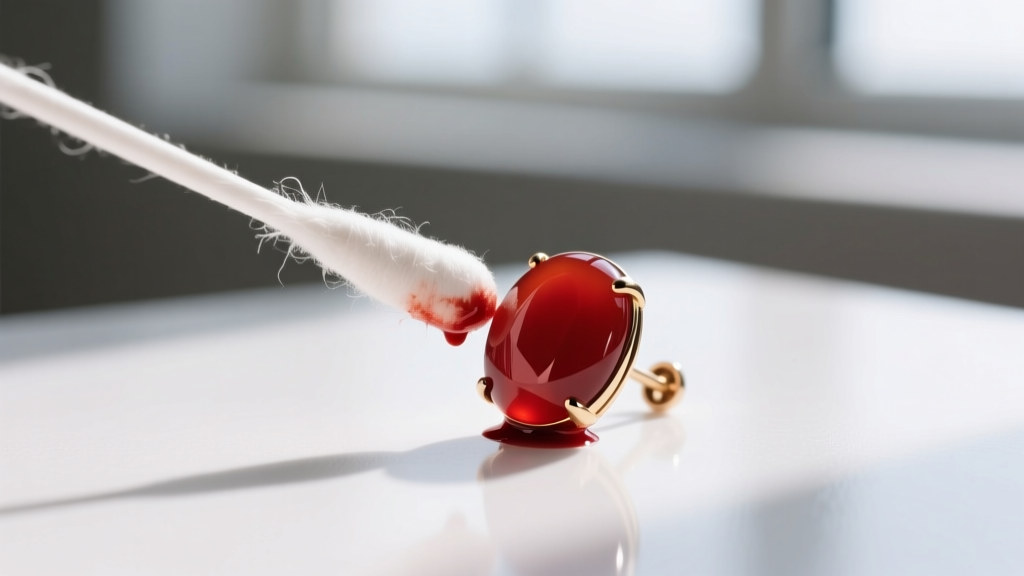
If your carnelian earrings are leaving red marks on your earlobes or the metal settings are staining, you likely have dyed agate. To confirm this, perform a spot test:
- Dip a cotton swab in isopropyl alcohol or pure acetone (nail polish remover).
- Gently rub an inconspicuous area of the stone, such as the back of the cabochon or a drilled hole edge.
- If the swab turns red or orange, the stone is dyed with unstable organic pigments.
| Characteristic | Natural Carnelian | Heat-Treated (Iron Salts) | Organic Dyed Agate |
|---|---|---|---|
| Color Distribution | Even, slightly cloudy, natural banding | Deep, uniform red-orange | Neon red, concentrated in fractures |
| Reaction to Solvents | No reaction | No reaction | Bleeds red/orange pigment |
| Longevity | Lifetime | Lifetime | Fades and stains over months |
| Value | Premium | Standard Market Value | Very Low / Costume Grade |
Damage Control: If your earrings are dyed, avoid wearing them in the rain or while sweating. You can seal the stone using a specialized gemstone micro-crystalline wax to prevent further bleeding, but the stone's value and integrity are permanently compromised.
Problem 3: Hardware and Setting Failures
Carnelian is frequently cut into large, domed cabochons. Because it is a dense silicate mineral, a 12mm carnelian cabochon carries significant weight. This leads to specific structural failures in earring designs.
Bent Ear Wires and Drooping
Many mass-produced carnelian drop earrings utilize standard 22-gauge sterling silver ear wires. This gauge is too thin to support the specific gravity of a large carnelian stone, resulting in bent wires and earrings that droop forward on the earlobe.
The Fix: Take the earrings to a bench jeweler to have the hooks replaced with 18-gauge or 20-gauge leverback findings. Leverbacks not only provide the necessary tensile strength to hold the stone upright but also secure the earring from falling off due to the front-heavy weight distribution.
Prong Setting Pops
Cabochon carnelian lacks the faceted girdle that prongs typically grip. If your carnelian is set in a prong setting rather than a bezel, the stone is highly prone to popping out upon minor impact. Mindat's mineralogical database notes that chalcedony's conchoidal fracture means a dropped stone won't just chip—it can shatter. Always opt for deep, full-bezel settings for heavy carnelian drops to protect the girdle edge.
Problem 4: Safe Cleaning Protocols (What to Avoid)
When carnelian earrings lose their brilliance, the instinct is to use commercial jewelry dips or ultrasonic cleaners. This is a critical error that can destroy the stone.
The Ultrasonic Danger
Carnelian often contains microscopic fluid inclusions and internal stress fractures. The high-frequency vibrations of an ultrasonic cleaner can cause these internal flaws to propagate, literally splitting the stone in half. Furthermore, if the stone has been fracture-filled with resin or dyed, ultrasonic waves will strip the treatments out, leaving a cloudy, pitted surface.
The Correct Cleaning Method
To safely restore the luster of your carnelian earrings without risking structural or chemical damage, follow this protocol:
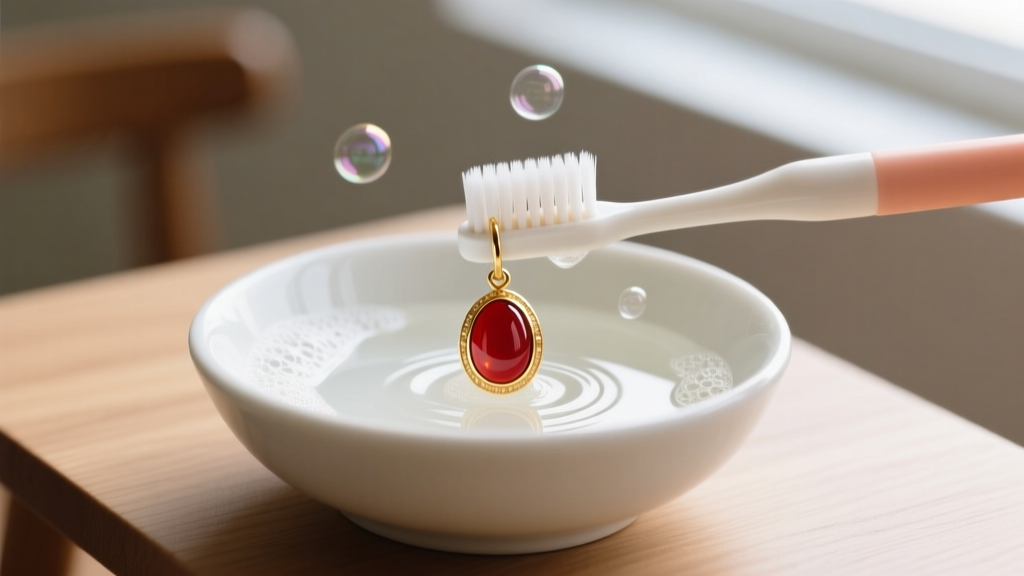
- Solution: Mix a few drops of pH-neutral dish soap (like Dawn) into a bowl of lukewarm distilled water. Avoid tap water, as chlorine and hard water minerals can leave a film on the porous chalcedony surface.
- Agitation: Use a soft-bristled baby toothbrush to gently sweep the bristles over the dome of the cabochon and along the bezel edge where skin oils and cosmetics accumulate.
- Rinsing: Rinse briefly under a gentle stream of lukewarm water. Never use hot water, as thermal shock can cause micro-fractures.
- Drying: Pat dry immediately with a lint-free microfiber cloth. Do not air dry, as water spots will cling to the polished surface.
Expert Maintenance Checklist
"Carnelian is a resilient stone, but it demands respect for its chemical and structural boundaries. Treat it like glass, not like a diamond, and it will retain its fire for generations." — Bench Jeweler's Adage
Keep your carnelian earrings in peak condition by performing a quick bi-annual inspection:
- Check the Bezels: Run a piece of silk fabric over the setting. If it snags, the metal bezel or prong has lifted and needs to be burnished back down by a jeweler.
- Inspect the Post/Wire: Look for stress marks or thinning in the metal just above the earlobe loop, a common failure point for heavy cabochons.
- Chemical Isolation: Remove carnelian earrings before applying hairspray, perfume, or lotions. The silica structure can absorb chemical residues, leading to a permanent greasy film that standard washing cannot remove.
By understanding the specific mineralogical traits of carnelian and avoiding common cleaning pitfalls, you can effectively troubleshoot dullness, prevent physical damage, and ensure your earrings remain a vibrant staple in your jewelry collection.


