Expert Care Guide: Cleaning Heavy Bahubali Earrings
Learn expert cleaning and storage tips for heavy Bahubali earrings. Protect Kundan, Polki, and Meenakari from tarnish and damage with our care guide.

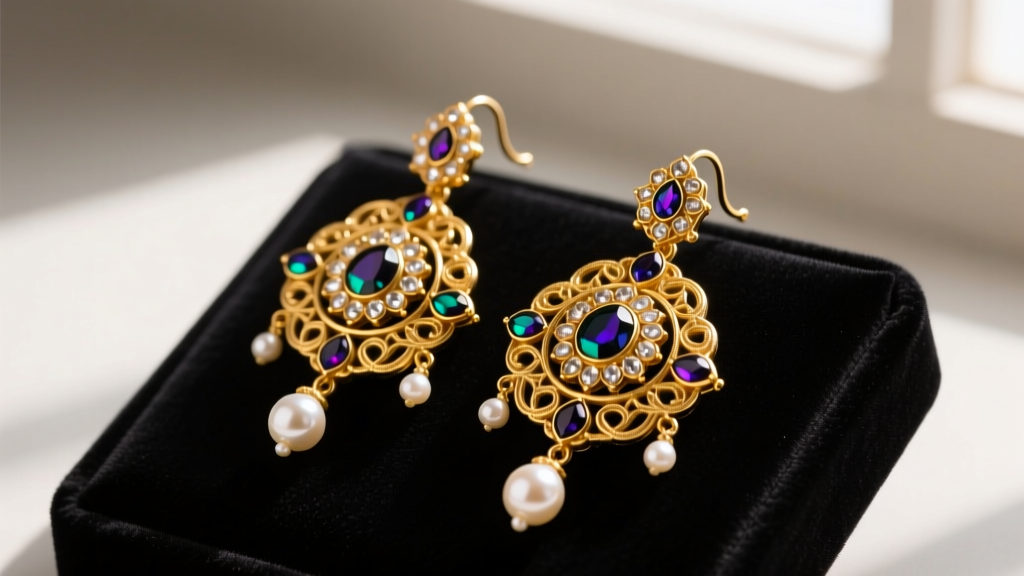
The Anatomy of Bahubali Earrings: Why They Need Special Care
Bahubali earrings are not merely accessories; they are intricate, wearable works of art inspired by traditional Indian royal jewelry. Characterized by their dramatic scale, heavy weight, and elaborate craftsmanship, these pieces typically feature a combination of Kundan (glass or precious stones set in gold foil), Polki (uncut diamonds), Meenakari (vitreous enamel), and natural pearls. Understanding the structural anatomy of these earrings is the first step in preserving their heirloom quality.
The primary vulnerability of Bahubali earrings lies in their setting technique, known as Jadau. Artisans use lac (a natural, heat-sensitive resin or wax) to secure the stones, backing them with varak (ultra-thin silver or gold foil) to enhance brilliance. According to conservation guidelines from the Victoria and Albert Museum, historical enameled and foiled jewelry is highly susceptible to moisture and temperature fluctuations. If water penetrates the stone setting, the foil oxidizes and turns permanently black. If exposed to high heat, the lac melts, causing stones to dislodge. Therefore, standard liquid jewelry cleaners and ultrasonic machines are strictly prohibited for this category of ear wear.
Handling the Weight: Earlobe Care and Wearability
Authentic Bahubali jhumkas and chandbalis can weigh anywhere from 30 to 70 grams per ear. This immense weight poses a structural risk not only to the earring's wire hooks but also to your earlobes. Prolonged wear can cause lobe stretching, tearing, or severe discomfort.
- Use a Sahara (Ear Chain): Always attach the sahara—the decorative chain that hooks from the earring into your hair. This transfers up to 60% of the earring's weight away from the lobe and onto the scalp.
- Silicone Support Patches: Apply adhesive silicone earlobe support patches behind the ear before inserting the hook. These distribute the pressure across a wider surface area of the skin.
- Upgrade the Backings: Standard push-backs will fail under the weight of a 40-gram earring. Have a jeweler convert your hooks to thick-gauge (14g or 12g) screw-backs, or use heavy-duty silicone stoppers with a wide flange to prevent the earring from slipping out.
The Golden Rules of Daily Wear and Prevention
Preventative care is vastly superior to reactive cleaning. The chemical composition of modern cosmetics is the leading cause of premature degradation in traditional Indian jewelry.
The 'Last On, First Off' Protocol: Bahubali earrings must be the absolute last thing you put on when dressing and the first thing you remove. Hairsprays, perfumes, and setting sprays contain high concentrations of alcohol and aerosolized chemicals. Alcohol dissolves the protective wax coating on Meenakari enamel and degrades the luster of natural pearls. Furthermore, the Gemological Institute of America (GIA) warns that organic gems like pearls are highly porous and will absorb acidic compounds from sweat and cosmetics, leading to irreversible surface pitting and yellowing.
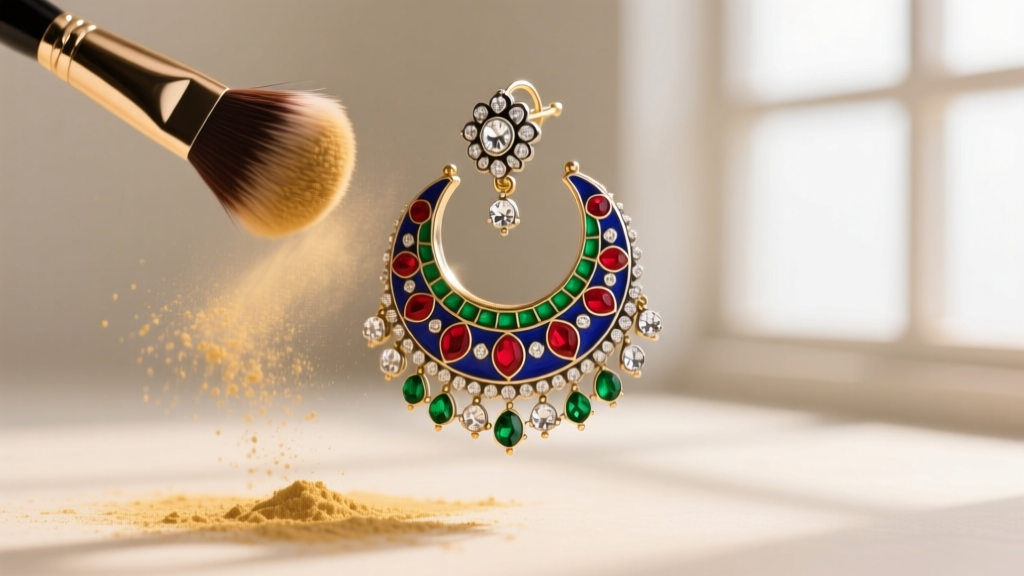
Step-by-Step Dry Cleaning Method for Kundan and Polki
When your Bahubali earrings accumulate dust, skin oils, or cosmetic residue, you must rely on mechanical dry-cleaning methods. Never submerge these earrings in water or apply liquid soap.
- The Soft Brush Technique: Use a brand-new, ultra-soft makeup blending brush or a clean goat-hair duster. Gently sweep the bristles across the surface of the Kundan glass and Polki diamonds to dislodge trapped dust from the intricate bezels. Do not press hard, as grit can scratch the glass or the gold foil backing.
- Targeted Cotton Swabbing: For oily residue around the metal bezels, take a wooden cotton swab and lightly roll it over the metal without touching the stones. If necessary, dip the very tip of the swab in a minuscule amount of rubbing alcohol, but ensure it is almost completely dry before it touches the metal. Keep alcohol far away from the lac settings and pearls.
- The Eraser Method for Plain Metal: If the unadorned gold-plated brass or silver base of the earring has tarnished, use a soft pink pearl eraser. Gently rub the eraser over the plain metal parts only. The mild abrasives lift tarnish without scratching the plating. Brush away the eraser shavings immediately with your soft makeup brush.
- Microfiber Buffing: Finish by lightly buffing the metal components with a dry, high-quality microfiber cloth to restore shine and remove any remaining microscopic oils.
What NEVER to Do: Common Cleaning Disasters
Many well-intentioned owners ruin their heritage pieces by applying standard jewelry cleaning logic to traditional Jadau work. Review the table below to understand the catastrophic failure modes associated with improper cleaning agents.
| Improper Cleaning Agent | Chemical / Physical Reaction | Resulting Damage to Bahubali Earrings |
|---|---|---|
| Ultrasonic Cleaners | High-frequency sound waves create cavitation bubbles. | Shatters fragile Kundan glass, cracks uncut Polki, and vibrates the lac resin loose, causing total stone fallout. |
| Liquid Soap & Water | Water becomes trapped between the stone and the backing. | The silver/gold foil (varak) oxidizes, turning the stone grey or black. The lac resin turns white and crumbles. |
| Toothpaste & Baking Soda | High RDA (Relative Dentin Abrasivity) particles act as sandpaper. | Permanently scratches the Meenakari enamel surface and strips the gold plating off the brass base. |
| Commercial Silver Dips | Harsh thiourea-based acids strip oxidation rapidly. | Dissolves the darkened antique patina intentionally left in the crevices by the artisan, ruining the 3D depth and contrast. |
Long-Term Storage: Preventing Tarnish and Warping
How you store your Bahubali earrings between wedding seasons or festive events dictates their lifespan. Humidity is the ultimate enemy of foiled jewelry and silver bases.
Never store these earrings in plastic ziplock bags. Polyvinyl chloride (PVC) and certain cheap plastics emit sulfur-containing gases as they degrade, which rapidly accelerates the tarnishing of the silver base metals used in Jadau work. Instead, wrap each earring individually in unbleached, acid-free muslin cloth or archival tissue paper. This allows the jewelry to breathe while protecting the Meenakari on the reverse side from scratching the Kundan on the front of the adjacent piece.
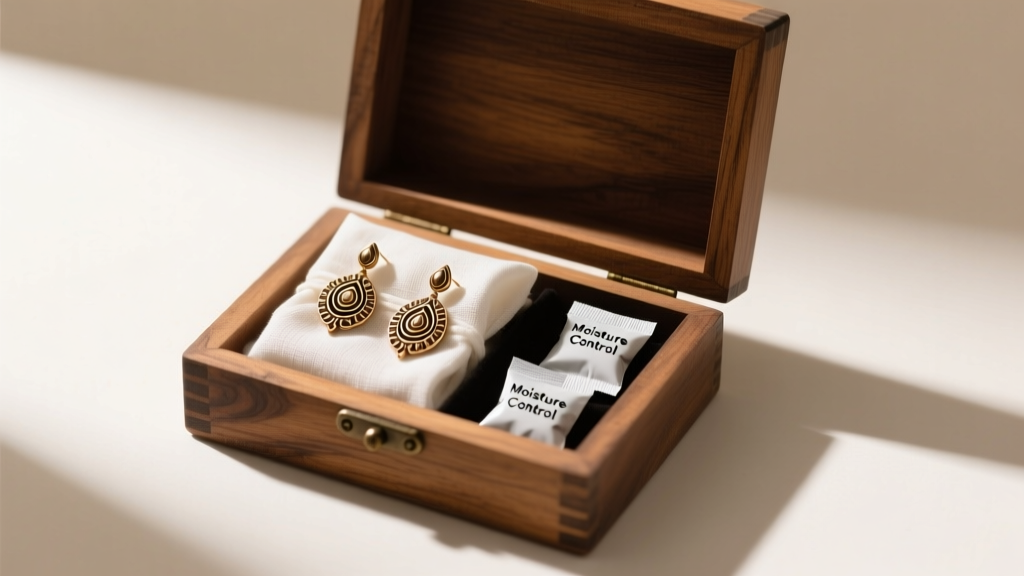
Place the wrapped earrings in a rigid, velvet-lined wooden box. Crucially, you must include 2 to 3 fresh silica gel desiccant packets inside the box to maintain a micro-climate with low relative humidity. Replace the silica packets every three months, or immediately if they change color (indicating moisture saturation). Store the box in a cool, dark closet—never in a bathroom where shower steam fluctuates the ambient humidity, and never in direct sunlight which can fade the Meenakari pigments and dry out the natural pearls.
When to Seek Professional Restoration
Despite meticulous home care, the organic materials used in Bahubali earrings will eventually require professional intervention from a skilled karigar (traditional artisan). Do not attempt DIY repairs with superglue, which will cloud the stones and ruin the lac.
- Re-foiling: If a Kundan stone looks cloudy, grey, or black, the foil behind it has oxidized. A jeweler must carefully heat the lac, lift the stone, replace the foil, and reset it.
- Pearl Restringing: If your earrings feature pearl drops strung on silk thread, have them professionally restrung every 3 to 5 years. Silk degrades and weakens when exposed to the lactic acid in human sweat, leading to sudden breakage and lost pearls.
- Hook Soldering: If the thick wire hook becomes bent or warped from the heavy weight of the earring, take it to a professional for laser soldering and reinforcement to prevent the earring from snapping and falling out of your ear.


