Gold Cuff Earrings: Solid, Vermeil, and Plated Compared
Discover the best gold cuff earrings for your lifestyle. We compare solid, vermeil, filled, and plated gold properties, durability, and pricing.

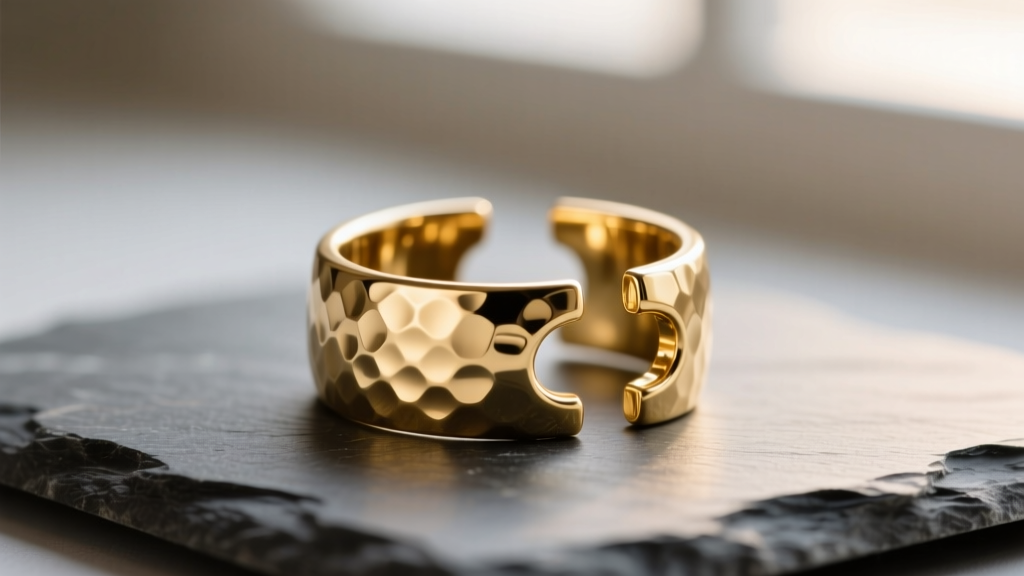
The Unique Metallurgy of Ear Cuffs
When shopping for gold cuff earrings, most buyers focus entirely on aesthetics—how the piece wraps around the helix or conch. However, from a metallurgical standpoint, ear cuffs are fundamentally different from standard stud or hoop earrings. A traditional earring relies on a post, a friction back, or a hinge to stay in place. An ear cuff, by contrast, relies entirely on the physical properties of the metal itself: specifically, its yield strength, malleability, and springback.
If the metal is too soft, it undergoes plastic deformation, meaning it will stretch out and lose its grip on your cartilage after a few wears. If the metal is too brittle or improperly annealed, it will snap when you attempt to adjust the tension gap. Understanding the material hierarchy is crucial for investing in gold cuff earrings that actually stay on your ear without causing contact dermatitis or turning your skin green. In this comprehensive guide, we break down the exact properties, gauge requirements, and failure modes of every gold material on the market.
Deconstructing Gold Alloys and Coatings
Solid Gold (14k vs. 18k): The Tension Standard
Solid gold is the premium choice for ear cuffs, but the karat weight drastically changes how the cuff performs mechanically. Pure 24k gold is far too soft for an ear cuff; it would bend open and fall off within hours. Therefore, jewelers use gold alloys.
- 14k Solid Gold (58.5% Gold): Alloyed with copper, silver, and zinc, 14k gold possesses a higher Vickers hardness than 18k. This makes it the absolute best material for ear cuffs. It provides excellent "springback," meaning you can gently squeeze it onto your cartilage, and it will retain its tension for years. Standard gauge sizes for 14k cuffs range from 20g (0.8mm) for delicate, minimalist designs to 18g (1.0mm) for structural security. Expect to pay between $150 and $450.
- 18k Solid Gold (75% Gold): With a higher gold content, 18k is noticeably softer and more malleable. To compensate for this lower yield strength, jewelers must use thicker wire—typically 16g (1.2mm) or even 14g (1.6mm)—to ensure the cuff doesn't warp. While it offers a richer, deeper yellow hue, it requires more careful handling. Pricing generally starts at $250 and can exceed $700 for designer pieces.
Gold Vermeil: The Sterling Silver Compromise
By definition, gold vermeil requires a 925 sterling silver base metal coated with a minimum of 2.5 microns of gold. Because sterling silver is relatively soft and has a lower modulus of elasticity than gold alloys, vermeil ear cuffs are prone to "tension fatigue." Over time, the silver core will slowly stretch, requiring you to gently squeeze the cuff back into shape. However, because the base is silver, it remains a safe, hypoallergenic option for those with severe metal sensitivities. Prices typically range from $45 to $120.
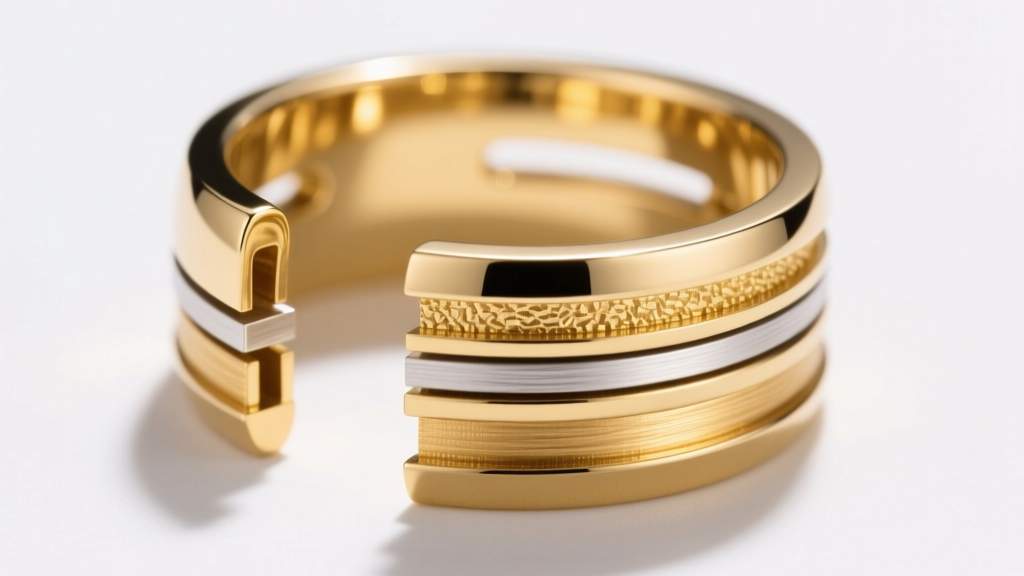
Gold Filled vs. Advanced PVD Plating
Gold Filled: This material consists of a brass or copper core that is mechanically bonded with a gold layer comprising at least 5% of the total weight. Brass is exceptionally stiff, which makes gold-filled ear cuffs fantastic at holding their shape and gripping the ear. The failure mode here is wear-and-tear: if the gold layer rubs off at the inner contact point, the exposed copper will react with your skin's natural acids, leaving a green residue on your cartilage. Price: $30 to $80.
PVD Gold Plating (2026 Standard): Traditional electroplated gold (which deposits less than 0.5 microns of gold onto brass) is a poor choice for cuffs due to high friction against hair and skin. However, modern Physical Vapor Deposition (PVD) coating uses titanium nitride to create a ceramic-like gold surface that is up to 10 times harder than electroplated gold. PVD gold cuff earrings resist scratching and fading far better than traditional plated options, though the base metal remains a potential allergen if the coating chips.
Material Properties & Failure Modes
To help you make an informed decision, we have mapped the mechanical properties and common failure modes of each material type used in gold cuff earrings.
| Material | Base Metal | Gold Thickness | Tension Retention | Common Failure Mode | Avg. Price Range |
|---|---|---|---|---|---|
| 14k Solid Gold | Gold Alloy | Solid | Excellent | Permanent warping if slept in | $150 - $450 |
| 18k Solid Gold | Gold Alloy | Solid | Good (Requires thicker gauge) | Bending out of shape due to softness | $250 - $700+ |
| Gold Vermeil | 925 Silver | ≥ 2.5 microns | Moderate | Tension fatigue; cuff loosens over time | $45 - $120 |
| Gold Filled | Brass/Copper | 5% by weight | Excellent (Stiff core) | Inner layer wears off, causing green skin | $30 - $80 |
| PVD Plated | Stainless/Brass | Sub-micron (PVD) | Good | Coating chips at high-friction contact points | $25 - $65 |
Skin Sensitivities and the Cartilage Microbiome
The skin covering your ear cartilage is significantly thinner and more avascular than your earlobe. This makes it highly susceptible to allergic contact dermatitis. According to the American Academy of Dermatology, nickel and cobalt are the most common culprits in jewelry-induced skin reactions.
"Because ear cuffs apply constant, localized pressure to the skin without the benefit of a healed piercing fistula, any trace amounts of reactive base metals will cause irritation much faster than a standard earring post."
If you have known metal allergies, you must avoid gold-filled and standard plated cuffs, as the brass and copper cores contain trace nickel and highly reactive copper. Stick exclusively to 14k/18k solid gold or high-quality gold vermeil, as the 925 sterling silver base is generally well-tolerated by sensitive skin.
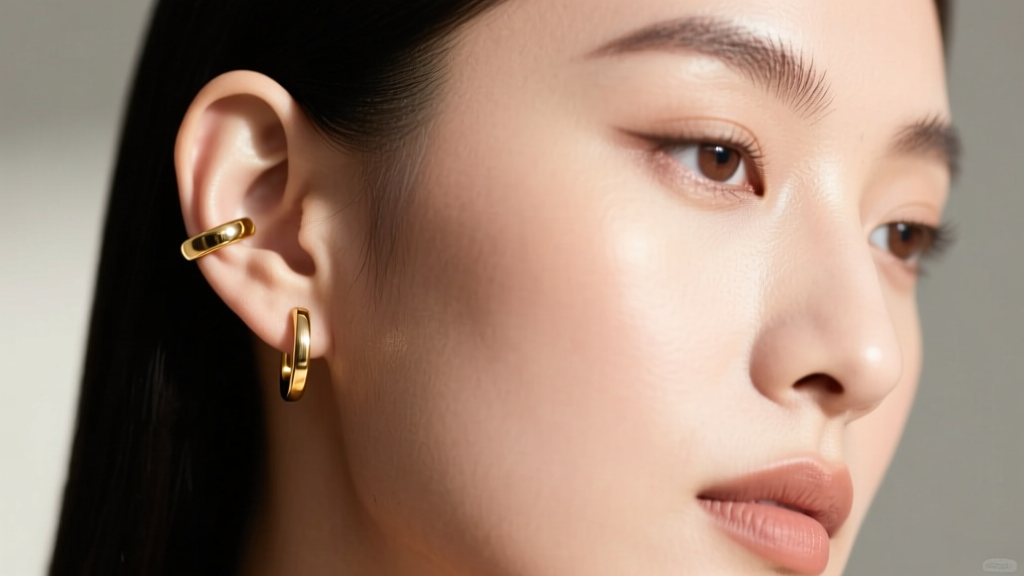
Care, Maintenance, and Longevity Framework
Proper maintenance extends the life of your gold cuff earrings and preserves their metallurgical temper. The Gemological Institute of America (GIA) notes that while gold itself does not tarnish, the alloy metals (like copper and silver) can oxidize when exposed to environmental factors.
- The "Squeeze" Rule: Never pull an ear cuff apart to put it on. Instead, slide it onto the thinnest part of your ear (usually the outer helix ridge) and gently slide it down to your desired position. Pulling the gap wide weakens the metal's memory.
- Chemical Exposure: Remove vermeil and plated cuffs before swimming or using harsh skincare acids (like glycolic or salicylic acid), which can strip the micron layers.
- Storage: Store cuffs individually in soft pouches. If tossed into a jewelry box, heavier items can crush the cuff, altering its tension gap permanently.
- Cleaning: Use a mild, phosphate-free dish soap and warm water. Avoid ultrasonic cleaners for vermeil and plated cuffs, as the high-frequency vibrations can cause the gold layers to delaminate from the base metal.
Final Verdict: Which Material Should You Choose?
The ideal material for your gold cuff earrings depends entirely on your budget, skin sensitivity, and wearing habits. If you plan to wear your cuff daily and want a "buy it for life" piece that will never lose its grip or tarnish, 14k solid gold is the undisputed champion. Its alloy composition provides the perfect balance of malleability for adjustment and stiffness for long-term retention.
For those on a moderate budget with sensitive skin, gold vermeil is the safest alternative, provided you don't mind occasionally squeezing the cuff to restore its tension. Finally, if you view ear cuffs as a fast-fashion accessory to match specific outfits, PVD gold-plated options offer the best scratch resistance at an accessible price point, though they should be removed before showering to protect the base metal.


