Earrings Plaza NYC: 2026 Metal & Gem Material Guide
Discover how to navigate Earrings Plaza NYC in 2026. Compare titanium, gold, and platinum alloys, verify hallmarks, and source hypoallergenic metals.

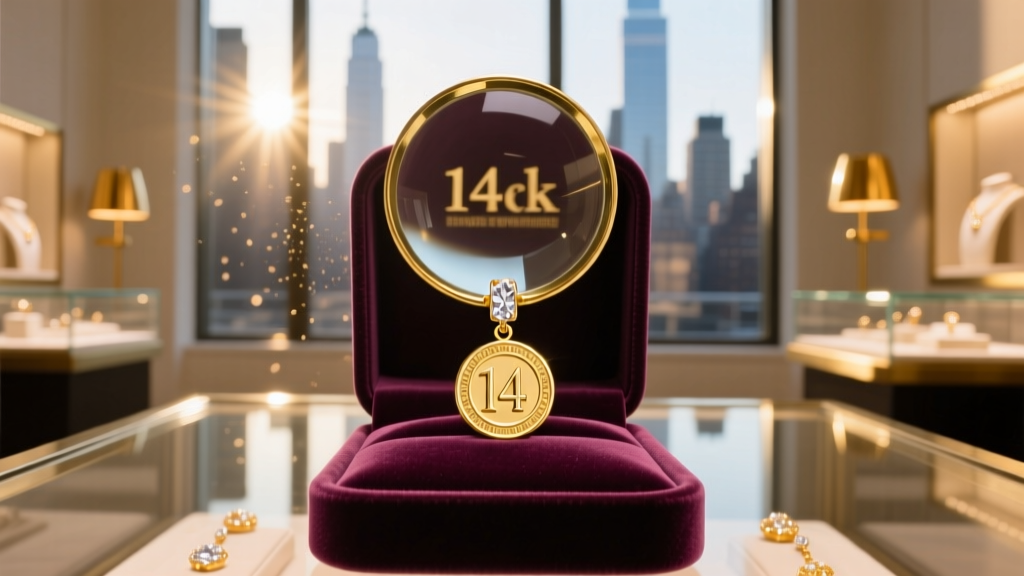
The Allure of the NYC Jewelry District: Why Material Matters in 2026
For serious jewelry buyers, collectors, and boutique owners, the New York City Diamond District remains the undisputed epicenter of global trade. Within this bustling ecosystem, hubs like Earrings Plaza NYC offer an unparalleled selection of wholesale and bespoke earring components. However, navigating the sheer volume of inventory in 2026 requires more than just an eye for design; it demands a rigorous understanding of metallurgy and gemology. Whether you are sourcing delicate cartilage huggies, heavy statement drops, or everyday lobe studs, the material composition dictates the longevity, biocompatibility, and ultimate value of the piece.
Counterfeit alloys and misleading hallmark stamps have become increasingly sophisticated. A vendor at Earrings Plaza NYC might offer you 'surgical steel' studs at a fraction of the cost of titanium, but without knowing the exact grade, you risk severe contact dermatitis for your clients. This comprehensive guide breaks down the exact material properties, alloy compositions, and verification tactics you need to master before stepping into the exchange.
Decoding the Metals: A Deep-Dive Comparison
The foundation of any high-quality earring is its post, wire, or hoop base. Let us dissect the most common metals you will encounter, moving beyond basic marketing terms into actionable metallurgical data.
Implant-Grade Titanium (ASTM F136) vs. Commercial Grades
Titanium is the undisputed king of hypoallergenic body jewelry, but not all titanium is created equal. When sourcing from reputable vendors at Earrings Plaza NYC, you must specifically request ASTM F136 compliant titanium (Ti-6Al-4V ELI). The 'ELI' stands for Extra Low Interstitial, meaning it has reduced levels of oxygen, nitrogen, carbon, and iron, which dramatically increases its biocompatibility and fatigue strength.
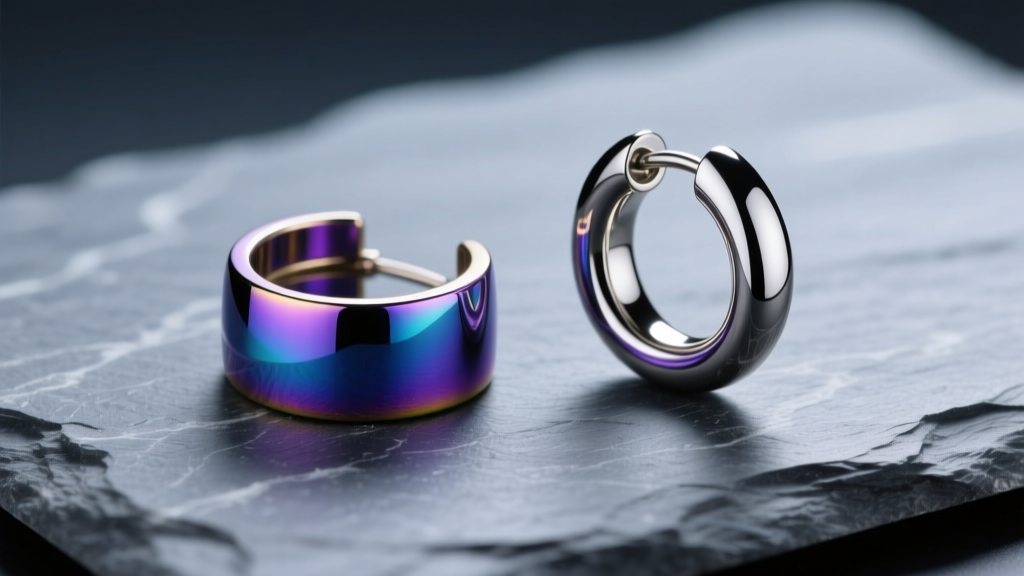
Conversely, ASTM F67 (commercially pure titanium) is softer and more prone to warping under the stress of threading. For internally threaded 16-gauge (1.2mm) or 14-gauge (1.6mm) cartilage barbells and huggies, F136 is mandatory. Furthermore, F136 titanium can be anodized using voltage manipulation to create a vibrant spectrum of colors without the use of toxic dyes or platings that can flake off inside a piercing channel.
The Gold Standard: 14k vs. 18k Alloys & The Nickel Trap
Gold is inherently hypoallergenic, but pure 24k gold is far too soft (Vickers Hardness of ~25 HV) for earring posts, which would easily bend and snap. Therefore, it is alloyed. According to the Association of Professional Piercers (APP), only 14k and 18k gold are suitable for initial piercings and long-term sensitive wear, provided they are nickel-free.
The danger lies in white gold. Traditional white gold is alloyed with nickel to achieve its silvery hue. In 2026, despite stricter EU regulations, nickel-white gold still permeates wholesale markets. When shopping at Earrings Plaza NYC, explicitly ask for palladium white gold or verify that the piece is heavily rhodium-plated over a nickel-free base. For yellow and rose gold, 14k (58.5% gold) offers superior durability for intricate prong settings on drop earrings, while 18k (75% gold) provides a richer color but requires thicker gauges (18G or higher) to prevent the post from bending.
Platinum (PT950) and Niobium: The Heavyweight & The Alternative
Platinum, typically stamped PT950 (95% platinum, 5% ruthenium or iridium), is incredibly dense and naturally white. It will never tarnish or require rhodium plating. However, its high density makes it expensive and heavy, which can cause earlobe stretching over time if used for large, unsupported dangle earrings. It is best reserved for secure, high-value diamond stud settings.
Niobium is a lesser-known but exceptional alternative to titanium. It is highly malleable, making it perfect for seamless segment rings and ear cuffs that require bending to fit the ear's cartilage contour. Like titanium, it can be anodized, though it yields slightly different color spectrums at varying voltages.
Material Properties & Sourcing Matrix
To make rapid, informed decisions on the floor at Earrings Plaza NYC, keep this comparative matrix in mind. Prices reflect 2026 estimated wholesale rates for a standard pair of 5mm stud bases or simple 10mm huggie hoops without gemstones.
| Material | Alloy Composition | Hardness (HV) | Nickel Content | Best Application | Wholesale Range (Pair) |
|---|---|---|---|---|---|
| ASTM F136 Titanium | Ti-6Al-4V ELI | 334 | 0% | Internally threaded posts, cartilage hoops | $12 - $25 |
| 14k Yellow Gold | 58.5% Au, Ag, Cu | 130 - 150 | 0% | Everyday lobe studs, delicate drop wires | $85 - $140 |
| 18k Palladium White | 75% Au, Pd, Ag | 120 - 135 | 0% | High-end diamond settings, heirloom pieces | $160 - $250 |
| PT950 Platinum | 95% Pt, 5% Ru/Ir | 130 - 160 | 0% | Secure prong settings, luxury studs | $220 - $350 |
| Niobium (Pure) | 99.9% Nb | 60 - 80 | 0% | Seamless rings, bendable ear cuffs | $15 - $30 |
Gemstone Treatments: What to Ask the Vendors
Metals are only half the equation. The gemstones adorning your earrings significantly impact both value and durability. When evaluating colored gemstones at Earrings Plaza NYC, you must understand the prevalence of enhancements. The Gemological Institute of America (GIA) emphasizes that untreated stones are exceedingly rare in commercial wholesale environments.
- Heat Treatment: Standard for sapphires and rubies. It is permanent and generally accepted without massive value depreciation, provided it is disclosed. Sapphires in drop earrings are almost always heat-treated to improve clarity and color saturation.
- Beryllium Diffusion: A controversial treatment where beryllium is introduced during heating to alter the stone's color (common in orange and yellow sapphires). This drastically reduces the stone's value compared to traditional heat treatment. Always ask if a stone is 'Be-diffused'.
- Fracture Filling: Common in emeralds (cedar oil or polymer resins) and some rubies (lead glass). Glass-filled rubies are incredibly fragile; the ultrasonic cleaners used by jewelers to clean earring settings will shatter the glass filling, destroying the stone. Never purchase glass-filled rubies for everyday wear earrings.
Verification Tactics: Spotting Fakes on 47th Street
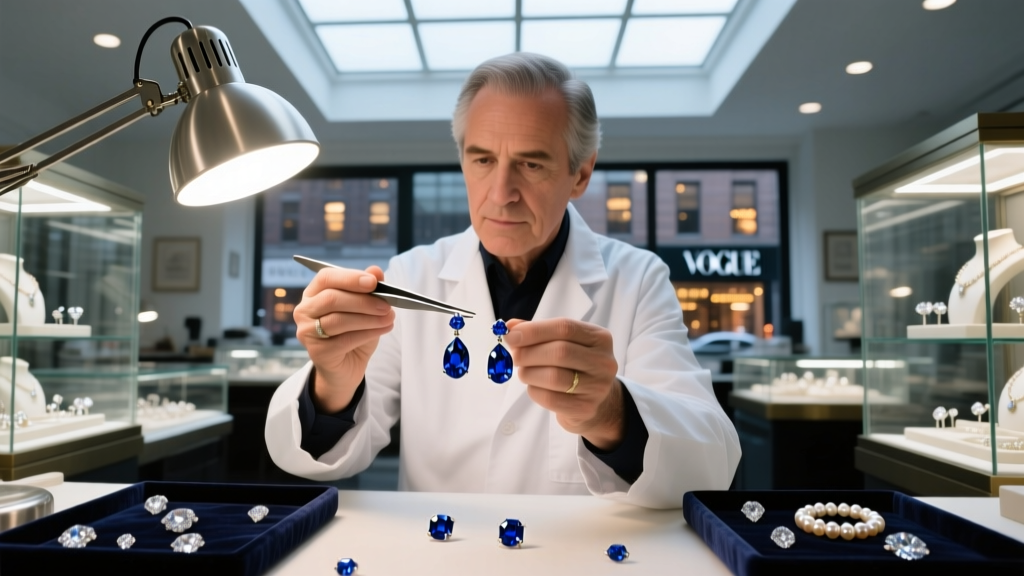
Trust, but verify. Even established vendors in the NYC jewelry exchange can make mistakes or source from questionable overseas foundries. Here is your tactical framework for verifying materials on the spot:
1. The Hallmark and Stamp Check
Use a 10x or 20x jeweler's loupe. A legitimate 14k gold earring post will be stamped '14k', '14kt', or '585'. Platinum will read 'PT950' or 'Plat'. However, stamps can be easily forged. Look for the maker's mark (a tiny symbol or initials next to the karat stamp), which indicates the manufacturer stands behind the assay.
2. Acid Testing for Gold
Many wholesale booths at Earrings Plaza NYC have acid testing kits on the counter. A tiny scratch is made on a testing stone, and nitric acid of varying strengths is applied. If the mark dissolves instantly with 14k acid, the piece is under-karated or plated. While destructive, it is the fastest way to verify bulk gold lots.
3. XRF (X-Ray Fluorescence) Scanning
For high-value platinum and palladium white gold purchases, rely on non-destructive XRF scanners. Many premium appraisal offices within the NYC Diamond District offer XRF scans for a small fee. This technology provides an exact elemental breakdown, instantly revealing hidden nickel or copper alloys that acid tests might miss.
4. The Magnet Test for Titanium and Platinum
While not definitive for karat gold, a strong neodymium magnet is a great first-line defense. Pure titanium, platinum, and gold are paramagnetic or diamagnetic and will not stick to a magnet. If a 'platinum' earring setting exhibits magnetic pull, it likely contains a high percentage of iron or nickel, indicating a counterfeit or severely under-karated white gold alloy.
Final Sourcing Advice for the Modern Buyer
Navigating Earrings Plaza NYC and the surrounding jewelry exchanges in 2026 is a masterclass in material science as much as it is an exercise in negotiation. Prioritize vendors who willingly provide ASTM certification for their titanium and detailed alloy breakdowns for their gold. By focusing on biocompatible metals like F136 titanium and palladium white gold, and by rigorously questioning gemstone treatments, you ensure that the earrings you source are not only visually stunning but structurally sound and safe for lifelong wear. Always carry your loupe, know your hallmarks, and never compromise on metallurgical integrity.


