What Is the Gay Side Earring? The Myth & Modern Material Guide
Discover the truth behind what is the gay side earring. We debunk the left-right myth and explore modern material choices for safe, stylish piercings.


The Historical Code: What Is the Gay Side Earring?
If you have ever typed "what is the gay side earring" into a search engine, you have likely stumbled upon a decades-old cultural myth rooted in the clandestine signaling codes of the late 20th century. During the 1970s and 1980s, when queer visibility was heavily stigmatized, a subtle playground and pop-culture rhyme emerged: "Left is right, and right is wrong." This coded language suggested that a man wearing a single earring in his right ear was signaling his homosexuality, while the left ear was reserved for heterosexual men.
However, as we navigate the fashion landscape of 2026, this binary is entirely obsolete. According to cultural historians and advocates at GLAAD, modern queer expression has long since abandoned these rigid, secretive codes. Today, identity, aesthetics, and personal style are communicated through curated "earscapes," anatomical placement, and, most importantly, the material quality of the jewelry itself. The modern signaling method is not about which ear you pierce, but rather the intentionality behind the metals you choose to wear.
Why Material Choice Replaced the Left-Right Binary
In contemporary jewelry styling, the focus has shifted from covert signaling to overt self-care and aesthetic excellence. Piercing multiple cartilage points—such as the daith, rook, conch, and helix—requires a deep understanding of metallurgy and biocompatibility. Cheap, mystery metals lead to hypertrophic scarring, contact dermatitis, and piercing rejection. Therefore, knowing your materials is the true mark of a sophisticated jewelry wearer today.
When building a curated ear, the base metal dictates the longevity of the piercing and the safety of your skin. The Association of Professional Piercers (APP) strictly regulates which materials are safe for initial piercings and long-term wear, emphasizing that not all "hypoallergenic" labels are created equal.
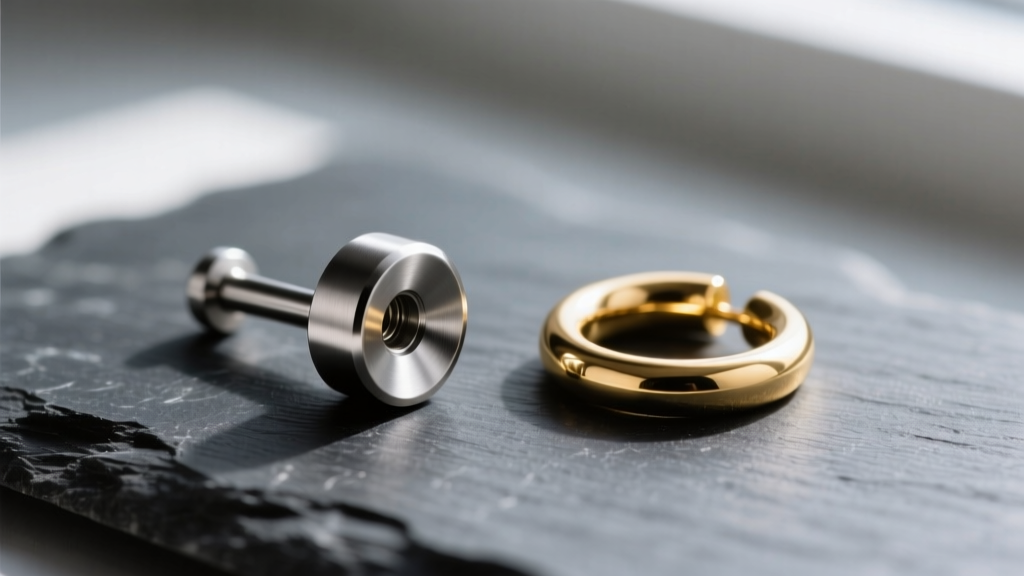
The Ultimate Material Comparison Chart for Piercings
To move beyond outdated tropes and focus on what actually matters, we must evaluate body jewelry through the lens of material science. Below is a comprehensive breakdown of the most common earring materials, their industry grades, and their biological compatibility.
| Material | Industry Standard / Grade | Nickel Content | Best Application | Average Price Range |
|---|---|---|---|---|
| Titanium | ASTM F136 (Implant-Grade) | 0% (Nickel-Free) | Fresh piercings, sensitive skin, cartilage | $35 - $90+ |
| Niobium | Commercially Pure (99.9%) | 0% (Nickel-Free) | Clicker rings, seamless hoops, daith piercings | $30 - $75 |
| Gold | 14k or 18k (Nickel-Free Alloy) | 0% (If properly alloyed) | Healed lobes, high-end cartilage studs | $80 - $300+ |
| Surgical Steel | ASTM F138 (Implant-Grade) | 8% - 12% | Fully healed lobes (only if no nickel allergy) | $15 - $40 |
| Sterling Silver | 925 (Contains Copper) | Varies (Often contains nickel in solder) | Occasional wear in fully healed lobes only | $20 - $60 |
The Danger of "Surgical Steel" and Sterling Silver
Many mass-market jewelry brands label their products as "surgical steel" or "sterling silver," leading consumers to believe they are safe for all ears. However, the American Academy of Dermatology notes that nickel allergy is one of the most common causes of allergic contact dermatitis. Surgical steel (even ASTM F138) contains up to 12% nickel. When exposed to the saline environment of a healing fistula (the piercing channel), nickel ions can leach into the tissue, causing severe itching, swelling, and the formation of irritation bumps.
Similarly, sterling silver tarnishes when exposed to oxygen and sulfur. The copper alloyed within it can oxidize inside a piercing channel, leading to a condition colloquially known as "argyria," where the skin around the piercing takes on a permanent grayish-blue tint.
Gauge Sizes, Threading, and Anatomy-Specific Jewelry
Modern queer and avant-garde fashion heavily favors cartilage piercings over standard lobe studs. This shift requires a strict adherence to proper gauge sizing and threading mechanics to prevent tissue trauma.
- Standard Lobe Piercings: Typically pierced at 20G (0.81mm) or 18G (1.02mm). Standard butterfly-back studs are common here, though flat-back labrets are vastly superior for sleeping comfort.
- Cartilage Piercings (Helix, Flat, Conch):strong> Best pierced at 16G (1.29mm) or 14G (1.60mm). A thicker gauge provides structural stability, reducing the "cheese-cutter effect" where thin wire can migrate through the tissue.
- Daith and Rook Piercings: These intricate inner-ear folds almost exclusively require 16G curved barbells or specialized clicker rings to accommodate the tight anatomical angles.
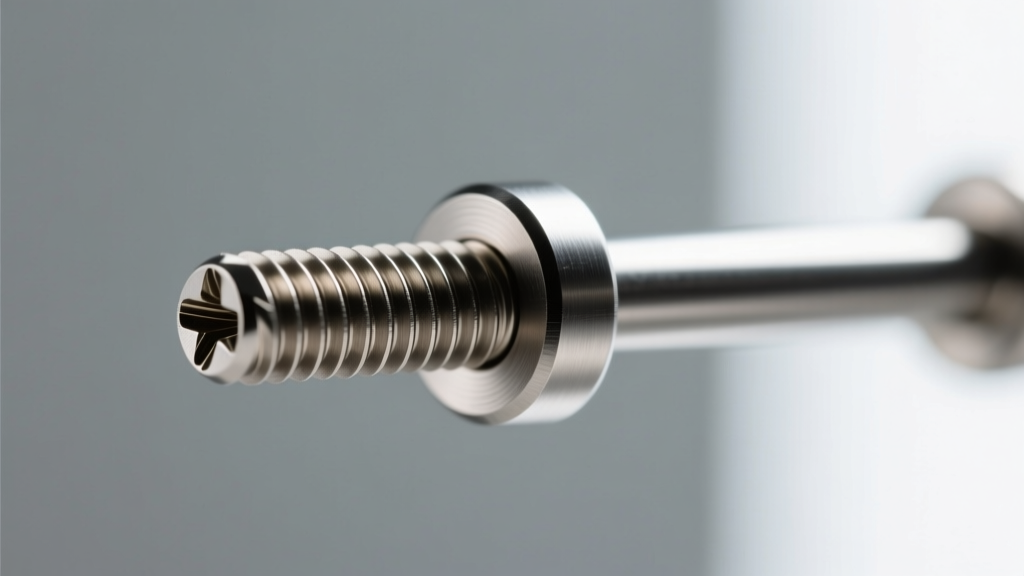
Internal vs. External Threading: A Critical Distinction
When purchasing high-end body jewelry, the threading mechanism is just as vital as the metal itself. Cheap earrings feature external threading, where the screw pattern is on the post that passes through your skin. This acts like a microscopic file, tearing the delicate fistula lining every time you insert or remove the earring.
"Internally threaded jewelry features a smooth post that glides through the tissue, with the screw mechanism hidden inside the decorative end. This is the only acceptable standard for cartilage piercings to prevent micro-tears and subsequent scar tissue buildup."
Brands like BVLA, Anatometal, and Maria Tada have popularized internally threaded and threadless (press-fit) titanium jewelry, making them the gold standard for modern ear curation.
Navigating Metal Allergies and Hypoallergenic Standards
If you are transitioning from cheap mall-kiosk jewelry to a curated, high-quality earscape, you must first identify your metal sensitivities. If you have ever experienced a red, itchy, or flaky earlobe after wearing fashion jewelry, you likely have a nickel or copper sensitivity.
To safely build your collection:
- Demand ASTM F136 Titanium: Do not settle for "titanium-plated" or "commercial grade." Only implant-grade F136 titanium guarantees a nickel-free, highly polished surface that resists bacterial adhesion.
- Explore Niobium for Hoops: Niobium is an elemental metal that is incredibly soft and malleable. It is the premier choice for seamless rings and clickers because it can be bent to fit the exact contour of your ear without snapping, and it can be anodized to create vibrant, permanent colors without using dyes or paints.
- Verify Gold Alloys: If you prefer the warmth of gold, ensure your jeweler uses 14k or 18k gold that is specifically alloyed with silver, copper, or palladium—never nickel. Avoid gold-plated or gold vermeil jewelry for cartilage, as the friction of daily wear will eventually rub the thin gold layer away, exposing the reactive brass or steel core beneath.
Final Thoughts on Queer Expression and Jewelry
The question of "what is the gay side earring" belongs in a museum of 20th-century pop culture, not in a modern jewelry box. Today, the LGBTQ+ community and fashion-forward individuals alike use body modification as a canvas for high-end material science and anatomical artistry. By prioritizing implant-grade titanium, nickel-free gold alloys, and internally threaded mechanics, you are not just protecting your body from adverse reactions—you are participating in a modern tradition of intentional, unapologetic self-expression. Ditch the outdated left-right rules, visit a reputable professional piercer, and let the quality of your metals do the talking.


