Turquoise Drop Earrings: A 2026 Value & Pricing Guide
Discover the true value of turquoise drop earrings in 2026. Compare pricing tiers, identify genuine stones, and assess metal hardware quality.

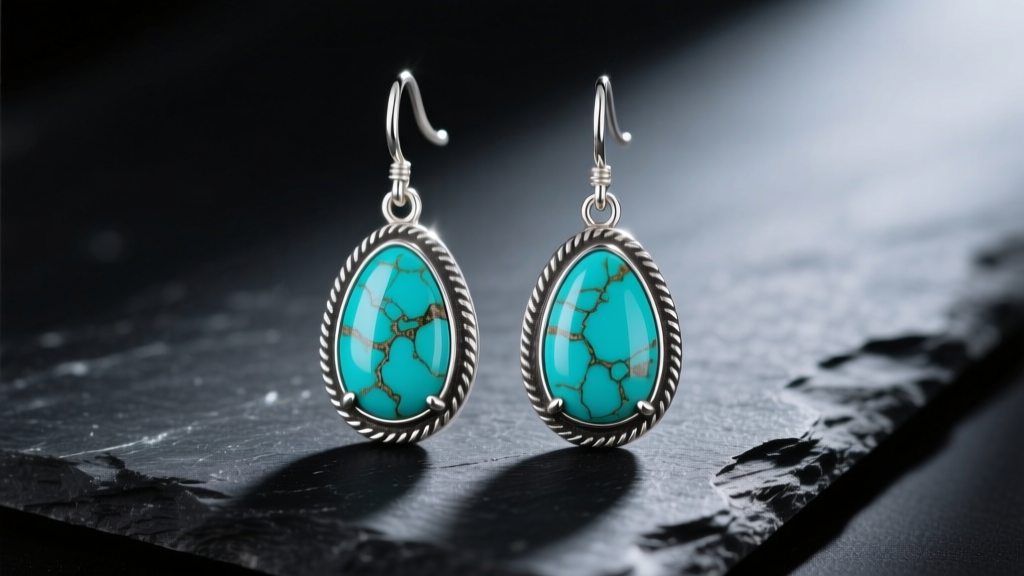
Turquoise drop earrings occupy a unique space in the jewelry market, bridging the gap between bohemian casual wear and high-end artisanal collecting. However, as we navigate the 2026 jewelry landscape, the market is increasingly saturated with treated stones, clever imitations, and poorly engineered hardware. For the discerning buyer, assessing the true value of turquoise drop earrings requires looking far beyond the initial aesthetic appeal. It demands a rigorous evaluation of gemological treatments, metal gauge thickness, and kinetic stress points.
In this comprehensive value assessment, we deconstruct the pricing tiers of turquoise drops, evaluate the structural integrity of the hardware, and provide a definitive framework for separating genuine, investment-grade lapidary work from mass-produced costume jewelry.
Decoding Turquoise Grades: Natural vs. Stabilized vs. Imitation
The foundation of any value assessment begins with the stone itself. According to the Gemological Institute of America (GIA), natural turquoise is a porous, hydrous phosphate of copper and aluminum, registering between 5 and 6 on the Mohs hardness scale. Because of this relative softness and porosity, understanding how the stone has been treated is critical to determining its market value.
The Stabilization Reality
There is a pervasive myth that "stabilized" turquoise is inherently fake or low-value. In the context of drop earrings, stabilization is often a necessary engineering choice. Genuine, untreated turquoise (often called "natural" or "untreated") is highly susceptible to cracking from the kinetic swinging motion of a drop earring, as well as discoloration from skin oils and cosmetics. The Zachery stabilization method, which uses a high-quality polymer resin to harden the stone without adding dyes, preserves the stone's natural matrix while increasing its durability to a Mohs 6.5. Stabilized genuine turquoise retains strong resale and collector value.
The Imitation Trap: Howlite and Magnesite
Conversely, dyed howlite and magnesite represent the lowest tier of the market. These naturally white, porous minerals are vacuum-injected with blue dye and a polymer binder to mimic turquoise. According to mineralogical data from Mindat.org, howlite has a completely different crystalline structure and specific gravity than true turquoise. While visually similar to the untrained eye, dyed howlite drops hold virtually zero intrinsic gemological value and should be priced strictly as fashion accessories.
2026 Market Pricing Tiers for Turquoise Drop Earrings
To accurately assess budget and value, we must categorize the market into distinct tiers based on material authenticity and hardware quality. The following table outlines what you should expect to pay in the current market.
| Tier | Stone Material | Metal Hardware | Price Range (USD) | Value Verdict |
|---|---|---|---|---|
| Budget / Fast Fashion | Dyed Howlite, Magnesite, or Reconstituted Chalk | Plated Brass, Zinc Alloy, or Stainless Steel | $12 - $35 | Poor long-term value; high risk of skin irritation and plating wear. |
| Mid-Range / Artisan | Stabilized Genuine Turquoise (e.g., Kingman, Pilot Mountain) | Solid 925 Sterling Silver, 20g or 18g wire | $65 - $180 | Excellent value; balances durability, authenticity, and wearability. |
| High-End / Collector | Natural, Untreated High-Grade (e.g., Lander Blue, Bisbee) | 14k/18k Solid Gold, Hand-forged settings | $350 - $1,500+ | Investment grade; appreciates in value due to mine depletion. |
Hardware Assessment: Wire Gauges and Stress Points
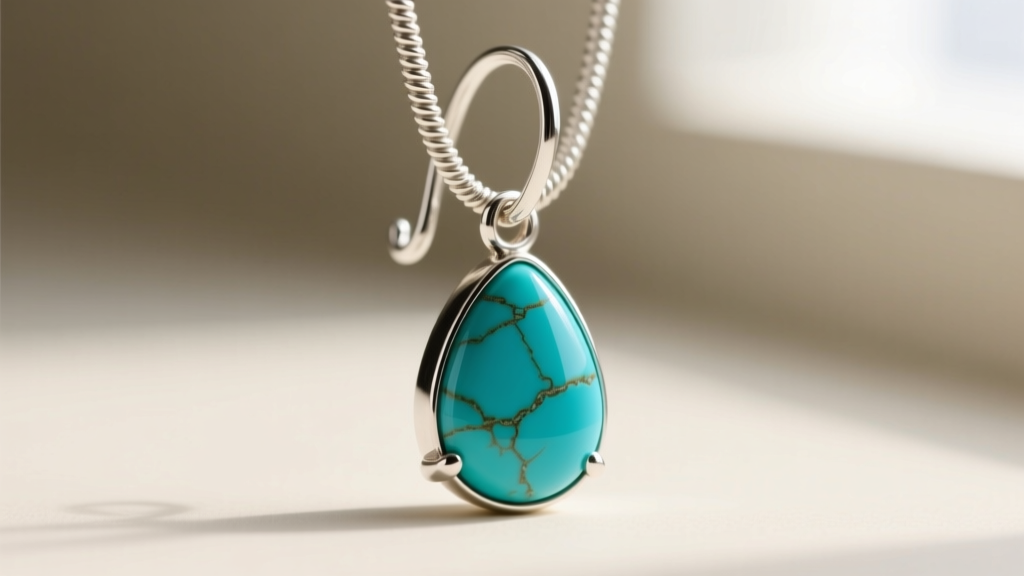
The most common failure mode in turquoise drop earrings is not the stone breaking, but the metal hardware snapping at the pivot point. Drop earrings are subject to continuous kinetic stress; every time the wearer turns their head, the drop swings, creating metal fatigue at the loop where the stone connects to the ear wire.
The Critical Importance of Wire Gauge
When evaluating mid-range to high-end turquoise drops, inspect the gauge of the wire used for the headpin and the ear hook.
- 22-Gauge (0.64mm): Too thin for heavy turquoise teardrops. While it slides easily through the ear, it will inevitably bend out of shape and suffer from fatigue snapping within a year of regular wear.
- 20-Gauge (0.81mm): The industry standard for quality drop earrings. It provides the necessary tensile strength to support a 15mm to 30mm turquoise drop without compromising the comfort of the earlobe piercing.
- 18-Gauge (1.02mm): Used for oversized, heavy statement drops or Native American squash-blossom style earrings. Note that 18-gauge wire may not fit through standard, un-stretched ear piercings (which typically accommodate up to 20g or 19g comfortably).
Furthermore, always check the connection loop. A properly engineered drop earring will feature a wrapped loop or a soldered closed jump ring connecting the stone to the French hook. Open, unsoldered jump rings will eventually pull apart under the swinging weight of the turquoise.
Ergonomics and the Pivot Point
Turquoise has a specific gravity ranging from 2.6 to 2.9, making it relatively lightweight compared to metals or denser gems like garnet. However, the elongated shape of a teardrop or briolette cut shifts the center of gravity downward.
A well-designed turquoise drop earring will incorporate a flexible pivot point—usually a small, unsoldered jump ring or a wrapped wire loop—that allows the stone to swing freely. If the stone is rigidly fixed to the ear wire, lateral pressure will bend the wire and distort the piercing hole over time.
When assessing value, look for "leverback" or "French hook with a silicone stopper" designs. French hooks without stoppers frequently fall out due to the pendulum effect of a heavy turquoise drop, leading to lost earrings and lost financial value.
The Collector’s Authentication Checklist
If you are shopping in the mid-to-high tier and want to ensure you are paying for genuine turquoise rather than an overpriced imitation, use this actionable checklist during your assessment:
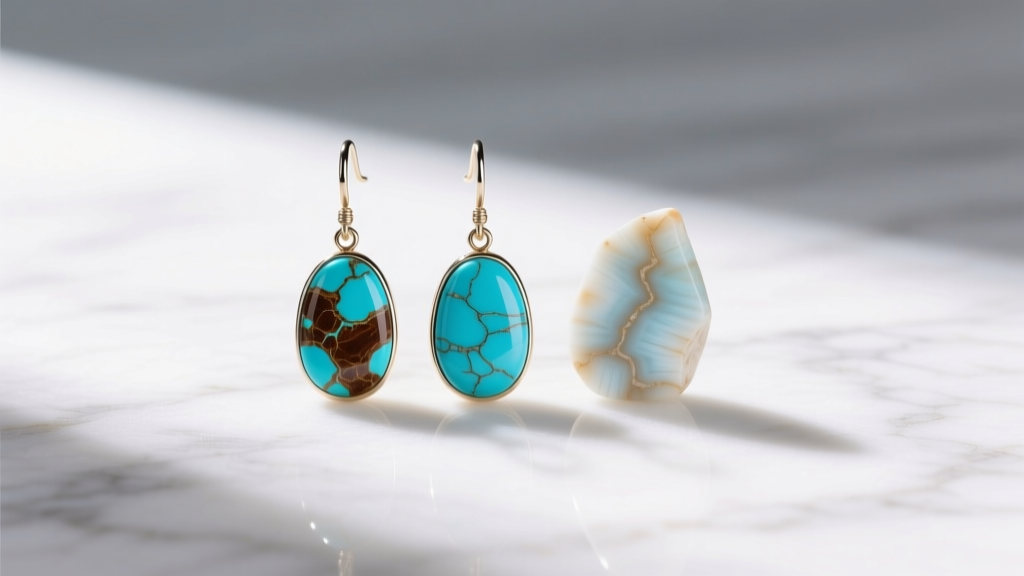
- Examine the Matrix Webbing: Genuine turquoise with matrix (the host rock, usually brown or black limonite or sandstone) will feature sharp, distinct, and somewhat random webbing patterns. Dyed howlite often features a superficial, uniform, and slightly blurred grey veining that looks printed on.
- Check the Price-to-Size Ratio: Natural, untreated turquoise is priced by the carat or gram. A pair of large (40mm+), untreated, high-grade turquoise drops selling for under $100 is a mathematical impossibility in the 2026 market. If the price is too good to be true, the stones are stabilized, reconstituted, or dyed.
- The UV Light Test: Many modern polymer resins used in cheap reconstituted turquoise will fluoresce brightly under a 365nm UV flashlight. While some natural turquoise can also fluoresce, a stark, glowing plastic reaction across the entire surface of the bead is a strong indicator of heavy polymer stabilization or reconstitution.
- Assess the Temperature: Genuine turquoise is a mineral and will feel distinctly cool to the touch when first picked up, taking a moment to warm to your skin. Howlite and plastic-resin composites will feel room-temperature or slightly warm immediately upon handling.
Final Value Verdict
Ultimately, the best value in turquoise drop earrings lies in the mid-range artisan tier. By targeting pieces that utilize stabilized, genuine turquoise (like Kingman or Sleeping Beauty) set in solid 925 sterling silver with 20-gauge hardware, buyers secure a product that offers authentic gemological heritage, structural longevity, and timeless style without paying the steep premiums attached to rare, untreated collector stones.


