The Ultimate Guide to Cleaning Gold Heart Nugget Earrings
Learn expert methods to clean gold heart nugget earrings. Discover safe solutions for textured 14k gold, avoid damage, and restore their raw shine.

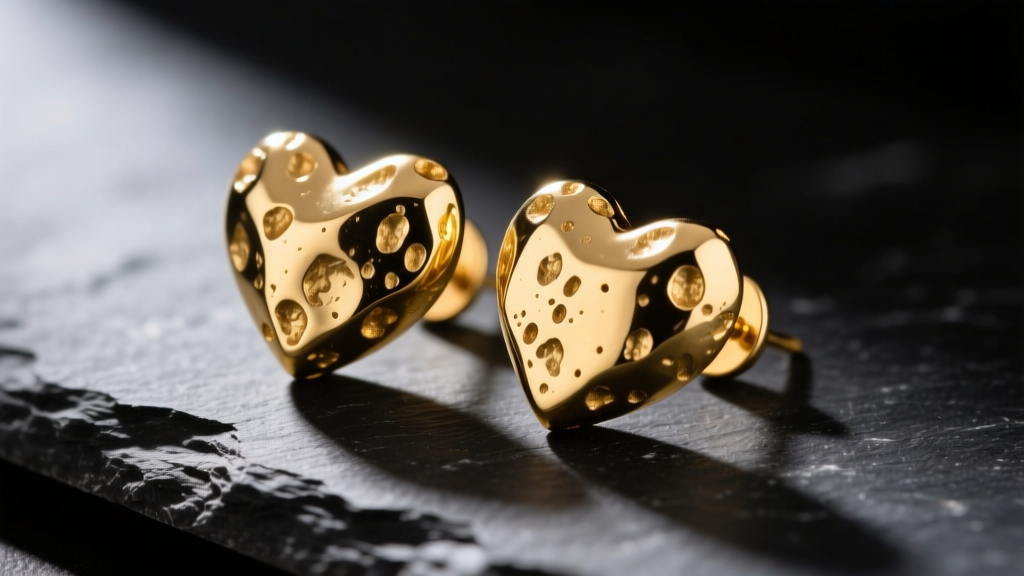
Gold heart nugget earrings offer a striking contrast between romantic symbolism and raw, earthy aesthetics. However, the very texture that makes these earrings visually captivating also makes them notoriously difficult to maintain. Unlike high-polish finishes that easily shed oils and debris, the porous, irregular surface of a nugget finish acts as a magnet for sebum, cosmetic residues, and environmental pollutants. When you combine this high-surface-area texture with the intricate clefts and points of a heart shape, standard jewelry cleaning methods often fall short—or worse, cause irreversible damage.
This comprehensive guide provides a metallurgist-approved approach to cleaning, maintaining, and preserving your gold heart nugget earrings, ensuring they retain their brilliant, raw luster for decades.
The Unique Challenge of Nugget-Textured Gold
The "nugget" or "raw gold" texture is typically achieved through specialized casting techniques or electroforming, which intentionally create microscopic pits, ridges, and crevices to mimic natural gold nuggets found in riverbeds. From a maintenance perspective, this increases the surface area of the earring by a factor of three to five compared to a polished piece of the same dimensions.
These microscopic valleys easily trap dead skin cells, lotions, and hair products. Over time, this trapped organic matter oxidizes and hardens, creating a dull, grayish film that masks the gold's natural warmth. Furthermore, the anatomical features of the heart shape—specifically the top cleft and the bottom vertex—create macro-crevices where debris accumulates heavily, requiring targeted intervention beyond a simple soak.
Step-by-Step Cleaning Routine for Textured Gold
To safely lift debris from the deep pores of the nugget texture without scratching the metal, you must use a combination of chemical softening and gentle mechanical agitation.
What You Will Need
- Mild Surfactant: A few drops of phosphate-free dish soap (such as original Dawn).
- Distilled Water: Tap water contains dissolved minerals (calcium and magnesium) that will leave hard water spots deep inside the nugget pits, which are nearly impossible to buff out.
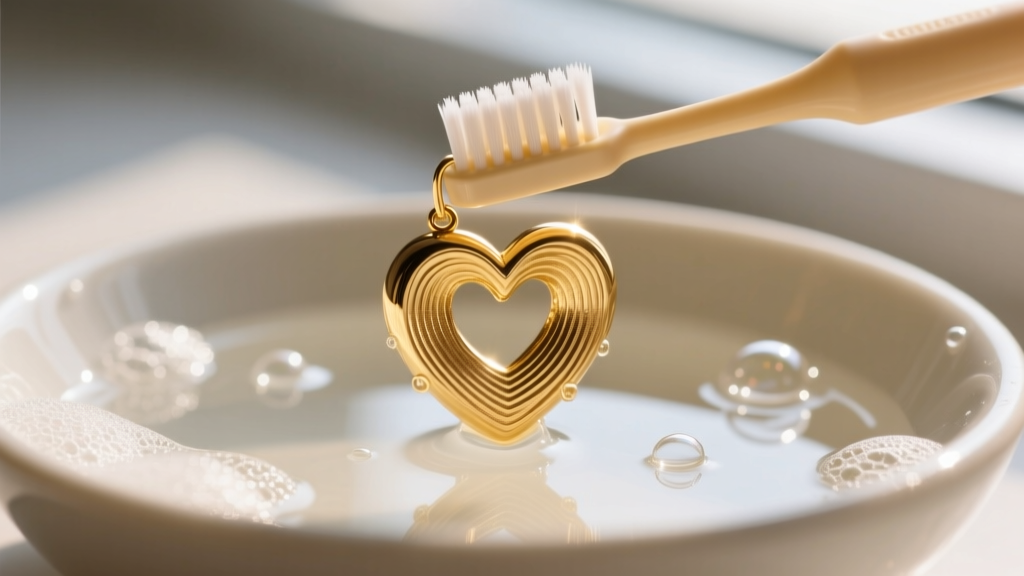
- Soft-Bristle Baby Toothbrush: The bristles must be ultra-soft to prevent micro-scratching on lower-karat gold alloys.
- Wooden Toothpicks: For precision cleaning in the heart's cleft.
- Compressed Air Duster: For lint-free drying.
The Soak and Agitate Method
- Prepare the Solution: Mix one cup of lukewarm distilled water with three drops of mild dish soap in a glass bowl. Avoid hot water, which can shock certain alloy mixes or damage secondary gemstone accents if your earrings feature them.
- The 15-Minute Soak: Submerge the gold heart nugget earrings completely. Allow them to soak for exactly 15 minutes. This gives the surfactant time to break the surface tension and penetrate the microscopic pits, softening hardened sebum.
- Gentle Agitation: Remove the earrings and gently brush the surface with the baby toothbrush. Brush in multiple directions—circular, vertical, and horizontal—to ensure the bristles reach into the uneven ridges of the nugget texture.
- The Distilled Rinse: Rinse thoroughly under a gentle stream of distilled water to wash away the suspended soils.
Chemicals to Avoid: A Karat-Specific Breakdown
Gold purity drastically alters how the metal reacts to household chemicals. According to the Gemological Institute of America (GIA), pure 24k gold is highly inert, but jewelry is alloyed with metals like copper, silver, and zinc for durability. These alloy metals are highly susceptible to chemical degradation.
| Gold Karat | Gold Purity | Primary Alloy Metals | Chemical Vulnerabilities |
|---|---|---|---|
| 10k Gold | 41.7% | Copper, Silver, Zinc | Highly prone to oxidation and tarnish in the nugget pits. Will turn black if exposed to sulfur or chlorine. |
| 14k Gold | 58.3% | Copper, Silver | Moderate vulnerability. Susceptible to Stress Corrosion Cracking (SCC) when exposed to bleach or pool chlorine. |
| 18k Gold | 75.0% | Copper, Silver, Palladium | Low chemical vulnerability, but physically softer. The nugget ridges are more easily flattened or scratched by abrasive cleaners. |
Expert Warning: Never wear your gold heart nugget earrings in a swimming pool or hot tub. Chlorine reacts with the copper and silver alloys in 10k and 14k gold, causing a phenomenon known as Stress Corrosion Cracking. This can cause the earring posts or the delicate bottom point of the heart to snap off entirely.
Deep Cleaning the Heart Cleft and Crevices
The top cleft of the heart shape is a notorious trap for lint and compacted skin cells. When the baby toothbrush cannot reach the deepest part of the crevice, you must use precision tools.
Never use metal needles, safety pins, or tweezers to pick debris out of gold. On the Mohs Hardness Scale, pure gold sits at a mere 2.5 to 3. Even 14k gold rarely exceeds a 3.5. Steel tools sit between 4 and 4.5. Using a steel pin to dig out lint from the heart's cleft will result in deep, permanent gouges that ruin the raw aesthetic of the nugget finish.
Instead, use a wooden toothpick or a plastic interdental pick. Wood and plastic are significantly softer than gold alloys. Gently scrape the cleft and the bottom vertex of the heart to dislodge compacted debris. If the debris is stubborn, re-soak the earring for an additional five minutes to soften it before attempting to lift it out.

Drying and Polishing: Preserving the Raw Finish
Drying textured gold requires a completely different approach than polished gold. If you attempt to dry nugget earrings with a standard microfiber cloth or cotton towel, the fabric will snag on the rough ridges. This not only leaves behind microscopic lint fibers that are incredibly difficult to remove, but the friction can also prematurely wear down the sharp peaks of the nugget texture over time.
The Compressed Air Technique
The safest and most effective way to dry gold heart nugget earrings is by using a can of compressed air (commonly used for cleaning electronics). Hold the can upright and use short bursts of air to blow the moisture out of the deep pits, the heart cleft, and the earring post mechanism. This ensures no water spots form and leaves the texture completely intact and lint-free.
If you do not have compressed air, use a hair dryer on the cool, low-speed setting. Never use heat, as rapid temperature changes can weaken the solder joints where the earring post meets the heart backing.
Ultrasonic Cleaners: A Risky Gamble
Many jewelers use ultrasonic cleaners, which rely on high-frequency sound waves to create microscopic bubbles in a cleaning solution—a process called cavitation. When these bubbles implode, they generate intense localized pressure that blasts dirt away.
While highly effective for smooth diamond rings, ultrasonic cleaners are strongly discouraged for cast nugget earrings. The rough texture of nugget gold is often the result of intentional casting porosity. The violent implosions of cavitation can exploit these microscopic internal voids, leading to surface pitting, structural fatigue, or in severe cases, the shattering of delicate points like the bottom tip of the heart. Stick to the manual soak-and-brush method to guarantee the structural integrity of your earrings.
Long-Term Storage and Maintenance
Proper storage is the final pillar of maintaining gold heart nugget earrings. Because the textured surface area is so vast, these earrings are more exposed to ambient humidity and airborne sulfur compounds, which cause the alloy metals (particularly in 10k and 14k gold) to tarnish.
According to the Federal Trade Commission's Jewelry Guides, proper care and storage are essential to maintaining the integrity of precious metal alloys. To prevent tarnish from settling into the deep crevices of the nugget finish:
- Use Anti-Tarnish Strips: Place a 3M anti-tarnish strip inside your jewelry box or ziplock bag. These strips absorb airborne sulfur and hydrogen sulfide before they can react with the copper in your gold alloy.
- Control Humidity: Store the earrings in an airtight container with a small silica gel desiccant packet to keep the ambient moisture near zero.
- Isolate from Other Jewelry: The rough texture of nugget gold can easily scratch softer gemstones (like pearls or opals) if stored together, while harder gemstones (like diamonds or sapphires) can scratch the gold. Always store them in a dedicated, soft-lined compartment.
By understanding the unique metallurgical properties of your gold alloys and the physical geometry of the nugget texture, you can keep your heart earrings looking as raw, brilliant, and captivating as the day they were cast.


