How to Choose the Perfect Small Hoop Diamond Earrings
Discover how to choose the perfect small hoop diamond earrings. Learn about carat weights, gold purity, clasp types, and pricing in this beginner guide.


Why Small Hoop Diamond Earrings Are the Ultimate Everyday Staple
When building a foundational fine jewelry collection, small hoop diamond earrings occupy a crucial middle ground. They offer more movement and light reflection than a traditional stud, yet remain understated enough for professional environments, gym sessions, and casual weekends. For beginners navigating the complex world of diamond jewelry, these pieces can seem deceptively simple. However, the difference between a brilliant, lifelong staple and a dull, fragile disappointment lies in understanding the nuances of diameter, gauge, diamond melee quality, and clasp engineering.
This comprehensive guide breaks down the exact specifications you need to look for when shopping for small diamond hoops, ensuring your investment sparkles brilliantly and withstands daily wear.
Decoding Diameter and Gauge: Finding Your Perfect Fit
The term "small hoop" is subjective, but in the jewelry industry, it generally refers to earrings with an outer diameter between 10mm and 20mm. Understanding these millimeter measurements is critical for achieving your desired aesthetic.
The 10mm to 12mm Huggie
Earrings in the 10mm to 12mm range are often classified as "huggies" because they are designed to hug the earlobe tightly. This is the most secure option for active lifestyles, as the minimal gap between the ear and the metal prevents snagging on hair or clothing. However, if you have thicker earlobes, a 10mm inner diameter might feel restrictive or pinch the skin.
The 15mm Classic Small Hoop
A 15mm diameter is the universal standard for a classic small hoop. It grazes the bottom of the earlobe without extending significantly past it. This size provides enough surface area for a meaningful display of diamonds while maintaining a lightweight, comfortable profile.
Wire Gauge and Piercing Compatibility
Beginners often overlook wire gauge—the thickness of the metal that actually passes through the ear piercing. Standard earlobe piercings are typically done at 20-gauge (0.81mm) or 18-gauge (1.02mm). If you purchase a hoop with a 22-gauge (0.64mm) wire, it may feel flimsy and is highly susceptible to bending. Conversely, if your piercings have naturally tightened or were done with a thicker needle, forcing a standard 18-gauge wire can cause micro-tears in the tissue. Always verify the post thickness, especially when buying from online retailers where you cannot physically test the fit.
Clasp Mechanics: Security vs. Aesthetics
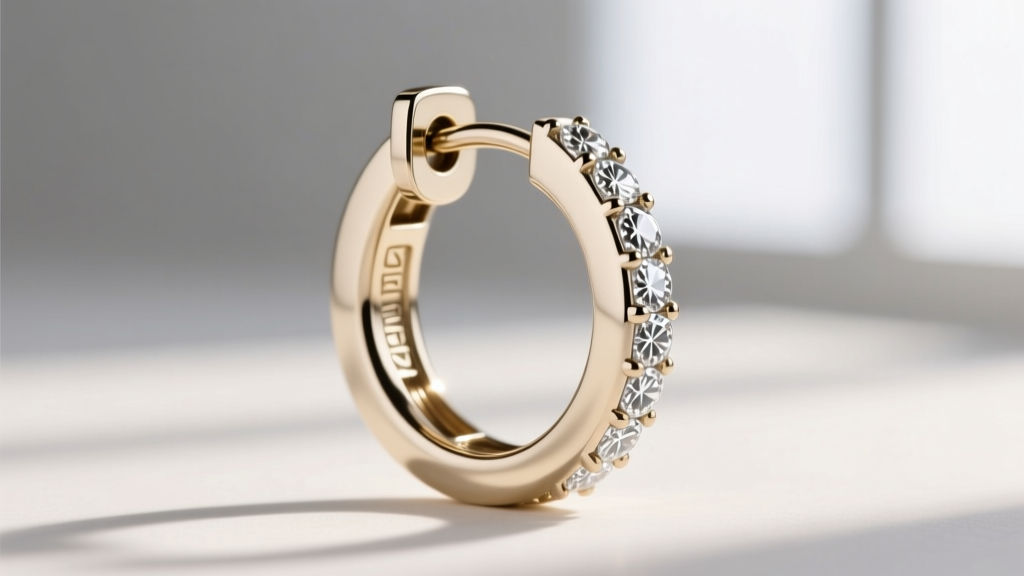
The clasp is the unsung hero of any hoop earring. A poor clasp mechanism is the leading cause of lost diamond jewelry. Here are the three primary closures you will encounter:
- Hinged Snap Closure: The hoop features a hinge on one side and a snap latch on the other. It produces a satisfying "click" when closed. While secure, the hinge mechanism can accumulate lotion and skin cells, requiring regular cleaning with a soft brush to prevent stiffness.
- Click-Top (or Post) Closure: A straight post passes through the ear and clicks into a notched groove on the back of the hoop. This is widely considered the most secure option for small hoops, as the post acts as a rigid anchor. It also allows the front of the earring to sit flush against the lobe without a visible gap.
- Endless (Continuous) Hoops: These feature a thin, curved wire that loops completely through the ear and tucks into the hollow tube of the opposite end. While they offer a beautiful, seamless aesthetic, they are notorious for losing their tension over time. Repeated opening and closing can weaken the wire, leading to the earring slipping out unexpectedly.
Diamond Quality: Understanding Melee and TCW
Small hoop diamond earrings rarely feature a single, large center stone. Instead, they utilize "melee" diamonds—tiny stones usually weighing between 0.005 and 0.10 carats each. The total weight of all diamonds in both earrings is referred to as the Total Carat Weight (TCW).
A common beginner trap is focusing solely on a high TCW while ignoring the cut quality of the melee. Many mass-market jewelers use "single-cut" diamonds to save costs. Single-cut diamonds only have 17 or 18 facets, resulting in a glassy, flat appearance. You must seek out "full-cut" melee diamonds, which possess the standard 57 or 58 facets of a larger brilliant-cut diamond, ensuring maximum light return and sparkle.
| Feature | Ideal Specification for Small Hoops | What Beginners Should Avoid |
|---|---|---|
| Cut Quality | Full-Cut (57-58 facets) | Single-Cut (17-18 facets / "Diamond Chips") |
| Color Grade | G-H (Near Colorless) | K-M (Faint Yellow, noticeable against white metals) |
| Clarity Grade | SI1-SI2 (Slightly Included) | I1-I3 (Included, structural weaknesses in tiny stones) |
| Setting Style | Micro-Pave or Shared Prong | Glued / Invisible Settings (high risk of stone loss) |
For authoritative guidance on how diamond proportions affect brilliance, even in micro-sizes, consult the GIA's 4Cs of Diamond Quality educational resources.
Metal Selection: Durability Meets Design
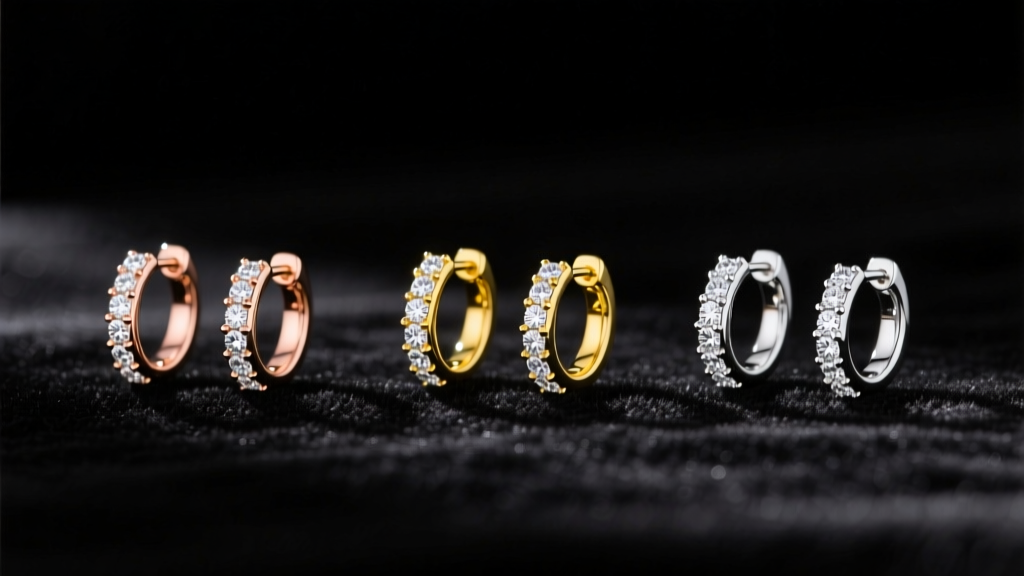
The metal you choose impacts both the longevity of the setting and the overall maintenance required.
14K Gold: The Everyday Workhorse
Composed of 58.5% pure gold mixed with strengthening alloys like copper and zinc, 14K gold is the most practical choice for daily-wear hoops. It is hard enough to protect micro-pave prongs from wearing down and bending, which keeps your diamonds securely in place.
18K Gold: Rich Color, Softer Grip
With 75% pure gold content, 18K gold offers a noticeably richer, warmer hue (especially in yellow and rose gold variations). However, it is a softer metal. If you choose an 18K micro-pave setting, you must be more vigilant about having a jeweler check the prongs annually, as the softer metal can wear away faster than 14K.
Platinum: The Premium Anchor
Platinum is dense, naturally white, and highly durable. Unlike white gold, which requires periodic rhodium plating to maintain its bright white color, platinum will never fade. Its strength makes it the ultimate metal for securing tiny pave diamonds, though it commands a significant price premium.
Pricing Expectations: What Should You Actually Pay?
Pricing for small hoop diamond earrings varies wildly based on the origin of the diamonds (natural vs. lab-grown) and the metal weight. Here is a realistic framework for budgeting in the current market:
- $300 - $600 (Entry-Level / Lab-Grown): In this bracket, you will find excellent quality lab-grown diamond hoops set in 14K gold. You can expect a TCW of 0.50ct to 1.00ct with near-colorless (G-H) and eye-clean (VS-SI) clarity grades.
- $800 - $1,500 (Mid-Range / Natural Earth-Mined): This is the sweet spot for natural diamonds. Expect 14K or 18K gold settings with a TCW of 0.30ct to 0.75ct. The diamonds will typically be SI1-SI2 clarity, which is perfectly acceptable for melee stones where inclusions are invisible to the naked eye.
- $2,000+ (Luxury / Designer): At this tier, you are paying for premium brand craftsmanship, platinum settings, and exceptionally high TCW (1.50ct+). You may also find specialized cuts, such as baguette accents mixed with round brilliants.
Crucial Care and Maintenance Protocols
Beginners often mistakenly believe that diamonds are indestructible and that jewelry can be cleaned using any method. While diamonds themselves are a 10 on the Mohs hardness scale, the metal prongs holding them are not.
Expert Warning: Avoid using ultrasonic jewelry cleaners on micro-pave small hoop diamond earrings. The high-frequency vibrations can easily shake loose the microscopic prongs holding the melee diamonds, causing stones to fall out and be lost forever.
Instead, adopt a gentle, manual cleaning routine. The American Gem Society recommends mixing a few drops of mild dish soap (like Dawn) into a bowl of warm water. Let your hoops soak for 15 minutes to break down body oils and lotions. Then, use a baby-soft toothbrush to gently sweep the underside of the diamonds and the clasp hinges. Rinse under lukewarm water and pat dry with a lint-free microfiber cloth.
Finally, always store your small hoops in a dedicated compartment of a jewelry box or a soft pouch. Tossing them loosely into a drawer with heavier bangles or chains can result in the hoop wire bending or the diamonds scratching adjacent gold pieces.
Final Thoughts for the First-Time Buyer
Investing in small hoop diamond earrings is an exercise in balancing aesthetics with structural integrity. By prioritizing full-cut melee diamonds, selecting a secure click-top or hinged clasp, and opting for a durable 14K gold or platinum setting, you ensure that your earrings will remain a brilliant, reliable staple in your wardrobe for decades. Take the time to verify the exact millimeter diameter and gauge thickness before purchasing, and you will avoid the most common pitfalls that plague first-time fine jewelry buyers.