Moon Stud Earrings: 2026 Celestial Jewelry Trend Analysis
Discover the 2026 trend forecast for moon stud earrings. Explore material grades, gauge sizes, styling frameworks, and celestial jewelry market shifts.

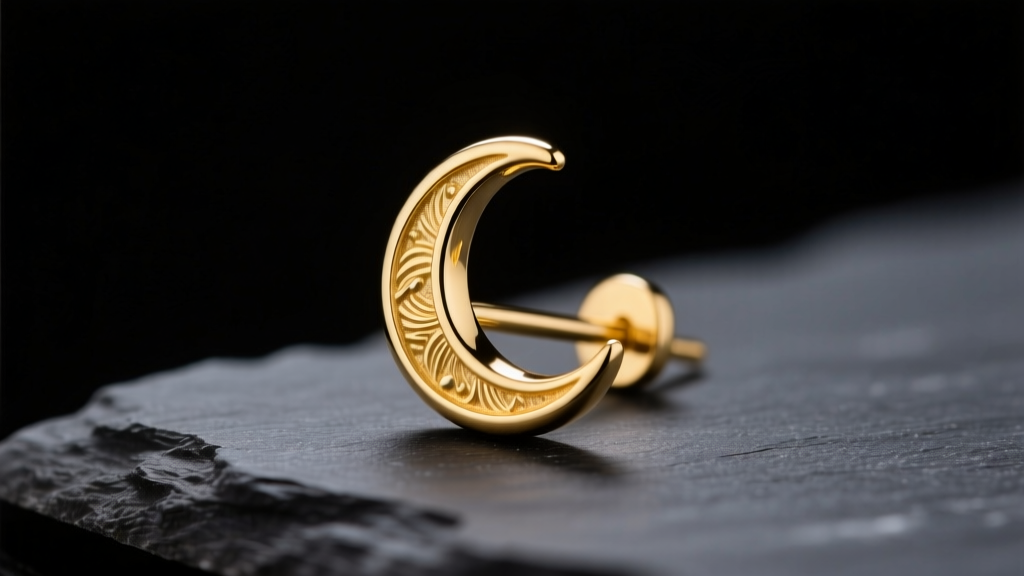
The Celestial Shift: Why Moon Stud Earrings Are Dominating 2026
The jewelry market has seen a definitive shift toward personalization and symbolic motifs, and as we navigate 2026, moon stud earrings have emerged as the undisputed leaders of the celestial trend. Moving far beyond the basic star-and-moon charms of the early 2020s, today's iterations are exercises in micro-sculpture and metallurgical precision. Consumers are no longer just buying jewelry; they are investing in talismans that reflect their personal astrology, nocturnal aesthetics, or simply a desire for subtle, nature-inspired luxury.
According to recent retail analytics, searches for specific lunar phases—such as "waxing crescent stud" or "eclipse moon earring"—have outpaced generic celestial queries by over 40% this year. This hyper-specificity demands a higher level of craftsmanship from jewelers. The modern moon stud is defined by its texture: hammered craters, pavé-set diamond terminators, and inlaid gemstones that mimic the lunar surface. But with this surge in popularity comes a flood of low-quality, mass-produced alternatives. This guide breaks down the exact specifications, materials, and styling frameworks you need to navigate the market like an industry insider.
Material & Grade Breakdown: What to Buy (and Avoid)
When evaluating moon stud earrings, the base metal dictates not only the longevity of the piece but also the biological compatibility with your piercings. The intricate crevices of a textured "moonscape" design can trap moisture and bacteria, making metal purity non-negotiable.
Implant-Grade Titanium (ASTM F136)
For fresh piercings, hyper-sensitive ears, or cartilage placements like the helix and tragus, ASTM F136 implant-grade titanium is the gold standard. According to the Association of Professional Piercers (APP), this specific alloy is entirely nickel-free and biocompatible. Titanium moon studs are typically CNC-machined or cast using advanced techniques to ensure the post and the moon face are a single, seamless unit, eliminating the risk of solder-joint failure.
14k vs. 18k Solid Gold
While 18k gold (75% pure gold) offers a richer, deeper yellow hue, it is a softer metal. For moon stud earrings featuring tiny prongs holding a 1mm diamond or a delicate moonstone, 14k gold (58.5% pure gold) is vastly superior. The higher concentration of alloy metals (like copper and zinc) increases the tensile strength of the prongs, preventing them from bending and losing the gemstone during daily wear or sleep.
Sterling Silver (925) and the Tarnish Trap
Sterling silver is a viable option for budget-conscious buyers, but it requires rigorous maintenance. The copper content in 925 silver reacts with sulfur in the air and human sweat, leading to oxidation. In a textured moon stud, this tarnish accumulates in the microscopic "craters" of the design, turning the earring black and requiring constant polishing with a treated jeweler's cloth.
The Gauge & Post Thickness Matrix
Selecting the correct post thickness is critical for avoiding the "cheese-cutter effect" (where a thin wire slowly migrates through the ear tissue) and ensuring a comfortable fit in different ear zones.
| Gauge Size | Thickness (mm) | Ideal Placement | Post Style Recommendation |
|---|---|---|---|
| 20G | 0.81mm | Standard Earlobe | Friction back (butterfly) or secure screw-back |
| 18G | 1.02mm | Helix, Forward Helix, Tragus | Flat-back labret (prevents sleeping discomfort) |
| 16G | 1.29mm | Conch, Industrial, Thick Lobes | Internally threaded flat-back labret |
Design Variations: From Minimalist Crescents to Pavé Moonscapes
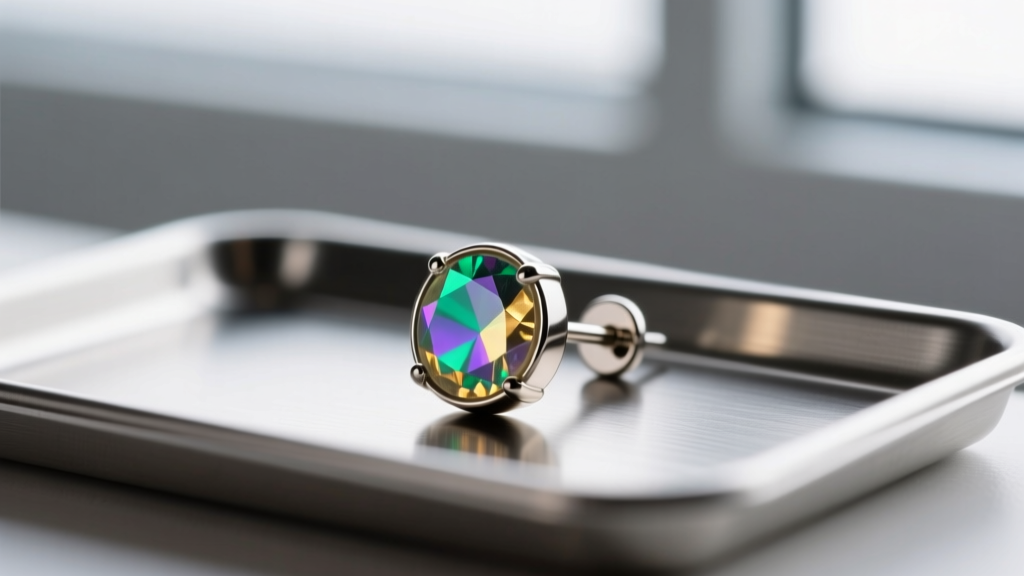
The aesthetic execution of moon stud earrings in 2026 is highly diversified, catering to distinct face shapes and personal style profiles. Understanding these variations allows for a more intentional purchase.
- The Minimalist Crescent: A sleek, unadorned outline of a crescent moon. This elongated, vertical design is highly recommended for individuals with round or square face shapes, as the sharp points and verticality help visually lengthen the jawline and cheekbones.
- The Pavé Full Moon: A circular disc entirely encrusted with micro-pavé diamonds or cubic zirconia. This design adds visual width and reflects maximum light. It is an excellent balancing choice for angular, heart-shaped, or long face structures.
- The Gemstone Inlay (Moonstone & Opal): According to the Gemological Institute of America (GIA), rainbow moonstone is actually a variety of labradorite that exhibits adularescence—a billowy, floating light effect. A bezel-set moonstone moon stud offers a mystical, organic vibe, but buyers must note its Mohs hardness of 6-6.5, making it susceptible to scratching if knocked against hard surfaces.
- The Asymmetrical Eclipse: A highly trending 2026 motif where a solid gold disc partially overlaps a textured or diamond-set crescent, mimicking a solar eclipse. This avant-garde design appeals to the mixed-metal, editorial jewelry consumer.
Pricing Tiers & Market Positioning
Navigating the pricing landscape of celestial jewelry requires an understanding of what you are actually paying for. The market is strictly segmented into three tiers:
Tier 1: Fast Fashion & Plated ($15 - $35)
These pieces feature a brass or zinc alloy core plated with a micro-layer of gold or silver. Expert Verdict: Avoid. The plating will inevitably wear off inside the intricate textures of the moon design, exposing the base metal and frequently causing contact dermatitis or green skin discoloration.
Tier 2: Demi-Fine & Vermeil ($45 - $120)
Vermeil requires a thick layer of gold (at least 2.5 microns) over a sterling silver base. Brands in this space offer excellent design-forward pieces for occasional wear. However, they are not suitable for 24/7 wear, especially in cartilage piercings where moisture trapping can degrade the silver core over time.
Tier 3: Solid Gold & Fine Jewelry ($180 - $600+)
Crafted from solid 14k or 18k gold, often featuring ethically sourced diamonds or high-grade moonstones. Brands like Catbird and Mejuri have capitalized on this tier, offering micro-celestial studs that hold their intrinsic metal value and can be worn in the shower, pool, and bed without degradation.
Expert Styling Framework: Curating the Celestial Ear Stack
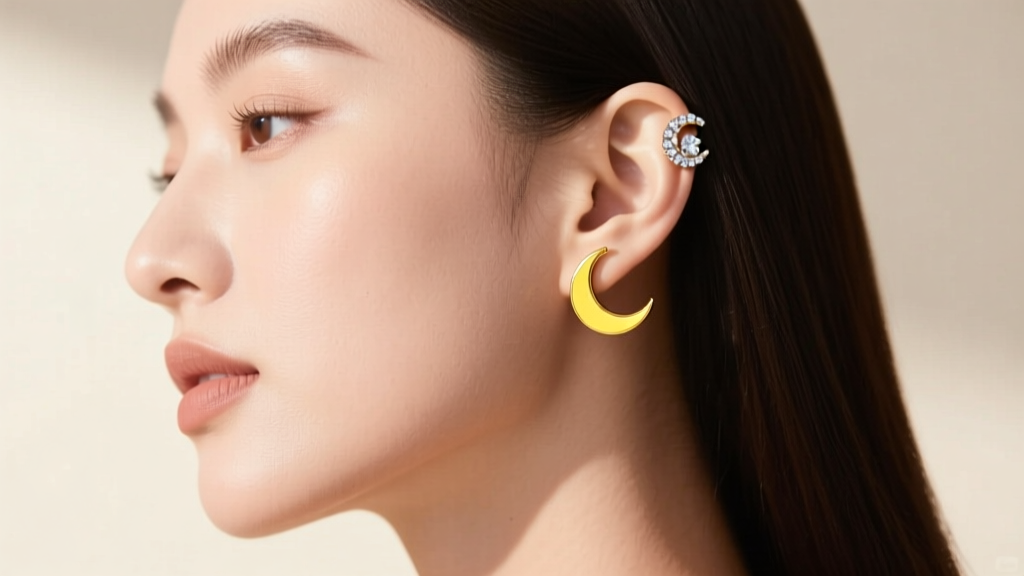
Moon stud earrings are the ultimate anchor pieces for a curated ear stack. The key to a professional-looking stack is varying the scale, texture, and motif. Here is a blueprint for a balanced, 2026-approved celestial stack:
The Rule of Proximity: Never place two identical moon studs next to each other. The eye needs negative space to appreciate the micro-details of the lunar texture. Alternate moons with simple gold balls, bezel-set diamonds, or subtle chain drops.
Lobe Placement: Anchor the stack with a medium-sized (6mm - 8mm) crescent moon or a textured full moon in the primary lobe piercing. The verticality of a crescent looks exceptionally chic when paired with a small huggie hoop in the secondary lobe piercing.
Helix / Flat Placement: Opt for a micro-moon stud (3mm - 4mm). Because the upper ear is further from the focal point of the face, a tiny, highly reflective pavé moon catches the light beautifully without overwhelming the ear's anatomy. Ensure this is set on a flat-back labret post so it does not snag on hair or headphones.
Tragus Placement: The tragus requires an ultra-low profile. A 2mm bezel-set moonstone or a simple, smooth gold crescent works best here. Avoid prong-set diamonds in the tragus, as the sharp prongs can easily scratch the side of your head or catch on earbuds.
Maintenance & Tarnish Prevention
Proper care extends the life of your moon studs, particularly those featuring gemstones or intricate metalwork. A common failure mode in celestial jewelry is the degradation of the gemstone setting due to improper cleaning.
Ultrasonic Cleaners: While ultrasonic cleaners are fantastic for removing sebum and dead skin from plain gold or titanium moon studs, they are destructive to moonstones, opals, and turquoise. The high-frequency vibrations and heat can cause internal fracturing in these relatively soft, water-bearing gemstones.
The Safe Cleaning Protocol:
1. Create a solution of warm water and a few drops of mild, phosphate-free dish soap.
2. Soak the earrings for 3-5 minutes to loosen debris trapped in the lunar craters.
3. Gently agitate the crevices using an ultra-soft baby toothbrush.
4. Rinse thoroughly under distilled water (to avoid hard water spots) and dry completely with a lint-free microfiber cloth before storing or re-inserting.
By understanding the metallurgical nuances, gauge requirements, and styling frameworks of moon stud earrings, you can invest in pieces that are not only trending in 2026 but are built to last a lifetime. The celestial trend is no longer just a passing fad; it has evolved into a permanent staple of fine jewelry curation.


