Star Earrings Dangle Styles: A Beginner's Guide to Celestial Drops
Discover how to choose and style star earrings dangle designs. Learn about gauges, materials, and face shapes in this beginner-friendly guide.

The Allure and Physics of Celestial Drops
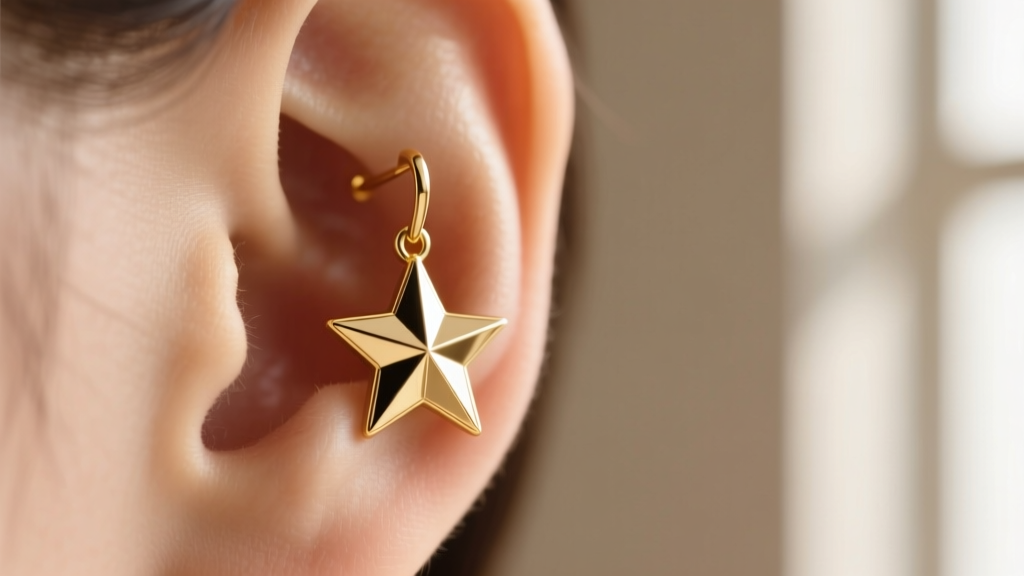
When transitioning from basic studs to movement-based jewelry, the star earrings dangle style is often the first choice for beginners. The celestial motif offers a timeless aesthetic, but the dangle mechanics introduce a new set of considerations regarding weight, friction, and earlobe health. Unlike a static stud, a dangle earring operates on a pendulum effect. Every time you turn your head, the kinetic energy transfers through the connector ring and down to the star charm. If the materials are too heavy or the wire gauge is too thin, this repetitive micro-movement can lead to earlobe fatigue, stretching, or even tearing over time.
This beginner-friendly explainer will decode the anatomy, metallurgy, and styling geometry of dangle star earrings, ensuring your first foray into celestial drops is both stylish and structurally sound for your piercings.
The Anatomy of a Dangle Star Earring
To understand how a dangle earring behaves, you must break it down into its three primary structural components. A high-quality star earrings dangle design is only as strong as its weakest connection point.
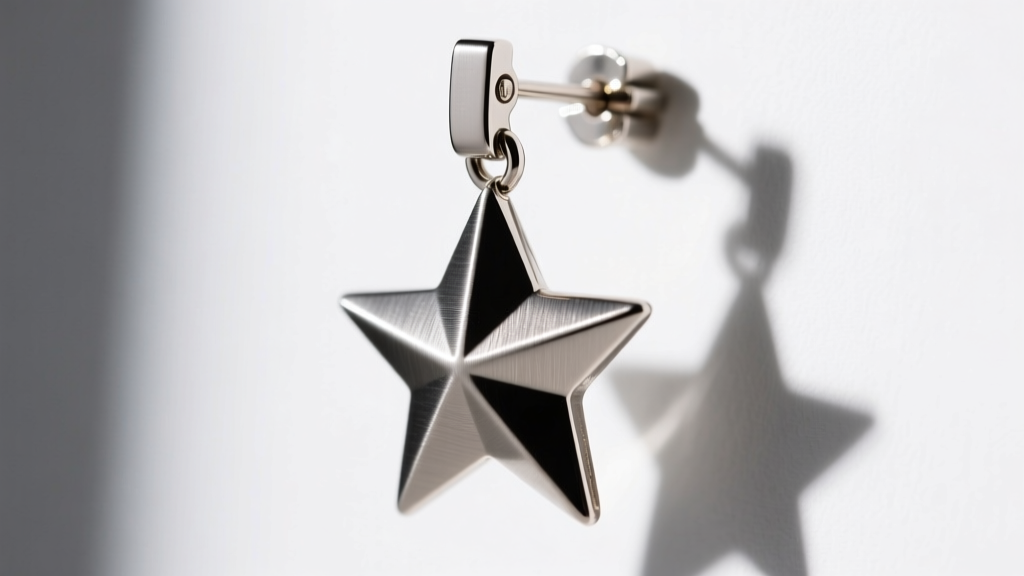
- The Anchor (Post or Hook): This is the wire that passes through your earlobe. For dangles, a leverback hook or a secure locking post is vastly superior to a standard French wire (fishhook), which can easily slip out when the heavy star charm pulls the earring forward.
- The Connector (Jump Ring): This tiny ring links the anchor to the star drop. Beginners should look for split jump rings (which function like a miniature keychain) rather than open soldered rings, as the pendulum motion can slowly pry open a poorly soldered seam.
- The Drop (Star Charm): The focal point. The star should be cast or stamped with a bail (a small loop at the top) that allows it to hang perfectly parallel to the jawline, rather than flipping backward against the neck.
Choosing the Right Metal for Sensitive Earlobes
Because dangle earrings create constant friction against the piercing fistula (the healed skin tunnel of your earlobe), material purity is non-negotiable. The constant swinging motion can cause micro-abrasions, making the ear highly susceptible to contact dermatitis if reactive metals are present.
Implant-Grade Titanium (ASTM F-136)
If you have sensitive ears or are newly piercing your lobes for the purpose of wearing dangles, implant-grade titanium is the gold standard. According to the Association of Professional Piercers (APP), ASTM F-136 titanium contains virtually zero nickel and is highly biocompatible. It is also significantly lighter than brass or copper alloys, reducing the overall gram-weight of the star charm.
Solid 14k vs. 18k Gold
For a luxurious star earrings dangle design, solid gold is ideal. However, 14k gold (58.5% pure gold) is structurally superior to 18k gold (75% pure gold) for the connector rings and hooks. 18k gold is softer and more prone to warping under the repetitive stress of a swinging dangle. Avoid gold-plated or gold-vermeil brass for dangles; once the friction wears through the plating at the jump ring, the exposed brass will oxidize and irritate the skin.
Argentium Silver
Standard 925 sterling silver tarnishes quickly when exposed to the oils and friction of the earlobe. Argentium silver, a modern alloy that replaces some of the copper with germanium, offers high tarnish resistance and is an excellent, budget-friendly alternative for celestial drops.
Weight and Gauge: Avoiding the 'Earlobe Drag'
The most common mistake beginners make is purchasing oversized star earrings dangle pieces without checking the gram weight. The human earlobe can comfortably support static weight, but dynamic weight (swinging) multiplies the downward force.
Expert Rule of Thumb: A dangle earring intended for daily wear should never exceed 4 grams per ear. Anything heavier should be reserved for short-term evening wear to prevent irreversible lobe stretching.
Below is a structural specification chart to guide your purchase:
| Component | Ideal Specification | Why It Matters |
|---|---|---|
| Wire Gauge (Post/Hook) | 18G (1.0mm) or 20G (0.81mm) | Thicker wire prevents the 'cheese-cutter effect' where thin wire slices through the earlobe under the weight of the star. |
| Jump Ring Diameter | 3mm to 4mm | Allows the star charm to swing freely without pinching or creating excessive friction against the hook. |
| Total Earring Weight | 1.5g to 3.5g max | Prevents earlobe fatigue and keeps the piercing hole from migrating downward over time. |
| Star Charm Thickness | 1.2mm to 2.0mm | Provides enough rigidity so the points of the star do not bend when caught on hair or clothing. |
Matching Celestial Drops to Your Face Shape
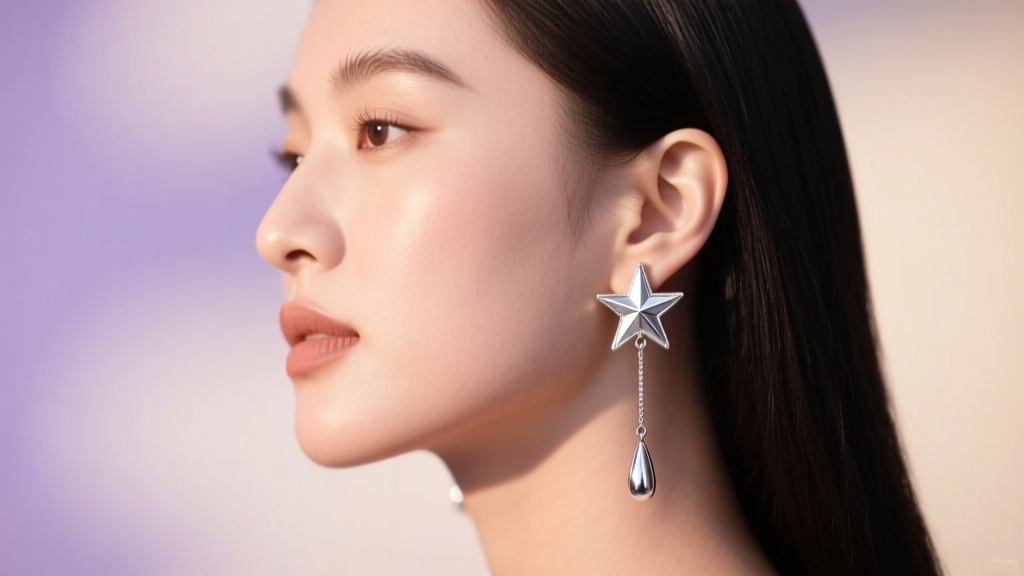
Styling a star earrings dangle piece is an exercise in visual geometry. The swinging motion naturally draws the eye downward, elongating the neck and framing the jawline. Here is how to match the silhouette of your dangle to your specific facial structure.
Round Faces
If your face is circular with softer angles, avoid wide, chunky star clusters that add horizontal volume. Instead, opt for elongated, vertical dangles. A single, long-bar drop ending in a small, delicate 5-point star will create an optical illusion that lengthens the face and sharpens the jawline.
Square and Angular Faces
Strong, sharp jawlines benefit from softening elements. Look for star earrings dangle designs that incorporate curved elements—such as a crescent moon cradling a star, or stars with slightly rounded, organic points rather than razor-sharp geometric edges. Medium-length drops that end right at the jaw hinge will beautifully balance your features.
Heart-Shaped Faces
With a wider forehead and a narrow chin, the goal is to add visual weight to the lower half of the face. Teardrop-shaped dangles that feature a cluster of stars at the bottom, or wide, horizontal starburst designs that swing gently, will perfectly complement your bone structure.
Maintenance and Tangle Prevention
Dangle earrings are notorious for tangling with hair, sweaters, and each other in the jewelry box. Proper maintenance ensures the jump rings stay secure and the metal retains its celestial shine.
- The Hair-Snag Test: Before wearing your star dangles out, run a silk scarf lightly over them. If the star points or the jump ring catch the silk, they will catch your hair. Have a jeweler file down any microscopic burrs left over from the casting process.
- Ultrasonic Cleaning: Because dangles have crevices where the star bail meets the jump ring, lotions and dead skin cells accumulate quickly. Use an ultrasonic jewelry cleaner with a mild, ammonia-free solution for three minutes weekly to dislodge debris from the hinges.
- Thread-Catching Storage: Never throw dangle earrings loosely into a drawer. The hooks will inevitably tangle with the star charms of other pairs. Store them hanging on a dedicated earring tree, or thread the hook through a small piece of felt or a silicone earring back to keep the assembly locked and separated.
Your First Purchase Checklist
Before you finalize your order for your first pair of star earrings dangle jewelry, run through this quick expert checklist to guarantee comfort, longevity, and style:
- Is the metal implant-grade titanium, solid 14k gold, or Argentium silver?
- Does the total weight of one earring fall under the 4-gram safety threshold?
- Is the hook a secure leverback or locking mechanism rather than a simple fishhook?
- Is the jump ring fully soldered or a secure split-ring to prevent the star from detaching?
- Does the length and shape of the drop complement your specific face shape?
By prioritizing structural integrity and biocompatible materials over fast-fashion trends, your celestial dangles will remain a staple in your jewelry rotation for years to come. For further reading on safe jewelry standards and metal allergies, consult the educational resources provided by Jewelers of America and your local professional piercing studios.


