Technical Guide to Ear Jewelry Types: Gauges, Anatomy, and Metals
Explore the technical mechanics of ear jewelry types. Learn about gauge tolerances, implant-grade metallurgy, and biomechanical stress on cartilage.

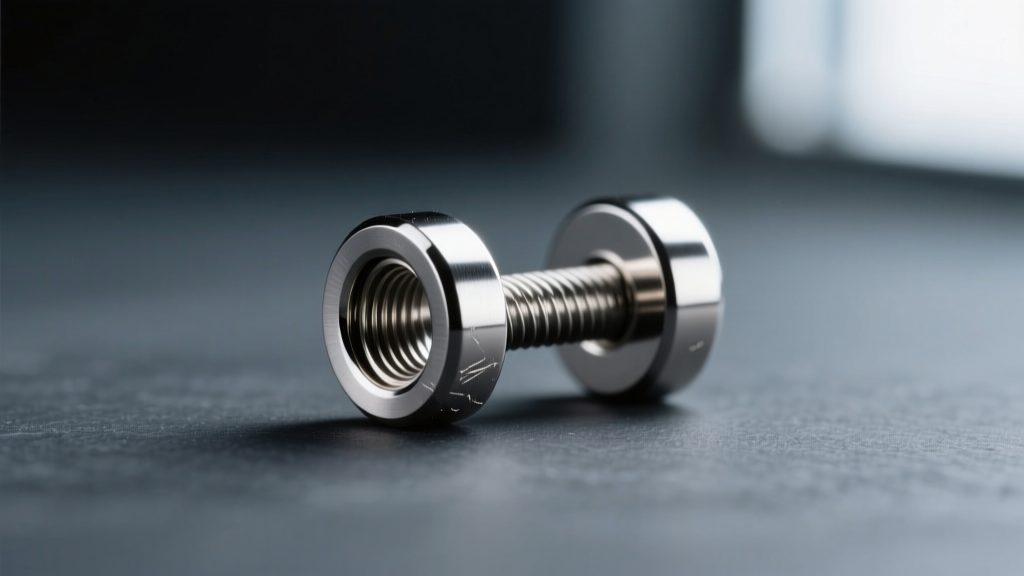
The Biomechanics of Ear Piercings: Why Jewelry Type Matters
When evaluating ear jewelry types from a clinical and structural perspective, it is crucial to understand that body jewelry is not merely decorative; it is a temporary or permanent implant interacting directly with living tissue. The human ear presents two vastly different anatomical environments: the earlobe, composed primarily of adipose and dense connective tissue, and the auricular cartilage, an avascular, rigid matrix that relies on perichondrium for its blood supply. Because cartilage lacks direct vascularization, it heals slower and is highly susceptible to mechanical stress, pressure necrosis, and hypertrophic scarring. Therefore, selecting the correct ear jewelry types requires a deep understanding of biomechanics, dimensional tolerances, and metallurgical biocompatibility.
A common failure mode in cartilage piercings is the use of jewelry that introduces rotational friction or uneven vector forces into the fistula (the healed tissue tube). For instance, while captive bead rings are a popular aesthetic choice, their curvature applies lateral pressure to a straight piercing channel, frequently resulting in angle migration and persistent irritation bumps. Understanding the engineering behind jewelry design is the first step toward long-term tissue health and structural stability.
Gauge Tolerances and Dimensional Standards
The term "gauge" refers to the thickness of the jewelry post or wire. In professional piercing, gauge sizes are standardized, though slight variations can exist between manufacturers. Utilizing the correct gauge for specific ear jewelry types is vital to prevent the "cheese-cutter effect," where a wire that is too thin slowly migrates through the tissue due to localized pressure.
| Piercing Location | Standard Gauge (AWG) | Millimeter Equivalent | Optimal Jewelry Type |
|---|---|---|---|
| Standard Lobe | 20G - 18G | 0.81mm - 1.02mm | Butterfly backs, huggies, lightweight studs |
| Helix / Forward Helix | 16G | 1.29mm | Flat back labrets, threadless push-pins |
| Tragus / Conch | 16G - 14G | 1.29mm - 1.62mm | Flat back labrets, large disc backs |
| Daith / Rook | 16G | 1.29mm | Curved barbells, captive bead rings (healed only) |
| Industrial | 14G | 1.62mm | Straight barbells (internally threaded) |
According to the Association of Professional Piercers (APP), 18-gauge and thinner wires should generally be avoided in fresh cartilage piercings due to the increased risk of tissue tearing and migration. Upgrading to a 16-gauge (1.29mm) or 14-gauge (1.62mm) post provides the necessary structural rigidity to support the weight of the jewelry and resist bending forces during sleep or accidental snags.
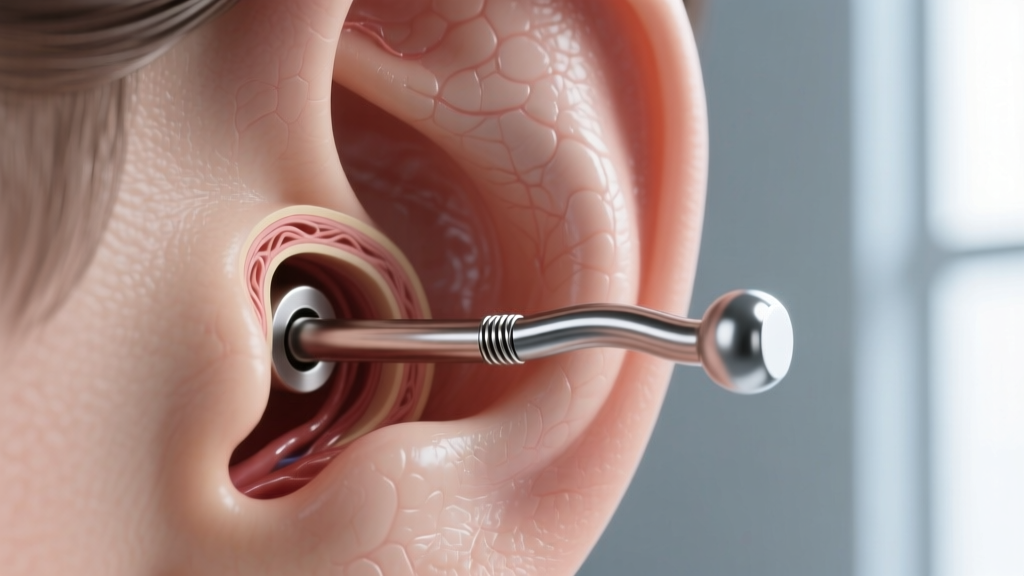
Metallurgical Breakdown: Implant-Grade vs. Commercial Alloys
The material composition of ear jewelry types dictates how the body's immune system responds to the implant. The oral and dermatological environments are highly corrosive, meaning metals must possess exceptional passivation layers to resist degradation and ion leaching.
ASTM F136 Titanium vs. "Surgical" Steel
The gold standard for initial piercings and sensitive ears is implant-grade titanium, specifically designated as ASTM F136 Ti-6Al-4V ELI (Extra Low Interstitial). The "ELI" designation means the alloy has reduced levels of oxygen, nitrogen, carbon, and iron, which significantly improves its fracture toughness and biocompatibility. Titanium is entirely nickel-free and forms a microscopic oxide layer that prevents corrosion.
Conversely, commercial "surgical steel" (often 316L) contains between 8% and 10% nickel. While the chromium oxide layer on 316L steel provides some protection, microscopic surface porosity and prolonged exposure to sweat and sebum can lead to nickel ion leaching. As documented in research regarding nickel contact dermatitis, even trace amounts of leached nickel can trigger severe localized allergic reactions, resulting in contact dermatitis, weeping fistulas, and delayed healing.
The Gold Karat and Alloy Matrix
For those preferring precious metals, 14k and 18k solid gold are acceptable, provided they are alloyed for biocompatibility. Pure 24k gold is too soft for body jewelry and will easily deform. However, white gold is frequently alloyed with nickel to achieve its silvery color. Experts mandate the use of palladium-alloyed white gold or rhodium-plated alternatives to eliminate nickel exposure. Yellow and rose golds, typically alloyed with silver, copper, and zinc, are generally well-tolerated, provided the jewelry is polished to a mirror finish to eliminate microscopic harboring sites for bacteria.
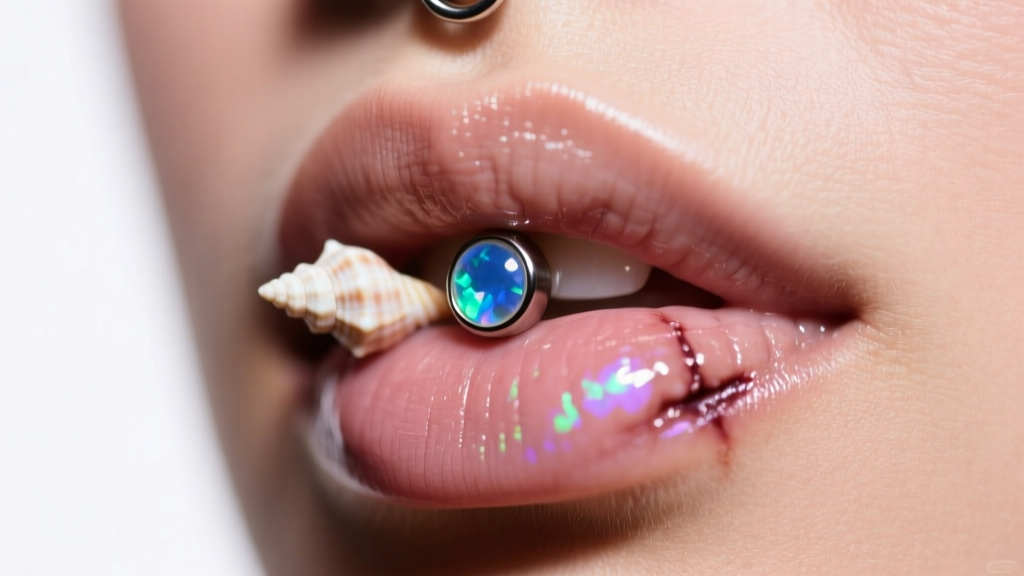
Threading Mechanisms and Tissue Trauma
The method by which decorative ends attach to jewelry posts is a critical, yet frequently overlooked, variable in tissue health. The threading mechanism determines the amount of micro-trauma inflicted on the fistula during insertion and removal.
- External Threading: The screw pattern is cut into the post itself. As the post passes through the piercing, the sharp, jagged threads act like a file, scraping and tearing the delicate epithelial lining of the fistula. This type should be entirely avoided.
- Internal Threading: The screw pattern is tapped into the decorative end, while the post remains completely smooth. This allows the post to glide through the tissue without causing mechanical abrasion, making it the standard for high-quality titanium and steel jewelry.
- Threadless (Push-Pin):strong> Utilizing a tension-fit mechanism, a slightly bent pin on the decorative end is pushed into a hollow post. This is particularly advantageous for 14k and 18k gold jewelry, as it eliminates the need to machine delicate threads into soft precious metals while providing a secure, seamless fit that will not unscrew during sleep.
Hoop Diameter and Angle Migration in Cartilage
While hoop earrings are a staple in ear styling, introducing them into a healing or newly healed cartilage piercing is a primary cause of angle migration. A flat-back labret sits flush against the tissue, distributing pressure evenly across the entry and exit points. A hoop, however, acts as a pendulum.
"The continuous rotational movement of a hoop draws environmental bacteria into the piercing channel, while the curvature forces the jewelry against the edges of the fistula, creating localized pressure points that lead to hypertrophic scarring."
If a hoop must be worn in a healed helix or conch, the diameter must be meticulously calculated. A hoop that is too small will compress the tissue, restricting lymphatic drainage and causing the ear to swell over the metal. A proper fit requires the inner diameter to clear the natural curvature of the ear's anatomy without resting heavily on the tissue below the piercing site. For most standard helix placements, an inner diameter of 8mm to 10mm is required to accommodate the natural swelling and anatomical fold of the auricle.
Final Technical Considerations
Mastering the selection of ear jewelry types requires moving beyond aesthetic preferences and embracing a bio-engineering mindset. By prioritizing ASTM F136 titanium or nickel-free precious metals, adhering to strict gauge tolerances (16G or 14G for cartilage), and utilizing internally threaded or threadless mechanisms, you ensure that the jewelry acts as a harmonious implant rather than a mechanical irritant. Whether you are curating a complex ear curation or selecting a simple lobe stud, the structural integrity of the jewelry is the foundation of both comfort and long-term tissue viability.


