2026 Gift Guide: Vintage Austrian Crystal Earrings
Discover the perfect vintage Austrian crystal earrings for every occasion in our 2026 gift guide. Expert tips on cuts, settings, and styling.

The Timeless Allure of Austrian Crystal
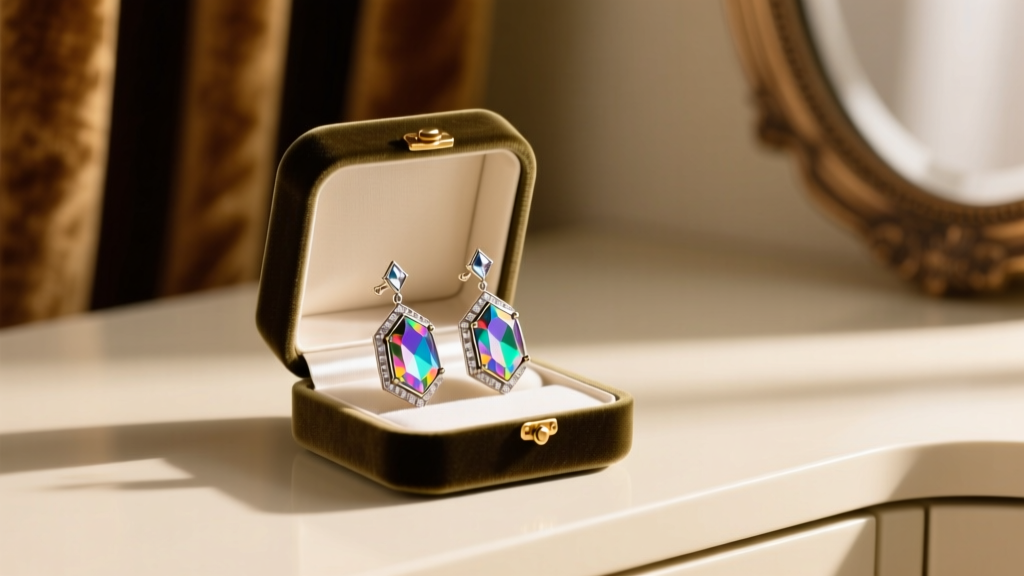
When it comes to gifting jewelry that commands attention without demanding a diamond's price tag, vintage Austrian crystal earrings remain an unparalleled choice. Unlike modern mass-produced glass, true vintage Austrian crystal—most notably pioneered by Daniel Swarovski in 1892—boasts a high refractive index (typically between 1.7 and 1.8) achieved through a precise lead oxide content. For the 2026 holiday season and milestone anniversaries, gifting a piece of this history offers a prismatic brilliance that modern synthetic alternatives simply cannot replicate.
According to Swarovski's official heritage archive, the brand's revolutionary hydroelectric cutting machines allowed for faceting precision that transformed glass into a luxury commodity. When you gift vintage Austrian crystal, you are gifting a piece of mid-century innovation, particularly if the piece features the legendary Aurora Borealis (AB) coating, a metallic vapor finish developed in 1956 in collaboration with Christian Dior to mimic the rainbow effect of light on snow.
Decoding Cuts and Coatings for the Recipient
Selecting the right earring requires matching the crystal's cut and coating to the recipient's face shape, personal style, and the specific occasion. Vintage pieces from the 1950s through the 1980s feature distinct faceting patterns that interact with light differently. Below is a decision framework to help you match the perfect vintage silhouette to your recipient.
| Crystal Cut / Style | Visual Effect & Light Play | Best Face Shape | Ideal Gifting Occasion |
|---|---|---|---|
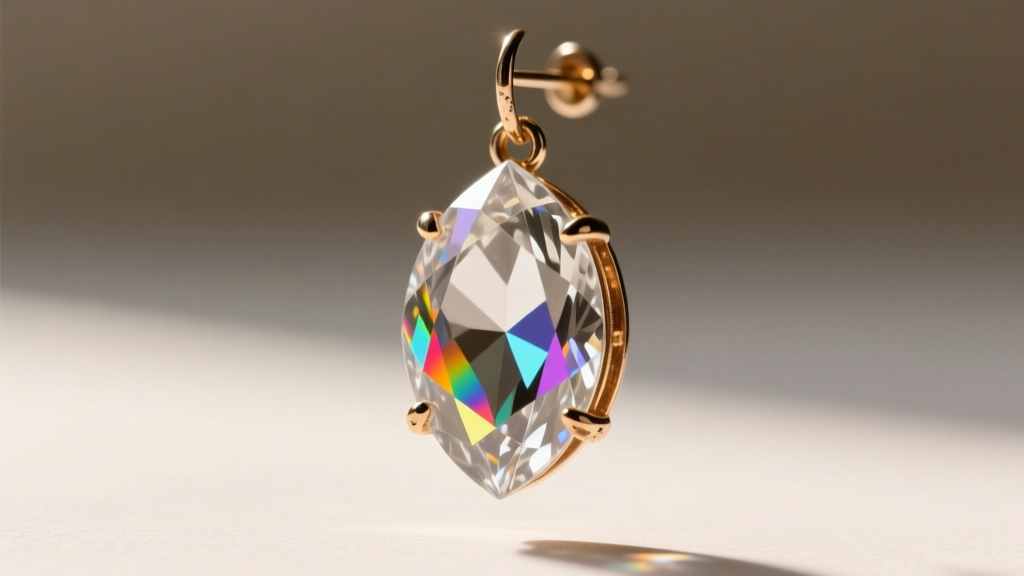
| Marquise (Navette) | Elongated, leaf-like facets that create sweeping, directional flashes of light. | Round or Square (adds vertical length) | Milestone Birthdays, Prom |
| Emerald / Baguette | Step-cut facets offering a sophisticated, hall-of-mirrors geometric gleam. | Oval or Heart (complements angles) | Corporate Milestones, Galas |
| Teardrop (Briolette) | 360-degree faceting; highly kinetic and captures light with every movement. | Diamond or Oblong (softens jawlines) | Weddings, Anniversaries |
| Round Brilliant (Chaton) | Maximum scintillation; classic starburst reflections mimicking diamonds. | Universal (flatters all shapes) | Holidays, Valentine's Day |
Occasion Matching: When to Gift What
The 30th Pearl & Crystal Anniversary
The traditional gift for a 30th anniversary is pearl, but the modern alternative is crystal. Gifting a pair of vintage 1960s Austrian crystal and faux-pearl cluster earrings bridges both traditions beautifully. Look for pieces that feature a central pearl surrounded by clear, uncoated round brilliant Austrian crystals set in rhodium-plated brass. The rhodium prevents tarnishing, ensuring the silver-toned metal remains bright against the skin.
Winter Galas and Holiday Soirées
For black-tie winter events, the Aurora Borealis (AB) finish is mandatory. The iridescent coating catches the warm, low light of evening venues, throwing off flashes of pink, gold, and blue. A pair of vintage AB chandelier earrings from the 1980s provides the necessary drama for a high-neck velvet gown or a structured blazer.
Hardware, Gauges, and the 'Lobe Drag' Dilemma
One of the most critical, yet frequently overlooked, aspects of gifting vintage earrings is understanding the physical weight of leaded glass and the hardware required to support it. Vintage Austrian crystals are significantly denser than modern acrylics or lead-free glass. A substantial 25mm vintage teardrop earring can easily weigh between 8 to 12 grams per ear.
Standard modern butterfly friction backs are entirely inadequate for this weight, leading to the dreaded 'lobe drag' where the earring pulls the piercing downward, causing discomfort and potential tissue stretching over time. As noted in Lang Antiques' educational guide on vintage earrings, understanding historical earring mechanics is vital for wearability.
- Post Gauges: Vintage pierced earrings typically feature thicker posts, usually 18-gauge (1.02mm) compared to the modern standard 20-gauge (0.81mm). Ensure the recipient's piercings can comfortably accommodate an 18G wire, or plan to have a jeweler carefully swap the post.
- Supportive Backings: If gifting heavy drops, ensure the piece features an omega-back or a leverback closure. These mechanisms distribute the weight across a wider surface area of the earlobe rather than relying solely on the piercing hole.
- Vintage Clip-Ons: If the recipient's ears are not pierced, the 1950s and 60s saw the golden age of the screw-back and paddle-back clip-on. Look for pieces with intact, flexible padding on the paddle to prevent cartilage pinching.
Inspecting Vintage Integrity Before You Buy
Because you are purchasing an item that is likely 40 to 70 years old, rigorous inspection of the setting integrity is non-negotiable before wrapping it as a gift. The primary failure mode in mid-century costume jewelry is the degradation of the adhesive used to secure the stones.
Prong Settings vs. Epoxy Glue
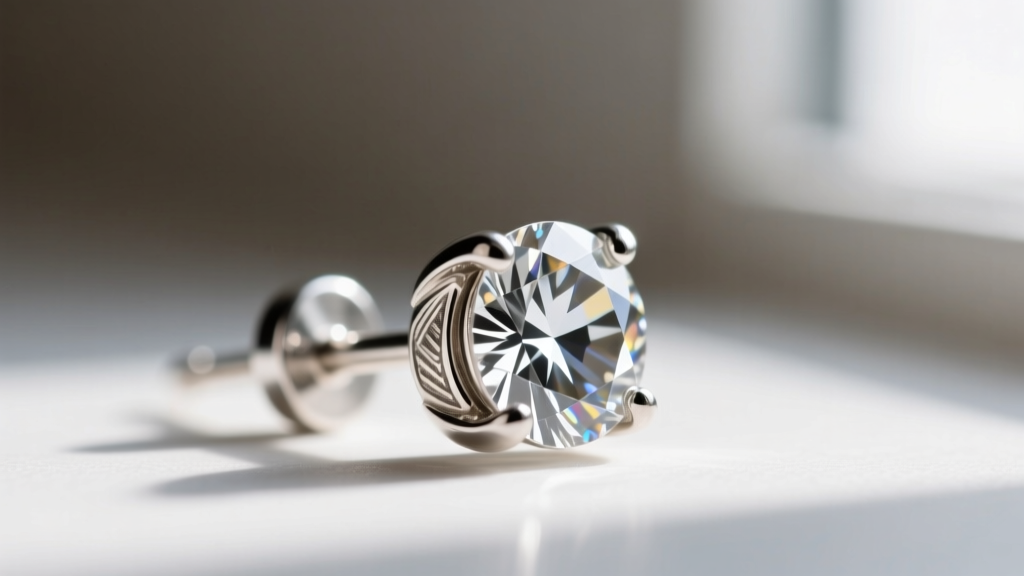
Always prioritize vintage earrings that utilize mechanical settings—such as four-prong, six-prong, or bezel settings—where the metal is physically folded over the girdle of the crystal. If you must purchase a piece where the crystal is glued into a cup setting, inspect the glue line under a jeweler's loupe or macro lens. Older epoxies tend to yellow, become brittle, and shrink over decades. If you see a cloudy, amber-colored residue around the base of the crystal, the stone is at high risk of falling out during wear.
Checking for Verdigris
Many vintage Austrian crystal earrings were crafted using a base metal alloy that was subsequently plated in gold or rhodium. If the plating has worn away on the earring post or the back of the setting, exposure to moisture and skin acids can cause copper in the alloy to oxidize, forming a toxic, crusty green substance known as verdigris. While surface verdigris can sometimes be cleaned with a mild acid solution, any pitting or structural compromise to the earring post means the piece should be avoided as a gift.
Sourcing Authentic Pieces in 2026
The secondary market for vintage jewelry is saturated with modern glass masquerading as mid-century Austrian crystal. To ensure you are gifting an authentic piece, focus your search on reputable platforms like 1stDibs, specialized Etsy vintage sellers, and established estate auction houses.
When searching, utilize highly specific terminology. Instead of searching for 'vintage crystal earrings,' use modifiers like 'Swarovski block letter SC,' 'early swan logo,' 'foil-backed aurora borealis,' or 'Trifari Austrian crystal.' True vintage pieces often feature a slightly softer, more complex faceting pattern than the laser-sharp, machine-cut crystals of the late 1990s and beyond. By prioritizing mechanical settings, appropriate weight distribution, and verified provenance, your gift of vintage Austrian crystal earrings will not only dazzle the recipient but will also stand the test of time as a cherished heirloom.


