Dangle Earring Engineering: Weight, Gauge & Clasp Tech
Discover the technical engineering behind the perfect dangle earring. Expert guide on wire gauges, weight distribution, and clasp mechanics for lobe health.

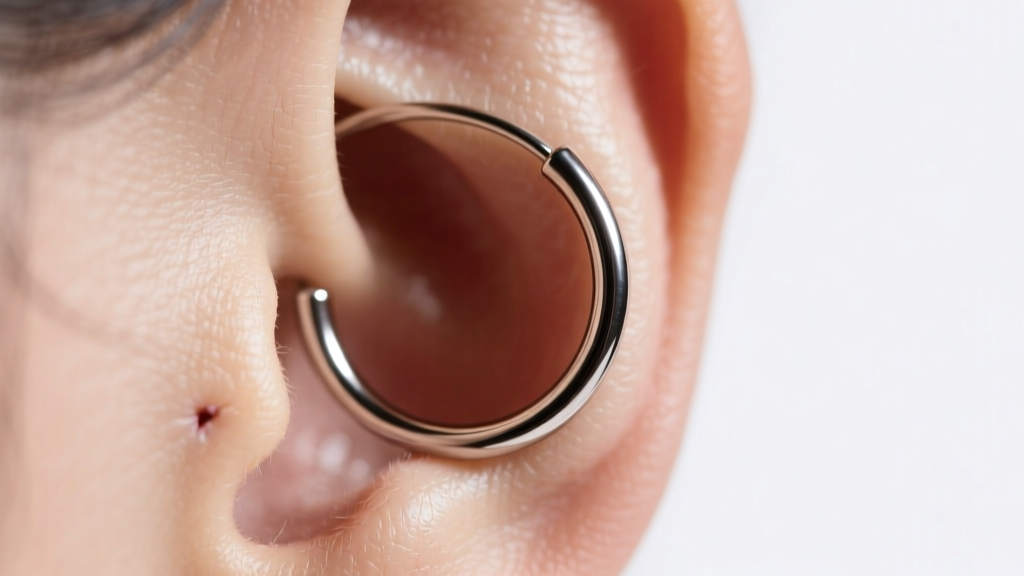
The Biomechanics of Lobe Stress and the Pendulum Effect
When evaluating a dangle earring, most consumers and even many jewelry designers focus exclusively on the visual drop length, the carat weight of the terminal gemstone, or the aesthetic silhouette. However, from a structural engineering and dermatological perspective, a dangle earring is essentially a kinetic pendulum. Unlike a stud or a huggie that sits flush against the anatomy, a dangle earring is subjected to continuous dynamic forces. Every step a wearer takes introduces acceleration and deceleration, transforming the static weight of the earring into dynamic shear stress against the earlobe fistula (the piercing channel).
The human earlobe is composed primarily of adipose (fat) tissue and a dense network of collagen, completely lacking the rigid structural support of cartilage. Because of this soft-tissue composition, the fistula is highly susceptible to micro-tears and the dreaded "cheese-cutter effect," where repetitive downward and swinging forces slowly elongate the piercing hole. According to dermatological studies on jewelry-induced trauma, prolonged wear of poorly balanced drop styles can lead to permanent lobe migration, requiring surgical repair. Therefore, understanding the engineering constraints of a dangle earring is not just about preserving the jewelry; it is about preserving the anatomy.
Torque, Drop Length, and the Moment Arm
Weight alone does not dictate the stress placed on an earlobe; the drop length is equally critical due to the physics of torque. In mechanical engineering, torque is calculated as the force multiplied by the distance from the pivot point (the moment arm). For a dangle earring, the pivot point is the base of the earlobe fistula.
A 10-gram dangle earring with a compact 1-inch drop exerts a relatively low rotational force on the tissue. However, a 10-gram chandelier or linear drop earring that extends 3 inches below the lobe acts as a lever. When the wearer turns their head or walks, the longer moment arm amplifies the kinetic energy, generating significantly higher torque at the base of the piercing. Master jewelers mitigate this by utilizing hollow-form construction or lightweight materials like titanium and aluminum for the lower segments of extended dangle earrings, ensuring the center of gravity remains as close to the earlobe as possible.
Wire Gauge and Tensile Strength in Dangle Earring Design
The wire that passes through the ear is the single most critical structural component of any dangle earring. The gauge (thickness) of this wire must be precisely matched to the static and dynamic weight of the piece. Using a wire that is too thin results in plastic deformation (bending), while a wire that is too thick causes friction and discomfort within the fistula.
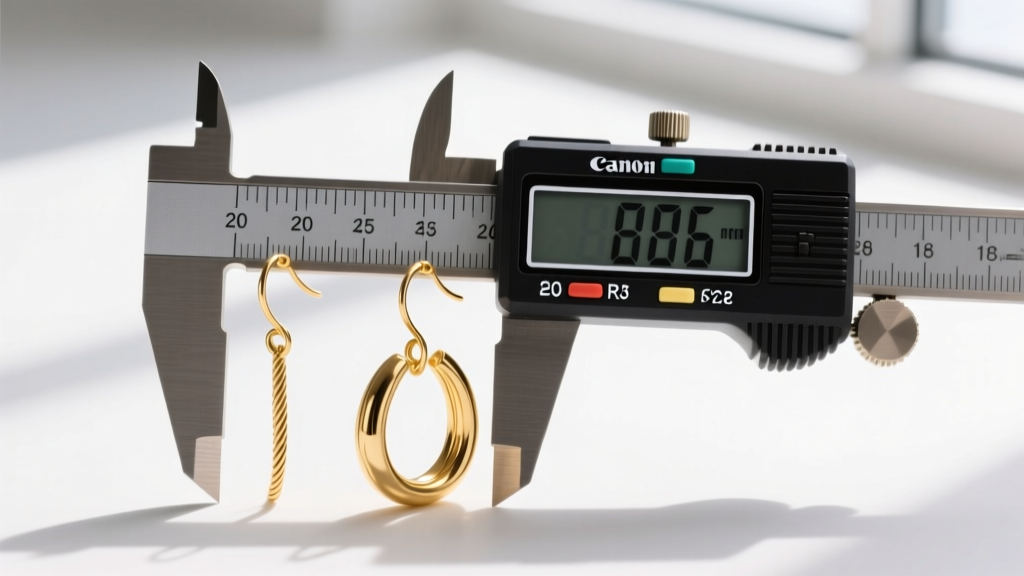
| Wire Gauge | Thickness (mm) | Max Static Weight | Best Use Case |
|---|---|---|---|
| 22-Gauge | 0.64mm | 3 grams | Ultra-lightweight, delicate chain drops |
| 20-Gauge | 0.81mm | 6 grams | Standard industry size for lightweight to medium dangles |
| 18-Gauge | 1.02mm | 12 grams | Optimal for statement pieces and moderate gemstone drops |
| 16-Gauge | 1.29mm | 20+ grams | Heavy tribal, chandelier, or architectural dangles |
It is crucial to note that these weight limits assume the wire has been properly work-hardened. A dead-soft 18-gauge wire will bend under 5 grams, whereas a work-hardened 18-gauge wire can comfortably support 12 grams without losing its structural integrity.
Clasp Mechanisms: Security vs. Ergonomics
The clasp mechanism dictates both the security of the dangle earring and the ease of insertion. Different mechanisms introduce unique failure modes that experts must account for during the design and purchasing process.
The French Wire (Fishhook) and the "J-Stretch" Failure
The French wire is the most common clasp for dangle earrings due to its seamless, elegant profile. However, it lacks a secure locking mechanism. The primary failure mode of the French wire is the "J-stretch." Over time, the repetitive micro-tugs from hair, clothing, and the pendulum effect cause the metal to exceed its yield strength. The once-perfect "U" or "J" curve slowly stretches open, eventually allowing the earring to slip out of the earlobe. To combat this, high-end manufacturers use silicone ear nuts or engineer a microscopic silicone sleeve over the wire terminus to provide friction-locking security without compromising the metal.
Leverback and Hinge Tension Engineering
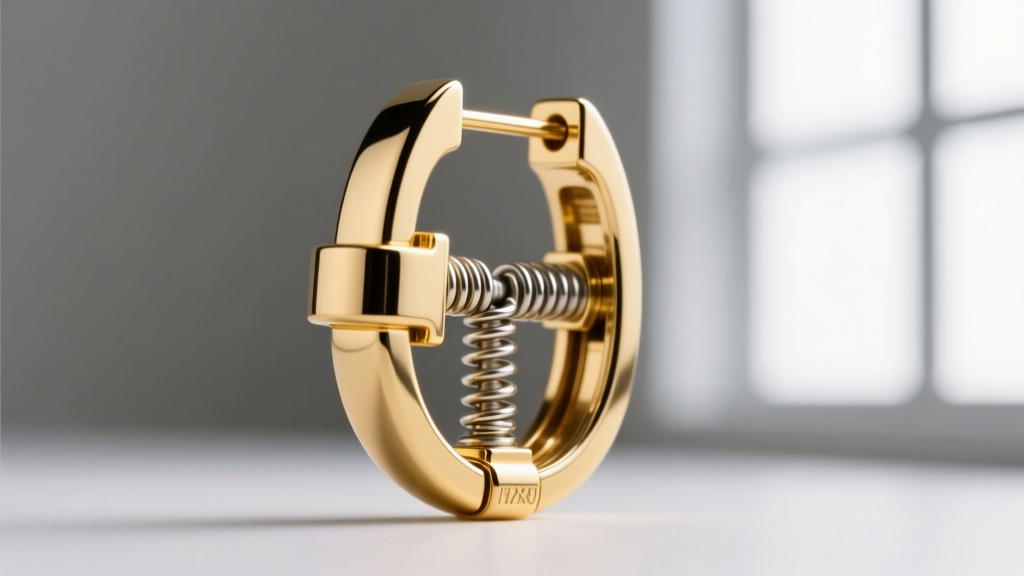
For heavier dangle earrings, the leverback is the superior choice. It features a hinged wire that snaps securely into a front-facing catch. The engineering challenge here lies in the hinge pin and the spring tension. If the alloy is too brittle, the hinge pin will snap under lateral stress. If the catch groove is not milled to a precise depth, the lever will fail to lock, or worse, wear down the catch mechanism over hundreds of open-close cycles. Premium leverbacks utilize a dual-spring internal tension system that ensures a satisfying, secure "click" and maintains clamping force over years of use.
Material Fatigue, Metallurgy, and Skin Safety
The metallurgical properties of the earring wire directly impact both the durability of the piece and the biological response of the wearer. The American Academy of Dermatology frequently highlights that jewelry contact dermatitis is often triggered by nickel alloys used in cheap earring wires. However, beyond allergies, the structural integrity of the metal is paramount.
- 925 Sterling Silver: While highly popular, pure silver and standard sterling silver have a relatively low yield strength. A sterling silver dangle earring wire must be heavily work-hardened (often through tumbling or drawing through a die) to prevent bending. It is also prone to tarnishing, which can increase friction inside the fistula.
- 14k and 18k Gold: Gold alloys offer an excellent balance of malleability and tensile strength. 14k gold, containing 58.5% pure gold mixed with strengthening metals like copper and zinc, provides superior spring-back memory compared to 18k gold, making it the metallurgical favorite for secure leverback clasps.
- ASTM F136 Titanium (Grade 23): As noted by the Gemological Institute of America (GIA) in their metal encyclopedias, titanium boasts an exceptional strength-to-weight ratio. An 18-gauge titanium wire can support the same dynamic load as a 16-gauge silver wire, allowing designers to use thinner, lighter wires that reduce friction and tissue trauma while maintaining absolute structural rigidity.
Ergonomic Framework: Choosing and Maintaining the Right Dangle Earring
To ensure both the longevity of your jewelry and the health of your earlobes, apply this expert decision framework when selecting or designing dangle earrings:
- Calculate the Dynamic Load: If the earring weighs more than 7 grams, reject 20-gauge or thinner wires. Demand an 18-gauge or 16-gauge wire to prevent the cheese-cutter effect.
- Evaluate the Center of Gravity: Hold the earring by the top of the ear wire. If the heavy elements swing wildly or pendulum aggressively, the torque will cause lobe fatigue. Look for designs where the mass is clustered near the top jump ring.
- Inspect the Jump Rings: The jump ring connecting the ear wire to the dangle body is a high-stress pivot point. Ensure the jump ring is soldered shut or features a locking mechanism. An unsoldered jump ring will eventually twist open under the pendulum effect, resulting in the loss of the earring.
- Perform the Tension Test: For leverbacks, open and close the clasp 10 times. The resistance should be smooth and consistent. Any grinding sensation indicates poor milling of the hinge pin, which will lead to premature metal fatigue.
- Rotate Your Wardrobe: Never wear heavy statement dangle earrings (over 12 grams) for more than 6-8 hours consecutively. Rotate with lightweight studs or sleepers to allow the collagen network in the earlobe to recover and contract.
"A beautifully designed dangle earring is a failure of engineering if it destroys the canvas it hangs upon. Respect the anatomy of the earlobe by matching the wire gauge to the kinetic reality of the drop." — Master Bench Jeweler Maxim
By shifting the focus from purely aesthetic considerations to a deep understanding of biomechanics, metallurgy, and structural engineering, you can curate a collection of dangle earrings that are as comfortable and durable as they are visually striking. True luxury in jewelry design is found in the invisible details: the precise temper of the wire, the flawless milling of a hinge, and the perfect distribution of weight.


