Authentic Zuni Earrings: A Buyer's Guide to Styles & Silver
Discover how to buy authentic Zuni earrings. Learn to identify genuine petit point, needlepoint, and inlay styles, silver grades, and artisan marks.

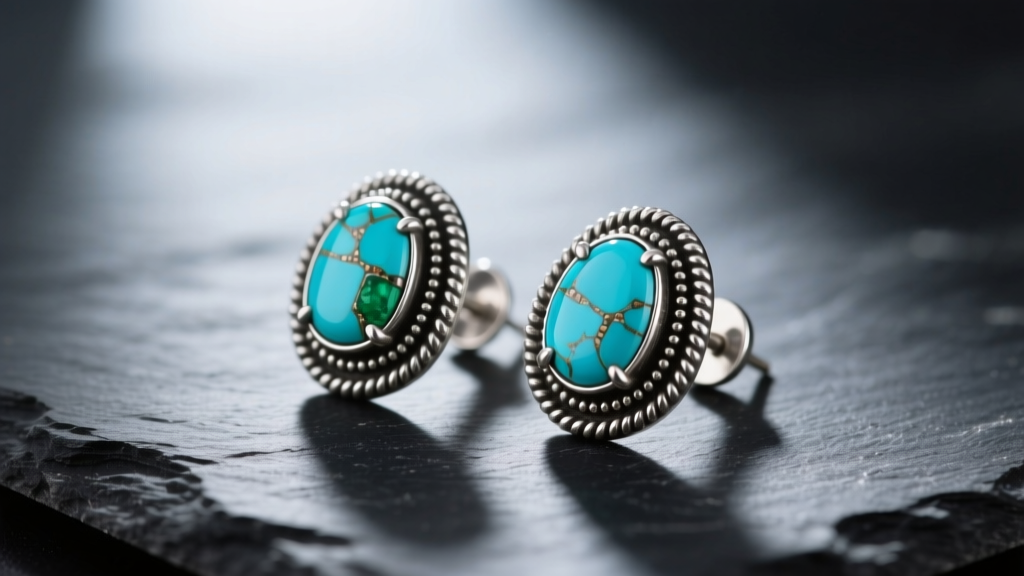
When it comes to Native American jewelry, the Zuni Pueblo of New Mexico is globally revered for its unparalleled lapidary precision. Unlike the heavy, oxidized silver stamping characteristic of Navajo work, Zuni artistry is defined by intricate stone cutting, meticulous silver bezels, and complex mosaic patterns. As of 2026, the market for authenticated indigenous jewelry has seen a massive surge in collector interest, which unfortunately brings an influx of mass-produced imitations. Whether you are hunting for a pair of delicate petit point studs or elaborate channel inlay chandeliers, understanding the anatomy of genuine Zuni earrings is essential for making an informed, respectful, and valuable purchase.
The Lapidary Legacy of the Zuni People
The Zuni people have been working with stone and shell for thousands of years, long before the introduction of silversmithing by the Spanish and Navajo in the mid-19th century. By the early 20th century, Zuni artisans had merged their ancestral stone-carving skills with European metalworking techniques. According to the Smithsonian National Museum of the American Indian, the Zuni quickly became the premier lapidaries of the Southwest. Today, Zuni earrings are not merely accessories; they are wearable archives of cultural heritage, requiring dozens of hours of hand-cutting, grinding, and setting to produce a single, symmetrical pair.
Decoding Core Zuni Earring Styles
To buy Zuni earrings with confidence, you must be able to identify the three foundational styles that dominate the market. Each requires a distinct set of silversmithing and lapidary skills.
Petit Point and Needlepoint
These two styles are often confused by novices but are distinctly different in execution. Needlepoint features long, narrow, elliptical cabochons with sharply pointed ends. Artisans use ultra-fine jeweler's saw blades (often 8/0 or smaller) to cut the intricate sterling silver bezels required to hold these fragile stones. Petit point, conversely, utilizes tiny, rounded, oval, or teardrop-shaped cabochons. Both styles are typically arranged in elaborate, symmetrical clusters or floral patterns. The silverwork acts as a delicate lace-like scaffold, designed to elevate the stones without overshadowing them.
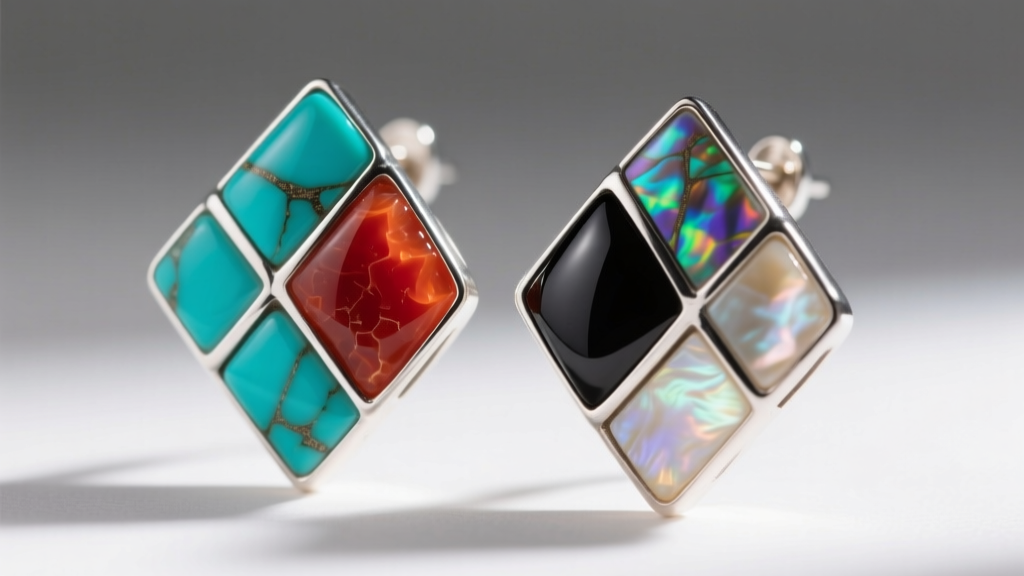
Channel and Mosaic Inlay
Zuni inlay is famous for its vibrant quadri-color palette: turquoise, red coral, black jet, and white mother-of-pearl.
- Channel Inlay: The stones are separated by thin, raised walls of sterling silver. The silversmith solders a grid of silver strips onto a backplate before meticulously cutting and dropping each stone into its designated 'channel'.
- Mosaic Inlay: The stones are cut to fit flush against one another with no silver separating them, creating a seamless, painting-like surface. This requires a master-level understanding of stone geometry and varying Mohs hardness scales.
Cluster and Snake Eye
Cluster work involves grouping multiple round or oval cabochons of varying sizes into a domed or flat arrangement, often resembling a cluster of grapes or a flower. The 'Snake Eye' style is a specific subset of cluster work featuring perfectly round, bright blue turquoise cabochons set in simple, smooth bezels, resembling the eye of a serpent.
Material Grades: Silver Purity and Gemstone Sourcing
Authentic Zuni earrings are crafted using specific material grades that impact both their durability and their value.
Silver Standards
Modern Zuni earrings are almost exclusively crafted from .925 Sterling Silver. However, if you are purchasing vintage pieces (pre-1950s), you may encounter Coin Silver. Coin silver was forged by melting down US coins and typically has a lower silver content (around .900) and a slightly darker, softer patina. Beware of pieces labeled 'Tibetan Silver' or 'Alpaca'—these are base metal alloys containing little to no precious metal and are immediate red flags for counterfeit Native American jewelry.
Gemstone Quality
The Zuni traditionally favor specific turquoise mines for their consistent color and workability. Sleeping Beauty turquoise (known for its pure, unwebbed sky-blue color) is a staple in petit point and needlepoint work. Kingman and Blue Diamond mines are also highly prized. For inlay, the red coral must be natural Mediterranean or fossilized coral, not dyed bamboo coral or plastic resin. Jet should be genuine lignite coal (often from the Acoma region), not black glass or dyed howlite.
Authentication: Spotting Genuine Zuni Artistry
The Indian Arts and Crafts Board strictly enforces the Indian Arts and Crafts Act of 1990, making it illegal to market jewelry as 'Native American' or 'Zuni' unless it is entirely crafted by a member of a federally recognized tribe. Yet, imported knockoffs still flood online marketplaces.
| Feature | Authentic Zuni Earrings | Mass-Produced Imports |
|---|---|---|
| Stone Setting | Hand-cut bezels; slight, natural variations in symmetry. | Cast bezels; perfectly uniform, machine-stamped settings. |
| Stone Backing | Often backed with epoxy or traditional sawdust for stability. | Dyed howlite or reconstituted turquoise dust glued to plastic. |
| Hallmarks | Artist initials, clan symbols, or simple '.925' stamps. | 'Native American Style', 'Southwest Inspired', or no marks. |
| Ear Wires | Hand-drawn or heavy-gauge sterling silver french hooks. | Thin, easily bent base-metal wires, sometimes plated. |
"True Zuni lapidary work reveals its humanity under magnification. You will see the tiny file marks on the silver bezels and the microscopic facets where the artisan hand-sanded the turquoise flush with the coral. Machines leave perfectly smooth, soulless edges."
2026 Market Pricing and Investment Tiers
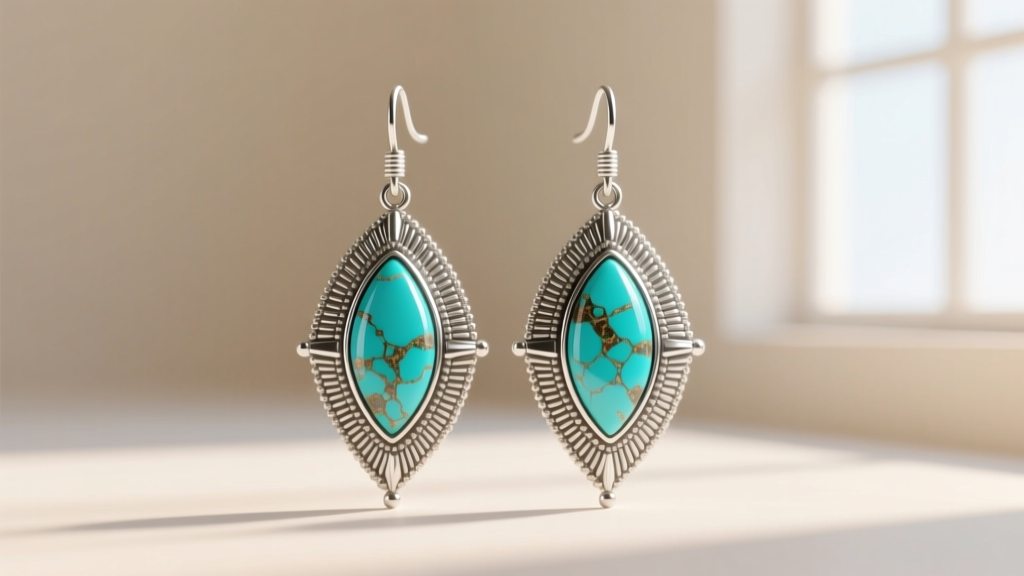
Pricing for Zuni earrings varies wildly based on the complexity of the lapidary work, the carat weight of the stones, and the reputation of the artisan. Here is a realistic breakdown of what you should expect to pay in the current market:
- Entry-Level ($75 - $150): Simple Snake Eye studs, small cluster post earrings, or basic single-stone inlay drops. Great for everyday wear.
- Mid-Tier ($200 - $600): Intricate petit point dangles, multi-stone cluster hoops, and standard channel inlay chandelier earrings. This tier represents the bulk of authentic, high-quality Zuni work.
- Master/Collector ($800 - $2,500+): Large-scale mosaic inlay ear cuffs, elaborate needlepoint bib-style earring sets, and pieces from renowned, award-winning Zuni families (such as the Leekya, Tsikewa, or Hustito families).
Preserving Porous Stones and Silver
Zuni earrings require specialized care due to the organic and porous nature of the materials. Turquoise, coral, jet, and mother-of-pearl are highly sensitive to chemicals, heat, and dehydration.
- Never use ultrasonic cleaners. The high-frequency vibrations will shatter the delicate needlepoint cabochons and strip the natural oils from the coral.
- Avoid commercial silver dips. These harsh acids will permanently discolor turquoise and eat away at the epoxy backing used to secure the stones.
- Polishing: Use a dry, untreated microfiber cloth to gently buff the sterling silver. If the silver is heavily tarnished, use a mild paste polish applied with a Q-tip, meticulously avoiding the gemstones.


