Can I Wear Earrings Through TSA? The Ultimate Travel Jewelry Guide
Discover if you can wear earrings through TSA security. Explore our travel jewelry gift guide, TSA-safe metals, and scanner-proof earring styles.

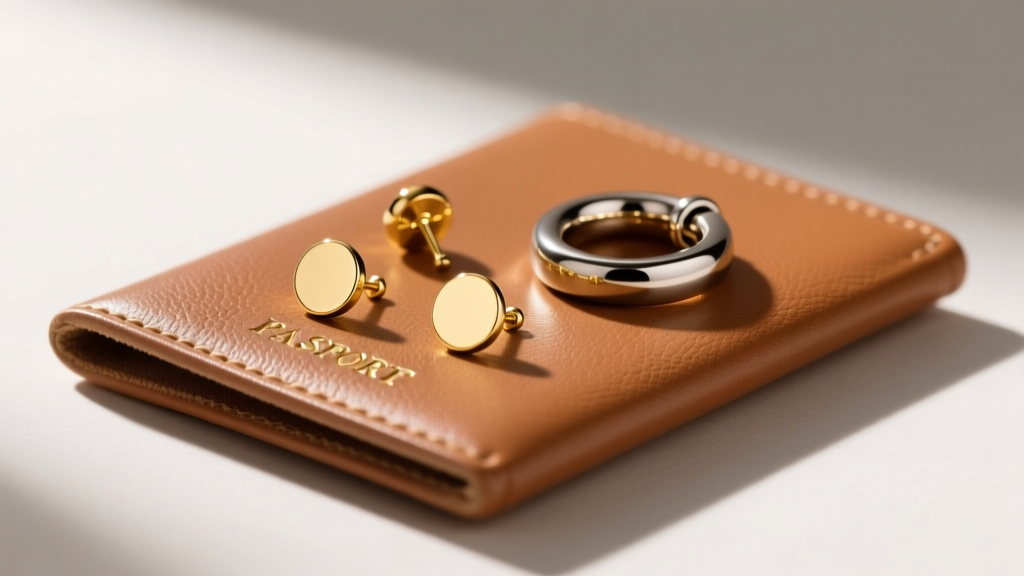
For frequent flyers and jet-setting jewelry lovers, airport security is often the most stressful part of the journey. A common question we receive at Jewel Style Radar is: can I wear earrings through TSA checkpoints without triggering alarms or facing a secondary pat-down? The short answer is yes, but with significant caveats regarding metal density, earring backing mechanics, and the specific scanning technology in use at your departure airport.
As we navigate the 2026 travel landscape, Advanced Imaging Technology (AIT) and millimeter-wave scanners have become highly sensitive. This guide serves as both a technical breakdown of airport scanner metallurgy and a curated gift guide for the frequent flyer in your life. Whether you are shopping for a commuter, a digital nomad, or a luxury vacationer, understanding how to match travel-safe earrings to specific occasions is the ultimate gifting flex.
Decoding the Question: Can I Wear Earrings Through TSA?
According to the official TSA security screening guidelines, passengers are not required to remove fine jewelry before passing through security. However, the reality of modern airport scanning technology is more nuanced. Most major airports now utilize millimeter-wave Advanced Imaging Technology (AIT) scanners rather than traditional walk-through metal detectors (WTMD).
Millimeter-wave scanners do not just detect magnetic metals; they detect anomalies in density and shape against the body's contour. While a delicate 18-gauge titanium stud will easily pass unnoticed, a dense cluster of 14k gold or a large, bulky hoop can create a 'shadow' on the scanner's avatar, prompting the TSA agent to conduct a targeted swab or physical pat-down of the ear area. Therefore, the goal of travel-friendly jewelry is not just to avoid magnetic triggers, but to minimize physical bulk and density around the head and neck.
The Metallurgy of Travel: Which Earrings Trigger Scanners?
When selecting earrings for travel—either for yourself or as a gift for a frequent flyer—the base metal is the most critical factor. The Association of Professional Piercers (APP) provides excellent standards for implant-grade metals, which double as the perfect benchmark for airport security.
| Metal Type | Magnetic Properties | Density & Scanner Reaction | Travel Verdict |
|---|---|---|---|
| Implant-Grade Titanium (ASTM F136) | Non-Magnetic | Low density; virtually invisible to AIT scanners. | Excellent (Best for sleepers) |
| Niobium | Non-Magnetic | Slightly denser than titanium but generally scanner-safe. | Great (Ideal for huggies) |
| 14k / 18k Solid Gold | Non-Magnetic | High density; large solid gold pieces may flag AIT scanners. | Good (Keep it small/minimal) |
| Surgical Steel (316L) | Mildly Magnetic | Contains trace iron/nickel; can trigger older WTMDs. | Fair (Risky for sensitive alarms) |
| Brass / Copper Alloys | Non-Magnetic | Variable density; often plated, leading to skin reactions on flights. | Poor (Avoid for travel) |
The Jet-Setter’s Gift Guide: Occasion-Matched Travel Earrings
Gifting jewelry to a traveler requires thinking beyond aesthetics; you must consider the 'occasion' of the transit itself. Here is how to match specific earring styles to the realities of modern air travel.
Occasion 1: The Red-Eye Flight (The Sleeper Earring)
Long-haul flights demand comfort. Gifting a pair of butterfly-back studs for a red-eye flight is a well-intentioned mistake, as the sharp prongs will dig into the wearer's neck while resting against an airplane seat. The Gift: Internally threaded or threadless flat-back labrets in ASTM F136 titanium. Brands like NeoMetal or BVLA offer threadless ends with a smooth, flush disc back that sits perfectly flat against the earlobe or cartilage, allowing the wearer to sleep comfortably through a 12-hour flight without ever needing to remove them at security.
Occasion 2: The Business Trip (The Capsule Wardrobe Stud)
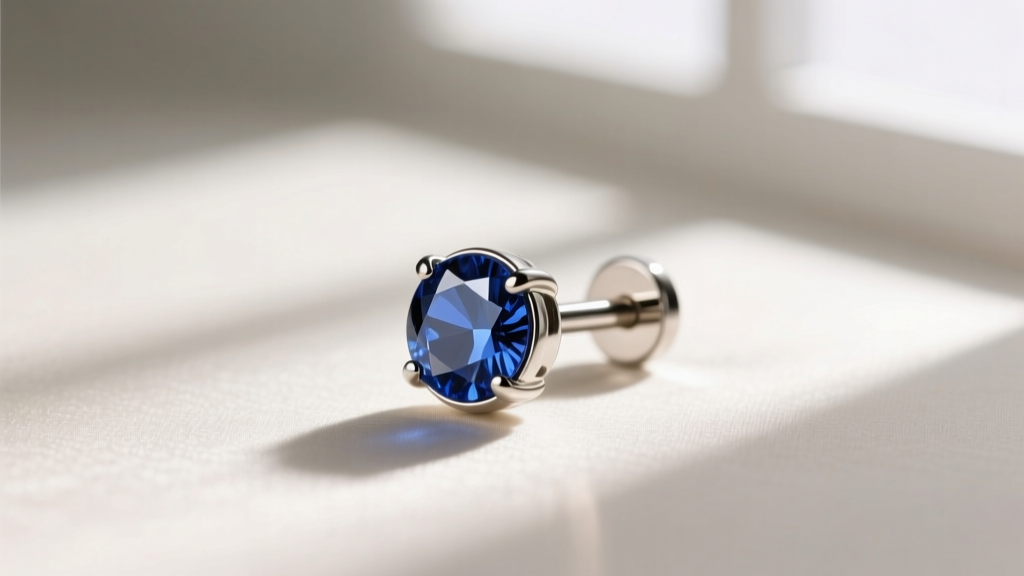
Corporate travelers need versatility. They require an earring that transitions seamlessly from a 6 AM TSA checkpoint to a 9 AM boardroom meeting without looking overly casual. The Gift: A 14k solid gold bezel-set diamond or sapphire stud (ranging from 3mm to 5mm). Because the gemstone is bezel-set (encased in a smooth rim of gold), there are no prongs to snag on silk scarves or winter coats. The low-profile density of a small bezel setting easily bypasses millimeter-wave scanners without triggering a secondary ear swab.
Occasion 3: The Resort Vacation (The Water-Safe Huggie)
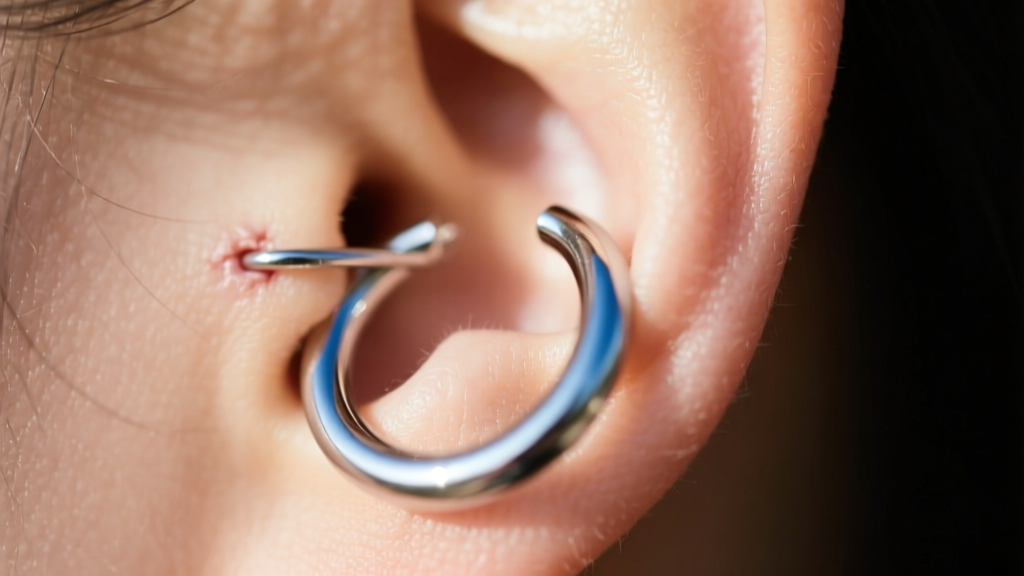
Vacationers transition from the airport to the beach, exposing their jewelry to saltwater, chlorine, and humidity. The Gift: Seamless Niobium or Solid 14k Yellow Gold continuous huggie rings. Unlike hinged hoops with delicate clasps that can trap sand or snap under pressure, continuous rings slide smoothly through the piercing. Niobium is highly resistant to saltwater corrosion and can be anodized into stunning jewel tones without the use of plating that might chip during travel.
Backing Mechanics: The Hidden Security Checkpoint Culprits
When evaluating if you can wear earrings through TSA, the backing mechanism is just as important as the front design. The hardware sitting behind your earlobe dictates both scanner visibility and physical comfort.
- Butterfly Friction Backs: These standard backings feature a dense cluster of folded metal and sharp prongs. Not only are they uncomfortable on flights, but the dense metal knot can occasionally register as an anomaly on high-sensitivity AIT scanners.
- Magnetic Clasps: Often found in 'no-piercing' clip-on earrings or specialty accessible jewelry, magnetic closures will instantly trigger walk-through metal detectors. If gifting to a traveler who prefers clip-ons, opt for screw-back or silicone-padded paddle backs instead.
- Threadless (Push-Pin) Systems: The gold standard for travel. A slightly bent 0.9mm or 1.2mm titanium pin slides into a hollow post, creating tension that holds the earring securely. They will not fall out during transit, and the smooth cylindrical profile is entirely scanner-friendly.
Gifting Framework: A Checklist for Travel-Safe Jewelry
Before purchasing earrings for the commuter or globetrotter in your life, run your selection through this quick E-E-A-T (Expertise, Experience, Authoritativeness, and Trust) checklist to ensure your gift enhances their journey rather than complicating it:
- Verify the Metal Grade: Ensure the product description explicitly states 'Implant-Grade Titanium (ASTM F136)' or 'Solid 14k/18k Gold'. Avoid vague terms like 'surgical steel' or 'gold-plated', as the base metals underneath can react to sweat and scanner environments.
- Measure the Profile: For cartilage piercings (like the helix or tragus), choose flat-back posts that are exactly 6mm or 8mm in length to prevent protruding too far behind the ear, which risks snagging on headphones or travel pillows.
- Check the Gauge: Standard lobe piercings are usually 20g or 18g, while cartilage is often 16g. Gifting a 14g threadless end to someone with 18g piercings will render the gift unusable on the go.
- Include a Travel Case: Always pair travel earrings with a hard-shell, velvet-lined jewelry pillbox. This protects threadless pins from bending inside a crowded carry-on bag.
Ultimately, the answer to 'can I wear earrings through TSA' is a resounding yes, provided you choose intelligent, low-profile designs crafted from non-magnetic, low-density metals. By gifting travel-optimized jewelry, you are giving the modern explorer the luxury of seamless transitions—from the security checkpoint to the clouds, and straight to their final destination in effortless style.


