Why Do My Earrings Smell Bad? The Material Science of Ear Odor
Discover why your earrings smell bad. We break down the material science of ear odor, compare metal alloys, and share expert cleaning protocols.

The Biology and Chemistry of Earring Odor
If you have ever taken out a pair of stud earrings and been hit with a pungent, cheesy odor, you are not alone. Colloquially known in the piercing community as "earring cheese," this phenomenon is rarely a sign of poor hygiene. Instead, it is the result of a complex biological and chemical interaction between your skin's natural microbiome, sebum production, and the specific metallurgical properties of your jewelry. To understand why this happens, we must first look at the anatomy of a healed ear piercing.
A healed earlobe piercing is essentially a fistula—a tube of skin lined with epithelial cells. Like the rest of your skin, this tunnel naturally sheds dead keratinocytes (skin cells) and secretes sebum, an oily substance produced by sebaceous glands to lubricate the skin. When these organic compounds become trapped against the surface of an earring post, they create an ideal breeding ground for Cutibacterium acnes and Staphylococcus bacteria. As these bacteria break down the lipids in your sebum, they release isovaleric acid, a short-chain fatty acid responsible for the distinct, foul odor associated with body odor and dirty earrings.
However, biology is only half the equation. The material composition of your earrings dictates how much debris adheres to the surface, how the metal reacts with your skin's acidic mantle, and whether the jewelry itself will oxidize and contribute to the smell.
Material Breakdown: Which Metals Cause the Stink?
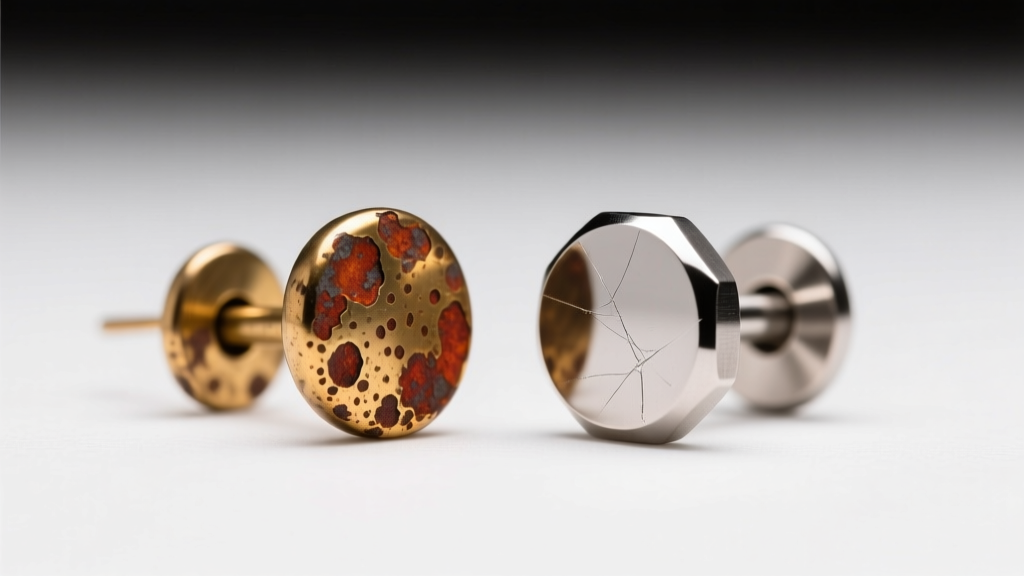
Not all metals are created equal when it comes to biocompatibility and surface porosity. The foul odor you experience is heavily influenced by the microscopic texture of the earring post and its chemical reactivity. Cheap fashion jewelry is often made from brass, copper alloys, or zinc-based pot metals, which are highly reactive and prone to microscopic pitting.
| Metal / Alloy | Surface Porosity | Oxidation Risk | Odor Profile & Risk Level |
|---|---|---|---|
| Brass / Copper Alloys | High (Micro-pitting) | Very High | Metallic, sour, high bacterial trap (Severe) |
| Surgical Steel (316L) | Low (Polished) | Moderate | Mild sebum odor if not cleaned weekly (Moderate) |
| Sterling Silver (925) | Moderate | High (Tarnish) | Sulfuric, "rotten egg" smell due to silver sulfide (High) |
| Implant-Grade Titanium | None (Mirror Polish) | None | Odorless, biologically inert (Zero) |
| Solid 14k/18k Gold | Very Low | Very Low | Minimal sebum adherence, easily wiped clean (Low) |
Brass and copper alloys are notorious for causing bad smells because they undergo a mild galvanic reaction when exposed to the acidic pH of human sweat (which typically ranges from 4.5 to 5.5). This reaction releases metal ions that bind with sulfur compounds in your skin, creating metallic-smelling sulfides. Furthermore, as these base metals oxidize, they develop microscopic pits and grooves that trap dead skin and bacteria, making them nearly impossible to clean with a simple wipe.
The Role of pH, Plating, and Galvanic Reactions
Many affordable earrings are marketed as "gold-plated" or "rhodium-plated" over a base metal core. While these look beautiful on the outside, the plating is often only a few microns thick. Over time, the friction of inserting and removing the earring wears away the plating at the post, exposing the reactive brass or nickel core underneath. Once the base metal is exposed to the moisture and acidity of the earlobe, it begins to corrode. This corrosion not only produces a foul smell but also triggers contact dermatitis, leading to weeping, crusting, and an even more severe odor caused by the breakdown of blood plasma and lymphatic fluid.
According to the Cleveland Clinic, nickel is one of the most common causes of allergic contact dermatitis. When your body detects nickel ions leaching from a cheap earring post, it mounts an immune response. The resulting inflammation creates a moist, weeping environment inside the fistula that anaerobic bacteria thrive in, drastically amplifying the odor.
The Hidden Culprit: Gauge Sizes and the "Cheese Wire" Effect
Material science aside, the physical dimensions of your earrings play a surprising role in odor development. Most commercial fashion earrings are manufactured at 20-gauge (0.81mm) or 22-gauge (0.64mm) thicknesses. While these delicate posts look dainty, they can actually cause mechanical trauma to the earlobe.
Because the surface area of a 20-gauge post is so small, the weight of the earring concentrates pressure onto a tiny edge of the fistula. This creates a "cheese wire" effect, where the thin metal slowly cuts through the delicate tissue inside the piercing. These micro-fissures heal over quickly, but they trap sebum and bacteria deep within the tissue where oxygen cannot reach. Anaerobic bacteria produce significantly more foul-smelling volatile organic compounds (VOCs) than aerobic bacteria. Upgrading to a thicker gauge, such as 16-gauge (1.2mm) or 14-gauge (1.6mm), distributes the weight evenly, prevents micro-tearing, and allows for better airflow and easier cleaning inside the piercing channel.
How to Deep Clean and Deodorize Your Ear Piercings
If your earrings and piercings have developed a persistent odor, standard wiping will not suffice. You must break down the lipid bonds of the sebum and remove the biofilm that has formed on the metal. Avoid using rubbing alcohol or hydrogen peroxide; these harsh astringents strip the skin of its natural moisture barrier, triggering a rebound effect where your sebaceous glands overproduce oil to compensate, ultimately making the smell worse over time.
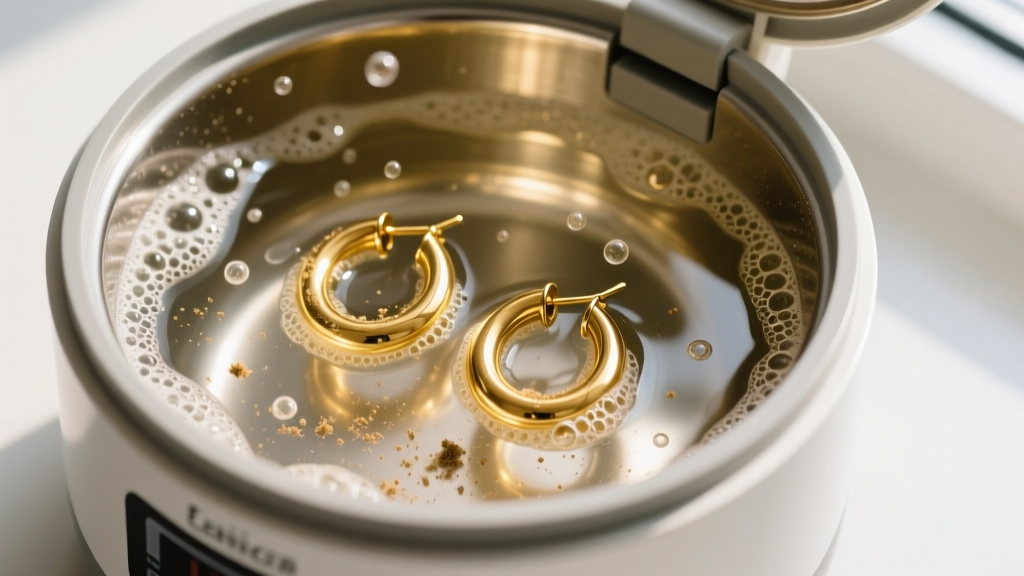
- Ultrasonic Cleaning: For non-porous metals like titanium, solid gold, and platinum, an ultrasonic jewelry cleaner filled with warm water and a drop of mild, fragrance-free dish soap will vibrate debris out of microscopic crevices in just three minutes.
- Enzymatic Soaks: Use a sterile saline wound wash or a specialized piercing aftercare spray containing hypochlorous acid. Hypochlorous acid is naturally produced by your white blood cells and safely destroys the cell walls of odor-causing bacteria without damaging the metal or your skin.
- The Floss Method: For stubborn buildup inside the earlobe fistula, gently thread a piece of clean, unwaxed dental floss through the piercing while in the shower. Move it back and forth to physically exfoliate the dead keratinocytes lining the tunnel.
Upgrading Your Jewelry: The Ultimate Odor-Proof Materials
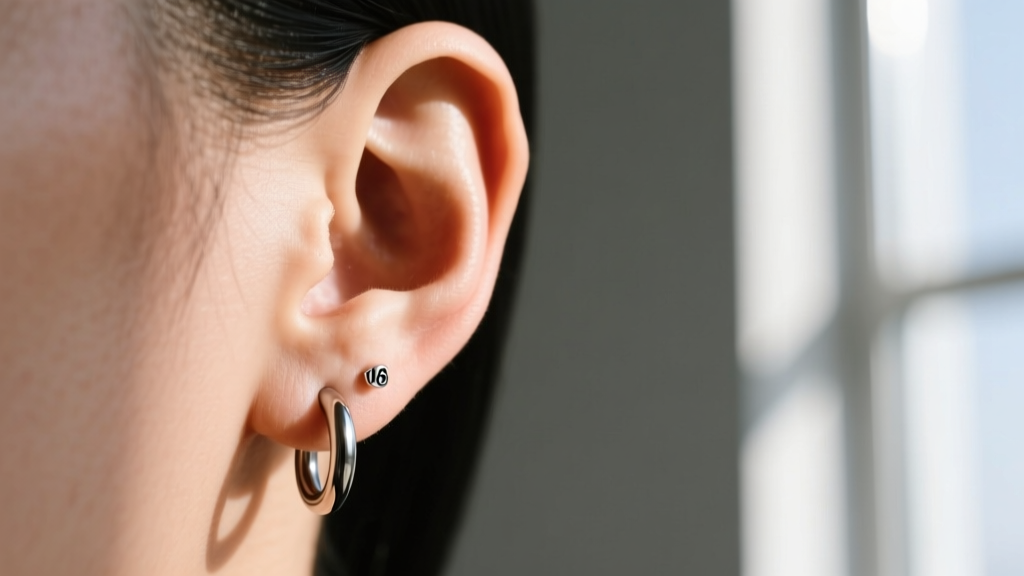
The most effective way to eliminate earring odor is to invest in biocompatible materials that refuse to harbor bacteria or react with human chemistry. The Association of Professional Piercers (APP) strictly recommends specific materials for their inert properties and mirror-finish capabilities.
Implant-Grade Titanium (ASTM F136): This is the gold standard for body jewelry. Unlike commercial "surgical steel," which contains up to 8% nickel and is prone to microscopic scratching, ASTM F136 titanium is entirely nickel-free and highly resistant to corrosion. It can be polished to a mirror finish that is so smooth bacteria and sebum simply cannot adhere to it, rendering it virtually odorless even after weeks of continuous wear.
Niobium: Similar to titanium, niobium is a highly biocompatible, reactive metal that forms a protective oxide layer when exposed to air. It is completely hypoallergenic and does not tarnish or produce sulfides, making it an excellent, slightly more affordable alternative to solid gold for huggies and seamless rings.
Solid 14k or 18k Gold (Nickel-Free): If you prefer the warmth of yellow or rose gold, ensure it is solid and alloyed with silver or copper, never nickel. While gold is softer and can accumulate minor scratches over time, its noble metal status means it will never oxidize or react with your skin's acidic mantle, keeping your piercings fresh and odor-free.
Expert Takeaway: Earring odor is a chemical distress signal. It indicates that your jewelry is either reacting with your skin's acidic mantle, trapping bacteria in microscopic surface pits, or causing micro-trauma due to an overly thin gauge. By upgrading to ASTM F136 titanium or solid gold and adopting an enzymatic cleaning routine, you can permanently eliminate the smell and protect the long-term health of your piercings.


