Bear Claw Earrings: Technical Guide to Materials & Sizing
Explore the technical details of bear claw earrings, from ethical sourcing and CITES regulations to gauge sizing and mounting techniques.

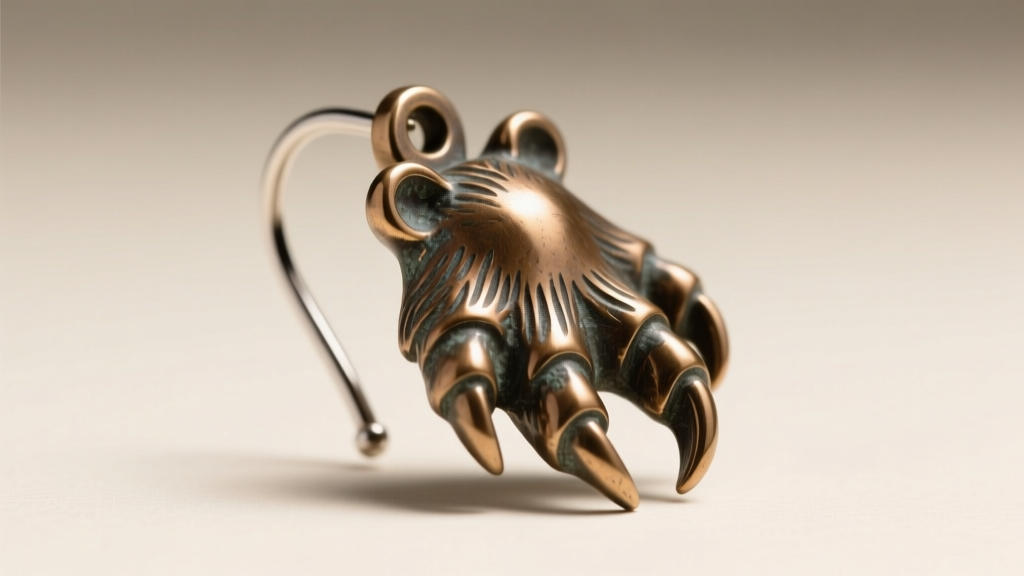
The appeal of bear claw earrings spans multiple subcultures, from rugged outdoor enthusiasts to high-fashion avant-garde circles. However, translating a naturally occurring, organic structure into a functional, safe, and legally compliant piece of ear jewelry requires a deep understanding of material science, biomechanics, and international wildlife regulations. This technical deep dive explores the exact specifications, fabrication challenges, and structural requirements necessary to design and wear bear claw earrings without compromising ear health or ethical standards.
The Material Science: Organic Keratin vs. Cast Alloys
Authentic bear claws are composed primarily of keratin—the same structural protein found in human hair and fingernails. From a jewelry fabrication standpoint, keratin presents severe limitations. It has a Mohs hardness of roughly 2.5, making it highly susceptible to scratching, and its moisture content fluctuates with ambient humidity. When exposed to the natural oils, sweat, and cosmetics present on the human body, untreated organic claws can quickly delaminate, emit odors, or harbor bacteria.
Because of these structural vulnerabilities, modern jewelers specializing in animal-inspired motifs overwhelmingly pivot to cast metals or high-durometer resins. A 3D-printed master modeled from a real claw can be cast in 925 sterling silver, bronze, or 14k gold. Bronze, specifically silicon bronze (C65500), offers a tensile strength of roughly 550 MPa and a natural earthy patina that mimics organic bone and keratin far better than highly polished precious metals. For artisans insisting on using genuine vintage claws, the keratin must be stabilized using cyanoacrylate or specialized two-part epoxy penetrants to prevent micro-fracturing during the mounting process.
Ethical Sourcing, CITES, and Legal Frameworks
The procurement of genuine biological materials is heavily regulated. Depending on the species—such as the Grizzly bear (Ursus arctos horribilis) or the American Black bear (Ursus americanus)—trade may be restricted under the Convention on International Trade in Endangered Species (CITES). According to the CITES Species Checklist, international commercial trade of threatened ursid parts is strictly prohibited or requires rigorous export permits.
In the United States, the U.S. Fish & Wildlife Service enforces the Endangered Species Act and the Lacey Act, which criminalize the interstate transport of illegally sourced wildlife parts. For jewelry makers and collectors, this means genuine bear claw earrings must either be:
- Pre-Act Antiques: Documented as existing prior to 1976, with a continuous chain of custody.
- Legally Hunted Byproducts: Sourced from state-regulated hunting seasons with official harvest tags, strictly restricted to intrastate commerce where legal.
- Faux/Replica: Cast from metal or carved from ethically sourced tagua nut or synthetic resins, bypassing wildlife laws entirely.
Given the immense legal liability and ethical concerns, the contemporary fine jewelry market has almost entirely transitioned to hyper-realistic cast metal replicas.
Technical Mounting and Hardware Specifications
Mounting a heavy, asymmetric object like a claw to an ear wire requires precise engineering. If a jeweler attempts to drill through genuine keratin using standard High-Speed Steel (HSS) twist bits, the material will splinter and shatter. Fabricators must use diamond-coated burr bits at low RPMs (under 5,000 RPM) with continuous water cooling to prevent thermal degradation of the protein structure.
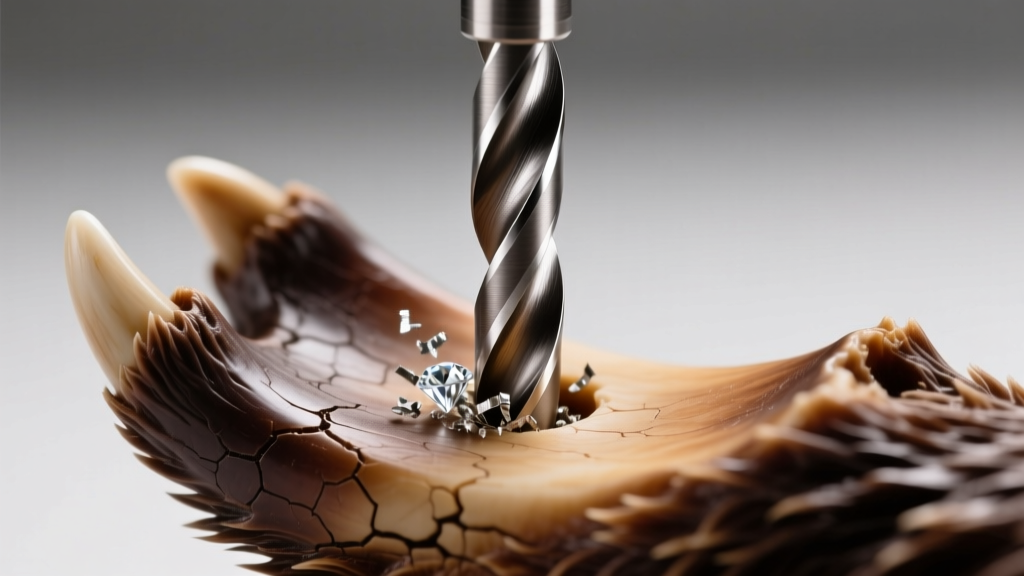
For metal castings, lost-wax investment casting allows for the integration of a threaded metal insert directly into the wax model before casting. This eliminates the need for post-cast drilling and provides a secure anchor for the earring post or bail.
Mounting Methods and Stress Tolerance
| Mounting Technique | Best Material | Tensile Stress Tolerance | Failure Mode |
|---|---|---|---|
| Direct Drilling & Wire Wrap | Stabilized Keratin | Low (15-20 lbs) | Keratin splitting along grain |
| Soldered Bezel Cup | Cast Silver/Bronze | High (80+ lbs) | Solder joint shear under impact |
| Threaded Insert & Bail | Cast Metals / Resin | Very High (100+ lbs) | Thread stripping if cross-threaded |
| Epoxy Adhesive Bail | Polished Stone/Resin | Moderate (30-40 lbs) | Adhesive degradation from body heat |
Gauge Sizing and Ear Lobe Biomechanics
Bear claw earrings are inherently heavy and top-heavy due to their elongated, curved geometry. A solid cast bronze claw measuring 40mm in length can easily weigh between 12 and 18 grams. Standard fashion earrings utilize 20-gauge (0.81mm) or 22-gauge (0.64mm) wires, which are entirely inadequate for this weight class. Prolonged use of thin wires with heavy drops causes 'cheese-cutter syndrome'—a biomechanical failure where the wire slowly migrates downward, stretching and eventually tearing through the earlobe tissue.
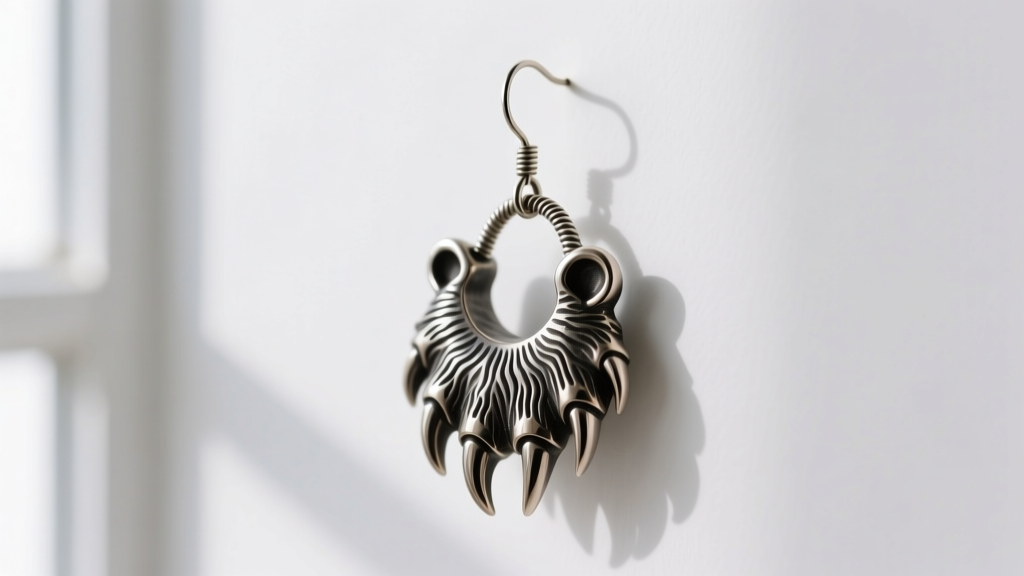
To safely support bear claw earrings, the hardware must be upgraded to structural gauges. A 16-gauge (1.29mm) or 14-gauge (1.63mm) ear wire is mandatory. Furthermore, the temper of the wire is critical. Dead-soft wire will bend under the 15g load of a bronze claw. Jewelers must use half-hard or full-hard tempered titanium (Grade 5 Ti-6Al-4V) or spring-hard niobium. These materials provide the necessary yield strength to maintain the hook's shape while remaining highly biocompatible, preventing allergic contact dermatitis that can be exacerbated by the friction of heavy earrings.
Care, Maintenance, and Degradation Prevention
The maintenance protocol for bear claw earrings depends entirely on the material composition. Genuine, stabilized keratin requires strict environmental control. It should never be exposed to ultrasonic cleaners, steam, or alcohol-based solvents, which will strip the stabilizing resins and cause the claw to become brittle. Instead, they should be wiped with a slightly damp microfiber cloth and occasionally treated with a micro-crystalline wax to maintain moisture barriers.
Conversely, cast metal replicas require standard metallurgical care. Bronze and brass alloys will oxidize when exposed to the sulfur compounds in human sweat, developing a dark patina. While some wearers desire this 'aged' look, those preferring a brighter finish should clean the earrings with a mild citric acid solution or a specialized brass polish, ensuring they thoroughly rinse and dry the pieces before storage to prevent localized pitting.
Pricing Tiers and Market Valuation
Understanding the market valuation of bear claw earrings requires distinguishing between genuine antique specimens, mass-produced fashion jewelry, and artisan-cast pieces.
- Mass-Produced Faux (Base Metal/Resin): $15 - $45. Typically made from zinc alloys or injection-molded acrylic. Prone to rapid finish degradation and utilizes unsafe, thin-gauge steel hooks.
- Artisan Cast Replicas (Sterling Silver/Bronze): $85 - $250. Hand-finished, utilizing proper 16g/14g biocompatible hardware and high-quality lost-wax casting techniques.
- Documented Vintage/Antique Genuine: $300 - $800+. Requires verifiable pre-1976 CITES documentation. Prices scale heavily based on the size of the claw, the quality of the historical metalwork (e.g., Native American silverwork or Victorian taxidermy jewelry), and the provenance.
When evaluating any organic animal-derived jewelry, always demand documentation. If a vendor cannot provide legal provenance for a genuine biological specimen, the ethical and legal risks far outweigh the aesthetic value. Opting for a master-cast metal replica provides superior durability, zero legal liability, and allows for precise biomechanical engineering of the ear wire.
Ultimately, the successful integration of bear claw earrings into a modern wardrobe relies on respecting the physical limitations of the ear and the legal boundaries of wildlife conservation. By prioritizing heavy-gauge, biocompatible hardware and ethically sourced materials, collectors can enjoy this bold, primal aesthetic without compromise.


