The Ultimate Guide to Buying Texas Gold Nugget Earrings
Expert guide to buying Texas gold nugget earrings: authenticate natural textures, evaluate karat purity, and choose secure backings.

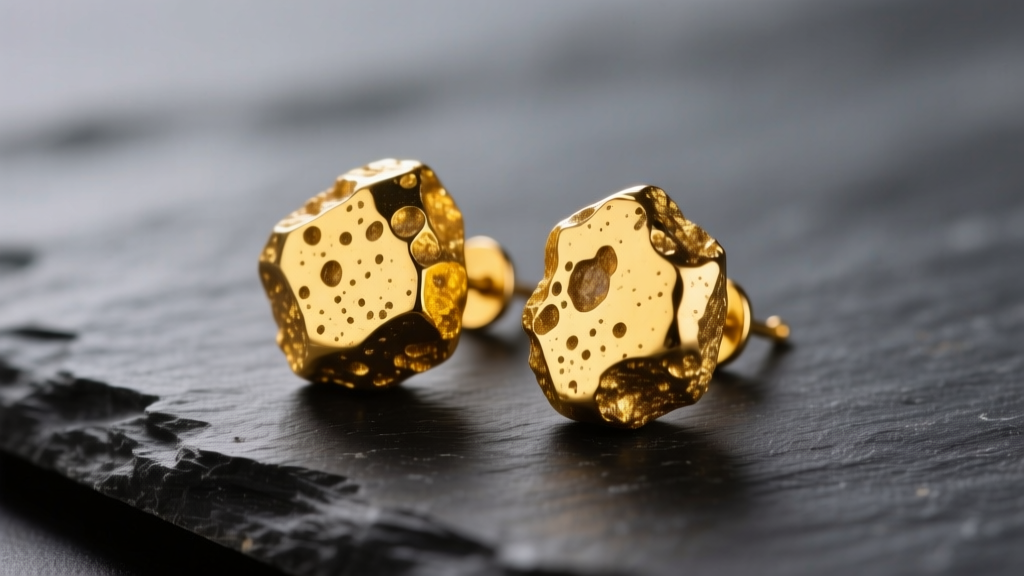
The Allure of Authentic Texas Gold Nuggets
When it comes to region-specific jewelry, few pieces carry the historical weight and geological fascination of Texas gold nugget earrings. Unlike mass-produced cast jewelry, authentic nugget earrings are crafted from naturally occurring gold that has been weathered, tumbled, and shaped by nature over millions of years. In Texas, the most notable gold deposits are found in the Llano Uplift region, particularly around Mason County and the historic Heath mine. While the Texas gold rush of the 19th century never rivaled California's in sheer volume, the gold that does emerge from the Texan earth is highly prized by collectors and artisan jewelers for its unique, rugged character.
For the discerning buyer, purchasing Texas gold nugget earrings is not just about acquiring a beautiful accessory; it is an investment in natural art and regional history. However, the modern jewelry market is increasingly saturated with casted imitations designed to mimic the rustic look of raw gold. This comprehensive buying guide will equip you with the metallurgical knowledge, structural insights, and pricing frameworks necessary to confidently evaluate and purchase authentic Texas gold nugget earrings.
Natural vs. Casted: How to Spot Genuine Nuggets
The most critical skill when shopping for raw gold jewelry is distinguishing between genuine, naturally formed nuggets and laboratory or workshop-casted replicas. Casted 'nuggets' are typically made by pouring molten gold (or a gold alloy) into water or specialized molds to create a lumpy, irregular shape. While they may look rustic at a glance, they lack the microscopic and macroscopic signatures of natural geological formation.
Visual and Tactile Identifiers
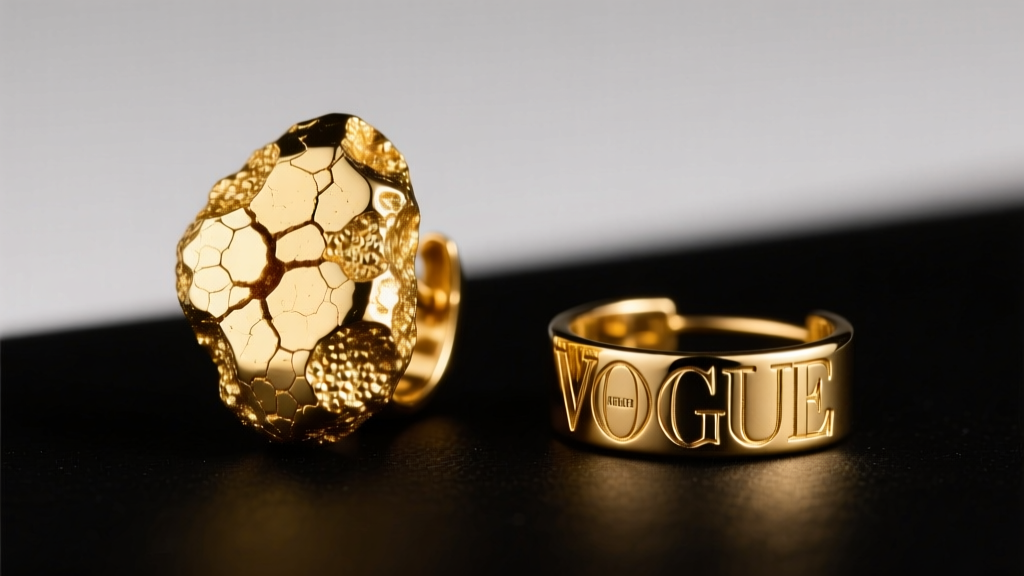
- Surface Pitting and Sponginess: Natural gold nuggets often exhibit a sponge-like or heavily pitted surface caused by the leaching of silver and other minerals over millennia. Casted gold typically has a smoother, more uniform 'melted' appearance with rounded, shallow divots.
- Flattened Edges: Genuine placer gold that has been tumbled in riverbeds or shifted in fault lines often features flattened, hammered edges. Casted pieces will have uniform, bulbous edges without directional flattening.
- Inclusions and Quartz Matrices: Authentic Texas nuggets occasionally retain tiny veins of quartz or ironstone within their deep crevices. Jewelers carefully clean these, but microscopic remnants often remain. Casted fakes are entirely homogenous metal.
- Specific Gravity and Weight: Natural nuggets have a distinct, dense heft. Because casted pieces are sometimes made with lower-karat alloys or hollow centers to save costs, they may feel suspiciously light for their overall volume.
Karat Purity and Metallurgy in Texas Gold
A common misconception among novice buyers is that natural gold nuggets are 24-karat (100% pure gold). In reality, natural gold is almost always an alloy, primarily mixed with silver and trace amounts of copper or iron. According to the Texas State Historical Association, gold found in the Llano Uplift often contains a significant silver content, classifying some of it as electrum (a natural gold-silver alloy formed in hydrothermal veins).
When evaluating Texas gold nugget earrings, you should expect a purity range between 18k (75% gold) and 22k (91.6% gold). Nuggets with higher silver content will exhibit a slightly paler, greenish-yellow hue, while those with trace copper will appear warmer and richer. This natural alloying actually increases the Vickers hardness of the metal slightly, making it more durable for jewelry than pure 24k gold, though it remains susceptible to scratching.
A reputable jeweler will use X-ray fluorescence (XRF) testing to determine the exact elemental breakdown before setting the nuggets. Always request an XRF printout or a certified assay report when purchasing high-value nugget earrings, as this document guarantees the natural origin and precise karat weight of the metal.
Structural Integrity: Choosing the Right Earring Back
Gold is a remarkably dense and heavy metal. A pair of solid, natural gold nugget earrings can easily weigh between 4 and 15 grams. This substantial weight presents a unique engineering challenge for earring construction. Standard friction backs (butterfly backs) are entirely inadequate for heavy nuggets; the weight of the gold will pull the earring downward, causing the post to bend and the backing to slip off, resulting in a devastating loss.
Post Gauge and Backing Mechanisms
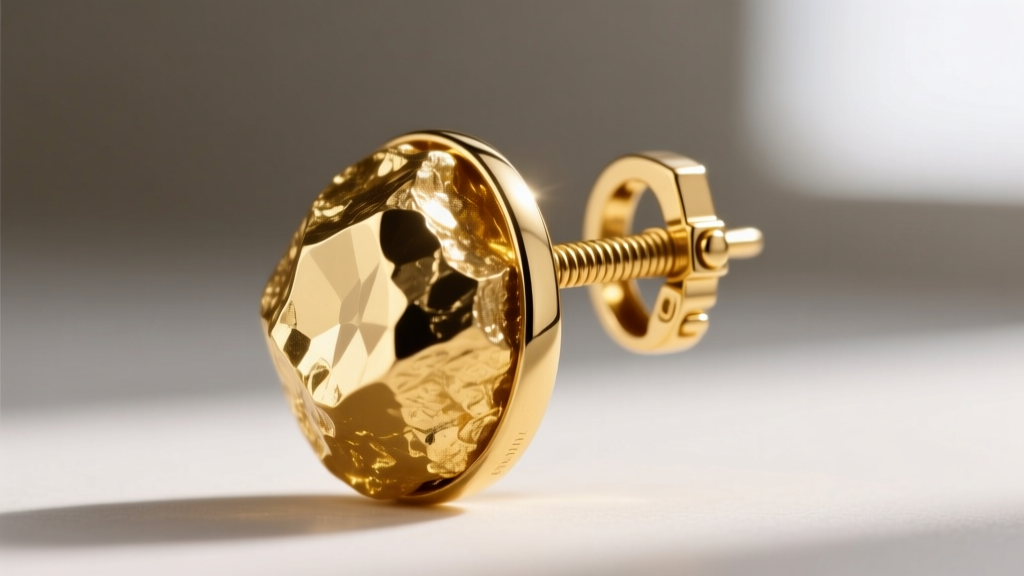
To support the mass of a raw gold nugget, the earring post must be thicker than standard jewelry. While typical stud earrings use 20-gauge (0.8mm) or 18-gauge (1.0mm) posts, authentic nugget earrings should feature heavy-duty 16-gauge (1.2mm) or even 14-gauge (1.6mm) posts. Furthermore, the securing mechanism must be mechanical rather than friction-based.
| Backing Type | Mechanism | Suitability for Heavy Nuggets | Security Rating |
|---|---|---|---|
| Friction / Butterfly | Spring-loaded tension grip | Poor - High risk of loss | 2/10 |
| Screw Back | Threaded post with screw-on nut | Excellent - Requires intentional removal | 9/10 |
| La Pousette | Spring-loaded locking clutch | Superior - Snaps securely into a post groove | 10/10 |
| Leverback Wire | Hinged wire that snaps into a catch | Good - Ideal for dangling nugget drops | 8/10 |
Pricing Framework: What Should You Pay?
Pricing authentic Texas gold nugget earrings requires a departure from standard jewelry valuation. You are not simply paying for the melt value of the gold. The pricing model for natural nuggets incorporates three distinct tiers:
- The Melt Value: The baseline price calculated by multiplying the exact gram weight by the current daily spot price of gold, adjusted for the nugget's specific karat purity.
- The Nugget Premium: Because natural, jewelry-grade gold nuggets are exponentially rarer than gold dust or refined gold bars, they command a collector's premium. Natural nuggets typically sell for 1.5x to 4x their melt value, depending on size, visual appeal, and regional provenance.
- Fabrication and Setting Costs: Crafting a secure mount for an irregularly shaped, heavy object requires custom bench work. Jewelers must build specialized bezels or prong settings that accommodate the nugget's unique topography without obscuring its natural texture.
As a general benchmark in the current market, expect to pay anywhere from $800 to $3,500+ for a pair of genuine, medium-sized (3-5 grams each) Texas gold nugget earrings. If a seller is offering 'raw nugget' earrings at or slightly above the daily melt value of scrap gold, you are almost certainly looking at casted imitations.
Care, Maintenance, and Insurance
Despite its high value, natural gold is relatively soft, especially when alloyed with silver. To preserve the intricate pitting and natural texture of your Texas gold nugget earrings, avoid ultrasonic cleaners and harsh chemical dips. These can strip away the natural patina and potentially loosen the custom settings.
Expert Appraisal Tip: Always clean raw gold jewelry using only warm water, a few drops of mild dish soap, and a soft-bristled baby toothbrush. Gently brush the crevices to remove skin oils and environmental dust, then pat dry with a microfiber cloth. Store them in individual soft velvet slots to prevent the heavy nuggets from banging against each other and denting the softer silver-alloyed matrices.
Finally, because these earrings are unique, irreplaceable natural artifacts, standard homeowner's insurance policies often fall short in the event of loss or theft. We strongly recommend securing a specialized jewelry rider or scheduling the earrings through a provider like Jewelers Mutual, ensuring they are appraised at their full replacement value—including the collector's nugget premium—rather than mere scrap melt value.


