Flat Earrings Value Guide: Are Threadless Labrets Worth It?
Discover if premium flat earrings are worth the investment. We compare budget vs. high-end threadless labrets, materials, and cost-per-wear.

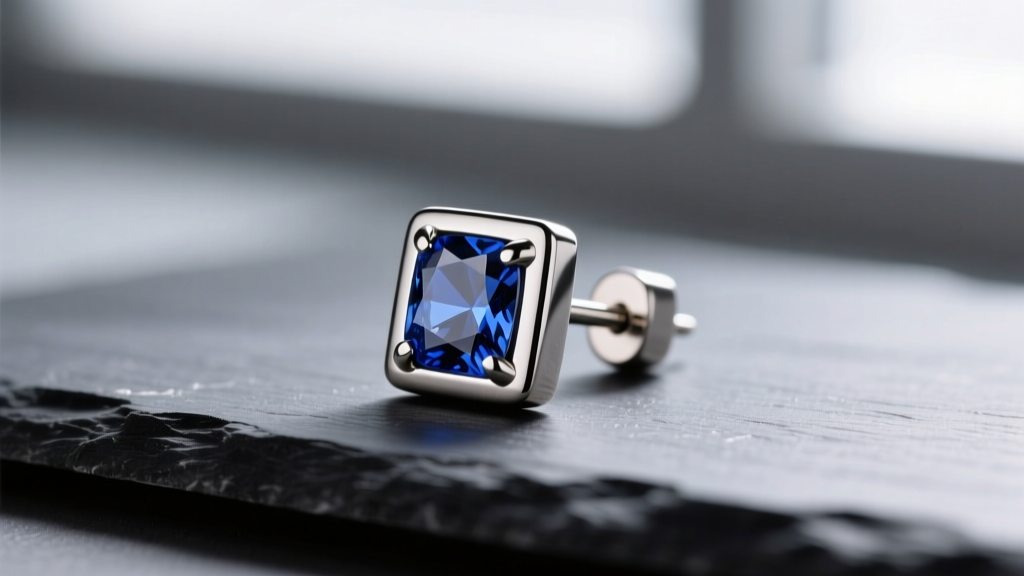
The Anatomy of Flat Earrings and the Budget Trap
Flat earrings—commonly referred to in professional piercing studios as flat back labrets or threadless studs—have entirely revolutionized the modern ear curation. Unlike traditional butterfly-back studs that harbor bacteria and dig into the neck during sleep, flat earrings feature a smooth, disc-shaped backing that sits flush against the skin. However, as their popularity has surged, the market has been flooded with ultra-cheap alternatives on mass-market e-commerce platforms.
When evaluating flat earrings from a budget and value perspective, the initial price tag is often deceptive. A $6 pack of mystery-metal flat backs might seem like a steal compared to a $45 solid gold threadless end from a premium brand. Yet, when you factor in material biocompatibility, mechanical security, and the potential medical costs of treating contact dermatitis or cartilage rejection, the 'budget' option quickly becomes a false economy. In this 2026 value assessment, we break down exactly where your money goes when purchasing flat earrings and how to allocate your jewelry budget intelligently.
Material Science: Why 'Surgical Steel' is a False Economy
The single most critical factor in the value of flat earrings is the base metal. Budget manufacturers frequently use the term 'surgical steel' (usually 316L stainless steel) to imply medical safety. However, 316L steel contains up to 14% nickel, a known allergen that can trigger severe contact dermatitis, especially in the confined, moist environment of a healing cartilage piercing.
True value lies in ASTM F-136 Implant-Grade Titanium. According to the Association of Professional Piercers (APP), implant-grade titanium is entirely nickel-free and features a mirror-polish that resists bacterial adhesion.
Red Flags in Budget Flat Earrings
- Magnetism: If your titanium flat earring sticks to a magnet, it is a cheap steel alloy masquerading as titanium.
- Dull Finishes: Budget posts often feature a matte or brushed finish. This microscopic roughness creates a breeding ground for biofilm and can tear delicate fistula tissue during insertion.
- 'Hypoallergenic' Labels: This is an unregulated marketing term, not a metallurgical standard. Always look for the specific 'ASTM F-136' or 'Ti6Al4V' designation.
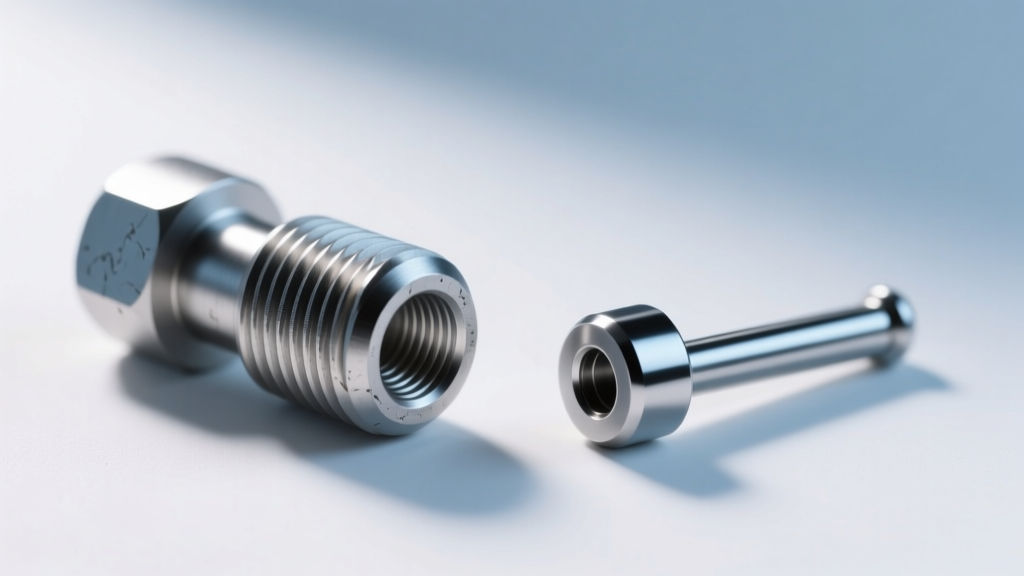
The Mechanics of Security: Threadless vs. Threaded
Flat earrings rely on different mechanical systems to stay in the ear. The construction method directly impacts the longevity, security, and ultimate value of the piece.
1. Externally Threaded (The Budget Hazard)
Cheap flat earrings often feature external threading, where the screw pattern is on the post itself. Pushing a threaded post through a piercing acts like a cheese grater on the tissue, causing micro-tears and irritation bumps. These are universally condemned by professional piercers and offer zero long-term value.
2. Internally Threaded (The Mid-Tier Standard)
Here, the threading is inside the decorative end, and the post is smooth. While vastly superior to external threading and safe for healing piercings, internally threaded flat earrings can slowly unscrew over time due to friction from hair, pillows, and headphones, leading to lost jewelry.
3. Threadless / Press-Fit (The Premium Value Winner)
Pioneered by brands like NeoMetal, threadless flat earrings use a tiny, slightly bent pin on the decorative end that slides into the hollow post. The tension of the bent pin against the inner wall of the post creates a lock that is practically impossible to lose during daily wear, yet easy to remove with a deliberate bending motion. While the upfront cost is higher, the security against losing expensive gemstone ends makes threadless hardware the highest-value option on the market.
Sizing Precision: The Hidden Cost of Poor Fit
Value isn't just about the metal; it's about the fit. Flat earrings require precise gauge and length measurements. Wearing an improperly sized post leads to the 'cheese-cutter effect,' where a post that is too long or too thin slowly migrates through the cartilage, eventually tearing out entirely.
| Piercing Location | Standard Gauge | Healed Post Length | Budget Risk Factor |
|---|---|---|---|
| Helix / Tragus | 16g (1.2mm) | 6mm (1/4') | High: Long posts snag on hair, causing rejection. |
| Conch / Lobe | 14g (1.6mm) | 6mm - 8mm | Medium: Lobes vary in thickness; one-size-fits-all fails. |
| Flat / Faux Rook | 16g (1.2mm) | 5mm - 6mm | Very High: Requires ultra-short posts rarely found in budget sets. |
Premium brands offer post lengths in 1mm increments (e.g., 5mm, 6mm, 7mm, 8mm), allowing for a bespoke fit that eliminates snagging and migration. Budget brands typically only offer a generic 8mm post, which is far too long for most healed ear anatomies.
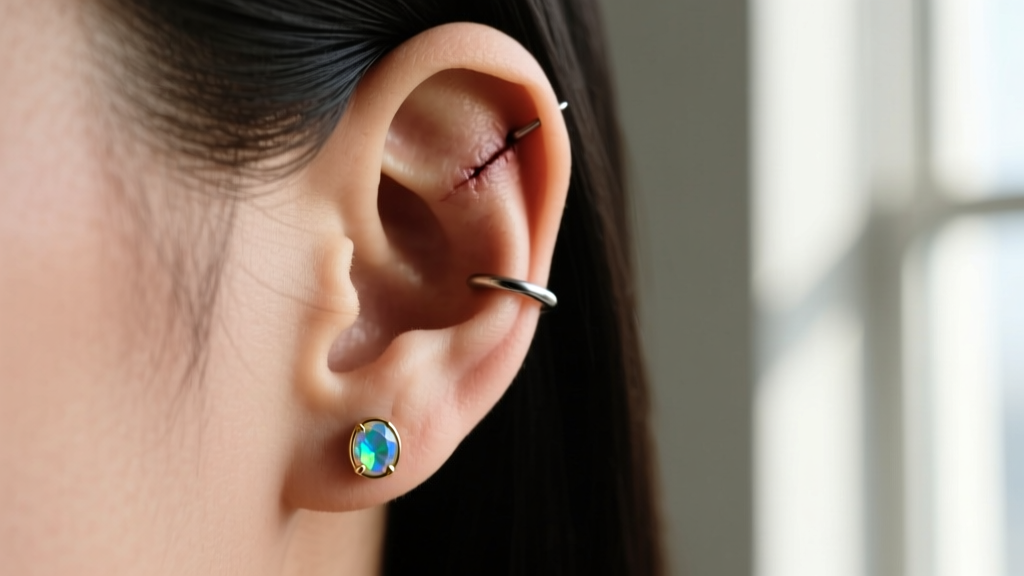
Value Matrix: Budget vs. Premium Flat Earrings
To understand the true cost-per-wear, we must look at the 2026 market pricing across three distinct tiers of flat earrings.
- The Mass-Market Tier ($5 - $15): Usually 316L steel or zinc alloys with glued-in cubic zirconia. Verdict: High risk of allergic reaction and lost stones. Cost-per-wear is high because they must be replaced frequently or discarded due to irritation.
- The Professional Tier ($20 - $45): Implant-grade titanium threadless ends and posts (e.g., NeoMetal, Industrial Strength). Verdict: The ultimate value sweet spot. Lifetime durability, zero nickel, and interchangeable ends mean you only buy the post once.
- The Luxury Tier ($80 - $300+): Solid 14k or 18k gold with precision-set genuine gems (e.g., BVLA, Maria Tash). Verdict: High upfront cost, but solid gold retains intrinsic value and can be worn 24/7 in water without tarnishing. Excellent for those with severe metal sensitivities.
Strategic Purchasing: Where to Save and Where to Splurge
If you are building a curated ear but working within a strict budget, the golden rule of flat earrings is to never compromise on the post.
You can save money by purchasing a high-quality, unadorned titanium threadless end (often under $15) rather than a gem-set one. However, you should never buy a budget, unbranded post to hold a premium end, nor should you buy a premium gold end and force it onto a cheap steel post. The structural integrity of the threadless pin requires precision CNC machining; budget manufacturers often have poorly calibrated pins that either fall out constantly or bend and snap inside the ear canal.
'Investing in an ASTM F-136 titanium post is non-negotiable for cartilage health. You are paying for the precision of the internal channel and the mirror finish that protects your fistula.' — Professional Piercer Guild Guidelines, 2025.
Final Verdict
Are premium flat earrings worth the investment? Absolutely. When assessing budget and value, the threadless implant-grade titanium ecosystem offers unparalleled longevity, security, and biological safety. By avoiding the hidden costs of allergic reactions, lost jewelry, and cartilage migration caused by cheap alternatives, you ensure that your ear curation remains a source of joy rather than a medical liability. Allocate your budget toward reputable, machined hardware, and your flat earrings will comfortably outlast the fleeting trends of the season.


