Choosing the Pearl Earring: A Beginner's Guide to Nacre Grades
Discover how to choose the pearl earring with our beginner's guide. Learn about nacre thickness, grading systems, settings, and proper care.

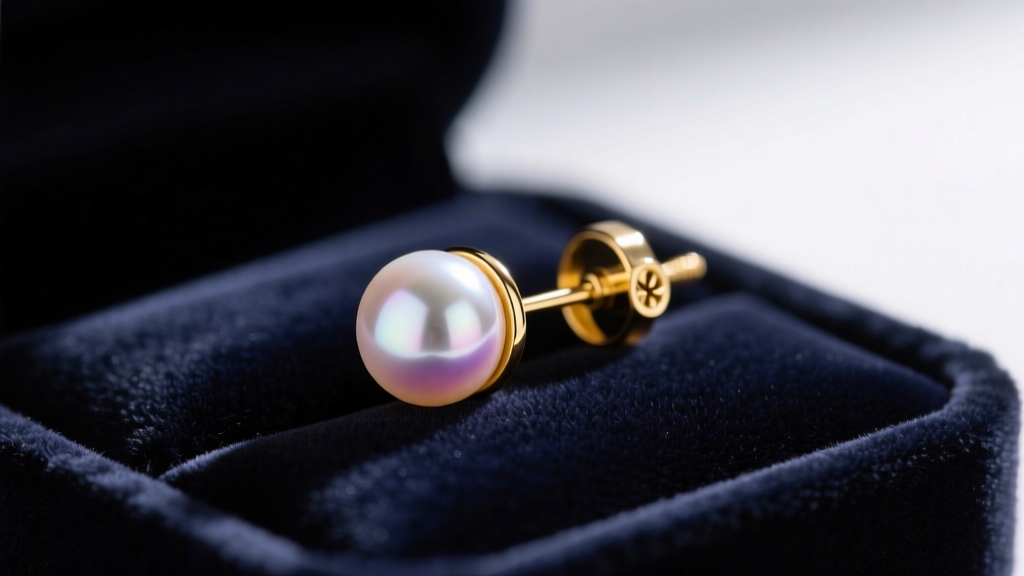
The Organic Gem: Understanding Nacre and Origin
When you begin your fine jewelry journey, acquiring the pearl earring is often considered a definitive rite of passage. Unlike mined gemstones such as diamonds or sapphires, pearls are organic gems created by living mollusks. The beauty and value of a pearl are entirely dependent on nacre—the iridescent substance the oyster secretes to coat an irritant. Nacre is composed of microscopic aragonite crystals held together by an organic protein called conchiolin. The thickness, translucency, and layering of this nacre dictate the pearl's luster, durability, and ultimately, its price. For a beginner, understanding nacre is the single most important step in making an informed purchase, as it separates a lifetime heirloom from a temporary fashion accessory.
The Four Major Pearl Varieties Explained
Not all pearls are created equal. The market is dominated by four primary varieties, each with distinct size ranges, color profiles, and price points. According to the Gemological Institute of America (GIA), understanding the origin of the pearl helps set realistic budget expectations for your first pair of studs or drops.
| Pearl Variety | Typical Size Range | Average Nacre Thickness | Expected Price (Stud Pair) |
|---|---|---|---|
| Freshwater | 5mm - 12mm | Solid Nacre (Tissue Nucleated) | $50 - $300 |
| Akoya | 6mm - 9.5mm | 0.3mm - 0.8mm+ | $150 - $1,000+ |
| Tahitian | 8mm - 16mm | 0.8mm - 2.0mm+ | $250 - $2,000+ |
| South Sea | 9mm - 20mm | 2.0mm - 6.0mm+ | $500 - $5,000+ |
For the quintessential, mirror-like white stud, the Japanese Akoya pearl remains the gold standard. Freshwater pearls offer excellent durability because they are typically tissue-nucleated, meaning the entire pearl is solid nacre. However, they often lack the sharp, glass-like luster of a high-grade Akoya. Tahitian and South Sea pearls are significantly larger and command premium prices due to their extended cultivation periods, which naturally result in much thicker nacre layers.
Decoding the Grading System: Luster, Surface, and Shape
Unlike diamonds, which are graded by a universal GIA 4Cs system, pearls do not have a single, globally standardized grading scale. However, the jewelry industry generally relies on the AAA-A system for Akoya and Freshwater pearls, and the A-D system for Tahitian and South Sea varieties. When evaluating the pearl earring for your collection, prioritize these three factors:
- Luster: This is the most critical value factor. High-quality nacre acts like a prism, refracting light from deep within the pearl. To test luster, look at the reflection of a light source on the pearl's surface. A sharp, distinct reflection indicates thick, high-quality nacre (AAA grade). A cloudy or chalky reflection indicates thin nacre.
- Surface Cleanliness: Pearls are organic and rarely flawless. Minor blemishes, bumps, or wrinkles are normal. However, avoid pearls with deep cracks or chalky dead spots, as these are structural weak points that can lead to peeling.
- Shape: Perfectly round pearls are the rarest and most expensive. Near-round or oval shapes offer significant savings with minimal visual difference when worn on the ear.
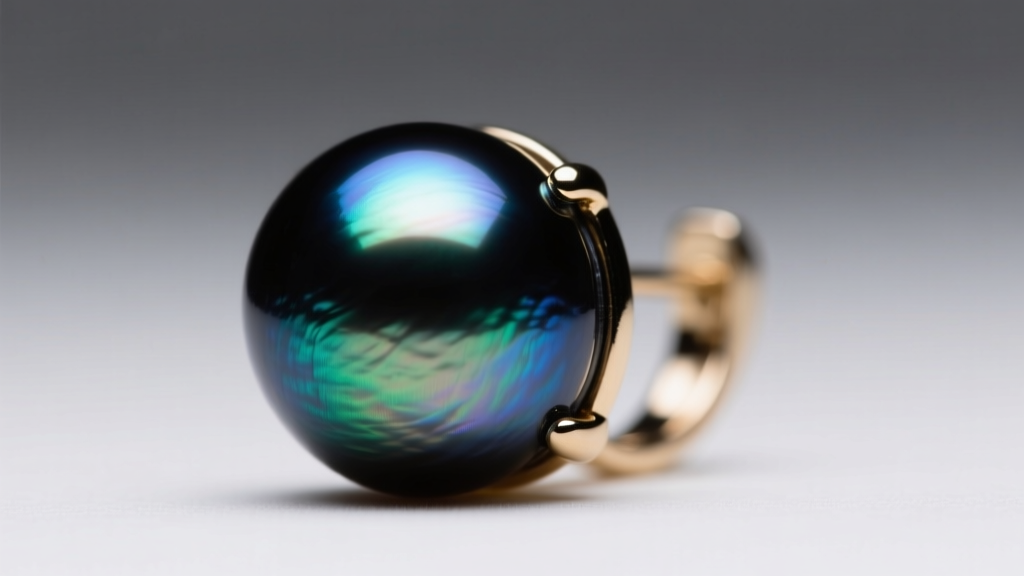
Hardware Mechanics: Posts, Backs, and Metal Alloys
A common beginner mistake is focusing entirely on the pearl while ignoring the hardware. The structural integrity of your earring is just as vital as the gem itself. Standard earring posts are typically 20-gauge (0.8mm thick). However, heavier pearls like South Sea or large Tahitians require 18-gauge (1.0mm) or even 16-gauge (1.2mm) posts to prevent the metal from bending under the pearl's weight, which can cause the earring to droop uncomfortably on the earlobe.
Peg Settings vs. Cup Settings
Most pearl studs utilize a 'peg setting,' where a small metal pin is glued into a drilled hole at the base of the pearl. The failure mode here is epoxy degradation. Over 10 to 15 years, the jeweler's epoxy can dry out, causing the pearl to spin on the post or detach entirely. Have your jeweler check and re-apply epoxy every decade. 'Cup settings' offer a more secure alternative, cradling the base of the pearl, though they can slightly reduce the amount of light entering the stone.
Friction Backs vs. Screw Backs
If you are investing over $300 in a pair of Akoya or Tahitian studs, friction backs (butterfly clasps) are insufficient. The tension on the metal grooves eventually wears out, leading to lost earrings. Always opt for threaded screw backs or specialized locking mechanisms like La Pousette backs, which physically lock onto the post and require a deliberate pinch to release.
The 'Last On, First Off' Care Protocol
Pearls rank between 2.5 and 3.0 on the Mohs hardness scale, making them exceptionally soft and vulnerable to scratching. More importantly, nacre is primarily calcium carbonate, which is highly reactive to acids. Everyday substances like perfume, hairspray, lotions, and even natural body sweat contain mild acids that will slowly etch and dissolve the nacre, stripping the pearl of its luster over time.
Expert Rule of Thumb: Your pearls should be the very last thing you put on when getting dressed, and the very first thing you take off when you get home. Never wear them to the gym, the pool, or the beach.
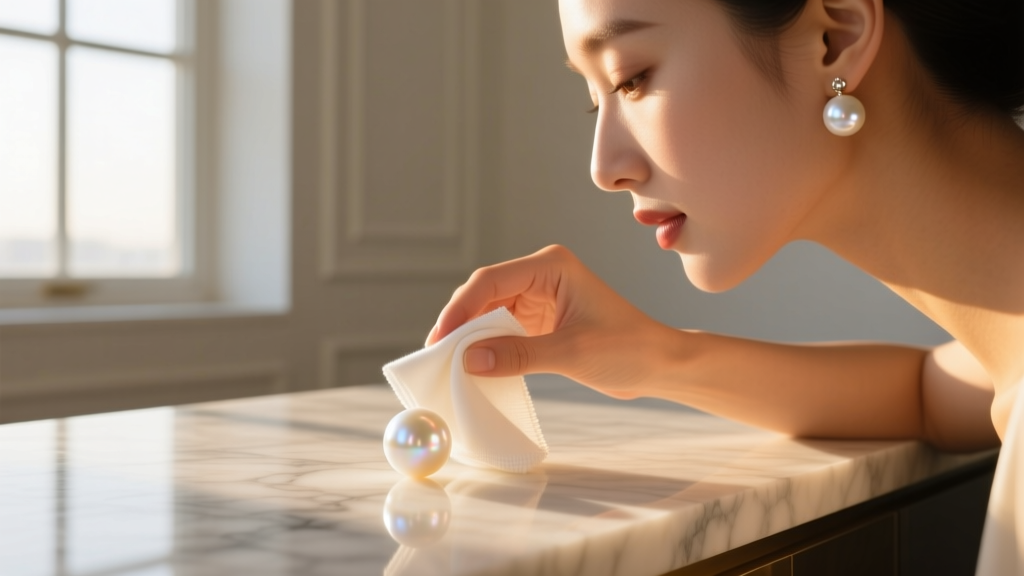
According to the American Gem Society (AGS), pearls should never be cleaned in an ultrasonic jewelry cleaner or with commercial silver dips, as the vibrations and harsh chemicals will destroy the nacre layers and dissolve the epoxy in the peg setting. Instead, after every wear, gently wipe the pearls with a clean, slightly damp microfiber cloth to remove skin oils, and store them flat in a soft pouch. Storing pearls in a plastic bag or a dry safe deposit box can cause them to dehydrate and crack; they need a slight amount of ambient moisture to maintain their structural integrity.
Your First Purchase: A Practical Decision Framework
If you are buying your first pair, start with a 7mm to 8mm pair of AA+ or AAA grade Akoya pearls set in 14k or 18k gold with screw backs. This size sits elegantly on the lobe without overwhelming the face, and the Akoya variety provides that iconic, sharp mirror-luster that defines the classic pearl earring aesthetic. Avoid department store 'bargain' pearls, which are often heavily processed, bleached, and coated in artificial lacquers to hide thin nacre. By prioritizing luster over perfect roundness, and investing in secure hardware, you will secure a versatile, timeless piece that can be worn daily and eventually passed down as a genuine heirloom.


