Beginner Guide to Aquamarine Starfish Earrings: Style & Care
Discover how to choose, style, and care for aquamarine starfish earrings. Learn about stone grades, metal pairings, and face-shape matching tips.

Introduction to Aquamarine Starfish Earrings
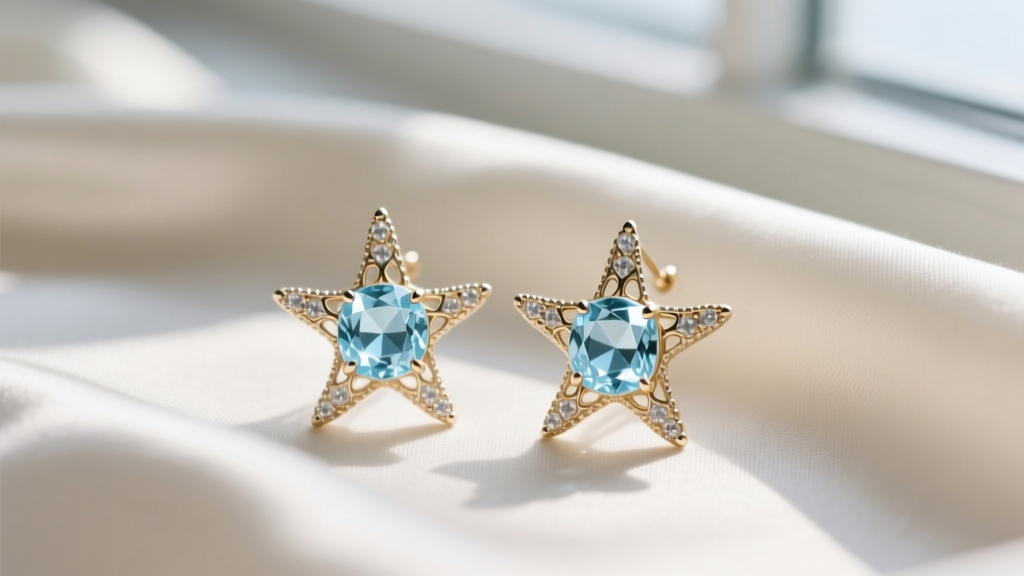
Aquamarine, a stunning blue to blue-green variety of the mineral beryl, has long been prized for its oceanic hues and exceptional clarity. When cut into the intricate, radial symmetry of a starfish silhouette, the gemstone takes on a playful yet elegant marine aesthetic. For beginners entering the world of fine jewelry, aquamarine starfish earrings offer a unique blend of organic design and durable wearability. However, navigating the market requires a solid understanding of gemological properties, metal settings, and anatomical placement. This guide will walk you through everything you need to know to select, style, and maintain your earrings with confidence.
The starfish design is particularly demanding on a gem cutter. Unlike standard round or oval cabochons, a starfish shape features five (or sometimes six) distinct points. This requires a gemstone with high structural integrity. Aquamarine ranks between 7.5 and 8 on the Mohs hardness scale, making it sufficiently durable for everyday wear, provided the setting is engineered correctly to protect those vulnerable points.
Decoding Aquamarine: Natural vs. Lab-Created vs. Simulated
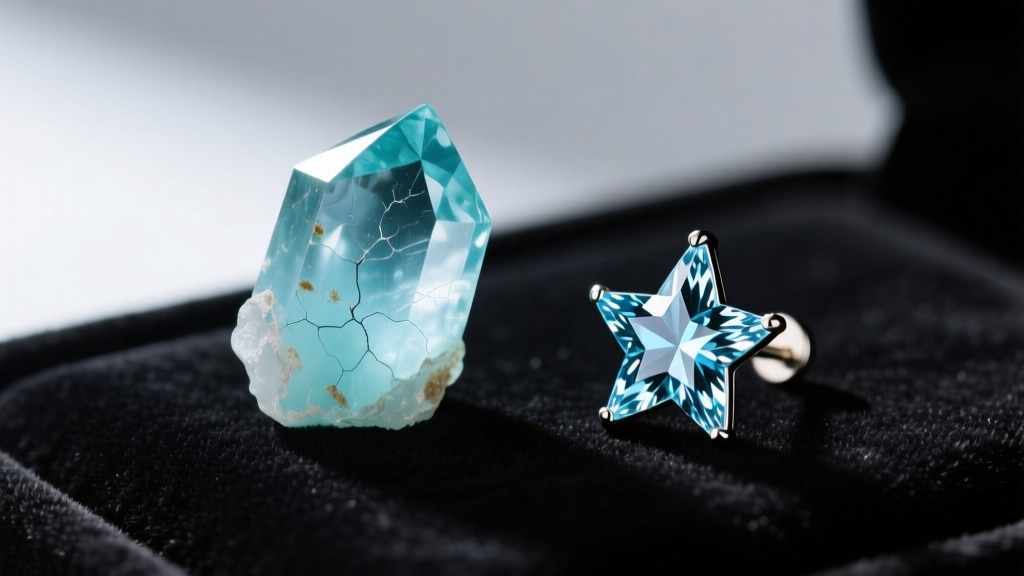
Before purchasing, it is crucial to understand what you are actually buying. The term 'aquamarine' is frequently misused in fast-fashion jewelry to describe any pale blue stone. According to the Gemological Institute of America (GIA), true aquamarine is a specific variety of beryl colored by trace amounts of iron (Fe2+ and Fe3+). Here is how the three main categories break down in terms of value, composition, and longevity.
| Stone Type | Composition & Origin | Average Price (per carat) | Durability & Notes |
|---|---|---|---|
| Natural Aquamarine | Mined beryl; often heat-treated to 400°C to remove green/yellow tones. | $100 - $500+ | Mohs 7.5-8. May contain liquid inclusions. Highest investment value. |
| Lab-Created Aquamarine | Hydrothermal synthesis; identical chemical and physical properties to mined. | $30 - $80 | Mohs 7.5-8. Usually flawless (VVS). Excellent ethical alternative. |
| Simulated (CZ/Spinel) | Cubic Zirconia or synthetic spinel dyed blue. Not beryl. | Under $10 | Mohs 8-8.5 (CZ). Lacks the specific gravity (2.68) and pleochroism of real beryl. |
For beginners seeking authentic aquamarine starfish earrings without the luxury markup, lab-created hydrothermal aquamarine is highly recommended. It offers the exact same optical properties and durability as natural stones but at a fraction of the cost, and it is free from the internal fractures that can sometimes plague mined gems.
Metal Pairings: Which Setting Protects Your Stone?
The intricate arms of a starfish earring dictate the type of metal and setting required. Because the points of the starfish are prone to chipping if struck against hard surfaces, the metal must act as a protective bumper.
Sterling Silver vs. White Gold vs. Platinum
- 14k or 18k White Gold: The industry standard for fine aquamarine jewelry. White gold is alloyed with nickel or palladium and plated with rhodium. This provides a bright, reflective surface that enhances the cool blue tones of the aquamarine. It is rigid enough to hold intricate prong settings securely.
- Platinum (950 Pt): The ultimate choice for heirloom-quality starfish earrings. Platinum is denser and heavier than gold, meaning the prongs will not wear down over decades of use. However, its high cost usually restricts it to custom, high-carat natural aquamarine pieces.
- Sterling Silver (925): A budget-friendly option, but it comes with a caveat. Silver is softer than gold and prone to sulfide tarnishing. If you choose silver aquamarine starfish earrings, ensure the silver is rhodium-plated to prevent tarnish from dulling the intricate starfish details and to protect the skin from nickel allergies often found in cheap silver alloys.
The Importance of V-Prongs
When inspecting the setting, look closely at the tips of the starfish arms. Standard round prongs leave the sharp points of the gemstone exposed. High-quality starfish designs utilize V-prongs (chevron-shaped metal caps) at the tips. This wraps the metal entirely around the vulnerable point, preventing chipping and catching on knitwear.
Sizing, Gauges, and Ear Anatomy Placement
Starfish earrings are not limited to standard lobe studs. Their organic shape makes them incredibly popular for cartilage placements, but this requires strict attention to wire gauge and weight distribution.
Standard Lobe Studs and Drops (20g to 18g)
Most standard ear piercings are done at 20-gauge (0.81mm) or 18-gauge (1.02mm). If you are buying a larger, solid gold starfish drop earring, the weight of the metal and the aquamarine can cause the earring to droop, stretching the earlobe over time. For any starfish design exceeding 15mm in diameter, insist on an 18-gauge post and use a secure screw-back or jumbo friction backing to distribute the weight evenly against the back of the lobe.
Cartilage and Helix Cuffs (16g)
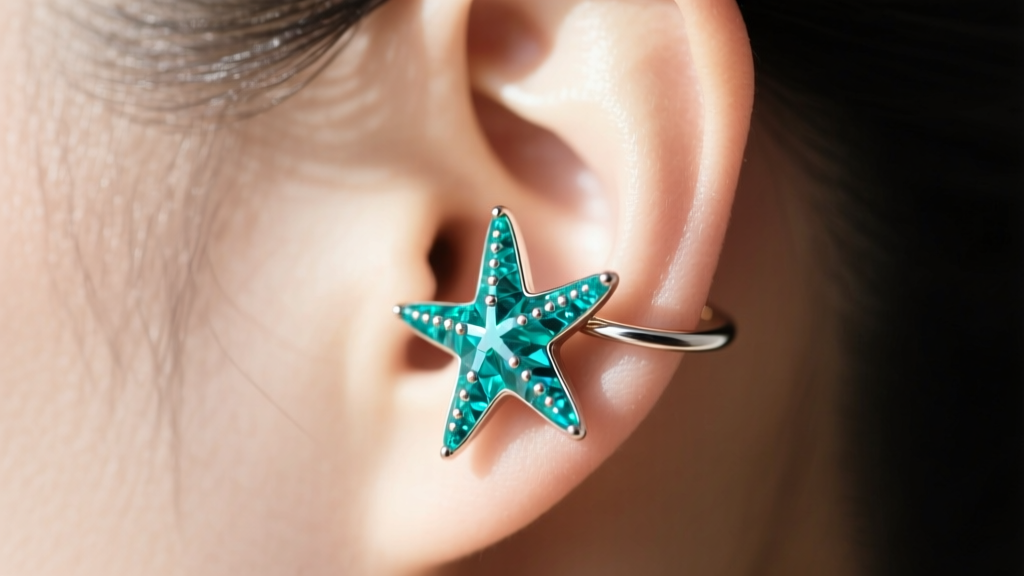
For upper ear placements like the helix or forward helix, jewelers typically use 16-gauge (1.29mm) wire. A 16g aquamarine starfish ear cuff or cartilage stud provides the necessary structural rigidity to prevent the post from bending if you accidentally brush your hair against it. Ensure the backing is a flat-back labret post rather than a standard butterfly clutch, which can dig into the side of your head while sleeping.
Face Shape Matching for Starfish Silhouettes
The radial symmetry of a starfish creates a visual widening effect. Understanding how this interacts with your facial geometry will help you choose the right scale and orientation for your earrings.
- Round Faces: Avoid wide, perfectly symmetrical starfish studs that sit flat against the lobe, as they will emphasize facial width. Instead, opt for a starfish drop earring where the starfish is oriented vertically (one arm pointing down) to elongate the jawline.
- Oval Faces: The most versatile shape. You can confidently wear wide, horizontal starfish studs or asymmetrical starfish climbers that wrap up the earlobe.
- Square Faces: The soft, organic curves of a starfish design beautifully contrast with a strong, angular jawline. Look for starfish earrings with slightly curved, tapered arms rather than rigid, geometric points.
- Heart-Shaped Faces: Balance a narrower chin by wearing starfish dangle earrings that add visual weight and width below the earlobe.
Everyday Care and Failure Mode Troubleshooting
Aquamarine is a durable stone, but it is not indestructible. Improper cleaning is the number one cause of damage to aquamarine jewelry. According to GIA care guidelines, the presence of liquid inclusions (common in natural beryl) makes these stones highly susceptible to thermal shock and ultrasonic vibrations.
Never place natural aquamarine starfish earrings in an ultrasonic jewelry cleaner or use a steam cleaner. The high-frequency vibrations can cause internal liquid inclusions to expand, leading to catastrophic fracturing of the gemstone.
Step-by-Step Safe Cleaning Protocol
- Prepare a mild solution: Mix a few drops of phosphate-free dish soap into a bowl of lukewarm (not hot) water.
- Soak briefly: Let the earrings sit in the solution for 3 to 5 minutes to loosen sebum and skin oils trapped in the starfish prongs.
- Agitate gently: Use a brand-new, ultra-soft baby toothbrush to gently sweep behind the gemstone and along the metal grooves. Do not scrub the surface of the aquamarine directly.
- Rinse and dry: Rinse under a gentle stream of lukewarm water. Pat dry with a lint-free microfiber cloth, ensuring no moisture is left trapped in the earring backing mechanism.
Troubleshooting Prong Snagging
Because starfish designs feature multiple protruding arms, they are notorious for catching on silk blouses, lace, and fine-knit sweaters. If you notice your earring snagging frequently, the rhodium plating on the prongs may have worn thin, creating microscopic burrs. Take the earrings to a local jeweler for a quick prong-tightening and rhodium re-plating. This simple maintenance step, which usually costs under $30, will extend the life of your setting by years and protect your clothing.
Final Thoughts
Aquamarine starfish earrings are a captivating choice for both the jewelry novice and the seasoned collector. By prioritizing proper V-prong settings, selecting the correct wire gauge for your specific piercing anatomy, and adhering to strict, non-ultrasonic cleaning protocols, you ensure that your marine-inspired pieces remain as brilliant as the day you bought them. Whether you opt for the investment value of natural beryl or the flawless clarity of a lab-created stone, the starfish silhouette guarantees a timeless, oceanic elegance that transcends seasonal trends.
For further reading on precious metal stamping and consumer protections when buying fine jewelry online, always refer to the Federal Trade Commission's Jewelry Guides to ensure you are getting exactly what you pay for.


