Ati Br Ch Earrings: Technical Guide to Botanical Casting
Explore the metallurgy, lost-wax casting techniques, and gauge specifications of Ati Br Ch earrings in this expert technical deep dive.

The Metallurgical Anatomy of Botanical Branch Earrings
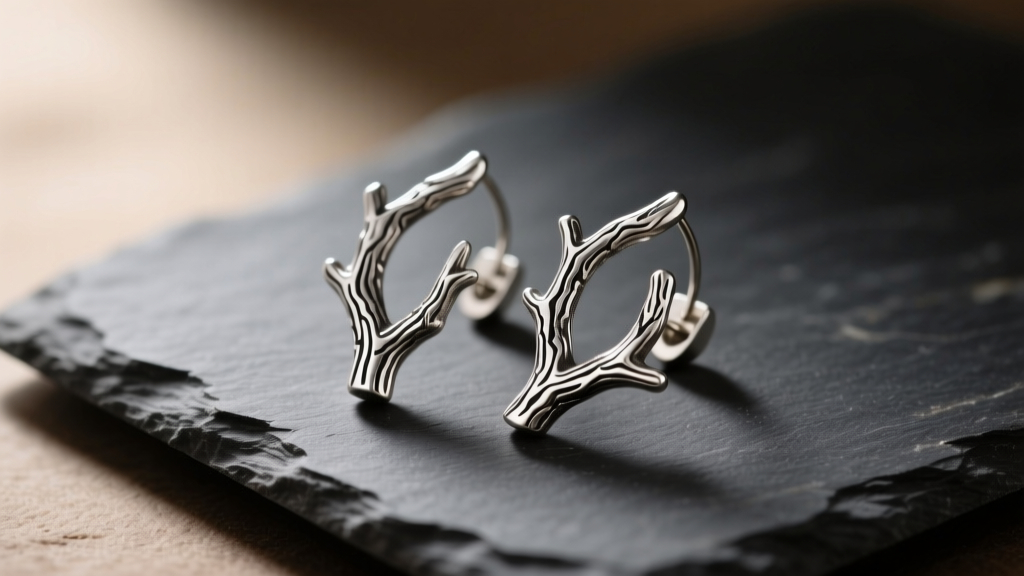
Botanical jewelry has experienced a massive technical renaissance in 2026, shifting away from mass-produced, uniform molds toward hyper-realistic, organic textures. When artisan collectors and metallurgy enthusiasts search for ati br ch earrings, they are typically looking for a specific tier of botanical, branch-inspired castings that prioritize raw, naturalistic bark textures over polished uniformity. However, achieving these intricate, asymmetrical shapes requires a profound understanding of metallurgy and fluid dynamics. This guide dissects the technical realities of producing, structurally reinforcing, and maintaining these complex organic pieces.
Alloy Composition and Tarnish Resistance
Standard 925 sterling silver (92.5% silver, 7.5% copper) is inherently problematic for deep-crevice botanical designs. During the soldering of earring posts, the copper content oxidizes rapidly, creating firescale that is nearly impossible to remove from the microscopic fissures of a cast 'bark' texture. Furthermore, copper accelerates tarnishing in the unmappable recesses of organic designs. To combat this, expert bench jewelers utilize Argentium Silver (typically 93.5% Ag, 5.5% Cu, 1.0% Ge). According to the Gemological Institute of America (GIA), the addition of germanium forms a transparent, self-healing germanium dioxide layer on the surface. This drastically slows tarnish and eliminates firescale during post-soldering, preserving the high-contrast patinas essential for branch motifs.
Lost-Wax Casting: Achieving Organic Textures
The lost-wax (cire perdue) method remains the gold standard for botanical jewelry, but branch earrings demand rigorous control over the investment and burnout phases. The organic, tapering geometry of a branch means that molten metal must flow through increasingly narrow channels without premature freezing.
Investment Ratios and Vacuum Protocols
For hyper-detailed branch earrings, the investment powder must be mixed at a strict 38:100 water-to-powder ratio. Any deviation results in either a brittle mold that cracks under thermal shock or a slurry too thick to capture the microscopic ridges of the bark texture. Mixing must occur in a vacuum chamber at 29 inches of mercury (inHg) to eliminate micro-bubbles, which would otherwise translate into surface nodules on the final silver casting.
The Thermal Gradient Burnout Cycle
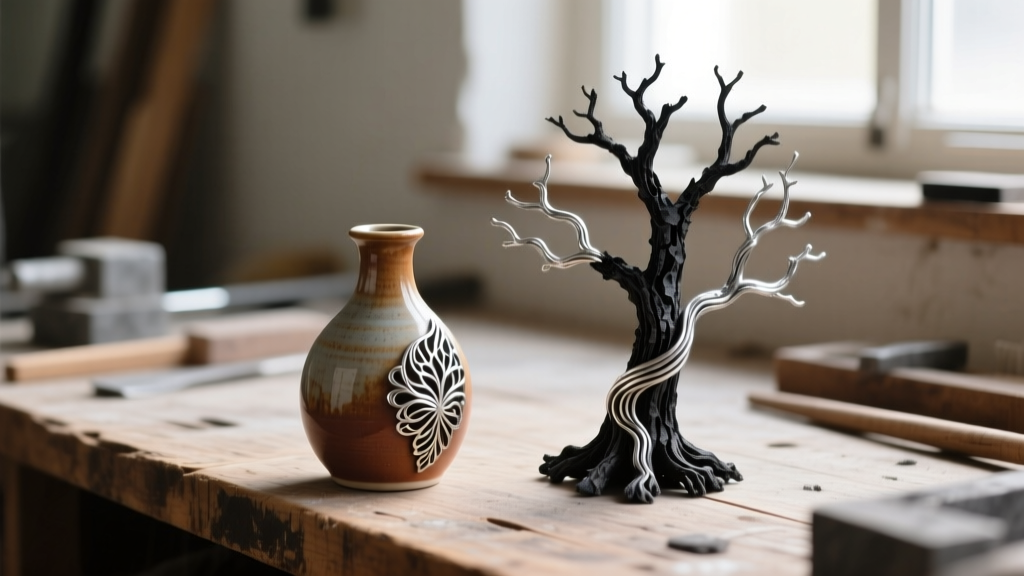
As detailed in proceedings from the Santa Fe Symposium on Jewelry Manufacturing Technology, the burnout cycle for intricate botanical trees requires a precise thermal gradient. The flask is ramped slowly to 1350°F (732°C) to melt and vaporize the wax, held for two hours to ensure complete carbon elimination, and then dropped to 950°F (510°C) for the actual pour. Casting at a flask temperature of 950°F ensures the mold is hot enough to keep the silver fluid as it navigates the thin, tapering extremities of the branch, yet cool enough to promote a fine grain structure in the metal, preventing brittleness.
Surface Finishing and Patina Chemistry
The visual success of branch earrings relies entirely on high-contrast antiquing. The recesses must be pitch black, while the high points (the 'ridges' of the bark) remain bright. This is achieved using Liver of Sulfur (potassium sulfide). Bench jewelers dilute the compound at a ratio of 1:1000 in warm distilled water (approximately 140°F). The earrings are submerged for precisely 45 to 60 seconds. Over-exposure results in a flaky, unstable sulfide layer that will chip off during wear. After rinsing, the high points are polished using a magnetic tumbler with stainless steel shot and a mild alkaline detergent, which burnishes the raised textures without stripping the dark sulfides from the deep crevices.
Gauge Specifications and Ear Lobe Biomechanics
Branch earrings are notoriously front-heavy and asymmetrical. A standard 20-gauge (0.81mm) earring post will inevitably bend under the lever-action stress of a 5-gram botanical drop, leading to post shearing or earlobe tearing. Understanding the biomechanics of the earlobe piercing channel is critical for structural integrity.
| Component | Standard Spec (Avoid) | Heavy-Duty Spec (Recommended) | Failure Risk if Undersized |
|---|---|---|---|
| Earring Post Gauge | 20g (0.81mm) | 18g (1.02mm) or 16g (1.29mm) | Post bending, lever-action shearing at the solder joint. |
| Solder Joint Type | Standard butt solder | Notched or L-bracket solder joint | Complete detachment of the branch head from the post. |
| Post Length | 10mm | 12mm to 14mm | Inability to accommodate heavy-duty clutches or earlobe swelling. |
| Backing Mechanism | Standard friction butterfly | La Pousette or screw-back clutch | Loss of earring due to front-heavy center of gravity. |
Center of Gravity and Clutch Tension
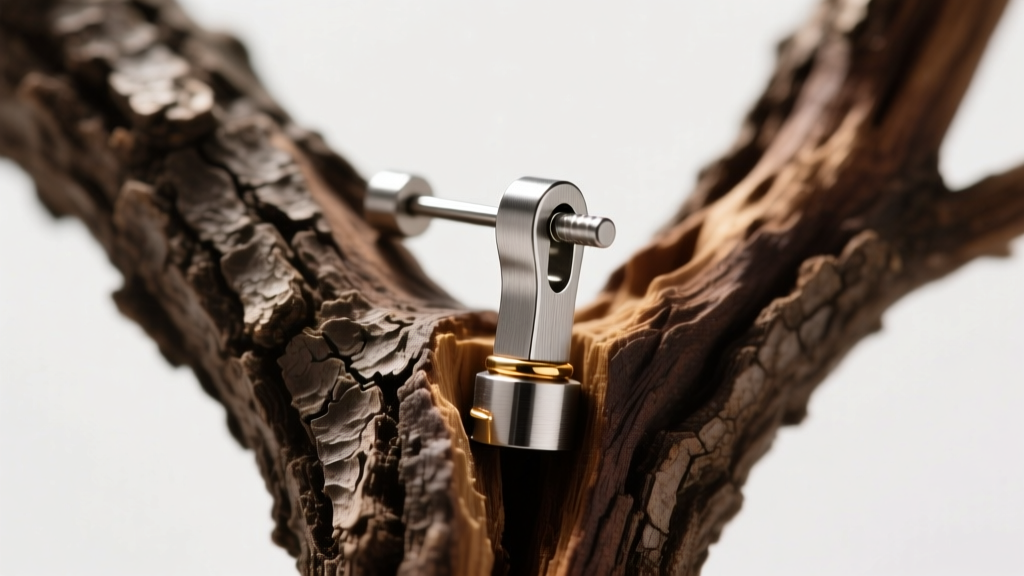
Because branch castings extend outward and downward, the center of gravity sits far away from the earlobe. Standard butterfly backs rely on simple friction, which is easily overcome by the rotational torque of a heavy branch earring catching on clothing or hair. La Pousette backs, which utilize a locking mechanism triggered by a push-button, or precision-machined screw-backs, are mandatory for any botanical earring exceeding 3.5 grams per ear.
Common Failure Modes and Troubleshooting
Even with perfect casting parameters, organic designs are prone to specific metallurgical and structural failures. Expert jewelers must inspect for the following:
- Gas Porosity: Appears as tiny, perfectly spherical pits on the surface of the branch. This is caused by trapped hydrogen or nitrogen in the molten silver, often due to an inadequate vacuum during the investment phase or a turbulent pour.
- Shrinkage Porosity: Appears as jagged, angular voids, usually located at the thick 'nodes' or junctions of the branch. This occurs when the thick section cools slower than the surrounding thin metal, starving the node of molten silver as it contracts. Adding a localized wax sprue to act as a heat sink during casting resolves this.
- Work Hardening Cracks: If a branch earring is bent to adjust the profile after casting, the silver can work-harden and snap. Botanical pieces must be annealed at 1200°F (648°C) and quenched before any mechanical adjustment is attempted.
Sourcing and Authenticating Artisan Botanical Pieces
As the market for organic jewelry expands in 2026, distinguishing between true lost-wax artisan castings and mass-produced, 3D-printed resin molds coated in silver is vital. True ati br ch earrings and similar high-end botanical pieces will exhibit microscopic asymmetry; no two branch nodes or bark fissures will be perfectly identical. Furthermore, authentic pieces will bear deep, laser-engraved or stamped hallmarks (such as '925' or 'AG935') located on a flat, polished plane of the post or a discreet flat pad on the branch, rather than shallow stamps that wear away quickly. By understanding the metallurgy, casting physics, and structural requirements detailed above, collectors and jewelers can ensure these wearable pieces of nature endure for generations.


