Master the Fit: A Technical Guide to 25mm Hoop Earrings
Discover exact wire gauges, closure types, and material grades for 25mm hoop earrings. Expert sizing and lobe-stretching prevention tips.

The Geometry of the Perfect 25mm Hoop
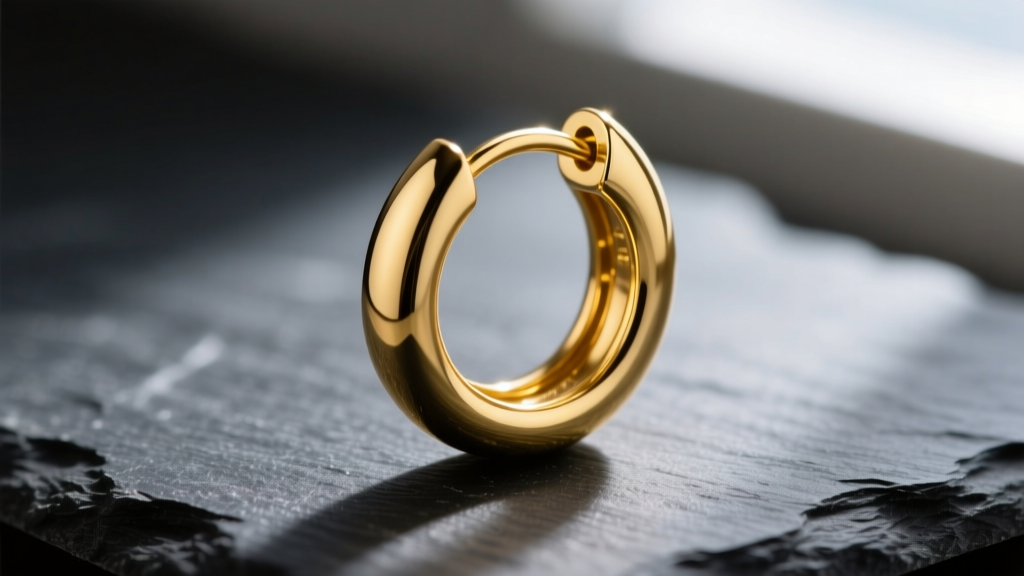
In the realm of ear styling, 25mm hoop earrings occupy a highly specific anatomical niche. Measuring approximately one inch in diameter, this size sits precisely at the threshold between a snug huggie and a dangling statement piece. However, from a technical and manufacturing standpoint, the way brands measure and advertise this 25mm dimension is a frequent source of consumer frustration and poor fit. The critical distinction lies between Inner Diameter (ID) and Outer Diameter (OD).
When a reputable body jewelry manufacturer specifies a 25mm hoop, they are referring to the Inner Diameter (ID)—the actual empty space inside the circle. This is the metric that dictates how the earring will interact with your earlobe or cartilage. Conversely, many fast-fashion and commercial jewelry brands list the Outer Diameter (OD). If you purchase a hoop advertised as 25mm OD, but the wire or tubing is 3mm thick, your actual inner clearance is only 19mm. This drastically alters the drape, potentially causing the hoop to hug the lobe too tightly, leading to friction, trapped moisture, and localized contact dermatitis.
For a standard lobe piercing placed roughly 8mm to 10mm from the edge of the ear, a true 25mm ID hoop will allow the earlobe to rest comfortably inside the circle without the metal pressing against the lower edge of the fistula. For upper lobe or lower cartilage (like a snug or anti-tragus), a 25mm ID is generally too large and will snag easily, making precise ID verification a non-negotiable step in the purchasing process.
Wire Gauge and Weight Distribution Mechanics
The structural integrity of 25mm hoop earrings is entirely dependent on the wire gauge relative to the hoop's overall circumference. A 25mm circle generates a surprising amount of kinetic leverage. When the hoop is snagged on clothing or hair, the force is transferred directly to the piercing channel, acting as a fulcrum.
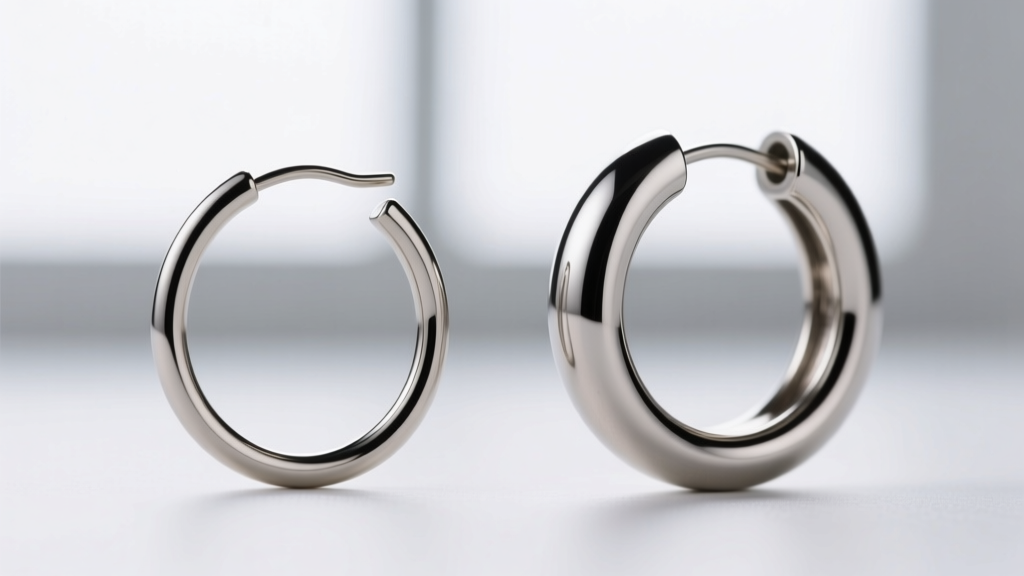
If the wire gauge is too thin, this leverage creates what professional piercers call the "cheese-cutter effect." The thin wire slices through the tissue, causing the piercing to migrate downward and eventually reject entirely. Therefore, selecting the correct gauge is not merely an aesthetic choice; it is a matter of tissue preservation.
| Gauge | Millimeter | Tensile Yield & Drape | Recommended Application for 25mm ID |
|---|---|---|---|
| 20G | 0.81mm | Low yield strength, high flexibility | Avoid. High risk of migration and cheese-cutting in standard lobes. |
| 18G | 1.02mm | Moderate strength, lightweight drape | Minimum acceptable. Suitable for healed, healthy standard lobe piercings. |
| 16G | 1.29mm | High strength, structural rigidity | Optimal. Best balance of weight, security, and tissue health for daily wear. |
| 14G | 1.63mm | Maximum rigidity, heavier weight | Specialty. Ideal for stretched lobes or heavy-gauge initial piercings. |
According to the Association of Professional Piercers (APP), maintaining an adequate wire thickness is vital for preventing tissue trauma. For a 25mm hoop, 16G (1.29mm) is the gold standard for everyday wear, providing enough rigidity to resist warping when the earring is opened and closed, while remaining light enough to prevent gravity-induced lobe stretching over time.
Closure Mechanisms: Failure Rates and Security
The closure mechanism on a 25mm hoop dictates both the security of the earring and the hygiene of the piercing channel. Because 25mm is a highly active size—moving frequently as you turn your head or brush your hair—the closure must withstand repetitive lateral stress.
Hinged Segment Rings (Clickers)
Hinged hoops feature a barrel hinge on one side and a snap or "click" closure on the other. They are currently the most popular style on the market due to their ease of use. However, the technical drawback is the hinge barrel itself. The microscopic gap in the hinge acts as a trap for sebum, dead skin cells, and soap residue. If not cleaned weekly with an ultrasonic jewelry cleaner or a soft bristle brush, this buildup can harbor bacteria and cause localized irritation.
Continuous (Endless) Hoops
Continuous hoops rely on a tension fit, where a slightly thinner post inserts into a hollow receiving tube. Aesthetically, they offer the cleanest, most seamless look. Mechanically, however, they possess the highest failure rate. Repeated opening and closing fatigues the metal at the bend point, eventually causing the wire to warp. Once the tension is lost, the earring will slide out of the piercing unexpectedly. Furthermore, inserting a continuous hoop requires bending the metal out of its circular axis, which can scratch the interior of the fistula if done carelessly.
Latch-Back and Post Closures
Traditional latch-back hoops use a straight post that clicks into a curved catch wire. While highly secure against lateral pulling, the straight post is a structural vulnerability. If the 25mm hoop is pulled forward, the straight post will bend. Once bent, the post will never align perfectly with the catch again, rendering the earring structurally compromised and prone to falling out.
Material Metallurgy: Hypoallergenic Standards
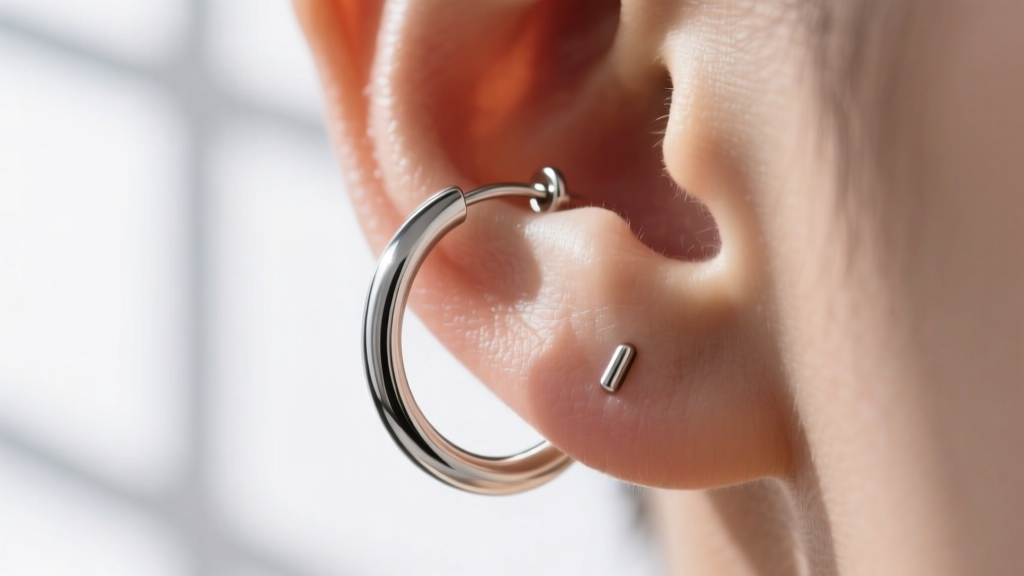
When investing in 25mm hoop earrings that will sit in the ear for 12 to 16 hours a day, the metallurgical composition of the alloy is paramount. The term "surgical steel" is largely a marketing misnomer that obscures the actual chemical makeup of the jewelry.
Most commercial "surgical steel" is 316L stainless steel. While 316L is highly corrosion-resistant, it contains between 8% and 10.5% nickel. Under the friction and warmth of the earlobe, nickel ions can leach into the skin. The American Academy of Dermatology notes that nickel is the leading cause of allergic contact dermatitis. To mitigate this, the European Union's Nickel Directive mandates that jewelry in prolonged contact with the skin must release less than 0.5 µg/cm²/week of nickel. Many cheap 316L hoops exceed this threshold once the outer polish layer wears away.
Expert Standard: For guaranteed biocompatibility, demand Implant-Grade Titanium (ASTM F136). This specific alloy contains zero nickel and is the exact same material used in orthopedic joint replacements. It is completely inert in the human body and will not trigger contact dermatitis, regardless of sweat, humidity, or friction.
If you prefer precious metals, ensure your 25mm hoops are crafted from solid 14k or 18k gold that is specifically nickel-free. Many jewelers alloy gold with nickel to increase hardness and lower costs. Always verify that the gold is alloyed with palladium or silver instead. Avoid gold-plated or gold-vermeil hoops for daily wear; the microscopic pores in the plating will eventually expose the base metal (usually brass or copper) to the piercing channel, leading to rapid oxidation and green discoloration of the tissue.
2026 Sourcing and Pricing Tiers
Understanding the technical specifications of 25mm hoop earrings allows you to accurately assess market pricing. In 2026, the cost of raw precious metals and ASTM-certified titanium has stabilized, creating distinct pricing tiers based on manufacturing quality and material purity.
- Tier 1: Commercial Fashion ($15 - $35) Typically 316L steel or brass with gold plating. Often mislabeled OD measurements. High risk of hinge failure and nickel exposure. Suitable only for occasional, short-term wear.
- Tier 2: Specialty Body Jewelry ($40 - $90) Solid ASTM F136 titanium or solid 14k gold. Precise ID measurements, 16G or 18G wire, and precision-machined clicker closures. Brands in this tier (e.g., BVLA, Maria Tash, Anatometal) offer lifetime warranties on closure mechanisms.
- Tier 3: Fine Jewelry & Bespoke ($150 - $400+) Solid 18k gold or platinum, often featuring hand-set diamond or gemstone inlays along the front-facing arc. The hardware is engineered to be completely seamless, with hidden tension closures that require specialized tools to open.
By prioritizing Inner Diameter, adhering to a minimum 18G (preferably 16G) wire thickness, and strictly selecting ASTM F136 titanium or nickel-free solid gold, you transform the 25mm hoop from a simple accessory into a precision-engineered, anatomically perfect fixture in your daily rotation.


