Amber Drop Earrings: A Technical Guide to Grading & Settings
Discover the technical details of authentic amber drop earrings. Learn to grade Baltic resin, identify inclusions, and choose secure settings.

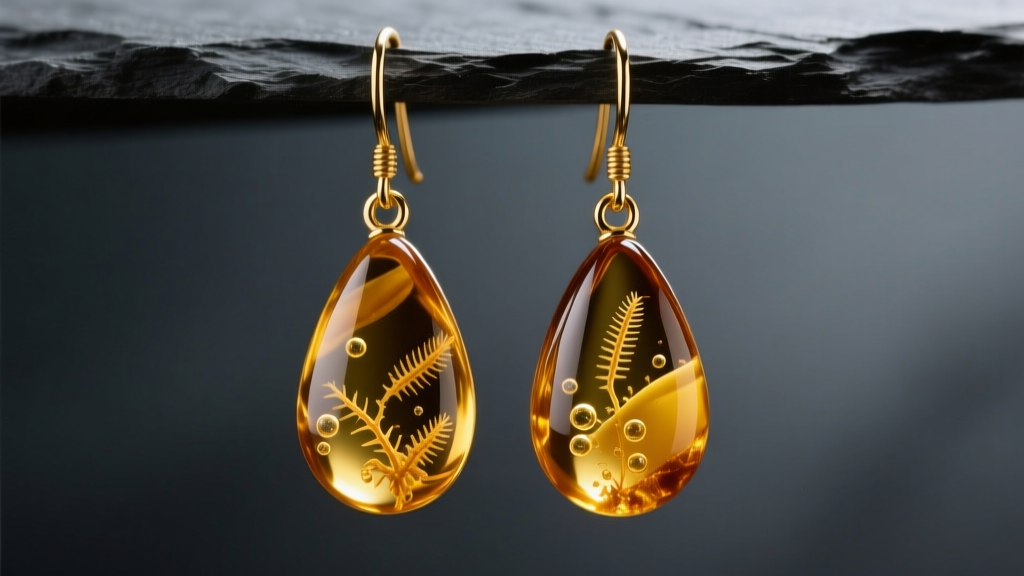
The Mineralogy and Polymerization of Amber
When evaluating amber drop earrings, it is crucial to understand that amber is not a mineral or a gemstone in the traditional sense. It is an organic gemstone formed from the fossilized resin of extinct coniferous trees, primarily Pinus succinifera. The transformation from sticky tree resin to hardened amber requires millions of years of polymerization and oxidation under specific geological conditions. According to the Mindat mineral database, true amber must be at least 20 million years old to achieve full molecular stability. Resin younger than this is classified as copal, which remains partially polymerized and is highly susceptible to environmental degradation, making it a poor choice for long-term jewelry wear.
On the Mohs scale of mineral hardness, amber ranks between 2.0 and 2.5. This extreme softness dictates strict limitations on how the material can be cut, polished, and set into drop earring configurations. Unlike quartz or beryl, amber cannot withstand high-pressure setting tools or ultrasonic cleaning vibrations, requiring specialized bench techniques that we will detail below.
Technical Grading: Baltic vs. Dominican vs. Copal
The commercial market for amber drop earrings is dominated by three primary sources, each with distinct chemical profiles, visual characteristics, and market valuations. The International Amber Association strictly regulates the classification of Baltic amber, which contains 3% to 8% succinic acid—a compound entirely absent in Dominican varieties.
| Amber Type | Geological Age | Primary Color Profiles | Inclusion Frequency | Avg. Price per Carat |
|---|---|---|---|---|
| Baltic (Succinite) | 35-45 Million Years | Butterscotch, Cherry, Opaque | Moderate (mostly gnats) | $2.00 - $15.00 |
| Dominican (Blue) | 15-20 Million Years | Transparent Gold, Neon Blue | High (diverse insects) | $20.00 - $100.00+ |
| Copal (Colombian) | 10,000 - 1 Million Years | Pale Yellow, Cognac | Very High (modern ants) | $0.10 - $0.50 |
Expert Note: Beware of 'heat-treated' Baltic amber. Many commercial drop earrings feature 'spangled' or 'sun-spangled' amber. This is achieved by heating the resin in a rapeseed oil bath to induce internal stress fractures that reflect light. While accepted in the trade, it fundamentally alters the stone's structural integrity compared to natural, untreated drops.
Identifying Authentic Amber: Destructive vs. Non-Destructive Testing
Because amber drop earrings command a premium, the market is flooded with phenolic resins, casein plastics, and glass imitations. As a bench jeweler or informed collector, you must rely on empirical testing protocols rather than visual inspection alone.

The Specific Gravity (Saltwater) Float Test
Amber has a specific gravity of 1.05 to 1.10, meaning it is only slightly denser than fresh water (1.00). By creating a saturated saline solution using a precise ratio of 1 part table salt to 2 parts warm water, the density of the liquid increases to approximately 1.12. Genuine amber drop earrings (when removed from their metal findings) will float in this solution, while glass, bakelite, and most modern plastics will sink immediately. Note that copal will also float, so this test only rules out glass and heavy synthetics.
UV Fluorescence Analysis
Using a 365nm (nanometer) UV flashlight provides the most reliable non-destructive verification. According to the Gemological Institute of America (GIA), authentic Baltic amber will fluoresce a pale, milky blue or greenish-yellow under long-wave UV light. Dominican blue amber exhibits an intense, almost neon blue glow due to polycyclic aromatic hydrocarbons. Conversely, plastic imitations will either show no fluorescence or emit a stark, artificial white glare. Copal tends to fluoresce a bright, chalky white, easily distinguishing it from true amber.
Engineering the Perfect Drop: Settings and Weight Distribution
Designing or selecting the setting for amber drop earrings requires accommodating the material's low Mohs hardness and conchoidal fracturing tendency. Traditional prong settings are highly discouraged. The metal prongs will eventually abrade the amber, and the pressure required to tighten them can cause the stone to cleave or chip.
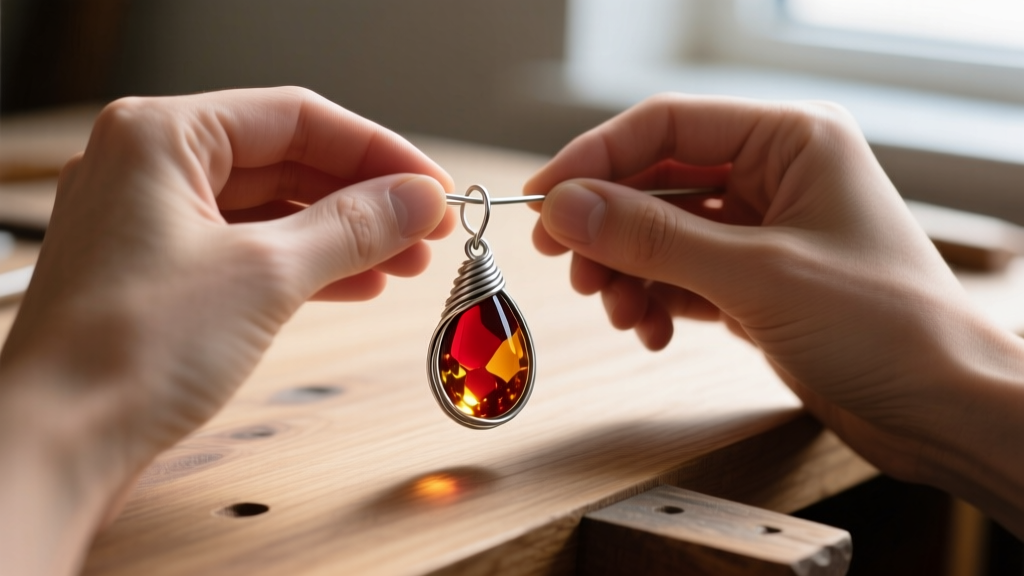
The optimal setting for an amber drop is a full bezel or a tension-free wire cage (wire wrapping). When using a bezel, the metal must be pushed over the amber using a bezel roller with a polished, rounded face to prevent scratching. For wire-wrapped drops, jewelers should use 24-gauge or 26-gauge dead-soft wire to create a protective cage that secures the stone without applying lateral pressure. Furthermore, because drop earrings swing and catch on clothing, the bail (the loop connecting the amber to the hook) must be reinforced with a metal tube or heavy jump ring to prevent the soft amber from wearing through at the drill hole.
Hardware Specifications: Wire Gauges and Hook Types
The pendulum effect of a drop earring places significant kinetic stress on the earlobe piercing. Selecting the correct hardware is a matter of both comfort and security.
| Hook Type | Standard Gauge | Security Level | Best Use Case |
|---|---|---|---|
| Leverback | 20g or 21g | High (Enclosed) | Heavy amber drops; active wear |
| French Wire (Fishhook) | 20g or 22g | Low (Requires stopper) | Lightweight, delicate drops |
| Ear Wire with Coil | 18g or 20g | Medium | Thick lobes; heavy statement pieces |
For amber drops exceeding 4 grams, a 20-gauge leverback is mandatory. French wires (fishhooks) in 22-gauge will bend under the weight of large amber teardrops, causing the earring to hang at an awkward angle and increasing the risk of loss. Always pair French wires with high-quality silicone friction backs rather than metal scroll backs, which can pinch the lobe when supporting heavier drops.
Care, Maintenance, and Failure Modes
Amber is highly reactive to common household chemicals and environmental stressors. The most common failure mode for amber drop earrings is 'crazing'—a network of fine surface cracks caused by rapid moisture loss or thermal shock. To prevent this, never store amber near heat sources or in unhumidified safes for extended periods.
- Chemical Degradation: Hairspray, perfume, and acetone will instantly dissolve the surface polish of amber, leaving a permanent cloudy etch. Always apply cosmetics before putting on your earrings.
- Cleaning Protocol: Never use ultrasonic cleaners, steamers, or commercial jewelry dips. Clean amber drops using only a soft, lint-free microfiber cloth lightly dampened with lukewarm water and a drop of mild, pH-neutral dish soap.
- Re-polishing: If the amber becomes dull over time, it can be re-polished on a muslin buffing wheel using a mild plastic polish or toothpaste, but this must be done at very low RPMs to avoid melting the resin through friction heat.
By understanding the geological origins, chemical vulnerabilities, and structural requirements of this ancient organic gem, you can confidently select, design, and maintain authentic amber drop earrings that will endure for generations.