How to Authenticate and Restore Vintage RH Macy and Co Earrings
Learn how to authenticate, clean, and convert vintage RH Macy and Co earrings with our expert step-by-step restoration and styling guide.

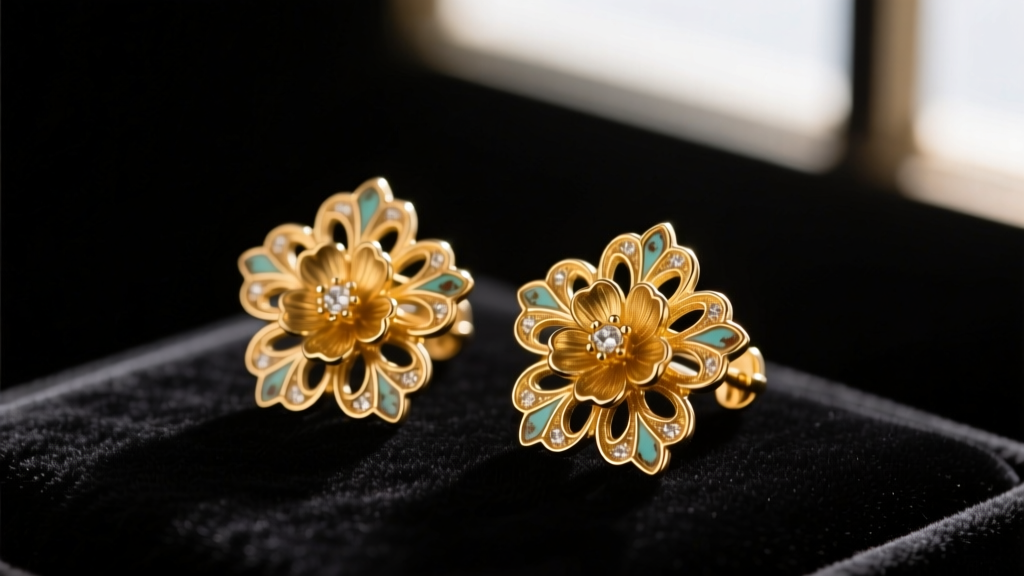
Collecting heritage jewelry is a pursuit of history, craftsmanship, and timeless style. Among the most sought-after pieces in the vintage market are department store commissions from the mid-20th century. If you are looking to buy, restore, or wear RH Macy and Co earrings, you are engaging with a legacy that bridges the gap between accessible luxury and fine jewelry craftsmanship. During the 1930s through the 1960s, the R.H. Macy & Co. jewelry department was renowned for curating exceptional estate pieces and commissioning custom runs from master goldsmiths and premier costume jewelry houses.
However, acquiring vintage earwear comes with unique challenges. From deciphering faded hallmarks to safely cleaning fragile gemstones and converting outdated screw-backs for modern pierced ears, proper restoration requires a meticulous, step-by-step approach. In this comprehensive guide, we will walk you through the exact methodologies used by professional jewelers to authenticate, clean, and modernize vintage Macy's earrings without compromising their historical integrity or monetary value.
The Legacy of R.H. Macy & Co. Jewelry
Before diving into restoration, it is crucial to understand what you are holding. R.H. Macy & Co. did not manufacture all of its jewelry in-house. Instead, the retailer acted as a prestigious curator, contracting legendary manufacturers like Trifari, Miriam Haskell, and Coro to produce exclusive lines, while also stocking fine jewelry from independent artisans. This means that authenticating a pair of vintage Macy's earrings often requires cross-referencing the store's stamp with the underlying manufacturer's hallmark. Recognizing these dual signatures is the first step in establishing the piece's provenance and true market value.
Step 1: Authenticating the Maker's Mark and Materials
The most critical step in evaluating any vintage piece is examining the hallmarks. You will need a 10x jeweler's loupe and a high-lumen LED light. Inspect the reverse of the earring, the post base, and the interior of any clip-on mechanisms. According to the Lang Antiques' Antique Jewelry University, department store hallmarks from this era were often stamped with a specific serif font that changed subtly over the decades.
Common Hallmarks and Material Grades
Use the table below to identify the material composition of your vintage finds. Understanding these grades will dictate your cleaning and restoration methods.
| Hallmark / Stamp | Material Composition | Typical Era | Restoration Notes |
|---|---|---|---|
| R.H. Macy & Co. 1/20 12K GF | Gold-Filled (5% 12k gold by weight) | 1930s - 1950s | Highly durable; can withstand gentle polishing. |
| Macy's Sterling / .925 | Sterling Silver (92.5% pure silver) | 1940s - Present | Prone to oxidation; requires specific silver dips. |
| R.H. Macy & Co. Rhodium | Rhodium-plated base metal or silver | 1950s - 1970s | Do not polish aggressively; plating is microscopically thin. |
| Macy's 14K / 585 | Solid 14 Karat Gold | All Eras | Safe for ultrasonic cleaning (unless stone-set). |
Step 2: Safe Cleaning Protocols for Vintage Pieces
One of the most common mistakes collectors make is treating vintage costume jewelry like modern fine jewelry. Submerging a 1940s rhinestone earring in water or placing it in an ultrasonic cleaner can cause irreversible damage. The Gemological Institute of America (GIA) emphasizes that porous stones and foil-backed paste gems require specialized, non-invasive cleaning methods.
The Foil-Back Warning
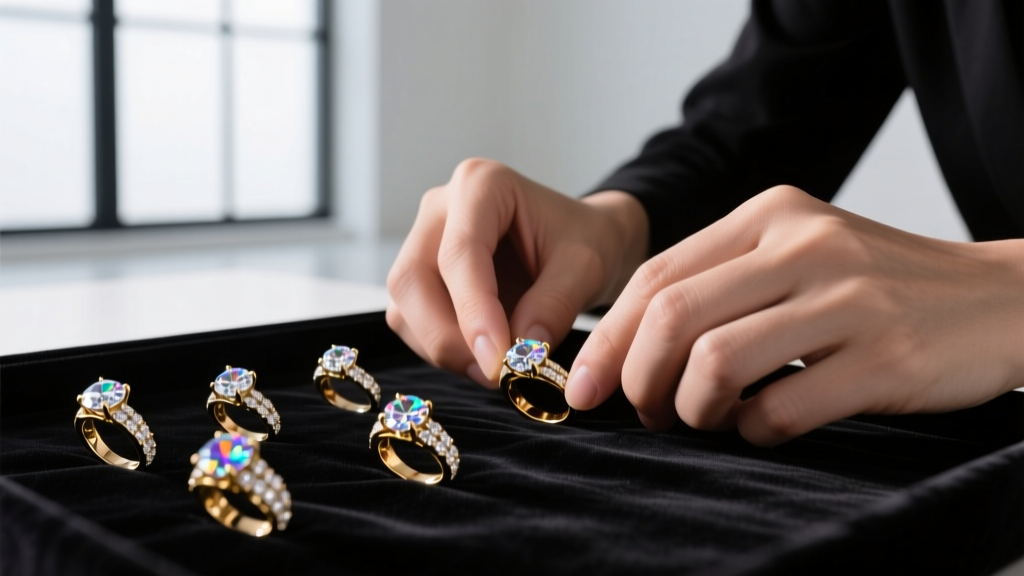
Many vintage RH Macy and Co earrings featuring 'diamond' accents actually utilize glass or acrylic paste stones with a delicate metallic foil backing. This foil is what gives the stone its brilliance. If water seeps behind the stone, the foil will oxidize, turn black, and flake away, leaving you with a dull, lifeless gray stone. Never use ultrasonic cleaners (which operate at roughly 40,000 Hz and can shatter fragile glass) or chemical dips on foil-backed jewelry.
Step-by-Step Cleaning Method
- For Gold-Filled and Solid Gold: Mix a few drops of mild, phosphate-free dish soap (like Dawn) into lukewarm distilled water. Use a baby toothbrush with ultra-soft bristles to gently agitate dirt from the filigree. Rinse quickly under a low stream of distilled water and pat dry immediately with a microfiber cloth.
- For Sterling Silver Filigree: Use a dry, treated silver polishing cloth. Fold the cloth and gently pinch the silver wires to remove tarnish. Avoid liquid silver dips, as they can strip the intentional dark patina (antiquing) that gives vintage filigree its three-dimensional depth.
- For Rhinestones and Paste: Use a barely damp cotton swab with a touch of glass cleaner (ammonia-free) to wipe the top surface of the stone only. Keep the swab away from the prongs and the back of the setting.
Step 3: Converting Screw-Backs to Modern 20-Gauge Posts
The vast majority of vintage earrings from the 1930s to the 1950s were designed for unpierced ears, utilizing screw-back or clip-on mechanisms. While some collectors prefer to keep them as-is, converting them to modern push-back posts makes them wearable for today's pierced earlobes. However, this is a precision task that should ideally be performed by a professional jeweler using a laser welder.
Understanding Vintage vs. Modern Gauge Sizes
Vintage screw-back earrings typically feature a threaded post that is significantly thicker than modern standard earrings. A vintage screw-back is often 18-gauge (1.02mm) or even 16-gauge (1.29mm). In contrast, modern earlobes are accustomed to 20-gauge (0.81mm) or 22-gauge (0.64mm) posts. Forcing a thick 16-gauge vintage screw-back into a modern 20-gauge piercing can cause micro-tears, blowouts, and severe irritation.
The Professional Conversion Process
- Removal: The jeweler uses flush cutters to carefully snip the threaded screw-back or clip-on hinge at the base, ensuring no damage to the decorative front.
- Filing: The remaining nub is filed completely flat against the backplate to ensure a flush mount.
- Welding: A new, hypoallergenic 20-gauge sterling silver or 14k gold post is attached. Modern jewelers use laser welding rather than traditional torch soldering. Laser welding concentrates heat into a microscopic point, preventing thermal damage to heat-sensitive vintage stones (like opals, emeralds, or paste glass) that would otherwise fracture under a jeweler's torch.
- Finishing: The post is polished, and a secure silicone or metal butterfly back is fitted.
Note: Never attempt to glue a post onto a vintage earring using cyanoacrylate (Super Glue) or epoxy. The shear force of putting the earring on and taking it off will eventually break the bond, and the glue residue will ruin the antique patina.
Step 4: Styling Heritage Earrings for Modern Face Shapes
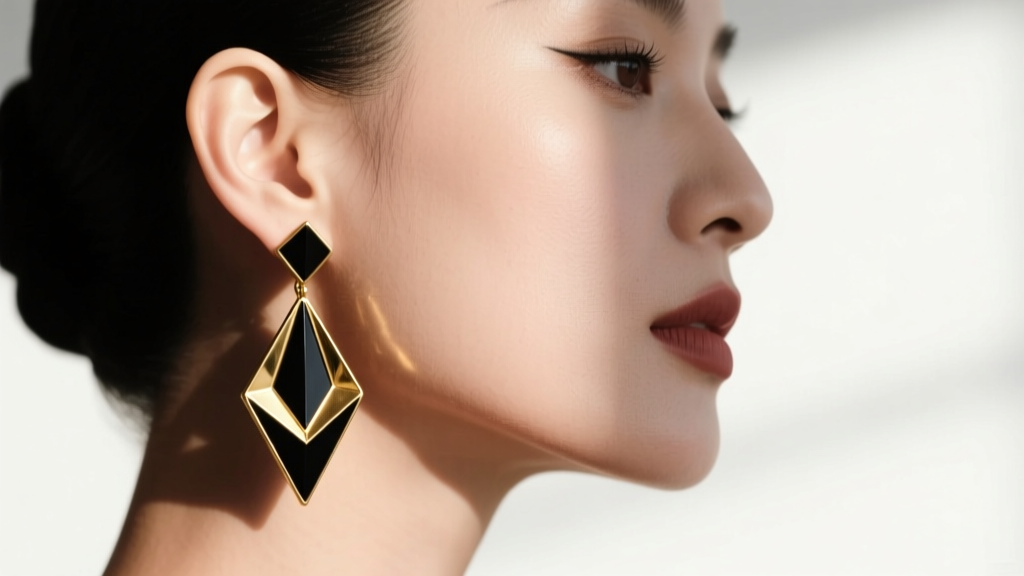
Once your RH Macy and Co earrings are authenticated, cleaned, and converted, the final step is styling them to complement your unique features. Vintage designs often feature bold, geometric Art Deco motifs or sweeping, floral Retro-era curves that interact differently with facial structures than modern minimalist jewelry.
- Round Face Shapes: Opt for vintage Art Deco drop earrings with sharp, linear geometric designs. The elongated vertical lines and sharp angles of 1920s and 30s Macy's commissions will help visually lengthen the face and draw the eye downward, creating a balancing effect.
- Square Face Shapes: Look for 1940s Retro-era floral or curved scrollwork clips (converted to posts). The soft, sweeping curves and rounded cabochon stones will soften a strong jawline and add a touch of organic movement.
- Heart-Shaped Faces: Vintage chandelier or wide teardrop earrings are ideal. The width at the bottom of the earring helps to visually fill out a narrower chin, creating beautiful symmetry.
- Oval Face Shapes: You have the versatility to wear almost any vintage style, from bold mid-century modernist studs to elaborate Victorian-revival dangles that the Macy's estate department frequently stocked in the 1950s.
Final Thoughts on Preserving Earwear History
Restoring vintage RH Macy and Co earrings is about more than just making old jewelry wearable again; it is an act of preservation. By taking the time to properly authenticate the hallmarks, utilizing safe, non-destructive cleaning methods, and respecting the metallurgy of the original piece during post-conversion, you ensure that these wearable artifacts survive for another century. Whether you are wearing a pair of 1940s gold-filled floral clips to a formal event or styling 1950s sterling silver studs for everyday wear, you are carrying a tangible piece of American retail and design history with you.


