How to Authenticate and Style Turquoise and Coral Earrings
Learn how to authenticate, style, and care for turquoise and coral earrings. Expert tips on stone grades, metal gauges, and daily maintenance.

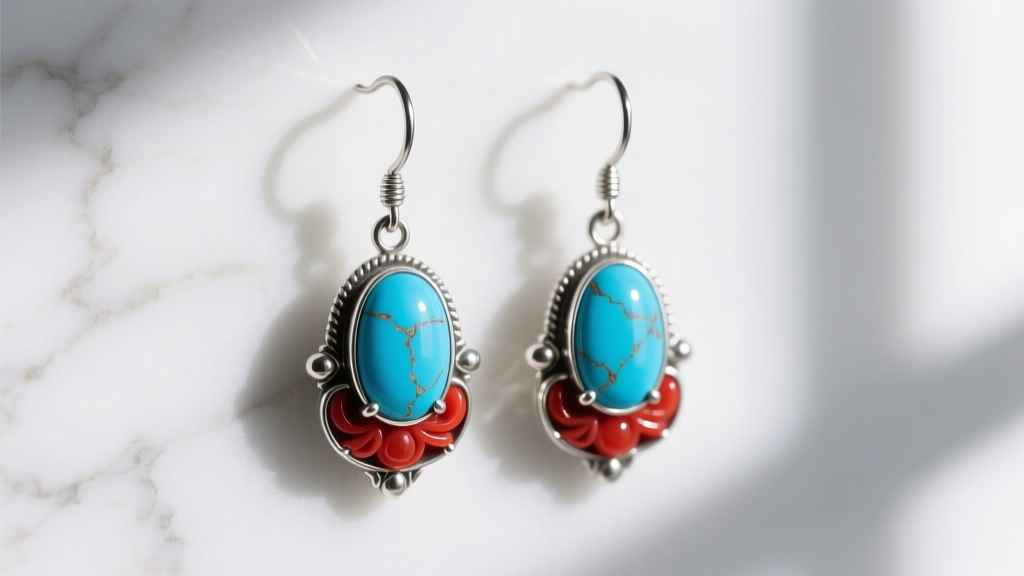
The combination of turquoise and coral has been a cornerstone of artisan jewelry for centuries, prized for its striking contrast between sky-blue or deep green matrices and vibrant, organic reds. However, the modern market is saturated with dyed howlite, reconstituted chalk, and synthetic resins masquerading as genuine stones. If you are investing in turquoise and coral earrings, understanding material grades, structural hardware requirements, and proper styling protocols is essential.
This step-by-step guide will teach you how to authenticate your stones, select the correct wire gauges for heavy cabochons, and maintain these porous gems for a lifetime of wear.
Understanding Material Grades: Natural vs. Stabilized
Before you can authenticate your earrings, you must understand how these stones are treated. According to the Gemological Institute of America (GIA), natural, untreated turquoise is exceptionally rare and highly porous, ranking between 5 and 6 on the Mohs hardness scale. Because it is so fragile, roughly 90% of the turquoise on the commercial market is stabilized.
Turquoise Treatments Explained
- Natural (Untreated): Mined, cut, and polished with no chemicals. It will absorb skin oils and change color over time. Extremely expensive and usually reserved for high-end, small stud earrings.
- Stabilized: Genuine turquoise that is too soft to be cut is placed in a vacuum chamber and infused with a clear epoxy resin. This hardens the stone and locks in the color. This is the industry standard for durable earrings and is considered genuine.
- Dyed/Reconstituted (Chalk): Pulverized turquoise dust or completely different minerals (like howlite or magnesite) are mixed with resin and artificial dyes. This is essentially plastic and holds no gemstone value.
Coral Varieties and Mineralogy
Coral is not a stone; it is an organic gemstone made of calcium carbonate. The Mindat mineralogical database notes that precious red coral (Corallium rubrum) ranks a mere 3 to 4 on the Mohs scale. Due to severe over-harvesting and CITES regulations, genuine Mediterranean red coral is heavily restricted and commands premium prices. Most affordable "red coral" on the market is actually bamboo coral, a naturally grey, highly porous deep-sea coral that has been heavily dyed red and filled with resin.
Step-by-Step Guide to Authenticating Your Earrings
When evaluating turquoise and coral earrings at a vintage market, estate sale, or online auction, use these physical and visual tests to verify authenticity.
Step 1: The Visual Matrix Inspection
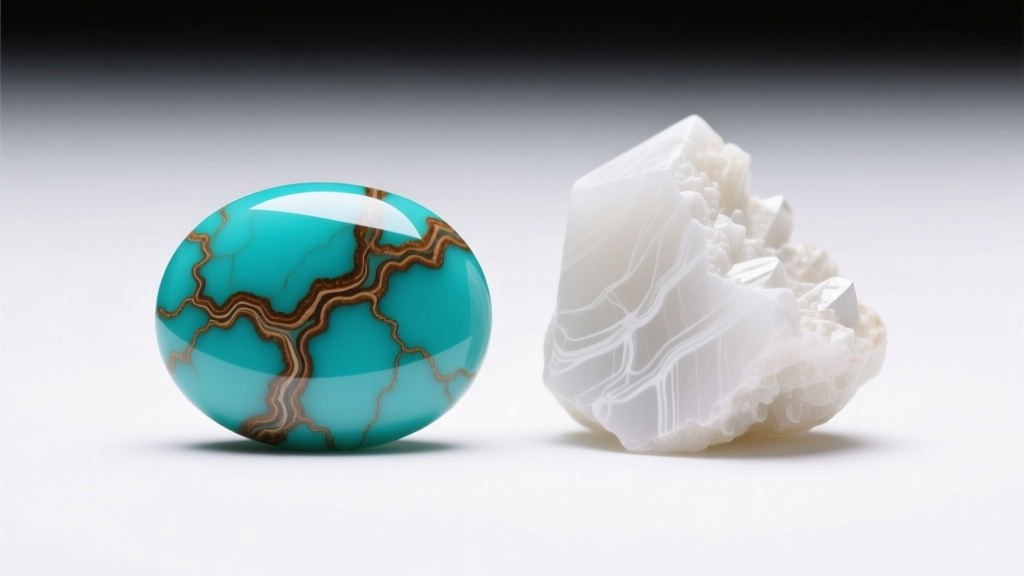
Genuine turquoise often features a "matrix"—the host rock trapped inside the gem. In natural stones like Kingman or Sleeping Beauty turquoise, the matrix lines are sharp, varied in thickness, and deeply integrated. In dyed howlite imitations, the "veins" are usually uniform, sit on the surface, and look like spiderwebs drawn with a fine-tip marker. Use a 10x jeweler's loupe to inspect the edges where the stone meets the metal bezel.
Step 2: The Acetone Test (For Coral)
Because bamboo coral is heavily dyed, it is prone to color bleeding. Dip a cotton swab in pure acetone (nail polish remover) and rub it discreetly on the back or bottom edge of the coral cabochon. If the swab turns red or pink, the coral is dyed. Note: Do not perform this test on vintage pieces with high collector value, as it may strip the polish.
Step 3: The Temperature Test
Genuine turquoise and coral are dense and will feel noticeably cold to the touch when first picked up, taking several seconds to warm to your skin temperature. Resin-based reconstituted stones and plastics will feel room temperature or warm almost instantly.
Selecting the Right Hardware: Gauges and Settings
A common failure mode in artisan jewelry is pairing heavy stone cabochons with inadequate hardware. Turquoise and coral are dense materials; a 1.5-inch dangle earring featuring both stones can easily weigh 8 to 12 grams.
Wire Gauge Requirements
Standard commercial ear wires are typically 20-gauge (0.81mm) or 21-gauge (0.72mm). While fine for lightweight studs, a 20-gauge wire will bend, warp, and eventually snap under the pendulum weight of heavy turquoise and coral dangles.
- For Studs and Small Huggies: 20-gauge or 18-gauge (1.02mm) posts are perfectly adequate.
- For Dangles and Drops (Under 1 inch): Insist on 18-gauge French hooks or leverbacks.
- For Statement Chandeliers and Heavy Drops: Require 16-gauge (1.29mm) ear wires or custom-forged shepherd hooks to prevent metal fatigue and lobe tearing.
Bezel vs. Prong Settings
Never buy coral earrings in prong settings. Coral's Mohs hardness of 3.5 means it will easily chip if bumped against a hard surface. Always look for full bezel settings, where a rim of sterling silver or gold completely encircles the stone's edge, absorbing impact shock and protecting the fragile perimeter.
How to Style Turquoise and Coral Earrings by Face Shape
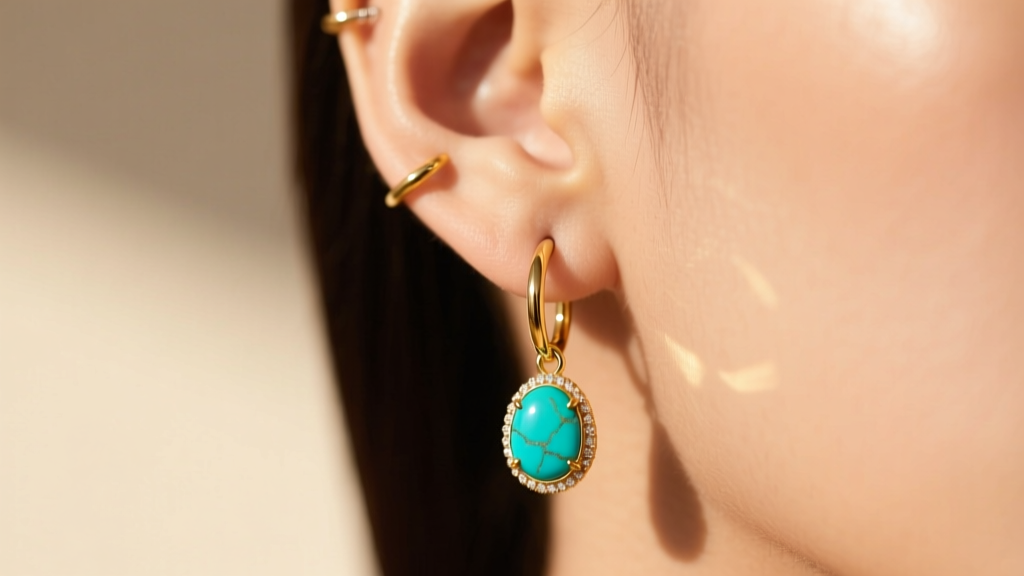
The bold, high-contrast color palette of these gems draws immediate attention to the face. Use the structural geometry of the earrings to balance your natural features.
Round Face Shapes
Avoid large circular hoops or clustered studs, which will emphasize the roundness of your jawline. Instead, opt for long, linear drop earrings featuring alternating turquoise and coral beads. The vertical lines create an optical illusion that elongates the neck and slims the face.
Square and Angular Face Shapes
Sharp jawlines benefit from softening elements. Choose rounded coral cabochon studs or medium-sized huggie hoops featuring inlaid turquoise. The curved lines of the jewelry will soften the angles of your face without adding unnecessary length.
Heart-Shaped Faces
With a wider forehead and a narrow chin, the goal is to add visual weight to the lower half of the face. Teardrop or chandelier earrings that are wider at the bottom than the top are ideal. Look for designs where the heavier coral elements sit at the base of the earring.
Daily Care and Maintenance Protocol
Both turquoise and coral are highly reactive, porous materials. Improper care will permanently ruin their finish and structural integrity.
The Golden Rule: Turquoise and coral earrings must be the last thing you put on and the first thing you take off.
What to Avoid
- Ultrasonic Cleaners: The high-frequency vibrations will shatter micro-fractures in stabilized turquoise and completely strip the polish from coral.
- Chemical Exposure: Hairspray, perfume, and sunscreen contain alcohols and acids. Acid will literally dissolve calcium carbonate (coral), causing it to pit and lose its luster.
- Water Immersion: Never wear these earrings in the shower or pool. Chlorine will discolor turquoise, and water trapped behind the bezel can cause the epoxy backing to fail, leading to the stone popping out of the setting.
Step-by-Step Cleaning
- After wearing, wipe the stones gently with a dry, untreated microfiber cloth to remove skin oils and acidic sweat.
- If the stones are visibly soiled, slightly dampen the cloth with distilled water (never tap water, which contains chlorine and minerals).
- Wipe the surface gently, avoiding the metal joints.
- Immediately dry with a separate soft cloth and store in an anti-tarnish pouch away from direct sunlight, which can fade dyed coral over time.
Quick Reference: Grading and Pricing Chart
Use this table to benchmark the fair market value of turquoise and coral earrings based on material quality and construction in the current market.
| Material Grade | Typical Treatment | Best Earring Style | Estimated Price Range (Pair) |
|---|---|---|---|
| Sleeping Beauty Turquoise | Stabilized (Epoxy) | Bezel-set Studs / Huggies | $45 - $120 |
| Kingman Turquoise (High Matrix) | Natural or Lightly Stabilized | Heavy Statement Dangles | $150 - $350 |
| Dyed Howlite (Imitation) | Dyed Resin | Fast Fashion / Costume | $10 - $25 |
| Precious Red Coral (Mediterranean) | Untreated / Polished | Vintage Gold Cabochon Studs | $400 - $1,500+ |
| Dyed Bamboo Coral | Heavily Dyed / Resin Filled | Large Hoops / Beaded Drops | $30 - $80 |
By understanding the gemological realities of these stones and demanding the correct structural hardware, you can curate a collection of turquoise and coral earrings that are not only visually stunning but built to endure for generations.


