Axolotl Earrings: 2026 Budget & Value Buying Guide
Discover the true value of axolotl earrings. We break down pricing tiers, material grades, and how to avoid cheap alloys that irritate sensitive ears.

The Anatomy of Axolotl Earrings: What Are You Paying For?
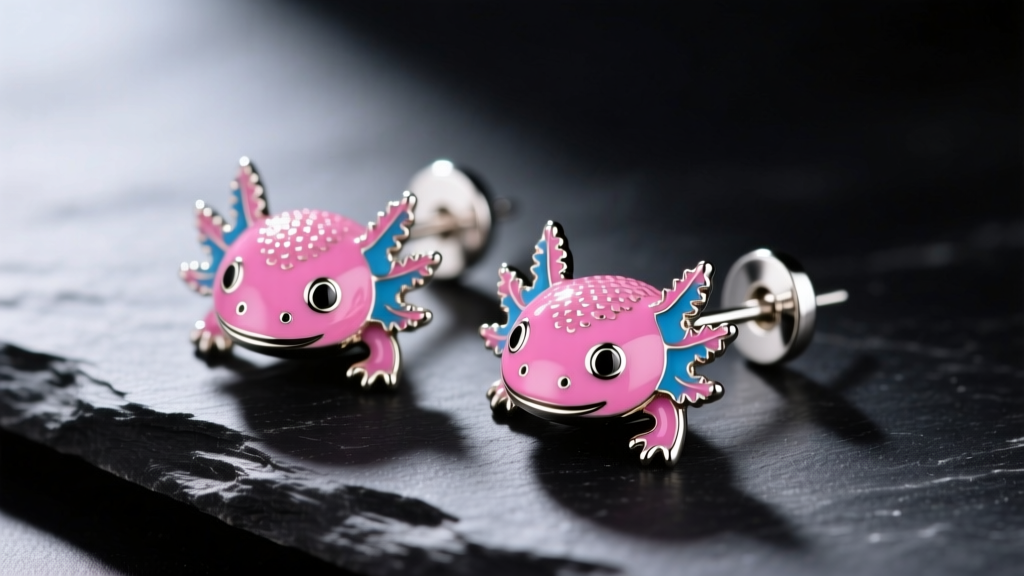
The internet's enduring obsession with the axolotl has translated into a massive market for novelty jewelry. However, the 2026 landscape of axolotl earrings is heavily saturated with low-quality, mass-produced trinkets disguised as premium accessories. When evaluating budget versus value, you must look past the cute aesthetic and scrutinize the metallurgy, enamel application, and structural integrity of the piece. A $12 pair of axolotl studs might seem like a bargain until the zinc alloy post triggers a severe contact dermatitis flare-up, or the delicate external gills snap off after a single wear. This guide dissects the true cost of axolotl earrings, helping you identify where to invest your money and where to walk away.
Material Breakdown: Enamel, Resin, and Metals
The charm component of an axolotl earring is typically rendered in enamel or resin to capture the animal's vibrant, multi-colored frills. Understanding the difference between these materials is the first step in assessing value.
Hard Enamel (Cloisonné) vs. Soft Epoxy Resin
Budget earrings (typically under $15) rely on soft epoxy resin. This liquid polymer is poured into metal recesses and UV-cured. While cheap to produce, soft resin sits below the metal lines, scratches easily, and yellows when exposed to UV light and skin oils over time. Mid-range and premium axolotl earrings utilize hard vitreous enamel. This process involves firing crushed glass powder into the metal recesses at temperatures exceeding 800°C. The result is a smooth, flush surface that is highly resistant to scratching and will never yellow. According to care guidelines from Jewelers of America, vitreous enamel requires only mild soap and water for maintenance, whereas resin requires careful avoidance of alcohol-based cleaners which can cloud the finish.
Base Metals: The Hidden Cost of Cheap Posts
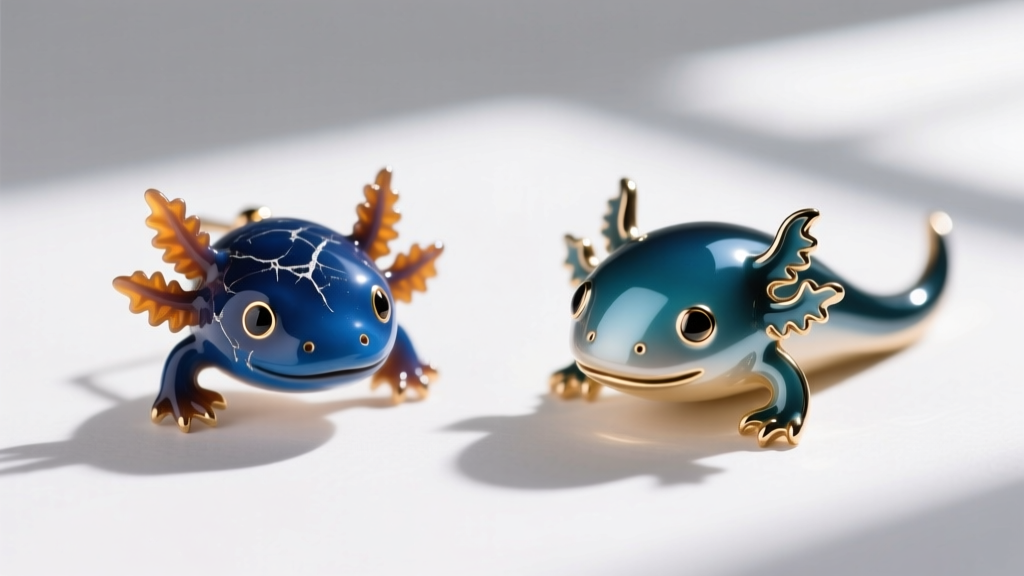
The most critical failure point in budget novelty jewelry is the earring post. Many dropshipped axolotl earrings use Zamak (a zinc-aluminum alloy) or raw brass for the entire piece, including the post. These base metals are highly porous and often contain nickel or lead as binding agents. The Mayo Clinic notes that nickel allergy is one of the most common causes of allergic contact dermatitis, resulting in redness, itching, and blistering on the earlobe. For genuine value, the earring post must be stamped "925" (indicating 92.5% pure sterling silver) or be crafted from implant-grade titanium (ASTM F136). Gold-plated brass is a common mid-tier compromise, but if the plating is under 0.5 microns, it will wear through to the reactive brass within weeks of daily wear.
2026 Pricing Tiers: Budget, Mid-Range, and Artisan
To accurately assess value, we must categorize the market into three distinct pricing tiers. Use this matrix to benchmark any axolotl earring you encounter online or in boutique stores.
| Tier | Price Range | Materials & Construction | Value Verdict |
|---|---|---|---|
| Budget / Fast Fashion | $4 - $14 | Zinc alloy base, soft epoxy resin, 22G unmarked wire posts, butterfly clutches. | Poor. High risk of skin irritation and structural breakage. Only suitable for occasional, short-term wear. |
| Mid-Range / Independent | $18 - $38 | 925 Sterling silver posts, brass charm base, hard vitreous enamel, silicone O-ring backs. | Excellent. The sweet spot for daily wear. Offers hypoallergenic safety and durable color. |
| Premium / Artisan | $45 - $95+ | Solid 14k gold or platinum, hand-carved resin or gemstone inlays, lost-wax casting, secure screw-backs. | Niche. Best for collectors or those with extreme metal sensitivities requiring solid gold. |
Sizing, Gauge, and Lobe Health
Novelty earrings often ignore standard jewelry ergonomics, leading to discomfort and long-term lobe damage. The axolotl's distinct shape—wide and frilly—creates unique weight distribution challenges, especially in dangle or drop earring formats.
Gauge Thickness and Post Integrity
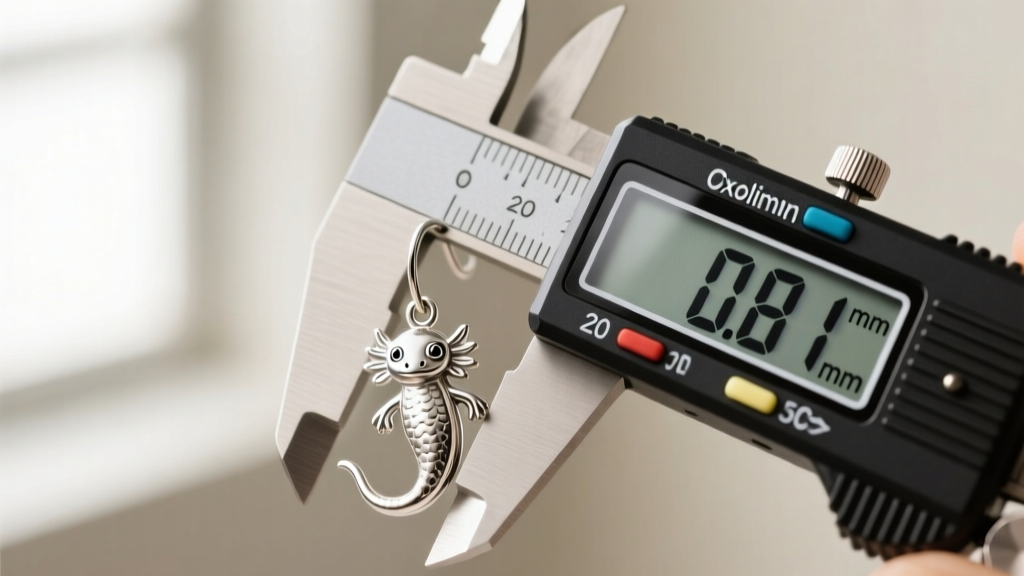
Standard ear piercings are typically 20-gauge (0.81mm) or 18-gauge (1.02mm). Budget manufacturers frequently use flimsy 22-gauge (0.64mm) wire to save on silver costs. This thin wire bends easily when inserting the earring and can warp under the weight of a chunky axolotl charm, causing the post to sit at an awkward angle and irritate the fistula (the piercing hole). Always verify the gauge; a sturdy 18G 925 silver post is the gold standard for heavier novelty studs.
Weight Tolerances and the 'Tug Test'
Axolotl dangle earrings with large resin frills can weigh anywhere from 8 to 18 grams per earring. While a standard earlobe can comfortably support up to 15 grams for a full day, anything heavier will cause the lobe to droop, stretching the piercing over time. If you are purchasing axolotl dangles exceeding 12 grams, ensure the backing is a wide silicone support disc rather than a standard metal butterfly clutch. The silicone disc distributes the weight across a wider surface area of the earlobe, preventing the dreaded 'cheese-cutter' effect where the earring slowly migrates downward through the tissue.
How to Spot Overpriced Dropshipped Axolotl Jewelry
The 2026 e-commerce landscape is flooded with middlemen marking up $3 factory earrings to $25. Protect your budget by looking for these red flags:
- The 'Gill' Fragility Test: Look closely at the external gills (the frilly head appendages). In cheap die-cast zinc alloy, these are razor-thin and brittle. High-value pieces use lost-wax casting or reinforced resin, giving the gills a rounded, sturdy core.
- Reverse Image Search: If a boutique Instagram page is selling 'hand-designed' axolotl enamel studs for $30, reverse image search the photo. You will often find the exact same mold on wholesale marketplaces for $2.50.
- Vague Metal Descriptions: Phrases like 'silver-tone,' 'antique silver,' or 'hypoallergenic alloy' are deliberate obfuscations. If it does not explicitly state '925 Sterling Silver' or 'Implant-Grade Titanium,' assume it contains nickel.
"The FTC Jewelry Guides strictly prohibit the unqualified use of the word 'silver' for products that are merely silver-plated or silver-toned. Always look for the quality mark, such as '925', to ensure you are paying for genuine precious metal content." — Federal Trade Commission (FTC)
Final Verdict: Where to Spend and Where to Save
When budgeting for axolotl earrings, your primary investment should always be directed toward the metal post and the enamel quality. You can safely save money by opting for smaller, stud-style designs rather than large, heavy dangles, which inherently cost more due to material weight and require expensive silicone backings. A $22 pair of 925 sterling silver studs with hard vitreous enamel will outlast, outshine, and be vastly more comfortable than a $40 pair of heavy, gold-plated brass dangles that will inevitably turn your earlobes green. Prioritize biocompatible metals and fired glass enamels, and your novelty jewelry will remain a cherished, irritation-free staple in your collection for years to come.


