Baby's First Earrings: The Ultimate Safety & Buying Guide
Discover the ultimate guide to baby's first earrings. Learn about safe metals, screw-back clasps, gauge sizes, and pediatric aftercare protocols.

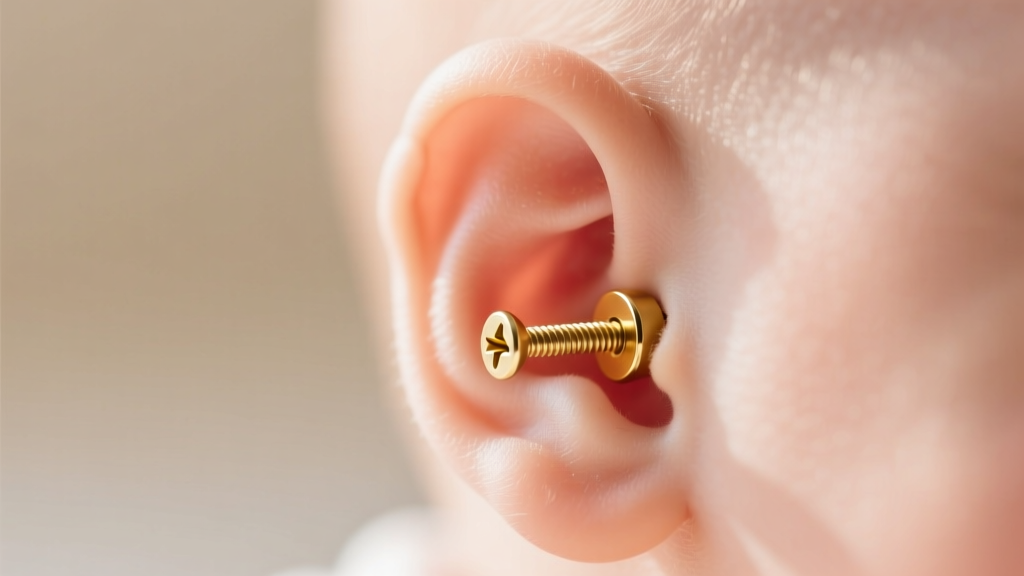
Choosing baby's first earrings is a significant cultural and emotional milestone for many families. However, beneath the sentimental value lies a complex landscape of material science, pediatric dermatology, and choking hazard prevention. Infant earlobes are exceptionally delicate, highly vascular, and prone to rapid swelling and contact dermatitis. In 2026, pediatricians and professional piercers alike emphasize a strict, evidence-based approach to infant ear piercing, moving far beyond the outdated mall-kiosk piercing guns and questionable metal alloys of the past.
This comprehensive buying guide breaks down the exact specifications, material grades, and safety mechanisms you need to know before purchasing your infant's first pair of earrings.
The Pediatric Consensus: When is the Right Time?
The American Academy of Pediatrics (AAP) does not specify a strict medical age limit for ear piercing, but most pediatricians recommend waiting until the infant has received at least their first round of vaccinations, including the tetanus shot, which typically occurs around 2 to 6 months of age. Waiting until the 6-month mark is widely considered the safest compromise. By this age, the infant's immune system is more robust, the earlobes have grown enough to accommodate standard infant jewelry without distortion, and the child is less likely to unconsciously tug at the healing fistula (the piercing channel).
While some medical professionals advise waiting until the child is old enough to consent and manage their own aftercare (usually around 8 to 10 years old), if you are opting for infant piercing, strict adherence to sterile environments and hypoallergenic materials is non-negotiable.
Material Science: Why "Surgical Steel" is a Trap
The most common mistake parents make when buying baby's first earrings is assuming that "surgical steel" or "stainless steel" is safe for infant skin. This is a dangerous misconception. Standard 316L surgical steel contains between 10% and 14% nickel to achieve its polished finish. With nickel allergies affecting up to 20% of the population, introducing nickel into an open, healing wound almost guarantees contact dermatitis, prolonged healing, and potential systemic sensitization.
When shopping, you must look for specific, verifiable material grades. Here is the hierarchy of safe metals for infant ears:
| Metal Grade | Nickel Content | Safety Rating for Infants | Notes & Considerations |
|---|---|---|---|
| ASTM F136 Implant-Grade Titanium | 0% | Excellent | The gold standard for initial piercings. Lightweight, completely biocompatible, and entirely nickel-free. |
| Solid 14k or 18k Gold | 0% (if alloyed correctly) | Excellent | Must be alloyed with silver, copper, or zinc. Avoid white gold unless verified nickel-free, as it is often alloyed with nickel. |
| Niobium | 0% | Very Good | Highly biocompatible and lightweight, though less commonly found in traditional infant jewelry stores. |
| 316L Surgical Steel | 10% - 14% | Poor / Unsafe | High risk of allergic reaction and delayed healing. Avoid entirely for fresh infant piercings. |
| Sterling Silver (925) | Varies (usually 7.5% copper) | Poor / Unsafe | Tarnishes easily and can cause argyria (dark staining of the skin) in healing wounds. Never use for initial piercings. |
The Mechanics of Safety: Posts, Threading, and Gauges
The physical construction of the earring post is just as critical as the metal itself. Infant earlobes are thin, but they experience significant edema (swelling) in the first 72 hours post-piercing.
Understanding Gauge and Post Length
For infants, the standard and safest gauge sizes are 20G (0.81mm) or 18G (1.02mm). Avoid 22G or thinner wires; they are so fine that they can create a "cheese-cutter effect," slowly migrating through the delicate lobe tissue if the earring is snagged.
Post length is equally vital. A standard adult post is often 10mm or longer, which will allow an infant earring to dangle and catch on clothing. Conversely, a post that is too short will be swallowed by the swelling lobe, leading to embedding—a medical emergency where the skin heals over the jewelry. The ideal post length for baby's first earrings is 1/4 inch (6mm)5/16 inch (8mm), providing just enough room for swelling without excess length to snag.

Internally Threaded vs. Externally Threaded
If you are purchasing screw-back earrings, examine the threading. Externally threaded posts have the screw pattern carved into the post itself. Pushing this through a fresh piercing acts like a file, tearing the delicate healing tissue. Always seek out internally threaded posts, where the post is perfectly smooth and the screw mechanism is hidden inside the backing, or opt for threadless (press-fit) systems which use tension to stay secure without any threads at all.
Earring Backings: Eliminating the Choking Hazard
The backing of the earring is the most frequent point of failure and the highest safety risk. Standard "butterfly" or friction clutches are entirely inappropriate for infants. They rely on weak tension, easily fall off when babies rub their heads against mattresses, and pose a severe choking and aspiration hazard. Furthermore, the sharp metal prongs of a butterfly back can scratch the infant's neck and trap bacteria.
When buying baby's first earrings, restrict your search to these two backing types:
- Screw-Backs (Threaded): These physically screw onto the post. They are highly secure and cannot be pulled off by tiny fingers. Ensure the backing has a smooth, rounded exterior to prevent scratching the skin behind the ear.
- Locking Safety Clutches: Brands like Blomdahl use patented medical-grade plastic safety clutches that snap into a groove on the post and require a specific twisting motion to remove. These are excellent for parents who want a lightweight, secure, and metal-free backing option.
Design Constraints: Weight and Profile
Infant jewelry must be engineered for minimalism. The Mayo Clinic advises keeping infant earrings as small and light as possible to prevent migration and tearing.
- Weight Limit: The earring should weigh less than 1 gram. Heavy jewelry will cause the fistula to stretch downward, leading to permanent lobe distortion.
- Profile: Choose bezel-set stones, smooth domes, or flat discs. Avoid prong settings (which snag on blankets and hair) and dangling charms (which invite pulling). If you prefer a hoop for later use, wait until the piercing is fully matured (6-12 months) and use a continuous segment ring or a micro-huggie with a recessed clicker closure.
The 6-Week Aftercare Protocol and Troubleshooting
Proper aftercare is where most infant piercings fail. The healing window for infant lobes is typically 6 to 8 weeks, but the aftercare routine must be meticulous.
What to Use
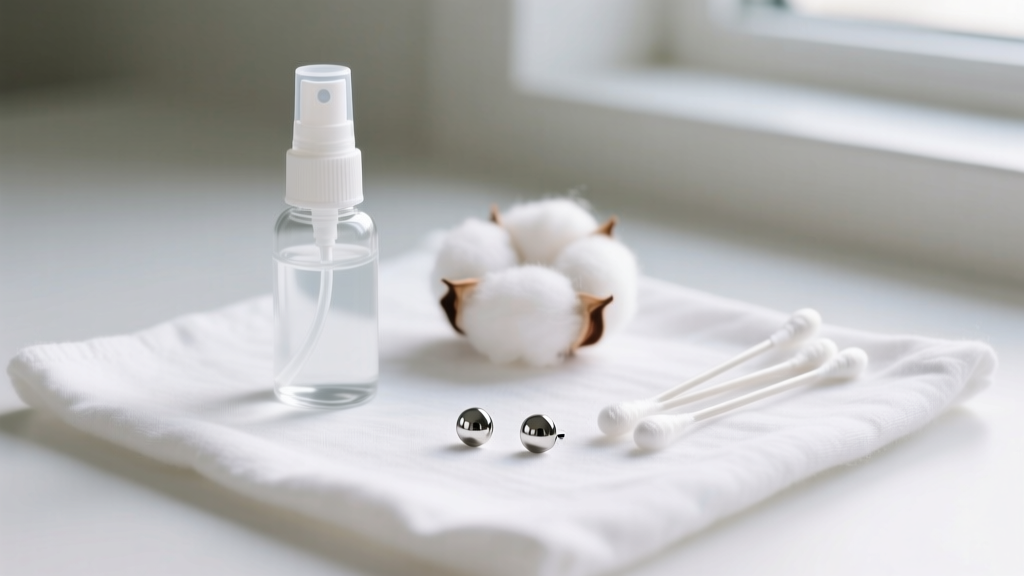
Use only sterile 0.9% sodium chloride wound wash (saline spray) with no added preservatives, fragrances, or botanicals. Spray the front and back of the lobe twice daily. Let it air dry or gently pat with a non-woven gauze. Avoid cotton swabs or cotton balls, as the micro-fibers can wrap around the post and embed in the healing wound.
What to Avoid
Never use rubbing alcohol, hydrogen peroxide, witch hazel, or antibiotic ointments. These harsh chemicals destroy the fragile new cells forming the fistula, delay healing, and trap moisture, creating a breeding ground for bacteria. Never twist or rotate the earrings. The old advice to "twist the stud so it doesn't heal to the skin" is a dangerous myth; twisting introduces surface bacteria into the wound and tears the healing tissue.
Troubleshooting: Infection vs. Normal Healing
It is normal for the earlobe to be slightly red, warm, and swollen for the first 48 hours. You may also see a small amount of clear or pale yellow lymph fluid (crusties) around the post. This is normal healing.
However, contact your pediatrician immediately if you observe:
- Redness spreading outward from the piercing site down the neck.
- Thick, opaque green or dark yellow discharge (pus).
- The earlobe feels hot to the touch or the infant develops a fever.
- Embedding: If the lobe swells over the front or back of the earring, do not attempt to dig it out yourself. Seek immediate medical attention to have the jewelry safely removed and the lobe treated.
Final Thoughts on Sourcing
When purchasing baby's first earrings, bypass standard mall jewelry stores and fashion brands that rarely disclose their exact metal alloys. Instead, seek out professional body piercing studios that stock APP (Association of Professional Piercers) verified jewelry, or specialized medical piercing brands that provide material certification for their ASTM F136 titanium and solid gold pieces. By prioritizing biocompatible metals, secure threading, and proper post lengths, you ensure that this cherished milestone remains a safe, beautiful, and complication-free experience for your child.


