Bamboo Earrings: 2026 Eco-Luxury Trend & Style Guide
Explore the 2026 bamboo earrings trend. Discover material science, hypoallergenic hardware integration, and styling tips for sustainable eco-luxury.

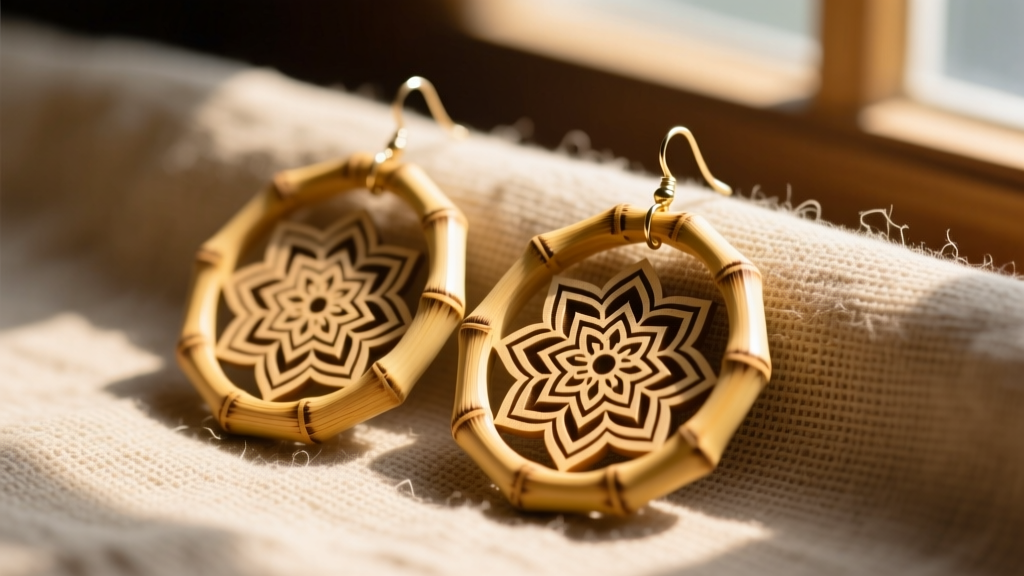
The jewelry industry is undergoing a massive paradigm shift in 2026, moving away from heavy, mined metals toward biophilic, regenerative materials. At the forefront of this eco-luxury movement are bamboo earrings. Once relegated to casual, bohemian craft fairs, bamboo has been elevated through advanced material treatments and precision hardware integration, making it a staple in high-end sustainable fashion. When evaluating sustainable earrings, bamboo offers an unmatched strength-to-weight ratio, allowing for dramatic, oversized silhouettes that remain virtually weightless on the earlobe.
For collectors of niche earrings, bamboo represents a fascinating intersection of ancient botany and modern CNC machining. This comprehensive guide breaks down the material science, hardware safety standards, and styling frameworks you need to navigate the bamboo jewelry market this year.
The Material Science: Moso vs. Guadua Bamboo
Not all bamboo is created equal. The structural integrity of botanical jewelry depends entirely on the species used and the harvesting timeline. According to the Food and Agriculture Organization (FAO), bamboo reaches maturity in 3 to 5 years, making it a highly regenerative resource compared to hardwoods that require decades to mature.
Moso Bamboo (Phyllostachys edulis)
Moso is the industry standard for laser-etched and geometric bamboo earrings. It features a dense, uniform vascular bundle structure that prevents splintering when cut into thin 2mm sheets. Its natural pale blonde color takes well to water-based eco-dyes and carbonization.
Guadua Bamboo (Guadua angustifolia)
Native to South America, Guadua is thicker and more fibrous. It is rarely used for delicate drop earrings but is favored for thick, carved statement cuffs and ear climbers. Its high silica content makes it naturally resistant to moisture absorption, a critical factor for jewelry worn near the skin.
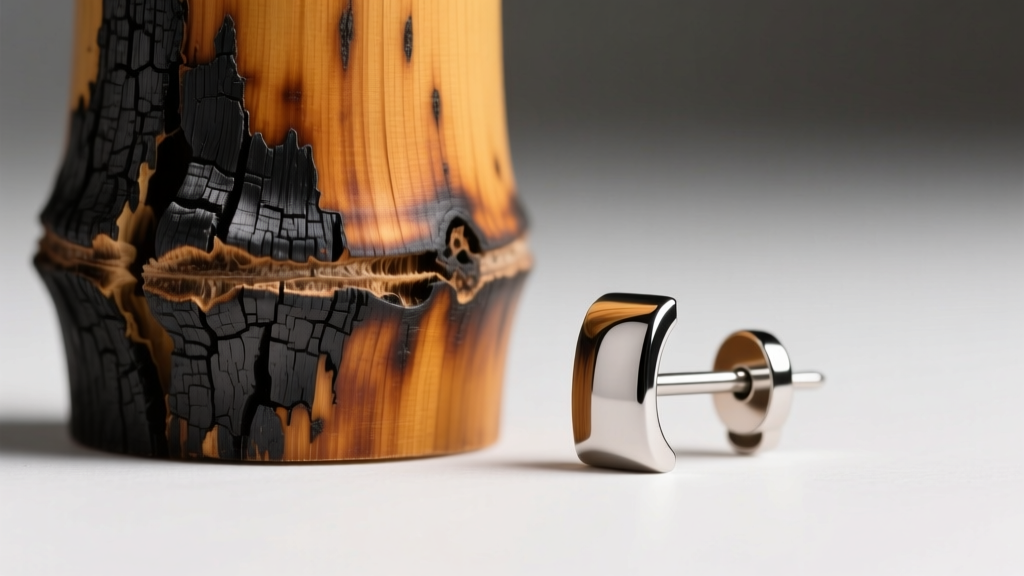
The Carbonization Process
Raw bamboo contains starches and sugars that attract insects and promote fungal growth. To make it viable for jewelry, artisans use a thermal carbonization process. The bamboo is subjected to high-pressure steam at approximately 200°C (392°F). This caramelizes the natural sugars, turning the wood a rich amber hue and permanently altering its cellular structure to repel moisture and pests without the use of toxic chemical preservatives.
Hardware Integration: The Hypoallergenic Mandate
The most critical failure point in botanical jewelry is the intersection between organic material and human tissue. Bamboo is inherently porous. If a raw bamboo post or unsealed bamboo backing touches a fresh or sensitive piercing, it can harbor bacteria and cause severe contact dermatitis or infections.
In 2026, reputable eco-jewelers adhere to strict hardware isolation protocols. The bamboo component should never touch the piercing channel. Instead, artisans use a press-fit or medical-grade epoxy bonding technique to embed inert metal sleeves into the bamboo.
- ASTM F136 Titanium: The gold standard for earring posts. Implant-grade titanium is completely biocompatible and will not react with the natural oils of the skin or the residual acids in bamboo treatments.
- Niobium Sleeves: Often used for the backing or clutch mechanism, niobium is highly malleable and hypoallergenic, providing a secure grip without the need for nickel-based friction backs.
- Cyanoacrylate Sealing: The drill holes where the titanium posts are inserted must be sealed with a medical-grade cyanoacrylate or two-part jeweler's epoxy to prevent sweat from seeping into the bamboo's end-grain, which causes delamination over time.
Weight & Material Comparison Chart
One of the primary reasons for the surge in bamboo's popularity is the elimination of "earring fatigue." Heavy metals cause lobe stretching and discomfort over a standard 8-hour wear period. Below is a comparative analysis of a standard 50mm diameter hoop earring across different popular materials.
| Material | Avg. Weight (50mm Hoop) | Hypoallergenic? | Eco-Impact Score (1-10) | Maintenance Level |
|---|---|---|---|---|
| Carbonized Bamboo | 2.8 grams | Yes (with Ti post) | 9.5 | Moderate |
| Solid Brass | 14.5 grams | No (contains zinc/copper) | 3.0 | Low |
| Sterling Silver (925) | 11.2 grams | Mostly (nickel risk) | 4.5 | High (tarnishing) |
| Bio-Acetate | 6.5 grams | Yes | 7.0 | Low |
| Hollow Aluminum | 3.5 grams | Yes | 5.5 | Low |
As demonstrated, bamboo outperforms almost all traditional metals in weight, rivaling even hollow aluminum while offering a vastly superior sustainability profile. The Responsible Jewellery Council has increasingly highlighted regenerative organics like bamboo as vital alternatives to the high carbon footprint associated with smelting and refining precious metals.
2026 Design Techniques: CO2 Laser Etching
The visual evolution of bamboo earrings in 2026 is defined by precision CO2 laser etching. Unlike traditional wood-burning, which leaves uneven, charred edges, a 40-watt CO2 laser can vaporize the surface of carbonized bamboo to a depth of exactly 0.5mm. This allows artisans to create intricate, lace-like geometric patterns, topographic maps, or micro-floral motifs without compromising the tensile strength of the 2mm bamboo sheet.
Because the laser burns away the top layer of caramelized bamboo, it reveals the lighter, raw wood beneath, creating a stunning natural two-tone contrast that requires no synthetic paints or stains. This technique has made bamboo a favorite among architects and minimalist designers who favor clean, structural lines over traditional gemstone settings.
Styling Frameworks: Face Shapes and Silhouettes
Bamboo's matte finish and light-absorbing properties make it behave differently on the face than reflective metals. Here is how to style bamboo earrings based on facial geometry:
Round and Oval Faces
Opt for elongated, angular bamboo drop earrings or rectangular dangles. The sharp, linear geometry of laser-cut bamboo provides a striking contrast to soft facial curves, adding structural definition to the jawline. Avoid large, circular bamboo hoops, which can exaggerate facial roundness.
Square and Heart-Shaped Faces
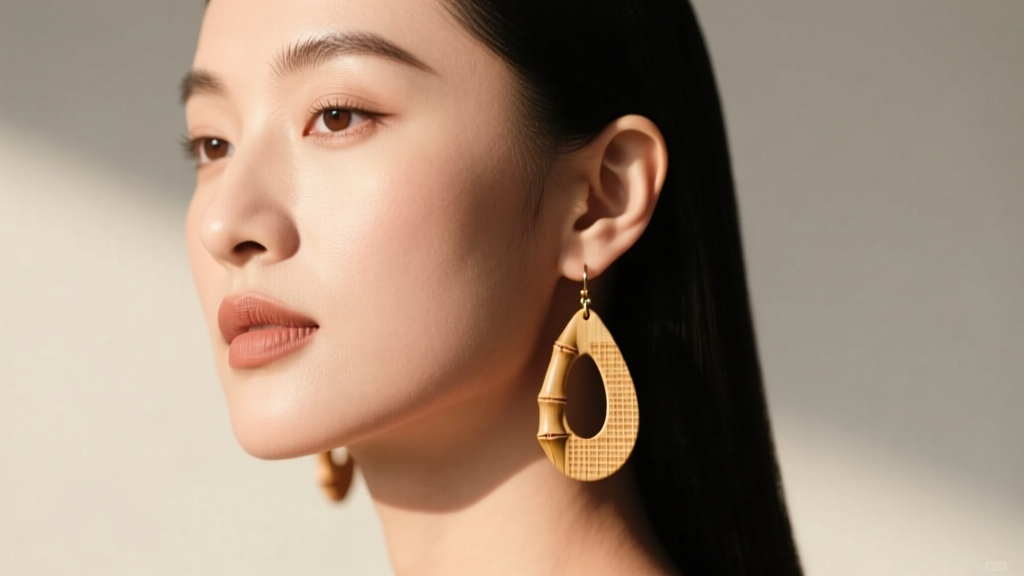
Soft, sweeping bamboo crescent hoops or teardrop silhouettes are ideal. The organic, curved grain of the bamboo complements strong jawlines and wider foreheads. Because bamboo is so lightweight, you can comfortably wear oversized 60mm crescents that draw the eye downward, balancing a narrower chin.
Cartilage and Ear Cuffs
Bamboo is exceptionally well-suited for ear cuffs and helix climbers. Since cartilage piercings are highly sensitive to weight and pressure, the 2-gram weight profile of bamboo ear cuffs ensures they stay securely in place without dragging on the delicate upper ear tissue. Look for cuffs lined with silicone or smooth titanium wire to prevent snagging on hair.
Care and Maintenance: Preventing Warping
While carbonization drastically reduces bamboo's reactivity to humidity, it remains a hygroscopic material. To ensure your bamboo earrings last a lifetime, follow these strict maintenance protocols:
- Avoid Ultrasonic Cleaners: Never submerge bamboo earrings in ultrasonic jewelry baths. The high-frequency vibrations and liquid solvents will break down the epoxy bonds holding the titanium posts and cause the wood fibers to swell.
- Humidity Control: Store your earrings in a climate-controlled environment. Leaving them in a steamy bathroom after a shower can cause asymmetric moisture absorption, leading to permanent warping or curling of flat bamboo sheets.
- Oiling: Once every three months, apply a microscopic drop of organic jojoba oil or camellia oil to a microfiber cloth and gently buff the bamboo. This replenishes the natural lipids lost to skin contact and maintains the deep amber luster of the carbonized grain.
- Sweat Mitigation: After wearing bamboo earrings during high-exertion activities, wipe the backing and posts with a slightly damp cloth to remove acidic sweat buildup, which can degrade the metal-to-wood adhesive over time.
Final Verdict on the Bamboo Movement
The integration of bamboo into fine and fashion jewelry is not a passing fad; it is a fundamental recalibration of what consumers consider "luxury." By combining the rapid renewability of Moso bamboo with the biocompatibility of implant-grade titanium, 2026's bamboo earrings offer a masterclass in functional, sustainable design. Whether you are drawn to the intricate possibilities of CO2 laser etching or simply seeking an oversized silhouette that won't stretch your lobes, bamboo represents the future of conscious adornment.


