Bamboo Gold Earrings: The 2026 Budget & Value Guide
Discover the true value of bamboo gold earrings in 2026. Compare solid, vermeil, and PVD plated options to find the best budget-friendly door-knockers.

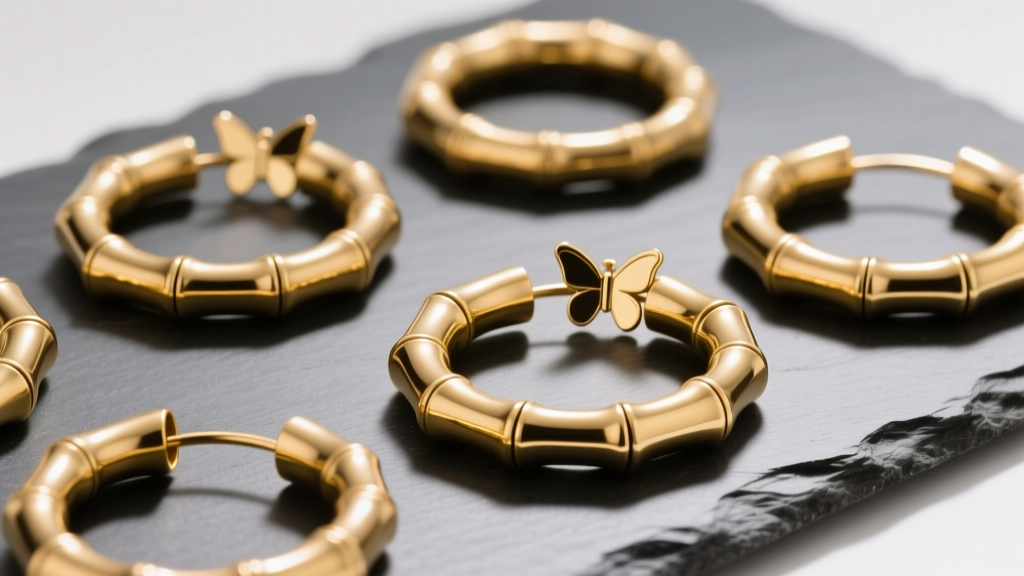
Bamboo earrings—affectionately known in streetwear and hip-hop culture as 'door-knockers'—are an undisputed staple of modern jewelry. Characterized by their segmented, tubular hoops that mimic the nodes of a bamboo stalk, these earrings offer a bold, structural aesthetic that smaller hoops simply cannot match. However, as we navigate the jewelry market in 2026, the influx of mass-produced bamboo gold earrings has created a confusing landscape for buyers. How do you separate a lifetime investment piece from overpriced costume jewelry that will turn your earlobes green in a matter of weeks?
This comprehensive budget and value assessment breaks down the exact material grades, gauge requirements, and manufacturing techniques you need to know. Whether you are spending $30 or $300, understanding the anatomy and metallurgy of bamboo hoops is the only way to ensure your money is well spent.
The Anatomy of Bamboo Earrings: What Are You Paying For?
Before evaluating price, you must understand the structural engineering required for a high-quality bamboo hoop. The iconic 'bamboo' look is achieved either through casting solid metal into a segmented mold or by bending and soldering hollow electroformed tubing. The latter is vastly superior for larger hoops (40mm to 70mm in diameter) because it drastically reduces the overall weight, preventing earlobe fatigue and tearing.
The Critical Importance of Post Gauge
The most common failure point in budget bamboo earrings is the post thickness. Because door-knockers are inherently heavier and possess a wider center of gravity than standard huggies, they exert significant leverage on the piercing.
- 20-Gauge (0.8mm) & 18-Gauge (1.0mm): Common in cheap, fast-fashion hoops. These thin wires will easily bend, warp, or slice through the earlobe if the heavy hoop is snagged on clothing.
- 14-Gauge (1.6mm) & 12-Gauge (2.0mm): The hallmark of premium bamboo earrings. A thicker post distributes the weight of the hoop evenly across the piercing channel, providing essential structural integrity and long-term comfort.
When assessing value, always check the product specifications for the post gauge. A $50 pair of 14-gauge hoops offers infinitely more value than a $40 pair of 18-gauge hoops that will eventually ruin your piercing.
Material Breakdown: Solid Gold vs. Vermeil vs. PVD Plated
The term 'gold' is heavily manipulated in the jewelry industry. To make an informed budget decision, you must look past the marketing and examine the base metal and the thickness of the gold layer. The Federal Trade Commission (FTC) maintains strict guidelines on how gold jewelry can be labeled, yet many overseas manufacturers bypass these rules. Here is how the primary materials compare in 2026:
| Material Type | Base Metal | Gold Layer Thickness | 2026 Price Range | Expected Lifespan |
|---|---|---|---|---|
| Flash Plated | Brass / Copper | < 0.1 microns | $15 - $35 | 1 - 3 months |
| Gold Vermeil | Sterling Silver (925) | 2.5+ microns | $60 - $150 | 2 - 5 years |
| PVD Coated | 316L Stainless Steel | Titanium Nitride + 18k Gold | $40 - $90 | 5 - 10+ years |
| Solid 14k Gold | 14k Gold Alloy | N/A (Solid throughout) | $350 - $900+ | Lifetime / Heirloom |
Budget Tiers: Where Does Your Money Actually Go?
Let us dissect the market into three distinct budget tiers to help you identify where the true value lies based on your wearing habits and financial constraints.
Tier 1: The Fast Fashion Trap ($15 - $35)
Earrings in this tier are almost exclusively 'flash plated' over a brass or copper base. The gold layer is measured in fractions of a micron—so thin that it can wear off from the natural friction of your neck and hair. Furthermore, brass contains copper. When copper reacts with the sebum, sweat, and natural acidity of your skin, it creates copper chelates, resulting in the dreaded 'green ear' effect. While the initial cost is low, the cost-per-wear is high because these earrings are essentially disposable.
Tier 2: The PVD Sweet Spot ($40 - $90)
For the everyday wearer who wants the look of gold without the solid gold price tag, Physical Vapor Deposition (PVD) coating on 316L surgical stainless steel is the undisputed champion of value in 2026. Unlike traditional electroplating, which uses chemical baths to adhere a soft layer of gold, PVD is a vacuum process that binds a layer of titanium nitride to the steel, followed by a micro-thin layer of real 18k gold. This creates a surface that is up to 10 times harder than electroplated gold, making it highly resistant to the scratches and friction that bamboo hoops endure when resting against the neck and shoulders.
Tier 3: Vermeil & Solid Gold ($150+)
Gold vermeil (a heavy 2.5-micron gold plate over sterling silver) is an excellent choice for those with severe nickel or steel allergies, as sterling silver is a hypoallergenic precious metal. However, vermeil is softer than PVD and will eventually wear down to the silver base on high-friction areas like the earring post. For those seeking a permanent, heirloom-quality piece, solid 14k gold is the ultimate investment. According to the Gemological Institute of America (GIA), 14k gold (58.5% pure gold) provides the ideal balance of rich color and metallurgical hardness, ensuring the hoop will not warp or lose its shape over decades of wear.
How to Evaluate Weight and Comfort (The Hidden Value Metric)
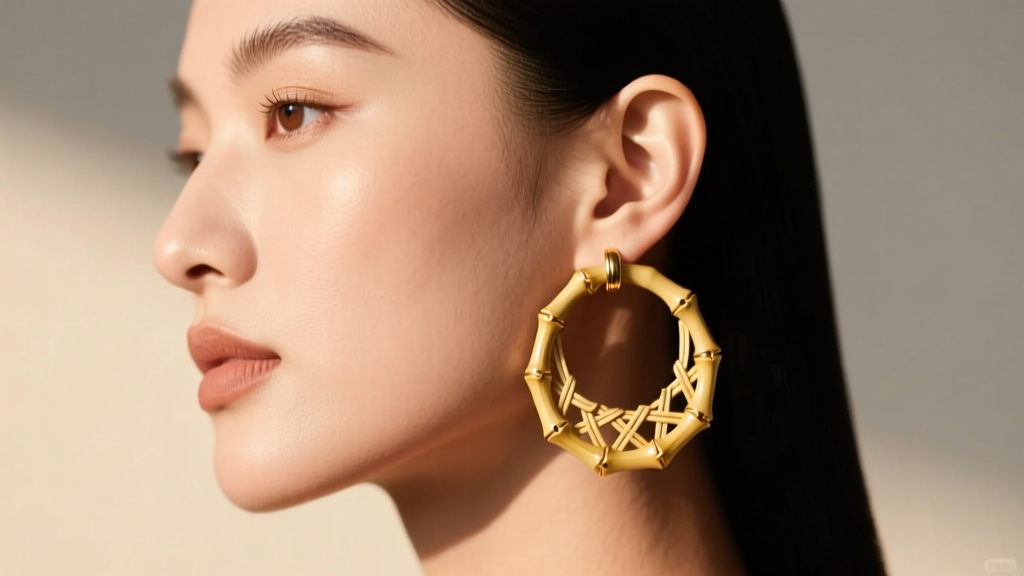
A major factor in the value assessment of bamboo gold earrings that most buyers overlook is weight distribution. A poorly designed 50mm bamboo hoop will pull the earlobe downward, causing discomfort and eventually stretching the piercing.
High-value manufacturers utilize electroformed hollow tubing. This process allows the earring to have the thick, luxurious visual profile of a 6mm or 8mm bamboo node, while remaining incredibly lightweight. Conversely, cheap manufacturers use solid cast brass to mimic the look, resulting in an earring that is unnecessarily heavy and prone to dragging. When shopping online, look for keywords like 'hollow core,' 'lightweight tube,' or check the listed gram weight. A comfortable 50mm bamboo hoop should weigh between 6 and 9 grams per earring; anything exceeding 14 grams per earring will likely cause fatigue during all-day wear.
Security Mechanisms: Butterfly vs. Screw-Back
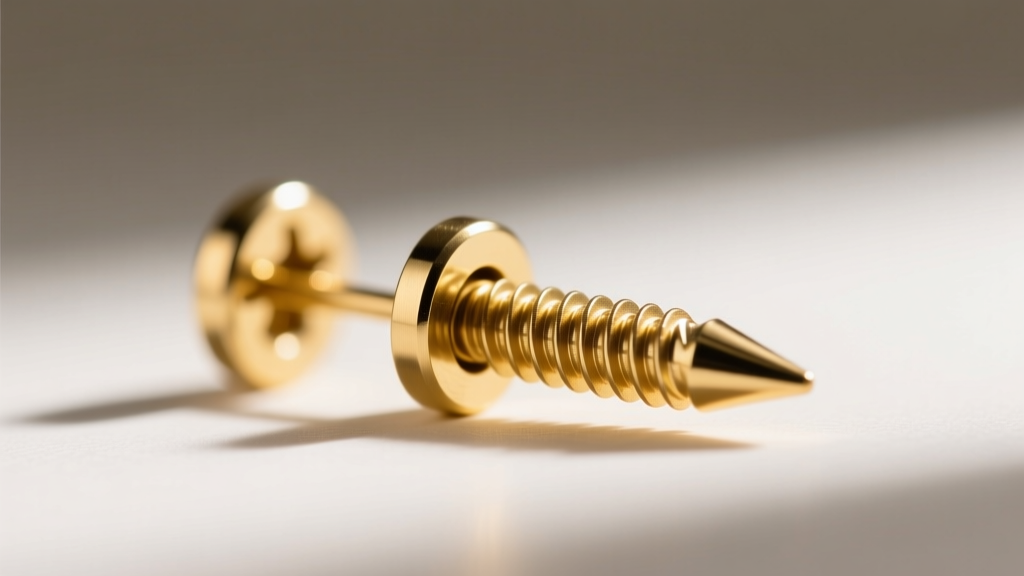
Because bamboo earrings are statement pieces, losing one is a costly mistake. Traditional push-back butterfly clutches rely on friction, which can loosen over time as the metal post wears down or if the earring is bumped. Premium budget options (particularly in the $60–$120 range) often feature threaded posts with screw-back clutches. This mechanical lock ensures that the heavy hoop remains securely on the ear, adding immense practical value to the purchase.
Final Verdict: Which Tier Offers the Best ROI?
If your goal is to maximize your budget without sacrificing longevity or skin health, PVD-coated 316L stainless steel bamboo earrings in the $45 to $85 range offer the highest return on investment in 2026. They provide the scratch resistance needed for daily-wear door-knockers, eliminate the risk of green skin, and often feature the thicker 14-gauge posts required for structural safety.
Reserve your budget for solid 14k gold only when you are purchasing a classic, mid-sized (30mm-40mm) bamboo hoop intended to be a permanent fixture in your jewelry rotation. By prioritizing post gauge, base metal integrity, and hollow-tube construction over misleading marketing terms, you can confidently invest in bamboo gold earrings that look luxurious and stand the test of time.


