Horseshoe Hoop Earrings: The 2026 Budget & Value Guide
Discover the true cost of horseshoe hoop earrings in 2026. Compare implant-grade titanium, solid gold, and steel to find the best value for your piercings.

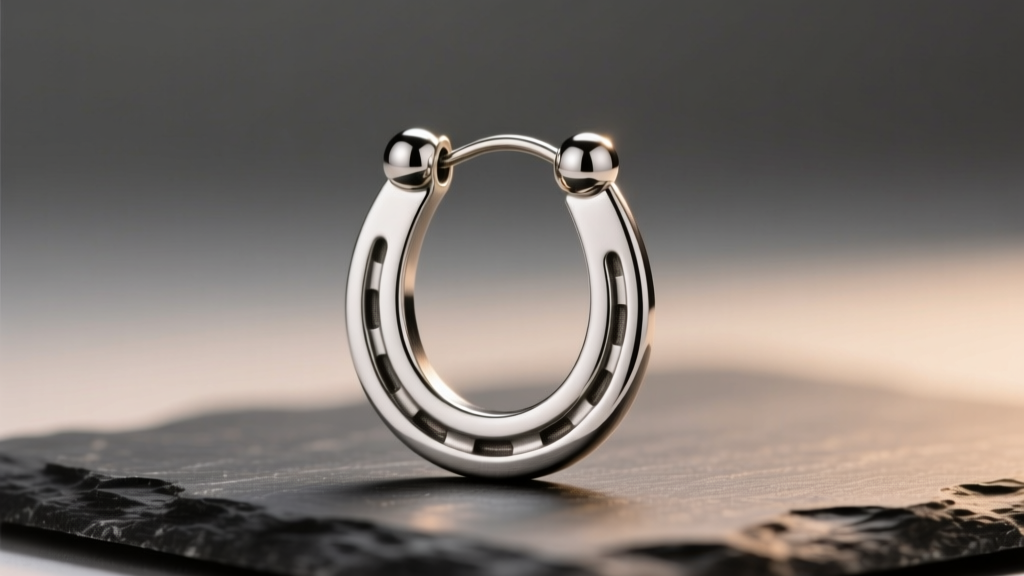
The Real Cost of Horseshoe Hoop Earrings: What Are You Paying For?
When shopping for body jewelry, the horseshoe hoop—technically known as a circular barbell—is one of the most versatile pieces in your collection. Whether you are outfitting a fresh septum piercing, decorating a healed daith, or stacking them in your helix and lobe, the horseshoe design offers a unique aesthetic that standard seamless hoops cannot replicate. However, the structural complexity of a horseshoe hoop, which requires two separate threaded or threadless ends attached to a curved bar, fundamentally changes its pricing dynamics.
In 2026, the market is flooded with options ranging from $4 mystery-metal imports to $250+ artisan-crafted solid gold pieces. But how do you determine the actual value? A budget-friendly price tag often masks hidden costs like tissue irritation, stripped threads, and premature replacement. This guide breaks down the metallurgy, manufacturing standards, and true market value of horseshoe hoop earrings to help you invest your money where it actually matters.
Material Breakdown: Budget Traps vs. Premium Value
The single largest factor dictating the price and value of a horseshoe hoop is the base metal. Understanding the difference between commercial grades and implant grades is critical for both your wallet and your healing tissue.
316L Surgical Steel (The Budget Trap)
Often marketed as "hypoallergenic," 316L surgical steel is the most common material in budget jewelry, typically priced between $4 and $12. However, 316L contains 8% to 10% nickel. According to the Mayo Clinic, nickel is the leading cause of contact dermatitis in body piercings. While the upfront cost is low, the "value" plummets if the jewelry causes an allergic reaction, forcing you to pay for a replacement and potentially expensive piercing aftercare products. Steel is only acceptable for fully healed piercings if you have zero nickel sensitivity.
ASTM F136 Implant-Grade Titanium (The Value Sweet Spot)
Priced between $16 and $35, ASTM F136 titanium is the undisputed champion of body jewelry value. It is 100% nickel-free, highly polished, and biocompatible. The Association of Professional Piercers (APP) strictly recommends implant-grade titanium for all fresh and healing piercings. When you buy a titanium horseshoe hoop, you are paying for CNC-machined precision and medical-grade safety. It will not tarnish, rust, or react with your body fluids, making it a lifetime investment for a fraction of the cost of precious metals.
14k & 18k Solid Gold (The Premium Investment)
Solid gold horseshoe hoops range from $75 to over $300, depending on the brand, karat, and gemstone accents. For gold to be safe for body jewelry, it must be alloyed with biocompatible metals like palladium or silver, rather than nickel or zinc. High-end brands like BVLA or Maria Tash charge a premium not just for the raw gold, but for their proprietary polishing techniques and flawless stone settings. The value here lies in luxury, heirloom durability, and brand prestige.
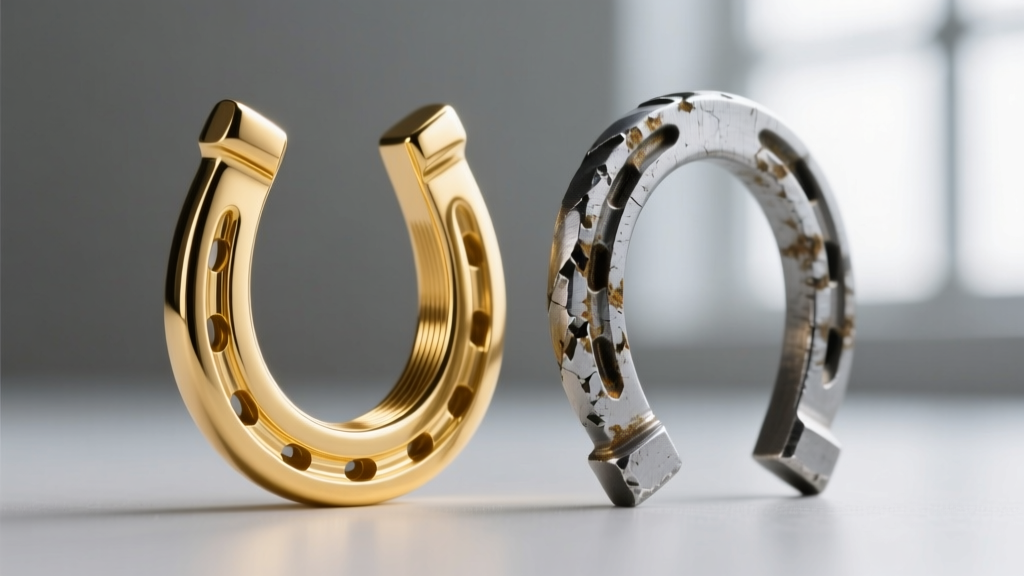
2026 Price Comparison Matrix: Market Rates & Value
To help you benchmark your purchases, we have compiled a matrix of current market rates for standard 16-gauge (1.2mm) horseshoe hoops with an 8mm or 10mm inner diameter. This table highlights what you should expect to pay for quality manufacturing.
| Material Grade | Avg. Price (Basic Beads) | Avg. Price (Gemmed Ends) | Threading Standard | Best Use Case |
|---|---|---|---|---|
| 316L Surgical Steel | $5 - $12 | $10 - $18 | External (Often) | Healed piercings (No nickel allergy) |
| ASTM F136 Titanium | $16 - $28 | $25 - $45 | Internal / Threadless | Fresh piercings, daily wear, sensitive skin |
| Niobium (Anodized) | $18 - $30 | $28 - $50 | Internal | Color variety on a budget, safe for healing |
| 14k Solid Gold | $85 - $140 | $150 - $280+ | Internal / Threadless | Luxury aesthetics, permanent jewelry setups |
Hidden Costs: The Threading Tax and Manufacturing Flaws
One of the most critical, yet frequently overlooked, aspects of horseshoe hoop value is the threading mechanism. Because the horseshoe design relies on removable end balls or gem clusters to secure the jewelry in the ear, the connection point is a potential failure mode.
External Threading (The Dealbreaker): Budget horseshoe hoops often feature external threading, where the screw pattern is cut into the post of the removable ball. This means the sharp, jagged threads must pass directly through your delicate piercing fistula every time you insert or remove the jewelry. This causes micro-tears, scar tissue buildup, and immense discomfort. Never pay premium prices for externally threaded jewelry.
Internal Threading (The Standard): High-value horseshoe hoops feature internal threading. The screw pattern is cut into the inside of the curved bar, and the post on the ball is perfectly smooth. This requires significantly more complex CNC machining, which raises the manufacturing cost by roughly 30% to 50%. However, the smooth insertion protects your piercing and ensures the threads do not strip over time. If a $6 horseshoe hoop is externally threaded and a $20 titanium one is internally threaded, the $20 option is infinitely more valuable.
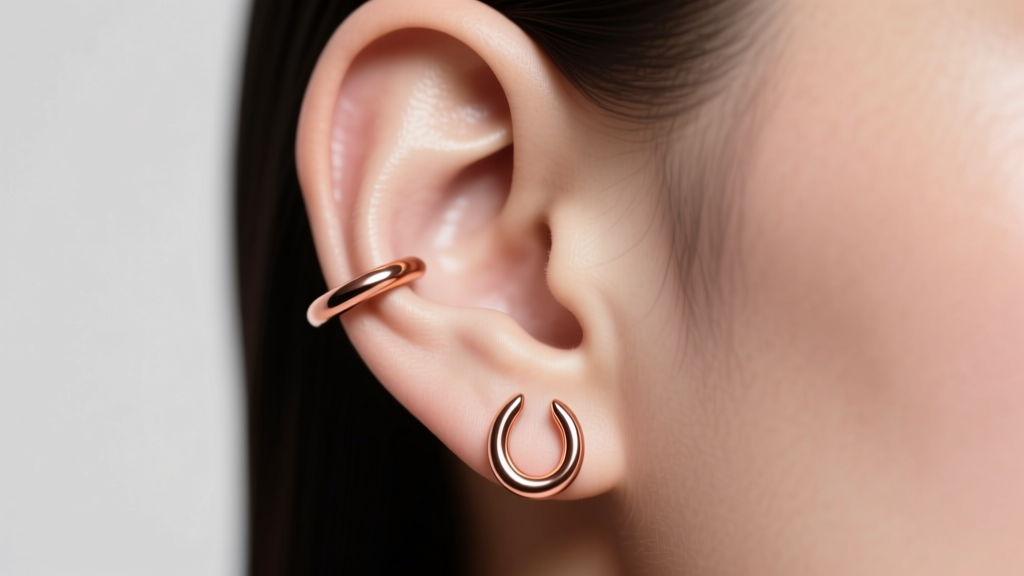
Sizing Matters: Gauge and Diameter Pricing Quirks
Unlike standard earrings, body jewelry sizing drastically impacts the price. The two main metrics for horseshoe hoops are gauge (thickness) and inner diameter (the width of the curve).
- Gauge Thickness: The most common sizes are 18G (1.0mm), 16G (1.2mm), and 14G (1.6mm). Moving from 16G to 14G requires roughly 75% more raw material and heavier-duty threading tools. Expect to pay a 15% to 25% premium for 14G horseshoe hoops compared to their 16G counterparts, especially in solid gold where material weight directly correlates to cost.
- Inner Diameter: Standard diameters are 8mm, 10mm, and 12mm. While the price difference between an 8mm and 10mm titanium hoop is negligible (usually $1 to $3), larger diameters like 14mm or 16mm often fall into "custom" or "specialty" sizing categories, which can carry a 20% markup due to lower production volumes.
Brand Value Assessment: Where to Spend and Where to Save
When assessing your budget, it helps to categorize brands by their value proposition. Generic marketplace brands offer the lowest entry price but carry high risks of poor polishing, inconsistent gauge sizing (a cheap "16G" might actually measure 1.4mm, causing insertion trauma), and high failure rates.
Mid-tier professional brands like Anatometal or Industrial Strength represent the absolute peak of functional value. You are paying for guaranteed ASTM F136 compliance, mirror-finish polishing that prevents bacterial adhesion, and flawless internal threading. For gem-set horseshoe ends, investing in premium brands like NeoMetal (which utilizes a threadless push-pin system, eliminating threading failure entirely) or BVLA ensures that the prongs holding your CZ or genuine diamonds will not snag on your hair or clothing.
Final Verdict: Maximizing Your Jewelry Budget
To get the best value out of your horseshoe hoop earrings in 2026, adopt a strategic purchasing framework. Never compromise on the base metal for healing or sensitive piercings; ASTM F136 titanium is a non-negotiable baseline that costs only slightly more than surgical steel but prevents costly complications. If you desire the look of gold or rose gold on a strict budget, opt for anodized titanium or niobium, which offer vibrant, safe colors for under $30. Save your premium budget for solid gold only when upgrading a fully healed, permanent piercing setup where the jewelry will remain untouched for years.


