Gold Heart Stud Earrings: The Complete Buying Guide
Discover what to look for when buying gold heart stud earrings. Learn about karat weights, backing types, gauge sizes, and pricing in our expert guide.

Why Gold Heart Studs Remain a Timeless Staple
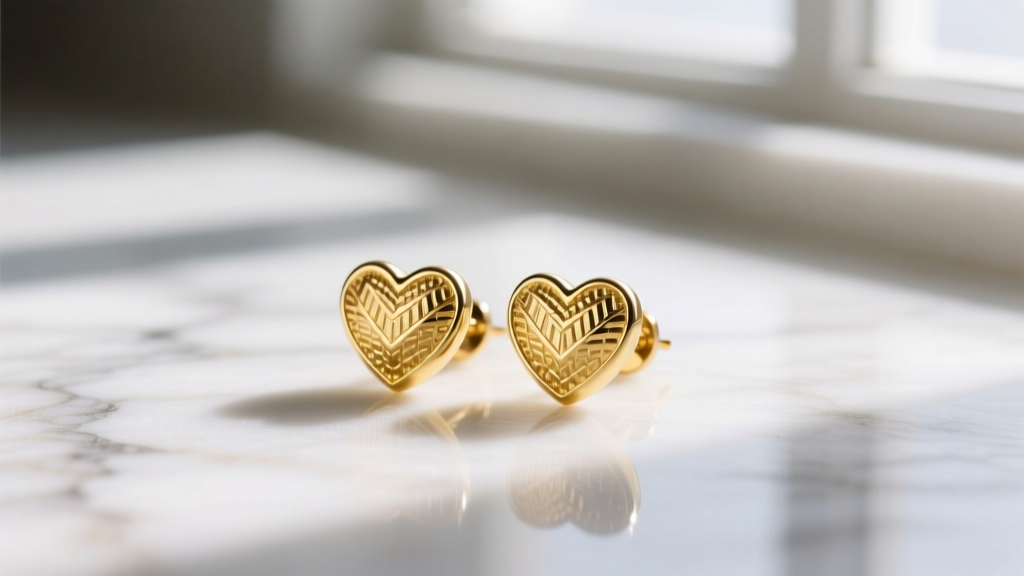
The heart-shaped stud earring is a cornerstone of fine jewelry, bridging the gap between youthful sentimentality and mature elegance. However, the market is heavily saturated with misleading descriptions, thin plating, and poorly balanced designs that droop on the earlobe. When investing in gold heart stud earrings, understanding the metallurgy, hardware mechanics, and structural balance is the difference between buying a lifelong staple and a disposable accessory. This comprehensive buying guide strips away the marketing fluff to give you the exact specifications, gauge sizes, and material grades you need to make an informed purchase in 2026.
Decoding Gold Purity: 10K vs. 14K vs. 18K for Daily Wear
Pure 24K gold is far too malleable for daily-wear jewelry; a pure gold post would bend under the slightest pressure, and the heart face would scratch and dent easily. Therefore, gold is alloyed with metals like copper, silver, and zinc to increase its Vickers hardness (HV). According to the Gemological Institute of America (GIA), the karat system dictates the exact ratio of pure gold to alloy metals.
| Karat Weight | Gold Content | Hardness & Durability | Color Profile | Average Price Range (6mm Studs) |
|---|---|---|---|---|
| 10K Gold | 41.7% | Highly durable, scratch-resistant | Pale yellow, slightly dull | $40 - $75 |
| 14K Gold | 58.3% | Ideal balance of strength & longevity | Warm, classic yellow | $90 - $160 |
| 18K Gold | 75.0% | Softer, posts may bend if snagged | Rich, deep saturated yellow | $180 - $350+ |
Expert Recommendation: For standard lobe piercings, 14K gold is the undisputed champion. It provides enough structural integrity to keep the post straight and the heart face secure, while retaining a beautiful warm hue. If you opt for 18K gold, ensure the heart design is slightly thicker (at least 1.2mm depth) to prevent warping.
The Allergy Factor: Nickel and Copper Sensitivities
White gold heart studs are typically alloyed with nickel or palladium and plated with rhodium. If you have contact dermatitis, avoid standard white gold unless it is explicitly alloyed with palladium. Rose gold gets its pink hue from a high copper content, which can also trigger reactions in highly sensitive skin. For hypoallergenic certainty, yellow gold alloyed with silver and zinc, or platinum-faced hearts with gold posts, are your safest bets.
Sizing, Proportions, and the 'Droop Factor'
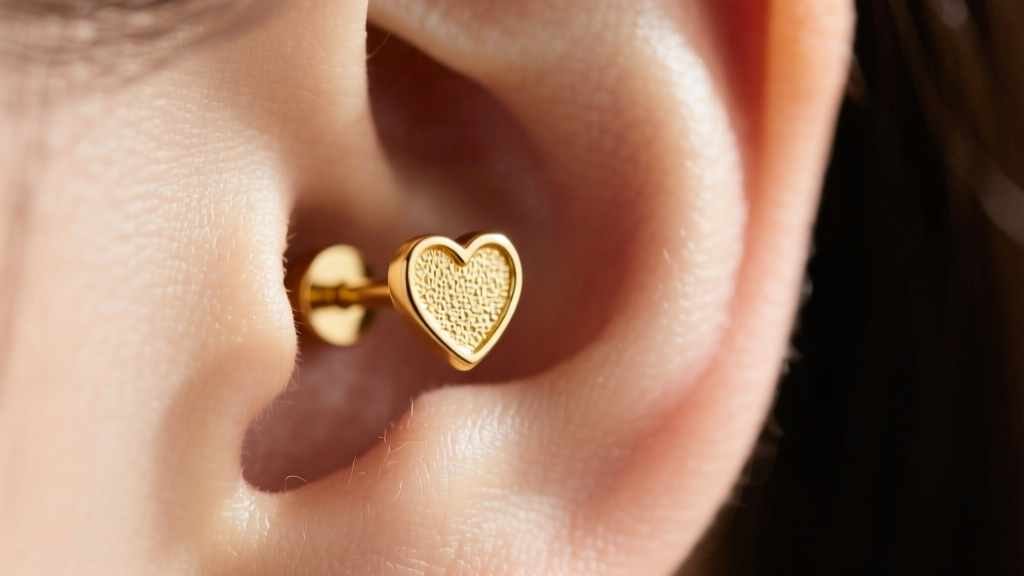
Heart studs are not perfectly symmetrical in weight distribution. The cleft at the top and the point at the bottom create a unique center of gravity. If the solder joint connecting the heart face to the post is placed too high, the earring will inevitably droop forward, pointing the bottom tip outward rather than resting flush against the lobe.
Millimeter Sizing Guide
- 3mm - 4mm (Micro): Ideal for upper lobe piercings, helix cartilage, or tragus placements. At this size, the heart reads as a subtle dot from a distance.
- 5mm - 7mm (Standard): The sweet spot for primary lobe piercings. A 6mm heart offers clear shape recognition without overwhelming the earlobe or catching on hair.
- 8mm - 10mm+ (Statement): Best for stretched lobes or secondary lower-lobe piercings. At this weight, you must ensure the earring features a reinforced post and a wide, supportive backing to prevent lobe tearing over time.
To combat the "droop factor," look for jewelers who utilize a slightly concave backplate on the heart design. This curvature allows the earring to cup the natural convex shape of the earlobe, keeping the heart perfectly upright.
The Hardware: Post Thickness and Backing Security
The most common failure point in gold heart stud earrings is not the heart itself, but the post and backing system. Standard friction posts (butterfly backs) are notorious for trapping sebum, dead skin cells, and bacteria, leading to localized irritation. Furthermore, the thin wire of a friction post is prone to bending.
Gauge Sizes Explained
According to the Association of Professional Piercers (APP), standard earlobe piercings are typically done at 18G or 16G, though commercial jewelry often defaults to 20G.
- 20 Gauge (0.81mm): Very thin. Common in mall-kiosk jewelry. Prone to bending and can cause the "cheese-cutter effect" in thin earlobes if the heart is heavy.
- 18 Gauge (1.02mm): The industry standard for fine jewelry studs. Offers excellent stability and fits 95% of healed lobe piercings comfortably.
- 16 Gauge (1.29mm): Thicker and highly secure. Usually reserved for cartilage, helix, or heavier statement hearts.
Upgrading Your Backings
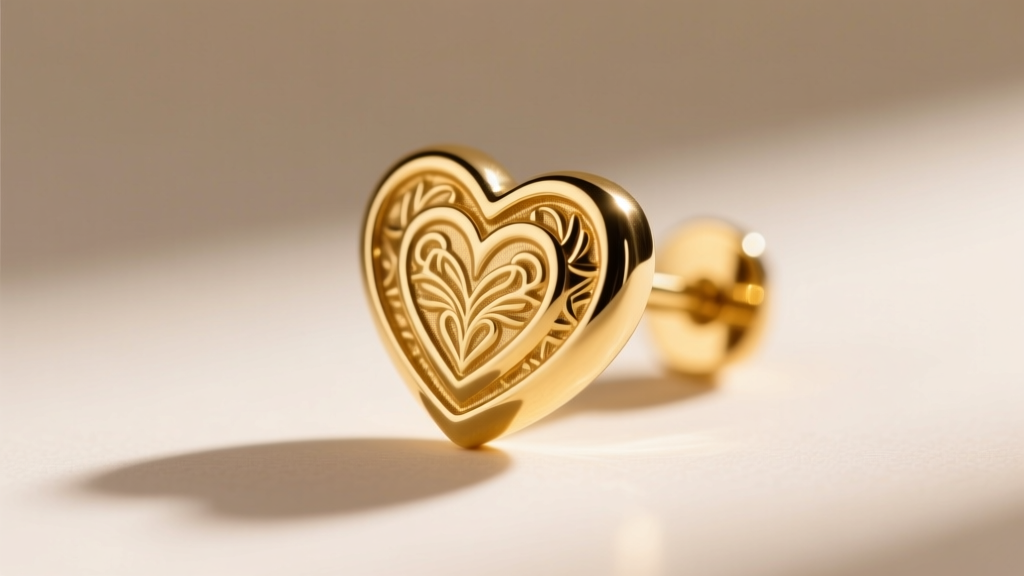
Ditch the standard butterfly clutch. If you are investing in solid gold hearts, upgrade to one of the following secure, hygienic alternatives:
- Threadless (Push-Pin) Flat Backs: Made from implant-grade titanium with a solid gold heart end. The flat disc sits flush against the back of the ear, making them perfect for sleeping and eliminating hair snagging.
- Internally Threaded Screw Backs: The post features internal threading, and the backing screws onto it. This ensures the threading never passes through your piercing tissue, protecting the fistula from micro-tears.
- La Pousette (Locking) Backs: A mechanical clutch that locks into a groove on the post. Highly secure for active lifestyles or children, though slightly bulkier than flat backs.
Solid Gold vs. Gold Vermeil vs. Gold Plated
When shopping, you will encounter vastly different price points for what appears to be the exact same gold heart stud. The difference lies in the base metal and the thickness of the gold layer, which is strictly regulated by the Federal Trade Commission (FTC).
Gold Plated (Brass Base): A microscopic layer of gold (usually less than 0.5 microns) electroplated over brass or copper. These are cheap ($15-$30) but will tarnish, turn your skin green, and cause allergic reactions within weeks of daily wear. Avoid these entirely for piercings.
Gold Vermeil (Sterling Silver Base): To legally be called vermeil, the base must be .925 sterling silver, and the gold plating must be at least 2.5 microns thick. Priced between $40 and $80, vermeil is a great entry-level option, but the gold layer will eventually wear off the high-friction areas (like the post and the edges of the heart) after 1 to 2 years of daily wear.
Solid Gold (No Base Metal): The gold is consistent all the way through. It will never tarnish, can be polished endlessly, and is safe to wear in the shower, pool, or ocean. A solid 14K gold heart stud is a generational piece.
Final Inspection Checklist Before You Checkout
Before finalizing your purchase, whether in a boutique or online, verify the following craftsmanship markers:
- Hallmark Stamps: Look for a laser-engraved "14K", "585", "18K", or "750" stamp on the back of the heart or the post base.
- Solder Joints: Inspect where the post meets the heart. The solder should be clean, flush, and free of porous pitting. Laser-welded joints are superior to traditional torch-soldered joints as they leave no visible discoloration.
- Edge Finishing: Run your finger over the edges of the heart. They should be softly beveled or polished, not sharp. Sharp edges indicate poor casting and finishing, which can scratch your skin or catch on delicate fabrics.
By prioritizing 14K or 18K solid gold, insisting on an 18-gauge post, and opting for ergonomic flat-back or screw-secure backings, your gold heart stud earrings will remain a secure, hygienic, and beautiful fixture in your jewelry rotation for decades to come.


