Single Left Earring Guide: Budget & Value Assessment
Discover the economics of buying a single left earring. We assess material grades, gauge sizes, and budget stacking strategies for asymmetrical ears.

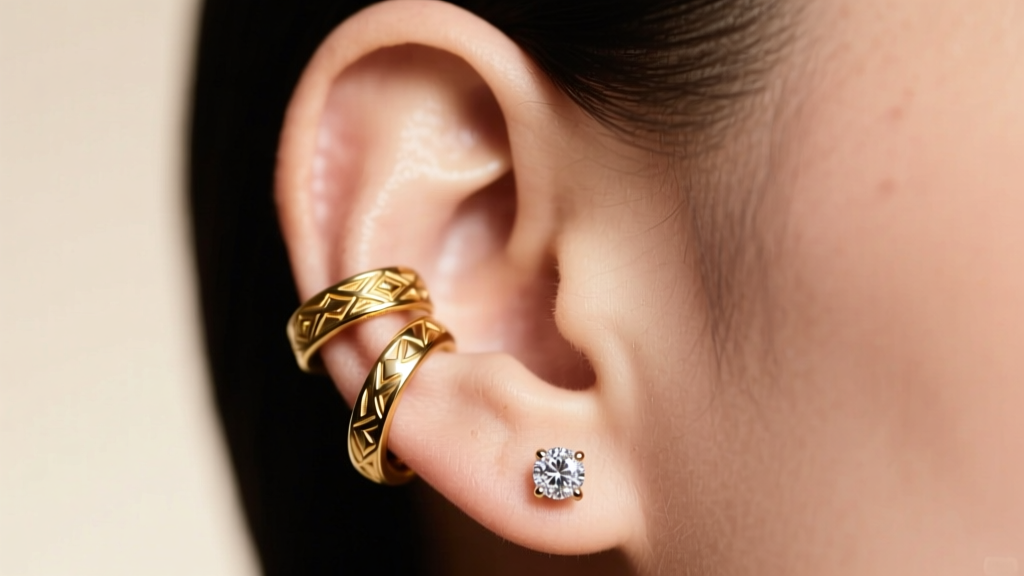
The Economics of Asymmetry: Why Buy a Single Left Earring?
The traditional paradigm of buying earrings in symmetrical pairs has fundamentally shifted. In 2026, the single left earring is no longer just a replacement for a lost piece; it is a deliberate, budget-conscious styling strategy. Asymmetrical ear curation allows collectors to allocate their jewelry budget toward high-impact, standalone pieces rather than paying a premium for a matching right-side counterpart that may rarely be worn. From a value assessment perspective, purchasing a single left earring maximizes your cost-per-wear ratio, especially when building a curated ear stack.
When assessing the value of a single earring, we must look beyond the initial price tag. The true value lies in the metallurgy, the precision of the gauge sizing, and the versatility of the piece across different piercing placements. A $150 single 14k gold helix hoop offers vastly superior long-term value compared to a $40 pair of gold-plated brass hoops, primarily due to the elimination of skin sensitivities and the inevitable degradation of plated finishes. According to the Federal Trade Commission (FTC) Jewelry Guides, gold-plated items have a strictly regulated, often microscopic layer of gold that wears away with friction, making solid metals the only viable option for everyday single-earring rotation.
Material Grades & Pricing: What You Should Actually Pay
Not all metals are created equal, and understanding material grades is critical when budgeting for a single left earring. The market is flooded with misleading terminology like 'hypoallergenic' or 'surgical steel,' which lack standardized definitions. To ensure you are getting genuine value, you must look for specific material certifications.
For fresh piercings or highly reactive ears, Implant-Grade Titanium (ASTM F-136) is the gold standard. The Association of Professional Piercers (APP) explicitly recommends ASTM F-136 titanium because it contains zero nickel, the most common contact allergen in jewelry. For luxury everyday wear, 14k solid gold remains the sweet spot for durability and price. The Gemological Institute of America (GIA) notes that 14k gold (58.5% pure gold) is alloyed with metals like copper and silver, providing the necessary tensile strength to prevent bending in small hoops or huggies, unlike softer 18k or 24k gold.
2026 Pricing Tiers for Single Earrings
| Material Grade | Style Example | Expected Price Range | Longevity & Value |
|---|---|---|---|
| ASTM F-136 Titanium | 16g Threadless Labret | $35 - $65 | Lifetime; zero tarnish, ideal for sensitive cartilage. |
| 14k Solid Yellow Gold | 20g Seamless Lobe Hoop | $85 - $160 | Generational; can be polished, melted, or resold. |
| Niobium (Anodized) | 18g Clicker Septum/Helix | $25 - $50 | Highly durable; color is permanent and hypoallergenic. |
| Gold-Plated Brass | Statement Chunky Hoop | $20 - $45 | Poor; 3-6 months before base metal oxidizes and causes reactions. |
Curating the Left Ear: A Budget-Friendly Stacking Strategy
Building a stack on a single left ear requires a strategic understanding of piercing anatomy and gauge sizes. Standard lobe piercings are typically done at 20-gauge (0.81mm) or 18-gauge (1.02mm), while cartilage piercings like the helix, conch, or tragus are usually pierced at 16-gauge (1.29mm). Buying a single earring that fits multiple placements dramatically increases its functional value.
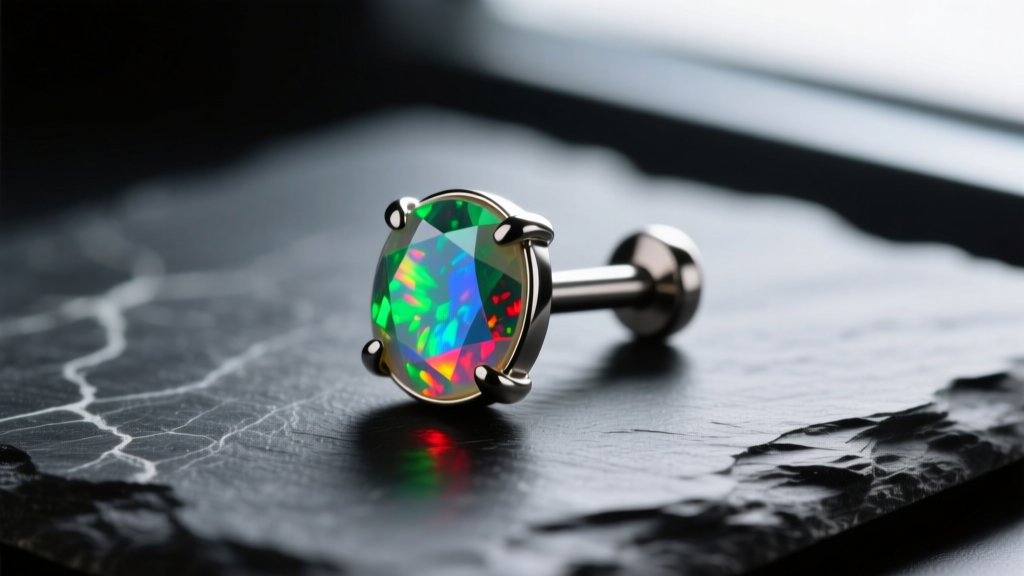
Consider investing in a high-quality, threadless 16-gauge titanium labret post with interchangeable ends. By purchasing one premium post ($30) and three distinct decorative ends (e.g., a pearl, a bezel-set opal, and a simple titanium ball for $25 each), you effectively create a modular single left earring system for under $110. This approach allows you to transition from a subtle office-appropriate look to an edgy evening stack without buying entirely new pieces.
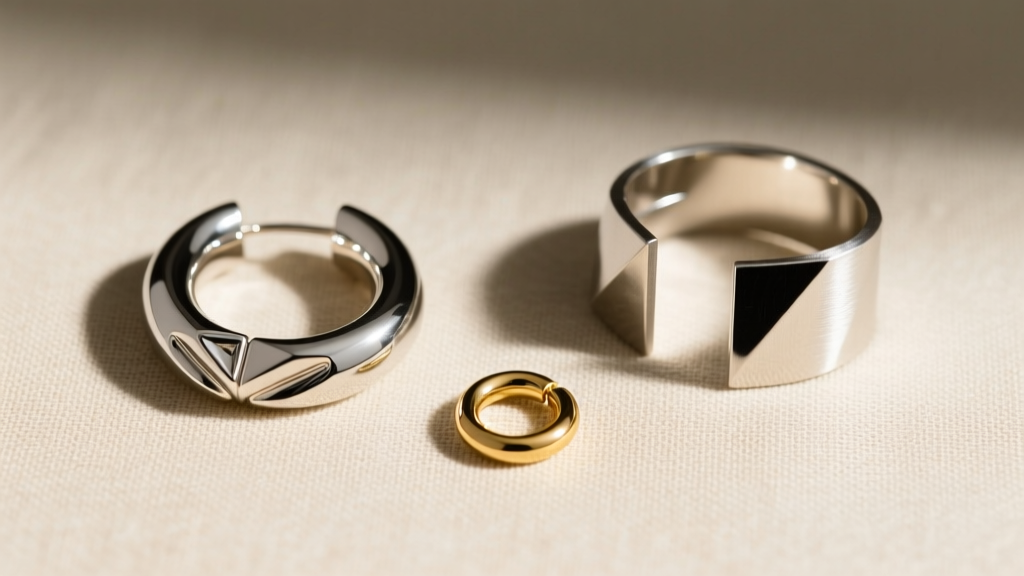
The Non-Pierced Alternative: Ear Cuffs
If your budget is tight or you want to avoid the healing time of new cartilage piercings, ear cuffs offer immense value. A well-crafted 925 sterling silver ear cuff costs between $30 and $60 and can be positioned anywhere along the outer helix ridge. Because they do not require a piercing, they are inherently one-size-fits-all, eliminating the risk of buying a single earring with an incompatible gauge or post length.
The 'Lost Earring' Dilemma: Replacement Value vs. Repurposing
The most common reason consumers search for a single left earring is the tragic loss of its right-side partner. When assessing the value of the remaining piece, you have three distinct financial pathways:
- Manufacturer Replacement: Some high-end artisan jewelers offer a 'half-price' replacement policy for lost single earrings. Always check the brand's warranty before purchasing a pair; this policy can save you 50% of the retail value in the event of a loss.
- Asymmetrical Integration: Intentionally wear the remaining left earring as a statement piece. Pair a leftover diamond drop earring with a simple 14k gold huggie on the right ear. This deliberate mismatch is a hallmark of modern, high-fashion styling and costs you nothing extra.
- Repurposing: A local jeweler can solder a bail onto the post of your remaining left earring for roughly $30 to $50, converting it into a pendant. If the original earring featured a high-value gemstone (like a natural sapphire or VS-clarity diamond), this repurposing preserves the intrinsic material value of the stone while giving it a new functional life.
'The modern jewelry consumer is moving away from rigid symmetry. A single, well-crafted left earring acts as an anchor for the entire side profile, allowing the wearer to invest heavily in one exceptional piece rather than diluting their budget across a matched set.' — Elena Rostova, Independent Jewelry Appraiser
Expert Verdict: Where to Allocate Your Budget
When executing a budget and value assessment for a single left earring, prioritize the anchor pieces. Allocate 60% of your budget to the primary lobe or helix piece, ensuring it is crafted from 14k solid gold or ASTM F-136 titanium. These materials guarantee that the piece will not degrade, cause contact dermatitis, or lose its structural integrity over years of daily wear.
Reserve the remaining 40% of your budget for secondary accents, such as Niobium clickers, delicate huggies, or non-pierced ear cuffs. By treating your left ear as an evolving, modular canvas rather than a static destination, you maximize both your financial investment and your stylistic versatility. Ultimately, the value of a single earring is not measured by its weight in gold, but by its ability to seamlessly integrate into your daily rotation for years to come.


