Expert Care for Authentic Italian Gold Earrings from Italy
Discover expert cleaning and maintenance tips for your Italian gold earrings from Italy. Learn how to protect 18k and 14k hallmarks and preserve luster.

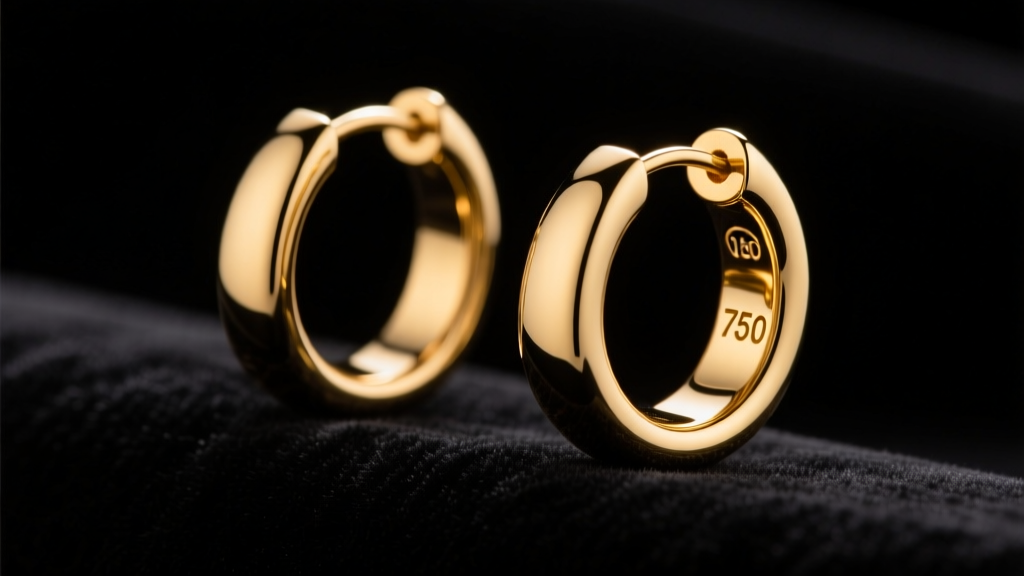
Italian goldsmithing is globally revered for its unparalleled craftsmanship, innovative textures, and rich metallurgical history. When you invest in authentic Italian gold earrings from Italy, you are acquiring more than just jewelry; you are wearing a piece of art from legendary manufacturing hubs like Vicenza, Arezzo, and Valenza. However, the unique alloy compositions and intricate structural designs—such as flexible Tubogas chains, delicate filigree, and deep rigato engravings—require specialized maintenance to preserve their brilliance and structural integrity over decades of wear.
This comprehensive guide moves beyond generic jewelry advice, providing a masterclass in the metallurgy, daily threats, and precise cleaning protocols required to maintain the luster and value of your Italian gold pieces.
Decoding Italian Hallmarks: 750, 585, and the Maker's Mark
Before applying any cleaning solution, you must understand the specific alloy you are working with. Unlike the United States, which primarily uses the karat system (14K, 18K), Italy mandates the use of millesimal fineness marks alongside a registered maker's mark (a geometric shape, a number, and a province code, such as 'VI' for Vicenza).
- 750 (18k Gold): Composed of 75% pure gold and 25% alloy metals. This is the standard for high-end Italian jewelry. It is highly resistant to tarnish but softer and more prone to micro-scratching.
- 585 (14k Gold): Contains 58.5% pure gold. It is harder and more durable, making it ideal for intricate Italian huggies or structural ear cuffs, but the higher alloy content makes it slightly more susceptible to oxidation from environmental acids.
- 375 (9k Gold): Less common in premium Italian exports, but contains over 60% alloy metals. This grade requires rigorous anti-tarnish maintenance.
According to the Gemological Institute of America (GIA), understanding your gold's fineness is critical because the 25% to 41.5% alloy metals (usually copper, silver, zinc, or palladium) dictate the jewelry's chemical vulnerabilities.
The Metallurgy of Color: Specific Vulnerabilities
Italian gold earrings are famous for their distinct hues, each presenting unique care challenges.
Italian Yellow Gold
The warm, buttery hue of traditional Italian yellow gold is achieved by balancing silver and copper alloys. While highly resistant to corrosion, the copper content can react to highly acidic skin pH levels or harsh cosmetics, leading to a dull, brownish film on the surface. This is not the gold tarnishing, but rather a surface-level copper oxide reaction that is easily reversed with proper washing.
Italian Rose Gold
Rose gold achieves its romantic pinkish-red tone through a significantly higher copper content. Copper is highly reactive to oxygen and moisture. If you live in a humid climate or frequently wear your rose gold Italian hoops in the shower, you may notice a darkening of the metal over time. Rose gold requires more frequent, gentle polishing to maintain its signature blush.
Italian White Gold and Rhodium Degradation
White gold is naturally a pale yellow-gray. To achieve the brilliant, mirror-like white finish associated with luxury Italian white gold earrings, the metal is electroplated with rhodium. Friction from hair, scarves, and even the natural oils from your earlobes will eventually wear this plating away, revealing the yellowish alloy beneath. Cleaning will not restore rhodium; these pieces require professional re-plating every 12 to 24 months.
The Step-by-Step Cleaning Protocol
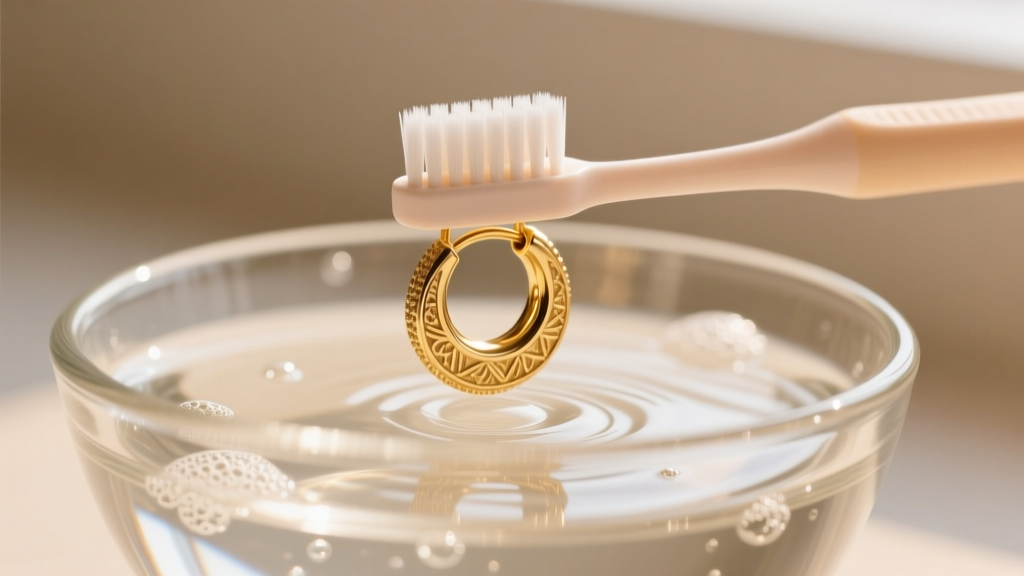
To safely remove sebum, dead skin cells, and cosmetic buildup from textured Italian gold, follow this precise methodology recommended by authorities like Jewelers of America.
What You Need
- Distilled water (Never use tap water; the chlorine and fluoride can cause microscopic pitting).
- Phosphate-free, mild liquid dish soap (Avoid soaps with added moisturizers or citrus degreasers).
- A soft-bristled baby toothbrush (Adult toothbrushes are too abrasive and will scratch 750 gold).
- Lint-free microfiber cloths.
- A hairdryer with a 'cool' setting.
The Soak and Agitation Method
- Prepare the Bath: Mix one cup of lukewarm distilled water with three drops of mild dish soap in a glass bowl. Avoid metal or plastic bowls that might harbor microscopic grit.
- Soak: Submerge your solid gold earrings for 15 to 20 minutes. This allows the surfactant to break down the lipid bonds of sebum and lotion trapped in engravings or behind the earring posts.
- Agitate: Gently brush the earrings with the baby toothbrush. Pay special attention to the earring post, the butterfly back or screw-back mechanism, and any intricate Italian filigree work. Brush in a circular motion, never aggressively back-and-forth.
- Rinse: Rinse thoroughly under a gentle stream of lukewarm distilled water. Ensure the drain is securely plugged.
- Dry: Pat dry with a microfiber cloth. For crevices, use the hairdryer on the 'cool' setting to blow out trapped moisture.
Critical Warning: Hollow vs. Solid Italian Earrings
Italy is famous for its 'electroforming' and hollow tube manufacturing techniques, which allow for massive, voluminous gold hoop earrings and statement drops that remain lightweight and comfortable. However, hollow earrings present a severe maintenance risk.
Expert Insight: If water or soapy residue becomes trapped inside the hollow chambers of an electroformed Italian earring, it can lead to internal corrosion, permanent water spots visible through the thin gold shell, and a foul odor caused by bacterial growth. Never submerge hollow Italian gold earrings. Instead, wipe them down with a damp, soapy microfiber cloth and immediately dry them with compressed air or a cool hairdryer.
Special Considerations for Italian Gemstone Inlays
Italian jewelry frequently incorporates organic and porous materials that require entirely different care protocols. If your gold earrings feature these classic Italian elements, alter your cleaning routine immediately:
- Coral and Cameos: Often sourced from the Mediterranean, coral and shell cameos are highly porous and sensitive to acids. Never soak them. Wipe gently with a barely damp cloth. Soap will strip their natural moisture, causing them to crack or turn chalky white.
- Micro-Mosaics: Popularized in Rome, these consist of tiny glass tesserae held together by resin or cement. Ultrasonic cleaners will vibrate the tesserae loose. Clean only with a dry, soft brush.
- Mother of Pearl: Highly sensitive to heat and dry environments. Keep away from direct sunlight and never use chemical dips.
Chemical Agents: Safe vs. Destructive
The wrong chemical can cause irreversible stress corrosion cracking, particularly in the alloy metals of 14k and 18k gold. Refer to this table before applying any household product to your earrings.
| Chemical Agent | Verdict | Metallurgical Impact on Italian Gold |
|---|---|---|
| Chlorine (Bleach/Pools) | Highly Destructive | Reacts with copper/zinc alloys to form gold chloride, causing microscopic stress fractures and eventual snapping of posts and prongs. |
| Baking Soda Paste | Avoid | Acts as a harsh abrasive. Will permanently dull the high-polish finish of 750 gold and scratch the rhodium on white gold. |
| Toothpaste | Avoid | Contains silica micro-abrasives designed for enamel; far too aggressive for soft Italian gold alloys. |
| Isopropyl Alcohol | Use with Caution | Safe for degreasing bare gold posts, but will strip natural oils from organic inlays like coral or degrade epoxy resins in hollow pieces. |
| Mild Dish Soap | Highly Recommended | Neutral pH surfactants safely lift oils without reacting with the metallic bonds of the alloy. |
Proper Storage to Prevent Micro-Scratching
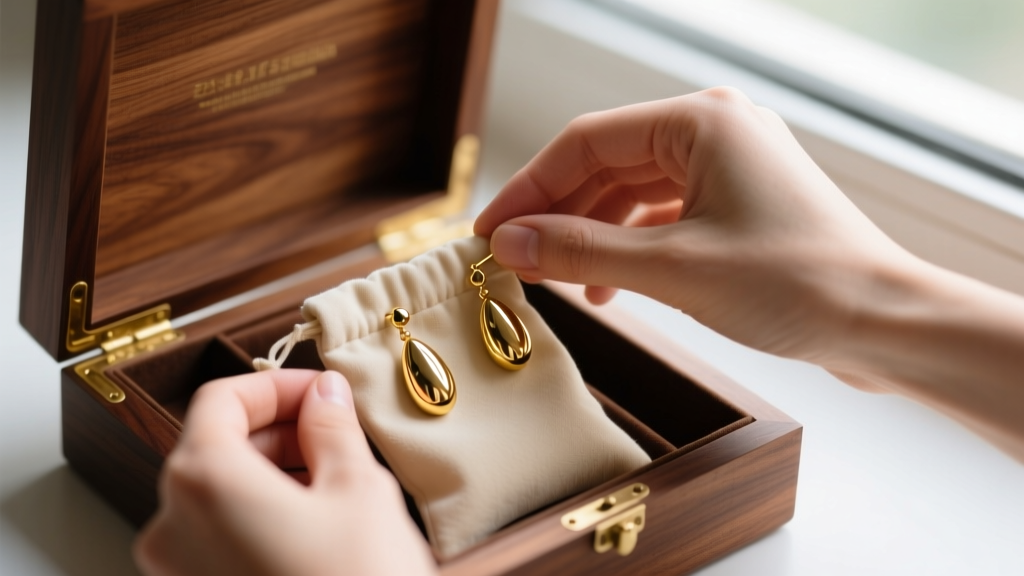
Gold, particularly 18k (750), is a relatively soft metal. Tossing your Italian gold earrings into a communal jewelry box guarantees a web of micro-scratches that will dull the metal's reflective properties over time.
Store each pair individually in anti-tarnish flannel pouches or soft microfiber slots. If your earrings feature sharp elements like ear cuffs or textured dangles, wrap them in acid-free tissue paper before placing them in the pouch to prevent them from snagging on the fabric. For long-term storage, consider adding silica gel packets to your jewelry box to control ambient humidity, which accelerates the oxidation of the copper alloys in rose and yellow gold.
When to Seek a Professional Italian Jeweler
While routine maintenance can be handled at home, certain situations require professional intervention. If your Italian gold earrings feature screw-backs or omega-backs that have lost their tension, a jeweler can carefully adjust the metal without compromising its structural integrity. Furthermore, if your white gold earrings have begun to yellow, or if deep scratches have marred a high-polish Buccellati-style engraving, a professional buffing and rhodium re-plating service is the only way to restore the piece to its original, factory-fresh brilliance.


