How to Style and Authenticate Art Deco Emerald Earrings
Learn how to authenticate, convert, and style vintage Art Deco emerald earrings. Expert tips on platinum hallmarks, stone grading, and care.

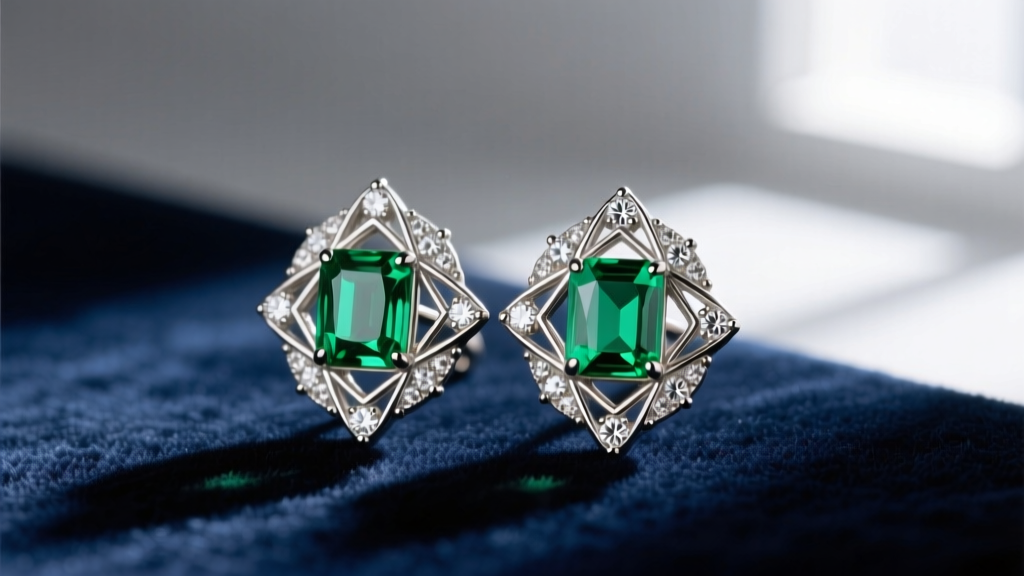
The Anatomy of Authentic Art Deco Emerald Earrings
The Art Deco era (roughly 1920 to 1935) marked a radical departure from the flowing, nature-inspired motifs of the Edwardian period. When evaluating art deco emerald earrings, you are looking for a celebration of geometry, contrast, and architectural precision. As we navigate the vintage jewelry market in 2026, genuine pieces from this era command premium prices, making the ability to identify authentic hallmarks and construction techniques an essential skill for collectors and stylists alike.
Authentic Deco earrings heavily feature calibre-cut emeralds. Unlike standard faceted stones, calibre-cut gems are custom-shaped to fit seamlessly into a specific geometric metal framework, often forming continuous lines or stepped shoulders. The vibrant green of Colombian emeralds was frequently juxtaposed against the stark, icy white of platinum and old European cut diamonds. Look for intricate millegrain edging—tiny beads of metal along the borders—which was applied by hand using a knurling tool, a hallmark of genuine 1920s craftsmanship that modern cast reproductions rarely replicate with the same crispness.
Step-by-Step Guide to Authenticating Vintage Pieces
The surge in demand for antique jewelry has led to a market flooded with high-quality 'Deco-style' reproductions. To ensure you are purchasing a genuine artifact, follow this forensic approach to authentication.
Step 1: Examine the Metal and Hallmarks
Platinum was the undisputed king of the Art Deco era due to its strength and malleability, allowing jewelers to create nearly invisible settings. Authentic pieces will typically bear stamps such as 'PT', 'PLAT', '900', or '950' (indicating 900 or 950 parts per thousand of pure platinum). If the piece is white gold, it is likely a later 1930s Depression-era piece or a reproduction, as white gold was used as a cheaper alternative when platinum was declared a strategic metal during WWII.
Step 2: Inspect the Emeralds and Inclusions
Natural emeralds are Type III clarity gems, meaning they almost always contain visible inclusions, known in the trade as 'jardin' (garden). Under a 10x jeweler's loupe, look for natural liquid inclusions, three-phase inclusions (liquid, gas, and solid crystals), or microscopic fissures. If the emeralds are completely flawless and possess a slightly reddish undertone under UV light, you may be looking at Chatham lab-created emeralds. While Chatham stones are valuable, they were not commercially introduced until the late 1930s, meaning a 1920s earring featuring them is either a later reproduction or has had its stones replaced.
Step 3: Analyze the Findings and Clasps
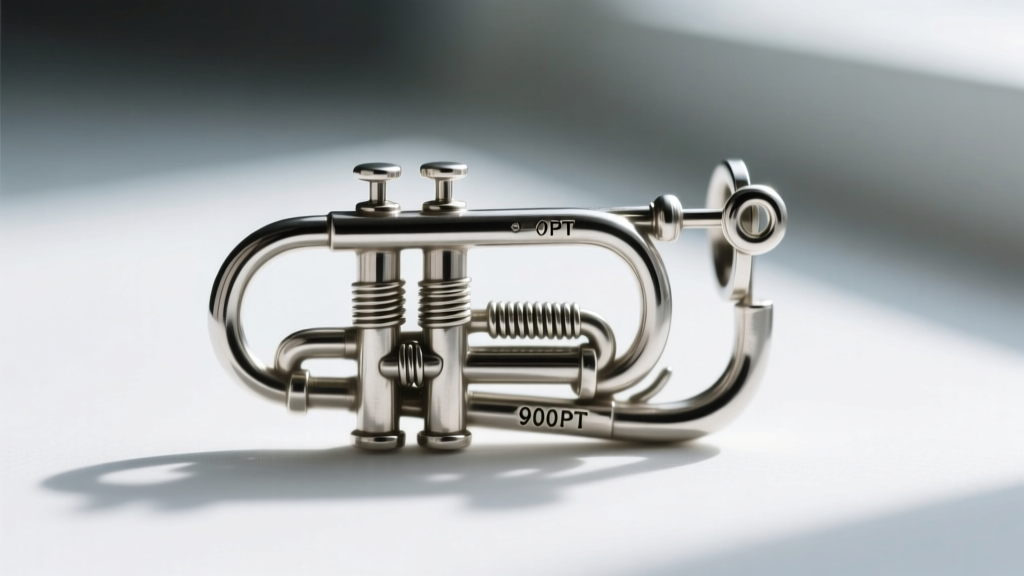
Earring findings evolved rapidly during this period. Early 1920s pieces often utilized shepherd hooks or simple wire loops. By the late 1920s and 1930s, the screw-back clasp (patented earlier but popularized in the Deco era) became standard for non-pierced ears. Trombone catches on convertible day-to-night drops are also a strong indicator of age.
| Authentication Feature | Genuine 1920s-1930s Artifact | Modern Reproduction |
|---|---|---|
| Metal Stamps | Faint '900PT', 'PLAT', or unmarked (tested via acid/XRF) | Deep, laser-sharp '18K', '750', or 'PT950' stamps |
| Stone Cutting | Hand-cut calibre stones with slight asymmetry and closed-back foil settings | Machine-cut, perfectly symmetrical stones with open-back prong settings |
| Millegrain Edging | Crisp, hand-pushed beads with slight irregularities | Soft, blurred beads caused by rubber mold casting degradation |
| Patina & Wear | Natural micro-scratches on metal; worn enamel in recessed areas | Uniform 'antiquing' chemicals; artificially darkened recesses |
For deeper research into period-specific construction, the educational archives at Lang Antiques provide exceptional visual databases of authentic hallmarks and findings.
How to Convert Antique Clip-Ons for Modern Piercings
A significant challenge when acquiring vintage art deco emerald earrings is that many surviving pairs from the 1930s were designed as clip-ons or screw-backs for unpierced ears. Wearing heavy platinum drops via tension clips can cause severe earlobe fatigue and tissue damage. Converting them to modern posts requires specialized lapidary and metalsmithing skills.
Modern standard ear piercings are typically 20-gauge (0.81mm) or 18-gauge (1.02mm). A master jeweler will carefully remove the vintage paddle-back or screw mechanism using a high-powered laser welder rather than a traditional torch. Laser welding is critical here; it focuses heat on a microscopic point, preventing the thermal shock that could shatter the brittle emeralds or melt the delicate platinum filigree. The jeweler will then weld an 18-gauge platinum or white gold post to the structural apex of the earring. Always insist on laser welding and request that the original vintage findings be kept and stored with the piece to preserve its provenance and historical integrity.
Styling Framework: Matching Deco Drops to Face Shapes
Art Deco earrings are inherently structural. The linear, elongated drops and sharp geometric angles interact dynamically with facial geometry. Here is how to style them for maximum impact:
- Round Faces: Opt for long, linear emerald drop earrings with vertical baguette diamond accents. The sharp vertical lines create an optical illusion that elongates the face and draws the eye downward, balancing wider cheekbones.
- Heart-Shaped Faces: Choose Art Deco chandelier earrings that are wider at the bottom. A geometric triangle or stepped pyramid motif ending in a cluster of calibre-cut emeralds will add visual weight to a narrower jawline.
- Square Faces: Soften strong jawlines with Deco earrings that feature curved arches or semi-circular sunburst motifs combined with emerald cabochons, avoiding overly sharp, rigid rectangles.
- Oval Faces: The universal shape. You can confidently wear bold, oversized geometric studs or wide platinum ear cuffs accented with emerald onyx contrasts.
When styling for evening wear, pair linear Deco drops with a deep V-neckline or a structured halter top. The verticality of the earrings should mirror the neckline to create a cohesive, elongated silhouette.

Care and Maintenance: Protecting Oiled Emeralds
Emeralds rank between 7.5 and 8 on the Mohs hardness scale, but their toughness is notoriously poor due to natural internal fractures. Furthermore, according to the Gemological Institute of America (GIA), the vast majority of natural emeralds are treated with oils or resins to fill surface-reaching fissures and improve clarity.
'The greatest threat to a vintage emerald is not a drop, but a cleaning machine. Ultrasonic vibrations will violently shake the stone, exploiting natural inclusions and causing catastrophic shattering. Steam cleaners will boil the cedar oil right out of the fissures, leaving the stone looking cloudy, fractured, and opaque.' — Master Lapidary Specialist
The Safe Cleaning Protocol:
- Mix lukewarm water with a single drop of mild, non-detergent soap (like Castile soap).
- Use a baby-soft toothbrush to gently agitate the dirt from the platinum millegrain and diamond pavé.
- Avoid scrubbing the emerald directly; let the soapy water run over it.
- Rinse in a bowl of clean, room-temperature water (never under a running tap where the stone could dislodge and fall down the drain).
- Pat dry with a lint-free microfiber cloth.
Every 3 to 5 years, have your art deco emerald earrings inspected by a jeweler who specializes in antique stones. They can check the structural integrity of the platinum prongs and, if necessary, perform a professional re-oiling treatment using high-grade, uncolored cedarwood oil to restore the emerald's natural luster and transparency.


