2026 Value Guide: Finding the Best Red Necklace Earring Set
Evaluate the true cost of a red necklace earring set in 2026. We analyze gemstone tiers, earring hardware durability, and price-to-value ratios.

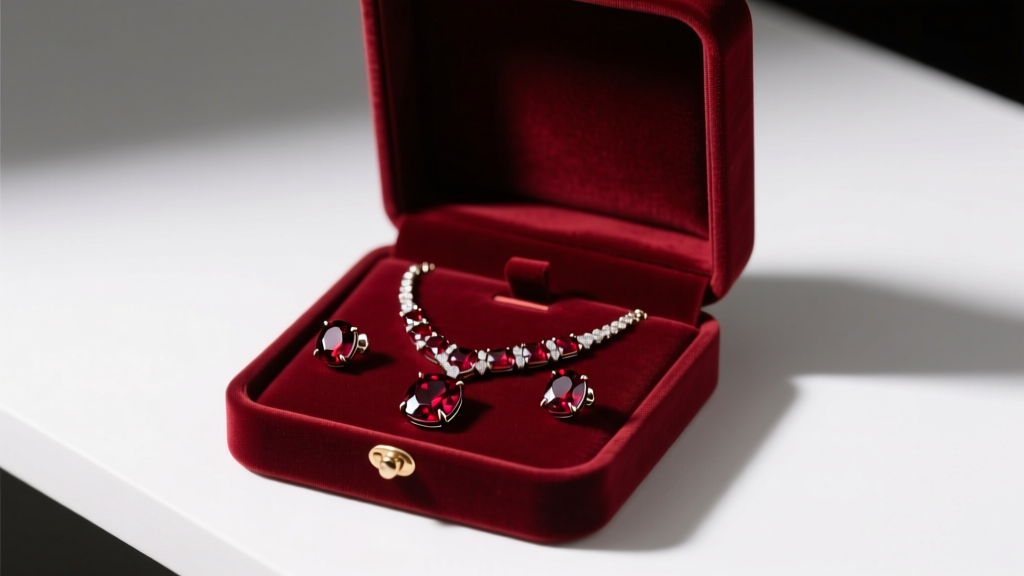
The Economics of Matched Jewelry: Set vs. Separates
When curating a cohesive jewelry collection, the appeal of a matched red necklace earring set is undeniable. Retailers frequently market these bundles as cost-effective solutions, promising a harmonious aesthetic at a bundled discount. However, from a strict budget and value assessment perspective, the reality of matched sets in 2026 requires a critical eye. While the necklace in a matched set often receives the lion's share of the manufacturing budget and design focus, the accompanying earrings are frequently where brands cut corners to maintain profit margins.
As a senior analyst for jewelry trends and hardware durability, I have evaluated hundreds of coordinated sets. The most common failure mode in budget-friendly and mid-tier matched sets is not the clasp on the necklace, but the structural integrity and metallurgical quality of the earring posts and friction backs. This guide deconstructs the true value of red gemstone sets, providing you with a concrete framework to assess whether a set is a genuine investment or a fast-fashion liability.
Decoding the "Red" Gemstone Spectrum
The term "red" in jewelry marketing is notoriously vague. A red necklace earring set priced at $45 and one priced at $4,500 can look remarkably similar in heavily edited product photography. To assess value, you must first identify the exact gemstone material and its corresponding market tier. According to the Gemological Institute of America (GIA), gemstone durability and rarity dictate long-term value retention and wearability.
| Gemstone Material | Mohs Hardness | Typical Set Price Range (2026) | Value Verdict & Wearability |
|---|---|---|---|
| Natural Ruby | 9.0 | $1,200 - $5,000+ | Exceptional. Heirloom quality, highly scratch-resistant. Best for daily wear. |
| Lab-Grown Ruby | 9.0 | $400 - $900 | High Value. Identical physical properties to natural, but lacks resale value. |
| Rhodolite Garnet | 7.0 - 7.5 | $150 - $350 | Good. Beautiful purplish-red hue, but requires care to avoid surface abrasion. |
| Carnelian (Quartz) | 6.5 - 7.0 | $60 - $120 | Fair. Opaque, earthy red. Prone to chipping if dropped on hard surfaces. |
| Red Glass / Resin | 5.5 / 2.0 | $20 - $50 | Poor. Strictly costume jewelry. Will scratch, cloud, and degrade quickly. |
If a retailer advertises a "Ruby Red Necklace and Earring Set" for $80, you are almost certainly looking at glass, synthetic corundum, or low-grade carnelian. True value lies in transparent material disclosure. Always demand the exact mineral name before purchasing.
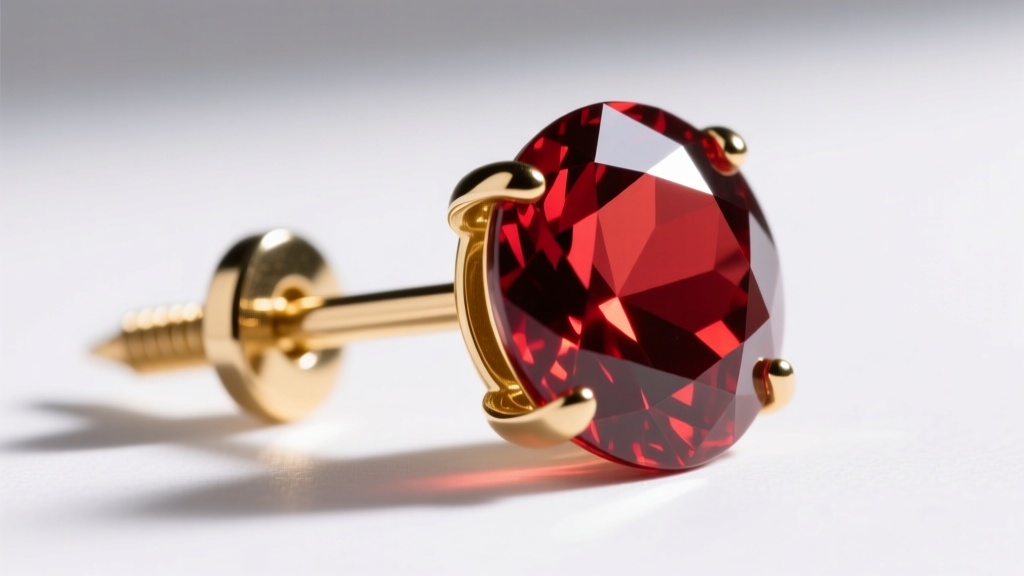
Earring Hardware: The Hidden Failure Point in Budget Sets
The most critical aspect of evaluating any red necklace earring set is examining the earring hardware. In coordinated sets, the earrings are often treated as an afterthought. Brands will use a solid 14k gold chain for the necklace to prevent tarnishing against the skin, but will inexplicably use gold-plated brass or nickel-alloy posts for the earrings to save fractions of a cent per unit. This leads to contact dermatitis, bent posts, and lost earrings.
Gauge Thickness and Post Integrity
The thickness of the earring post, measured in gauges, directly impacts its lifespan. Standard ear piercings are typically done at 20-gauge (0.81mm) or 18-gauge (1.02mm).
- 22-Gauge (0.64mm): Avoid. Often found in ultra-cheap fast-fashion sets. These posts will bend under the slight weight of a gemstone and can easily snap or tear through the earlobe.
- 20-Gauge (0.81mm): Acceptable for lightweight studs. However, if the red gemstone in the set is a heavy cabochon or a large faceted stone, a 20g post will slowly bend downward, causing the earring to droop uncomfortably.
- 18-Gauge (1.02mm) or 16-Gauge (1.29mm): The gold standard for demi-fine and fine jewelry. These thicker posts provide structural rigidity, ensuring the earring sits flush against the lobe even when set with heavier garnets or rubies.
Clasp Mechanics and Ear Lobe Health
The Federal Trade Commission (FTC) Jewelry Guides strictly regulate metal stamping and allergen disclosure, but many overseas manufacturers of budget sets bypass these rules. If the earring posts in your set are not stamped with "14K", "18K", "925", or "Ti" (Titanium), assume they contain nickel. Furthermore, evaluate the earring backs. Standard "butterfly" friction backs lose their tension over time, especially when subjected to the friction of hair and clothing. For valuable gemstone sets, insist on screw-backs or La Pousette (push-pull) locking mechanisms to secure your investment.
The 2026 Value Assessment Matrix
Before adding a red necklace earring set to your cart, run it through this practical decision framework to determine its true cost-per-wear and structural viability.
- The Weight Ratio Test: Look at the carat weight or millimeter dimensions of the gemstones. If the earrings feature stones larger than 8mm but the product description does not specify the post gauge or metal purity, walk away. The hardware will not support the stone weight.
- The Chain Link Audit: Matched sets often use delicate chains to offset the cost of the gemstones. Inspect the necklace clasp. A high-value set will feature a sturdy lobster clasp with a soldered jump ring. If the jump ring is split and unsoldered, the necklace will inevitably break and lose the pendant.
- The Backing Upgrade Cost: If you find a set with beautiful red gemstones but cheap friction backs, factor in the cost of buying replacement silicone or 14k gold locking earring backs (usually $15-$25). If the total cost still undercuts buying separate pieces, the set holds value.
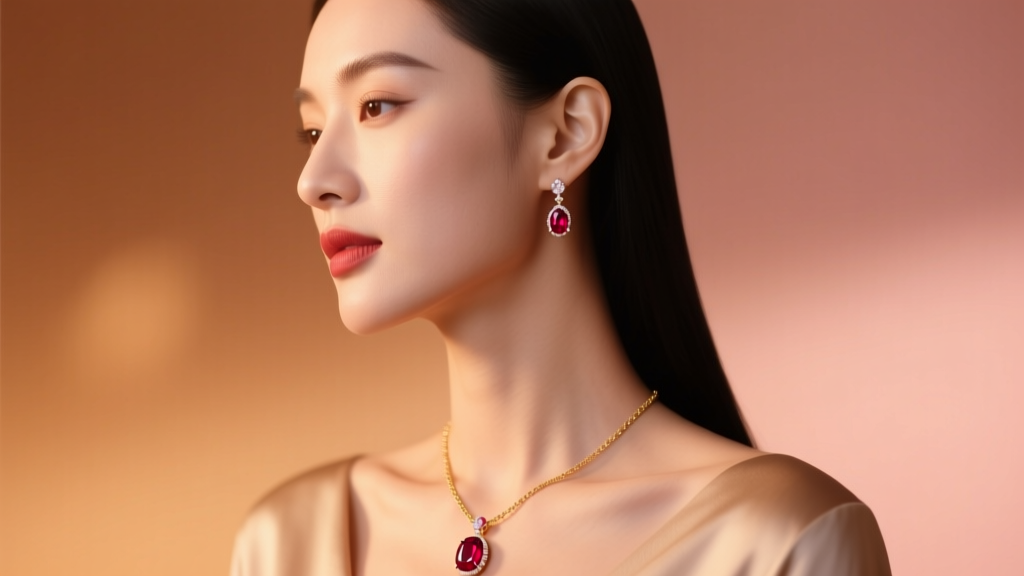
Market Tier Breakdown: What to Expect at Every Price Point
Understanding the market tiers for red jewelry sets helps calibrate your expectations regarding material grades and craftsmanship.
Tier 1: Fashion & Costume ($30 - $80)
At this level, the "red" stones are almost exclusively glass, cubic zirconia, or dyed quartz. The necklace chains are typically brass plated with a microscopic layer of gold or silver, which will oxidize and turn the skin green within weeks of daily wear. The earring posts are highly likely to contain nickel. Value Verdict: Only purchase for single-use events or temporary styling. Do not expect longevity.
Tier 2: Demi-Fine & Accessible Luxury ($150 - $450)
This is the sweet spot for modern consumers. In 2026, this tier is dominated by lab-grown rubies, high-grade rhodolite garnets, and red spinel set in sterling silver or 14k gold vermeil. The earring posts should be solid 14k gold or titanium to prevent allergic reactions, even if the rest of the earring body is vermeil. Value Verdict: Excellent cost-per-wear. The matched aesthetic is achieved without the prohibitive markup of natural, mined gemstones.
Tier 3: Fine & Heirloom ($800 - $3,000+)
Sets in this tier feature natural, earth-mined rubies or premium red tourmalines, set entirely in solid 14k or 18k gold, or platinum. The earring hardware will feature secure locking mechanisms, and the gemstones will be accompanied by third-party lab certificates detailing origin and treatment (e.g., heated vs. unheated). Value Verdict: A legitimate financial asset and generational heirloom, provided the rubies are certified untreated or minimally heated.
Final Thoughts on Coordinated Purchasing
Ultimately, a red necklace earring set can be a brilliant shortcut to a polished, put-together aesthetic, but only if you refuse to compromise on the earring hardware. By prioritizing post thickness, verifying gemstone mineralogy, and demanding hypoallergenic metals, you can navigate the 2026 jewelry market and secure a matched set that delivers both immediate visual impact and long-term structural value.


