Roach Clip Earrings: Technical Guide to Industrial Ear Cuffs
Explore the biomechanics, metallurgy, and safe wear practices of roach clip earrings. An expert guide to industrial spring-tension ear cuffs.

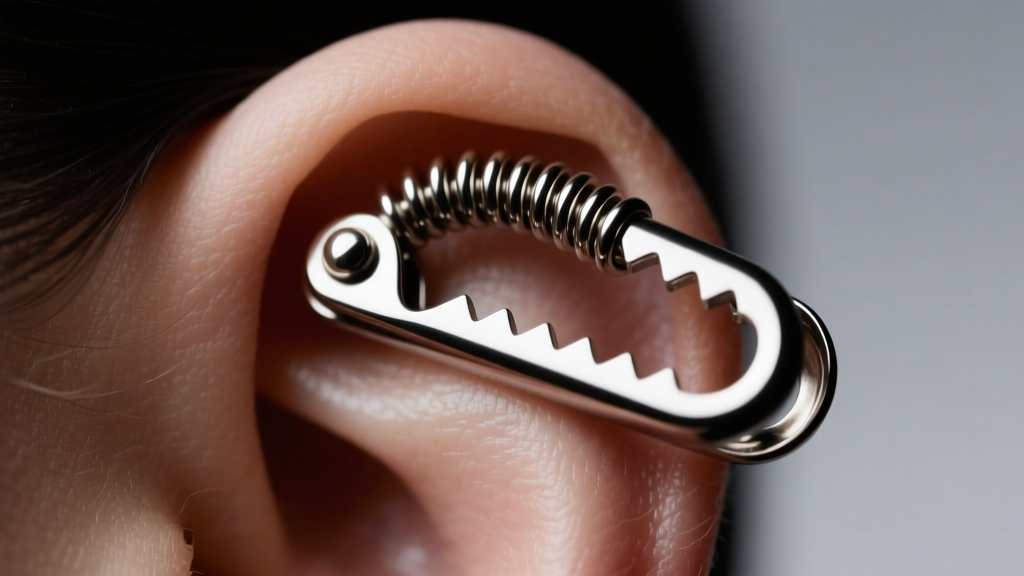
In the evolving landscape of avant-garde and industrial body modification, roach clip earrings have emerged as a striking, mechanical statement piece. Moving far beyond their counterculture origins, modern interpretations of the roach clip earring utilize precise torsion-spring mechanics to grip the helix, tragus, or earlobe without the need for a traditional piercing. However, applying industrial clamping force to delicate auricular cartilage requires a deep understanding of biomechanics, metallurgy, and tissue health. As we navigate the 2026 jewelry landscape, where brutalist and cyberpunk aesthetics dominate high-fashion runways, understanding the technical specifications of these pieces is critical for both designers and wearers.
The Anatomy of Industrial Clip Mechanics
Unlike standard friction-based ear cuffs that rely on the malleability of the metal band, a true roach clip earring operates on a fulcrum and torsion spring system. The mechanical advantage provided by the lever arms allows the jaws to exert a highly concentrated clamping force. The anatomy of a high-quality piece consists of four primary components:
- The Torsion Spring: Typically wound from music wire (ASTM A228) or stainless steel (ASTM A313), this coil provides the rotational force. The number of active coils and the wire diameter dictate the torque output.
- The Fulcrum Pin: The central axis around which the lever arms rotate. In premium designs, this is a captive, flush-riveted pin to prevent hair snagging and lateral wobble.
- The Jaw Pads: The contact points with the skin. While vintage or cheap iterations use bare, serrated metal, purpose-built jewelry utilizes medical-grade silicone or PTFE (Teflon) pads to distribute pressure and increase the coefficient of friction.
- The Lever Arms: The structural body of the clip, which must be rigid enough to prevent flexing under tension, which would otherwise dissipate the clamping force.
Metallurgy and Material Grades
The auricular environment is highly reactive. Sweat, sebum, and ambient humidity create a corrosive microclimate. When dealing with mechanical tension, material fatigue and galvanic corrosion become severe risks. Below is a technical comparison of common alloys used in manufacturing these mechanical cuffs.
| Material | Standard / Grade | Biocompatibility | Corrosion & Fatigue Risk |
|---|---|---|---|
| Titanium Alloy | ASTM F136 (Ti-6Al-4V ELI) | Excellent (Implant Grade) | Extremely Low; highly resistant to chloride pitting |
| Surgical Steel | ASTM F138 (316LVM) | Good (Contains Nickel) | Low; susceptible to crevice corrosion in spring coils |
| Brass / Bronze | C26000 / C51000 | Poor (High Copper/Zinc) | High; oxidizes rapidly, causes green skin discoloration |
| Zinc Alloy | Zamak 3 | Unacceptable for prolonged wear | Very High; prone to catastrophic brittle failure under tension |
For any piece intended for prolonged wear, ASTM F136 titanium is the gold standard. According to the Association of Professional Piercers (APP), implant-grade titanium eliminates the risk of nickel contact dermatitis, which is heavily exacerbated by the continuous pressure and micro-abrasions caused by spring-loaded clips.
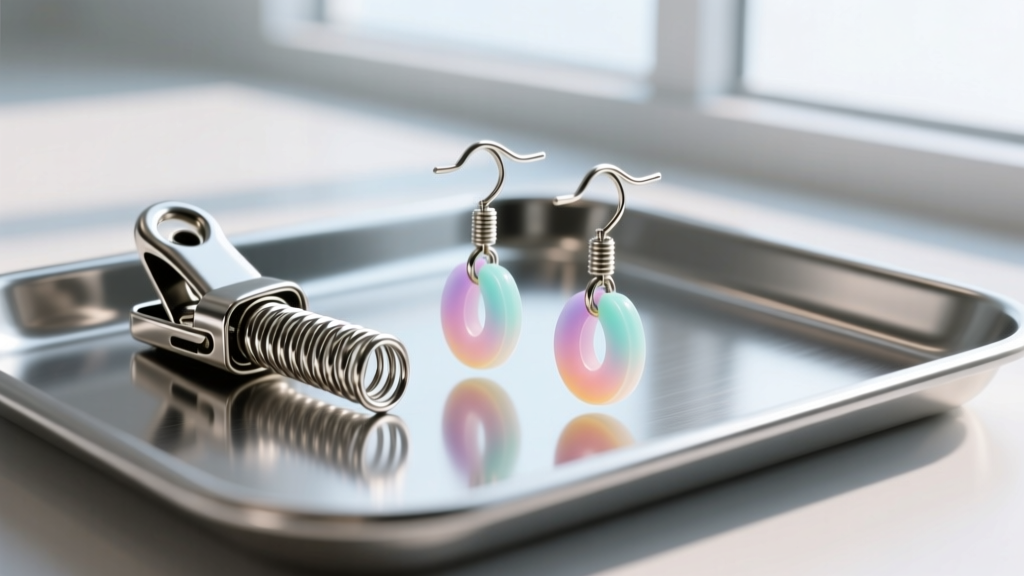
Biomechanical Risks: Tension, Necrosis, and Tissue Health
The most critical failure mode of a roach clip earring is not mechanical breakage, but biological rejection via pressure-induced ischemia. When the clamping force exceeds the capillary perfusion pressure of the ear tissue, blood flow is restricted. If left unchecked, this leads to tissue necrosis.
Calculating Safe Clamping Force
The average capillary closing pressure in human skin is approximately 32 mmHg (roughly 4.2 kPa). For a standard ear cuff jaw pad with a surface area of 15mm x 5mm (75mm²), the absolute maximum safe clamping force should not exceed 0.8 to 1.2 Newtons. Industrial hardware clips often exert 5 to 10 Newtons—enough to crush cartilage and cause rapid necrosis. Purpose-built jewelry clips must be calibrated to sit strictly below the 1.5 Newton threshold, relying on high-friction silicone pads rather than brute force to maintain their grip on the helix.
Symptoms of excessive tension include:
- Blanching: The tissue turns white and fails the capillary refill test (color does not return within 2 seconds of releasing pressure).
- Paresthesia: A tingling or numb sensation indicating nerve compression, particularly dangerous near the auriculotemporal nerve branches.
- Rebound Hyperemia: Severe throbbing and redness immediately upon removal, indicating reactive blood flow after ischemic deprivation.
Surface Treatments: PVD vs. Anodization
In 2026, the aesthetic demand for matte black, gunmetal, and iridescent roach clip earrings has driven advancements in surface treatments. However, the mechanical friction of the spring coil and jaw hinges makes traditional electroplating obsolete, as it quickly flakes and delaminates.
Physical Vapor Deposition (PVD) is the only acceptable coating for moving mechanical jewelry parts. PVD creates a molecular bond with the substrate (usually titanium or 316L steel), resulting in a coating that is harder than the base metal and highly resistant to the friction generated by the torsion spring. Conversely, anodization is excellent for coloring titanium but does not provide the necessary wear resistance for the high-friction pivot points of a mechanical clip.
Sourcing and Upcycling: Vintage vs. Purpose-Built
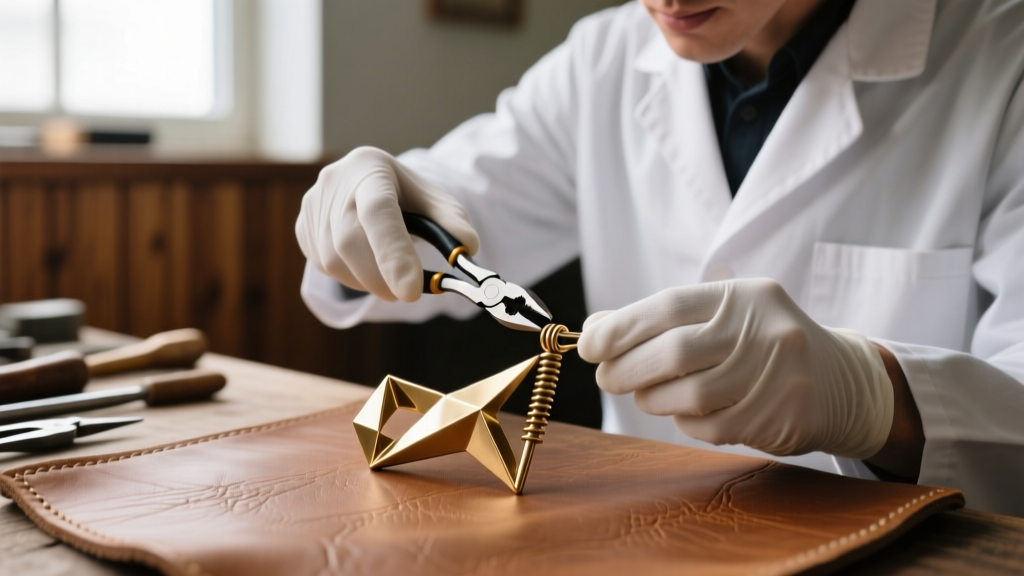
A dangerous trend in underground DIY jewelry involves upcycling actual vintage hardware or paraphernalia into ear cuffs. While aesthetically authentic to the grunge revival, this practice poses severe health risks. Vintage hardware is frequently manufactured from unknown pot metals containing high levels of lead, cadmium, and unregulated nickel. Furthermore, the spring tension on hardware meant for inanimate objects is vastly superior to what human tissue can withstand.
When sourcing these pieces, buyers must verify that the item is a purpose-built jewelry interpretation of the roach clip, not a repurposed hardware item. Look for hallmarks, laser-etched material grades (e.g., 'Ti-6Al-4V'), and polished, deburred edges that indicate jewelry-grade manufacturing rather than stamped industrial sheet metal.
Expert Fitting and Adjustment Protocol
Even purpose-built roach clip earrings may require tension adjustment to accommodate varying cartilage thicknesses (which typically range from 1.5mm at the helix edge to 4mm near the conch). Adjusting the torsion spring requires precision to avoid work-hardening and snapping the wire.
- Assess the Baseline: Test the clip on a silicone ear model or a piece of dense foam to gauge the initial clamping force.
- Tool Selection: Never use standard steel serrated pliers, which will mar the finish and create stress concentrators on the metal. Use specialized nylon-jaw pliers or wrap the tool tips in heat-shrink tubing.
- Micro-Adjustments: Grip the base of the spring coil firmly. Apply gentle, incremental bending force to the extended lever arm, not the spring wire itself. Bending the active spring wire directly will alter the coil geometry and cause uneven tension.
- Stress Relief: After adjustment, open and close the clip 20 times to settle the metal lattice and ensure the new tension holds without creeping back to its original state.
By respecting the metallurgy and biomechanics inherent in these designs, wearers can safely integrate the aggressive, industrial aesthetic of roach clip earrings into their daily rotation without compromising tissue integrity. For further reading on the thresholds of cutaneous pressure and ischemia, refer to the clinical guidelines published by the ASTM International standards committee on medical device materials.


