Barbie Magic Earring Materials: Vintage Plastics vs Modern Alloys
Explore the material science behind the vintage Barbie magic earring and how modern titanium and dichroic glass recreate the color-shifting effect.

The Nostalgia and Reality of the Barbie Magic Earring
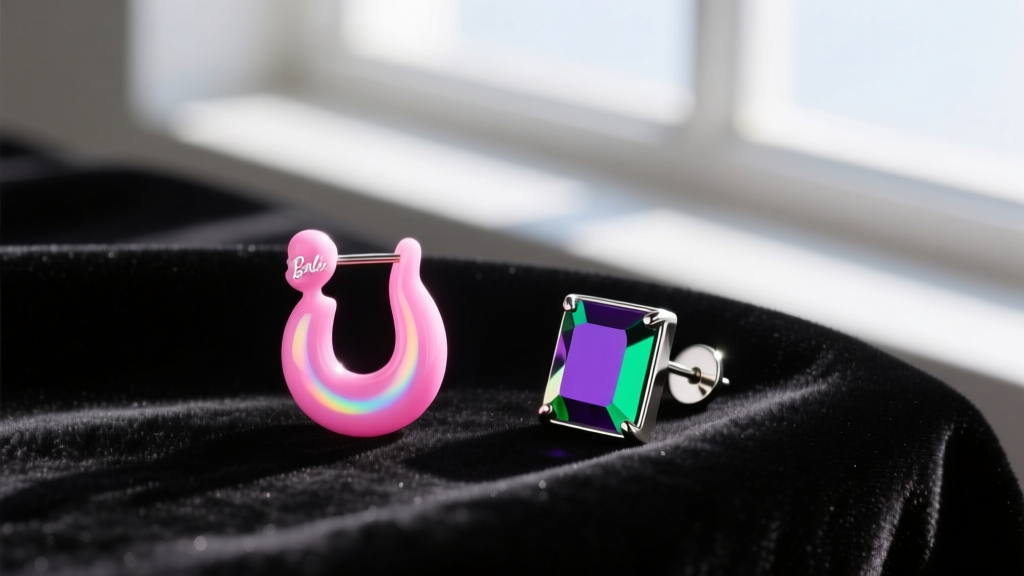
For many collectors and jewelry enthusiasts, the 1985 Magic Earring Barbie represents a pinnacle of 1980s toy innovation. The accessory set featured a pair of clip-on earrings with "magic" color-changing gems that shifted hues when exposed to temperature variations or specific lighting. While these pieces remain highly sought-after artifacts in the vintage toy market, attempting to wear original vintage toy jewelry in 2026 presents significant material and dermatological challenges. Understanding the exact chemical composition of the original Barbie magic earring allows us to appreciate its engineering while recognizing why modern metallurgy and gemology offer vastly superior, biocompatible alternatives for daily wear.
Material Breakdown: 1980s Thermoplastics vs. Modern Standards
The original Barbie magic earring was not manufactured with human biocompatibility in mind. The material choices were driven by injection-molding efficiency, cost, and visual novelty.
The Polymer Problem: ABS and Polystyrene
The primary structural components of vintage toy earrings were typically injection-molded Acrylonitrile Butadiene Styrene (ABS) or high-impact polystyrene. While durable enough for a doll, ABS plastic is inherently porous at a microscopic level. Over four decades, these thermoplastics undergo polymer degradation, often off-gassing plasticizers and becoming brittle. When pressed against the sensitive skin of the human earlobe, degraded ABS can harbor bacteria and cause localized contact irritation, completely lacking the inert properties required for modern body jewelry.
The "Magic" Dye: Leuco Compounds
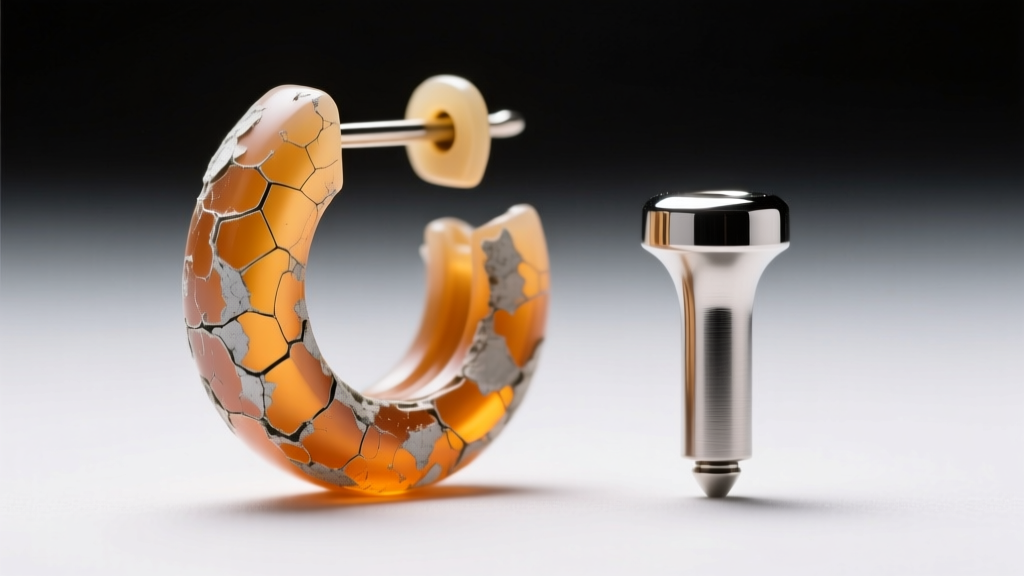
The color-shifting "magic" was achieved using thermochromic leuco dyes embedded within a cheap resin matrix. These dyes change their molecular structure—and thus their light absorption properties—when exposed to heat (such as body temperature or warm water). However, the resin binders used in the 1980s were not UV-stable. Prolonged exposure to sunlight causes the leuco compounds to permanently lock into their colorless state, a failure mode well-documented by conservation scientists studying vintage plastics.
Modern Equivalents for the Color-Shifting Effect
If you want to recreate the visual magic of the original Barbie accessory without the dermatological risks, 2026 gemology offers three distinct material pathways that provide dynamic color shifts safely.
- Dichroic Glass: Created by fusing micro-layers of silver and titanium oxides onto quartz glass in a vacuum chamber. Dichroic glass exhibits extreme pleochroism, shifting colors dramatically based on the angle of light and the background environment, mimicking the "magic" effect without relying on degrading chemical dyes.
- Thermochromic Enamel on Titanium: Modern jewelers now encapsulate highly stable, UV-resistant leuco dyes within biocompatible, medical-grade epoxy resins. When applied over an ASTM F136 titanium base, this creates a safe, temperature-responsive earring that won't trigger allergic reactions.
- Lab-Created Alexandrite: For a high-end gemological approach, synthetic alexandrite offers a natural color-shift from daylight (bluish-green) to incandescent light (purplish-red). According to the Gemological Institute of America (GIA), this phenomenon is caused by chromium doping in the crystal lattice, offering a permanent, non-degrading optical shift.
Material Properties Comparison Matrix
The following table contrasts the physical and biological properties of the vintage toy materials against modern jewelry equivalents.
| Material | Mohs Hardness | Biocompatibility | Color-Shift Mechanism | 2026 Price Range (Stud Pair) |
|---|---|---|---|---|
| Vintage ABS / Leuco Resin | 2.0 - 2.5 | Poor (Porous, degrades) | Thermochromic (Heat) | $40 - $120 (Collector Market) |
| Dichroic Glass | 5.5 - 6.0 | Excellent (Inert) | Optical Interference (Angle) | $35 - $85 |
| Thermochromic Epoxy | 3.0 - 4.0 | Good (If sealed properly) | Thermochromic (Heat) | $50 - $110 |
| Lab-Created Alexandrite | 8.5 | Excellent (Inert) | Pleochroism (Light Source) | $150 - $400+ |
Overcoming the Nickel Barrier: Post and Clasp Metallurgy
The most critical failure mode of the original Barbie magic earring is the metal hardware. To keep costs low in the 1980s, the clip-on mechanisms and earring posts were stamped from uncoated brass or nickel-silver alloys. Nickel is the most common contact allergen in jewelry, and vintage pieces often leach nickel salts when exposed to the natural oils and sweat of human skin.
"Wearing untested vintage toy jewelry is a primary trigger for acquired nickel allergies. Once sensitized, the immune system will react to even trace amounts of nickel in future jewelry wear."
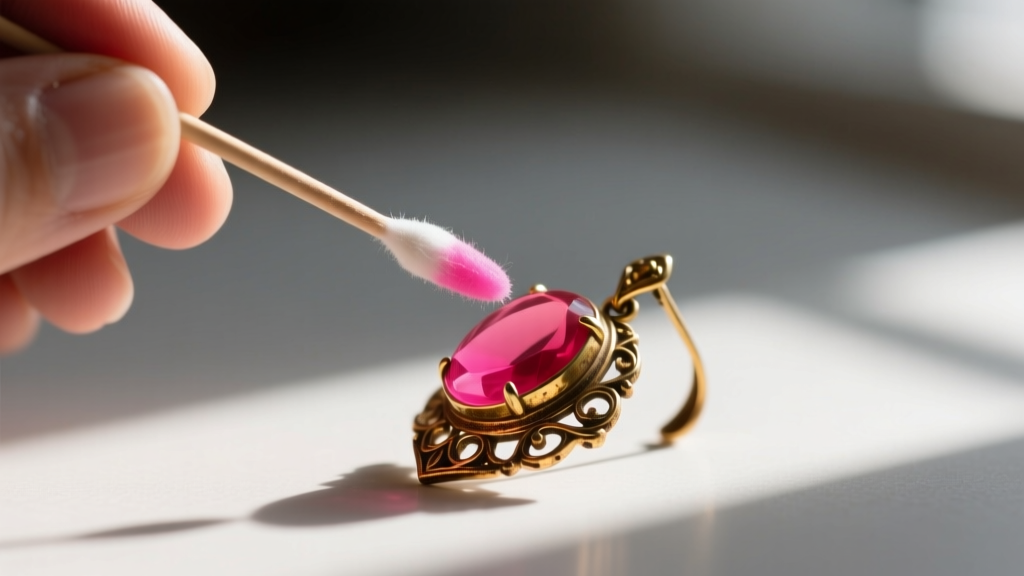
To test a vintage piece before handling or wearing it, jewelers use a dimethylglyoxime (DMG) test. Swabbing the metal with a DMG solution will turn bright pink within seconds if free nickel ions are present on the surface.
Modern alternatives utilize ASTM F136 implant-grade titanium (Ti6Al4V ELI) or pure niobium. These metals are completely nickel-free and biologically inert. Furthermore, while vintage toy earrings featured awkward, non-standard gauges with rough manufacturing seams that caused micro-tears in the earlobe, modern titanium studs are precision-machined to standard 20-gauge (0.81mm) or 18-gauge (1.02mm) thicknesses with mirror-polished finishes to ensure seamless insertion and healing.
Upcycling Vintage Toy Jewelry Safely
For collectors who own an original 1985 Barbie magic earring but wish to wear the nostalgic plastic gems safely, upcycling is the only viable option. This process involves removing the hazardous hardware and mounting the vintage plastic onto a safe base.
Step-by-Step Upcycling Protocol
- Hardware Removal: Use flush cutters to snip the nickel-heavy post or clip-on mechanism as close to the plastic base as possible. Do not twist or pull, as 40-year-old ABS plastic will snap under torsional stress.
- Surface Prep: Lightly scuff the back of the plastic gem with 800-grit sandpaper to create a mechanical bond. Clean with isopropyl alcohol to remove decades of handling oils.
- Base Selection: Purchase blank ASTM F136 titanium stud earrings with flat, 4mm or 5mm mounting pads.
- Adhesion: Apply a micro-drop of UV-curing jewelry resin or flexible E6000 adhesive to the titanium pad. Press the vintage plastic gem into place and cure under a 36W UV lamp for 60 seconds. The flexible nature of these adhesives accommodates the differing thermal expansion rates of titanium and ABS plastic, preventing the gem from popping off when exposed to body heat.
Final Verdict: Display vs. Daily Wear
The original Barbie magic earring remains a fascinating artifact of 1980s polymer science and toy marketing. However, its material reality—degrading thermoplastics, unstable leuco dyes, and highly allergenic nickel hardware—makes it entirely unsuitable for direct human wear in 2026. By understanding the specific material properties that made the original "magic" work, modern jewelry enthusiasts can pivot to advanced alternatives like dichroic glass, lab-created alexandrite, and implant-grade titanium. These modern materials not only replicate the mesmerizing color-shifting effects of our childhood nostalgia but do so with the biocompatibility and structural permanence required for fine jewelry.


