Beaded Pearl Earrings: Material Comparison & Care Guide
Discover the material properties of beaded pearl earrings. Compare nacre types, wire gauges, and stringing threads for durable, elegant jewelry.

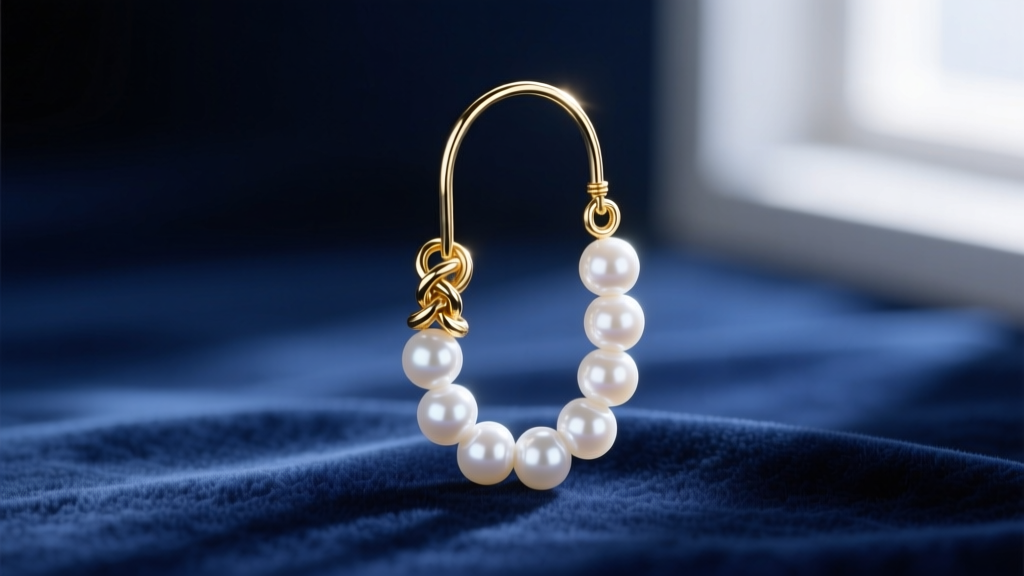
Deconstructing the Beaded Pearl Earring
When evaluating beaded pearl earrings, the aesthetic appeal is only half the equation. The true longevity, comfort, and value of the piece are dictated by its underlying material properties. As of 2026, advancements in freshwater nucleation and hypoallergenic metallurgy have vastly expanded the market, making it crucial for buyers to look beyond the surface luster. A high-quality beaded earring relies on a precise synergy between the pearl's nacreous layer, the structural integrity of the stringing medium, and the biocompatibility of the metal findings. Understanding these material distinctions separates fine jewelry from disposable fashion accessories.
Pearl Material Matrix: Cultured vs. Simulated
The core of any beaded pearl earring is the bead itself. According to the Gemological Institute of America (GIA), the value and durability of a pearl are intrinsically linked to its nacre thickness and the composition of its nucleus. Below is a technical comparison of the most common pearl materials used in multi-bead earring designs.
| Material Type | Nacre Thickness | Luster Profile | Avg. Price (Pair) | Mohs Hardness |
|---|---|---|---|---|
| Akoya (Saltwater) | 0.4mm - 0.8mm | Sharp, mirror-like | $150 - $600 | 2.5 - 4.5 |
| Freshwater (Solid) | 2.0mm - 4.0mm (Solid) | Soft, satiny glow | $40 - $250 | 2.5 - 4.5 |
| South Sea (Saltwater) | 2.0mm - 6.0mm | Deep, luxurious satin | $500 - $2,500+ | 2.5 - 4.5 |
| Majorica (Simulated) | N/A (Guanine coating) | Uniform, glass-like | $80 - $200 | 5.0 - 6.0 (Glass core) |
Saltwater vs. Freshwater Nacre Properties
Akoya pearls are bead-nucleated, meaning a spherical shell bead is implanted into the oyster, resulting in a relatively thin nacre layer (often under 1mm). While this yields an unparalleled mirror luster, the thin nacre is susceptible to chipping and peeling if the beads knock against each other in a drop earring design. Conversely, modern freshwater pearls are typically tissue-nucleated, resulting in a solid nacre bead. This makes them significantly more durable against friction and impact, an essential property for beaded dangle earrings that swing and collide during wear.
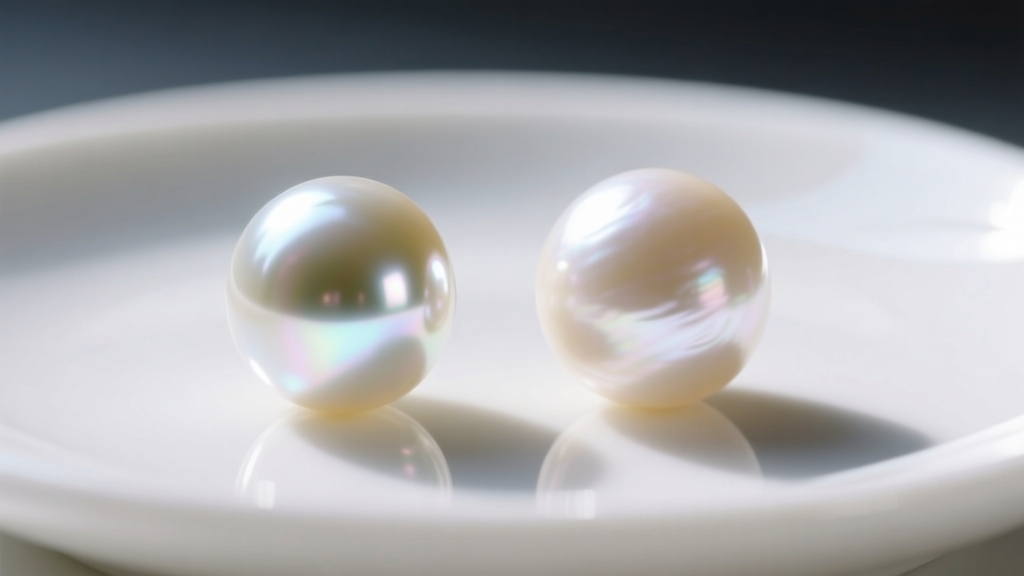
The Role of Conchiolin
Beyond calcium carbonate crystals, pearls contain conchiolin, an organic protein that acts as a biological glue. The ratio of conchiolin to aragonite affects the pearl's translucency and structural resilience. Simulated pearls lack this organic matrix entirely, relying on a glass core dipped in guanine essence (derived from fish scales or synthetic mica). While simulated beads are impervious to sweat and cosmetics, they lack the thermal properties of genuine nacre, often feeling unnaturally heavy and cold against the earlobe.
Structural Integrity: Wire Gauges and Stringing Threads
The materials used to suspend and connect the pearls dictate the earring's tensile strength and drape. A failure in the stringing material or wire alloy is the most common cause of lost beads.
Wire Alloys and Gauge Sizing
For beaded drop earrings, the headpins and ear wires must support the cumulative weight of the beads without bending or causing allergic contact dermatitis.
- 20-Gauge (0.81mm): The industry standard for standard lobe hooks and heavy South Sea bead drops. It provides sufficient rigidity to hold a 15-gram cluster of beads without work-hardening and snapping.
- 22-Gauge (0.64mm): Ideal for lightweight Akoya or seed pearl designs. It offers a delicate profile but requires careful handling to prevent the wire from warping under the weight of heavy glass-core simulated beads.
- Grade 23 Titanium (Ti-6Al-4V ELI): For sensitive ears, this medical-grade alloy is the gold standard. Unlike surgical steel, which contains trace nickel, ELI titanium is entirely nickel-free and highly resistant to corrosion from sebum and sweat.
Stringing Mediums: Silk vs. Synthetic
When beads are knotted between each other to prevent friction damage, the thread material is critical. Traditional Size F (0.35mm) silk thread offers a beautiful, supple drape that allows beaded hoops and tassels to move fluidly. However, silk is a protein fiber that degrades when exposed to the acidic pH of human sweat and ambient humidity. For heavy beaded pearl earrings, jewelers increasingly rely on braided ultra-high-molecular-weight polyethylene (UHMWPE) threads, such as PowerPro. These synthetic alternatives offer a tensile strength exceeding 30 lbs while maintaining a microscopic diameter, ensuring the knots remain secure for decades without rotting.
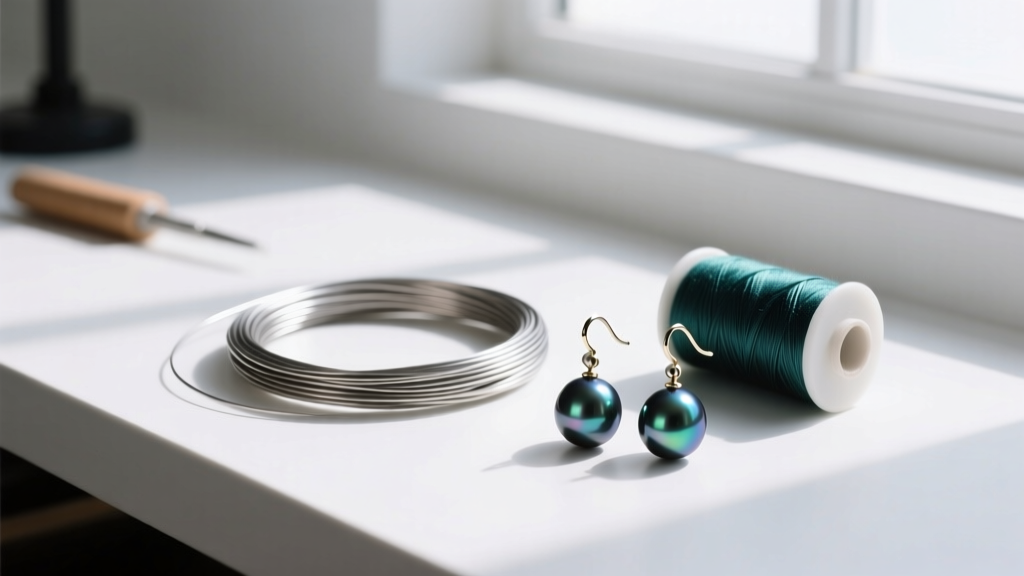
Weight, Ergonomics, and Lobe Health
Material density directly impacts the ergonomics of beaded pearl earrings. A 12mm South Sea pearl can weigh upwards of 3.5 grams per bead. A drop earring featuring five of these beads, plus metal findings, can easily exceed 20 grams per ear. This concentrated mass creates a fulcrum effect on the earlobe, leading to tissue stretching and micro-tears in the piercing fistula.
To counteract material density, expert jewelers employ ergonomic French wires or incorporate lightweight silicone O-rings and specialized locking backs (such as La Pousette backs) that distribute the load across a wider surface area of the posterior lobe. When selecting beaded designs, always calculate the total gram weight; anything exceeding 12 grams per earring requires structural support to prevent irreversible lobe elongation.
Chemical Sensitivities and Long-Term Care
Pearls are highly reactive to their chemical environment. The GIA Pearl Care Guide emphasizes that the calcium carbonate structure of nacre is easily dissolved by weak acids. Common cosmetics, hairsprays, and even the natural lactic acid in human perspiration can etch the surface of the pearls, stripping away the orient and overtone that give the beads their visual depth.
Furthermore, the stringing knots in beaded designs act as sponges, trapping moisture and acidic residues against the drill holes. Over time, this localized acidity eats into the nacre from the inside out, causing the drill holes to widen and the beads to crack. To mitigate this material vulnerability, beaded pearl earrings should be wiped with a damp microfiber cloth after each wear and stored in a breathable cotton pouch—never in an airtight plastic bag, which traps moisture and accelerates the dehydration of the conchiolin matrix.
Final Verdict: Matching Materials to Lifestyle
Choosing the right beaded pearl earrings requires aligning material properties with your daily environment. For daily wear and high-friction environments, solid-nacre freshwater pearls strung on UHMWPE thread with 20-gauge titanium hooks offer the highest durability-to-weight ratio. For formal occasions where maximum optical brilliance is required, thin-nacre Akoya beads on silk thread provide unmatched luster, provided they are protected from chemical exposure. By prioritizing the metallurgical and gemological specifications over mere visual appeal, you ensure your beaded pearl earrings remain structurally sound and visually captivating for a lifetime.


