Bearded Dragon Earrings: Best Materials & Safety Guide
Discover the best materials for bearded dragon earrings. Compare implant-grade titanium, enamel, and resin for durability and reptile-keeper hygiene.

The Intersection of Reptile Keeping and Jewelry Materials
For reptile enthusiasts, bearded dragon earrings are more than just a novelty accessory; they are a subtle nod to a beloved pet and a unique lifestyle. However, the intersection of herpetology and body jewelry presents a highly specific set of material challenges that mainstream jewelry guides completely ignore. When you own a bearded dragon (Pogona vitticeps), your hands, clothing, and environment are frequently exposed to reptile dander, substrate dust (like coconut fiber or reptile carpet particles), and the ever-present risk of Salmonella bacteria.
According to the Centers for Disease Control and Prevention (CDC), reptiles frequently carry Salmonella, necessitating rigorous handwashing and environmental hygiene. This means your earrings cannot simply look good—they must withstand frequent sterilization, resist porous trapping of bacteria, and endure accidental scratches from tiny reptile claws when your dragon decides to climb on your shoulder. In 2026, the standard for animal-themed novelty jewelry has shifted from cheap, porous base metals to highly engineered, biocompatible materials.
Why Porous Materials Fail the Reptile-Keeper Test
The most common mistake buyers make when purchasing animal-themed jewelry is opting for cheap, mass-produced alloys or unsealed 3D-printed resins. Let us break down exactly why these fail in a reptile-keeping environment.
The Problem with Standard Resin and Acrylic
Many Etsy artisans craft adorable, lightweight bearded dragon earrings using cast epoxy resin or hand-painted acrylic. While visually stunning and highly detailed, these materials are microscopically porous. If you handle your bearded dragon and subsequently touch your earlobes, microscopic organic matter and bacteria can become trapped in the resin's micro-fissures. Over time, this leads to biofilm buildup, resulting in contact dermatitis or localized ear infections. Furthermore, acrylic degrades when exposed to the 70% isopropyl alcohol solutions that reptile keepers frequently use to sanitize their hands and environments.
Zinc Alloys and the 'Green Ear' Effect
Cheap novelty earrings are often cast from zinc alloy (Zamak) and plated with a microscopic layer of silver or gold. The moment that plating wears off—which happens rapidly with the friction of daily wear and frequent washing—the underlying zinc and nickel are exposed to your skin's moisture and the oils from handling your pet. This causes rapid oxidation (the dreaded 'green ear') and triggers severe nickel allergies, which affect approximately 15% of the population.
Top-Tier Materials for Bearded Dragon Earrings
To ensure your lizard-themed jewelry survives your lifestyle without compromising your ear health, you must demand specific material grades. Here is the definitive hierarchy of materials for bearded dragon earrings.
1. Implant-Grade Titanium (ASTM F136)
For the post or wire that actually pierces your skin, ASTM F136 Implant-Grade Titanium is non-negotiable. Unlike commercial-grade titanium, F136 contains strictly controlled levels of aluminum and vanadium, and virtually zero nickel. It is highly resistant to corrosion, meaning you can submerge these earrings in hospital-grade disinfectants or boil them for sterilization without degrading the metal. For a bearded dragon owner, titanium posts offer absolute peace of mind against zoonotic bacterial transfer.
2. Vitreous Enamel on 14k/18k Gold
When it comes to the decorative face of the earring (the actual bearded dragon shape), vitreous enamel is the superior choice for color. Unlike epoxy resin or chemical paint, vitreous enamel is essentially crushed glass fused to a metal base (usually 14k or 18k solid gold) at temperatures exceeding 1,400°F (760°C). The resulting surface is completely non-porous, glass-smooth, and impervious to alcohol, UV light, and reptile scratches. It will never yellow, peel, or trap bacteria.
3. Niobium for Anodized Color
Niobium is a highly reactive, hypoallergenic elemental metal. Instead of using paints to achieve the vibrant oranges, yellows, and earthy browns of a bearded dragon's scales, jewelers use an electrolytic process called anodizing to alter the oxide layer on the niobium's surface. This creates vibrant, permanent colors without introducing any dyes, resins, or nickel. Niobium bearded dragon earrings are lightweight, entirely nickel-free, and exceptionally safe for sensitive piercings.
Material Comparison Matrix
Use this data table to evaluate the material properties of your next novelty earring purchase.
| Material | Porosity & Bacterial Risk | Scratch Resistance (Reptile Claws) | Sterilization Tolerance | Estimated Price Range (2026) |
|---|---|---|---|---|
| Implant-Grade Titanium (F136) | Zero (Non-porous) | High | Autoclave, Boiling, Alcohol | $45 - $120 |
| Vitreous Enamel on Solid Gold | Zero (Glass surface) | Medium-High (Glass can chip if dropped) | Alcohol wipe, Mild soap | $150 - $350+ |
| Anodized Niobium | Zero (Non-porous) | Medium (Metal can scratch) | Alcohol, Mild soap | $60 - $140 |
| Epoxy Resin / Painted Acrylic | High (Micro-fissures trap bacteria) | Low (Scratches easily) | Soap and water only (No alcohol) | $15 - $40 |
| Plated Zinc Alloy (Zamak) | High (Degrades and pits over time) | Low (Plating flakes off) | None (Corrodes with chemicals) | $5 - $20 |
Design and Gauge Considerations for Active Owners
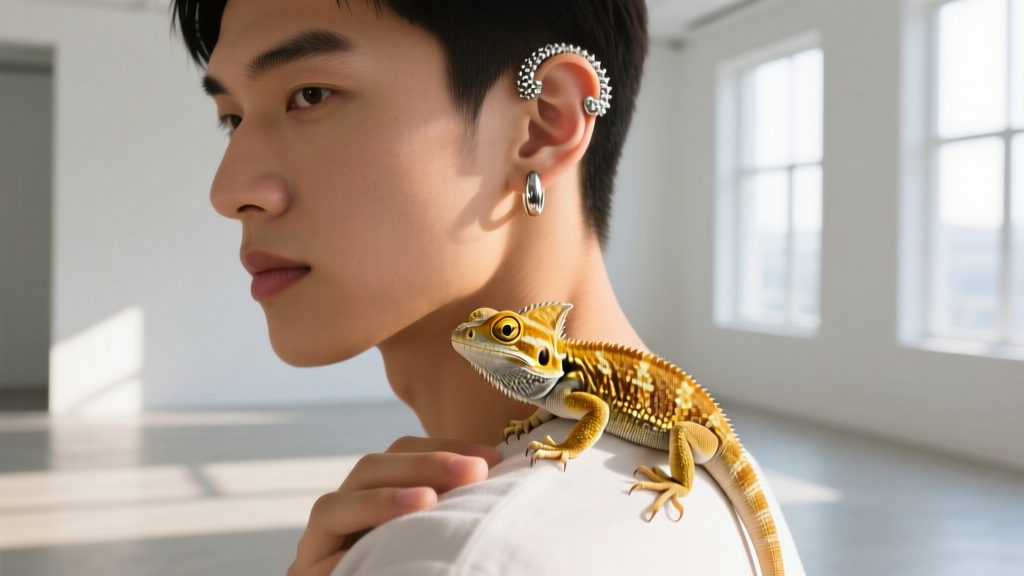
Beyond the raw material, the physical architecture of bearded dragon earrings dictates their survivability. Reptile owners are active; you are lifting heavy terrariums, mixing calcium supplements, and handling a lizard that might suddenly scramble up your neck.
Optimal Gauge Sizing
Most standard novelty studs are manufactured at 20-gauge (0.81mm) or 22-gauge (0.64mm). However, for active reptile keepers, we strongly recommend seeking out 18-gauge (1.02mm) or 16-gauge (1.29mm) posts. A thicker titanium post provides superior structural integrity, preventing the earring from bending if your bearded dragon's tail accidentally whips your ear or if you snag the jewelry on a branch while decorating a vivarium.
Secure Fastening Mechanisms
Standard friction-backed 'butterfly' clasps are a liability. They easily catch on loose terrarium mesh or reptile hammocks, pulling the earring out and leaving you searching the substrate for a lost piece of jewelry. Instead, opt for:
- Threadless (Push-Pin) Ends: The tension fit is incredibly secure and requires a deliberate pinching motion to remove.
- Internally Threaded Screws: Ensures the threading doesn't tear your fistula upon insertion and provides a rock-solid lock.
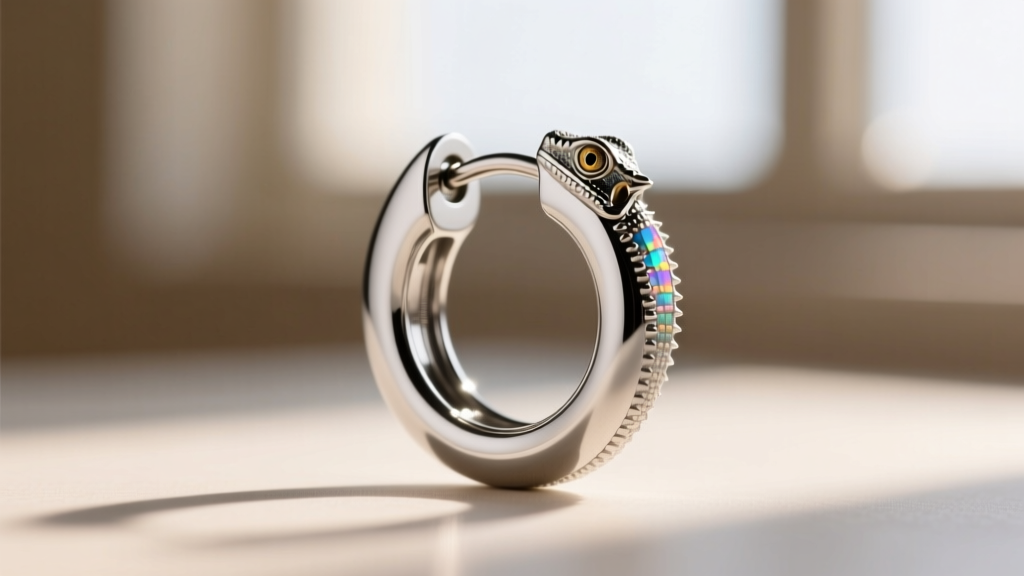
- Hinged Segment Rings (Clickers):strong> Ideal for cartilage or helix piercings, featuring a seamless closure that won't snag on your pet.
Hygiene Protocols for Novelty Jewelry
Even with the best materials, maintaining a strict hygiene protocol is essential to prevent localized infections. The Association of Professional Piercers (APP) recommends regular cleaning of body jewelry, but reptile owners must take this a step further.
- The 'No-Touch' Rule: Never adjust your bearded dragon earrings immediately after handling your pet or cleaning the enclosure without first washing your hands with an antibacterial soap and using a 70% alcohol wipe on the jewelry itself.
- Ultrasonic Cleaning: Once a month, place your metal and enamel earrings in an ultrasonic cleaner with a mild, phosphate-free jewelry solution. The cavitation bubbles will dislodge microscopic substrate dust and reptile dander from the intricate scale textures of the dragon design.
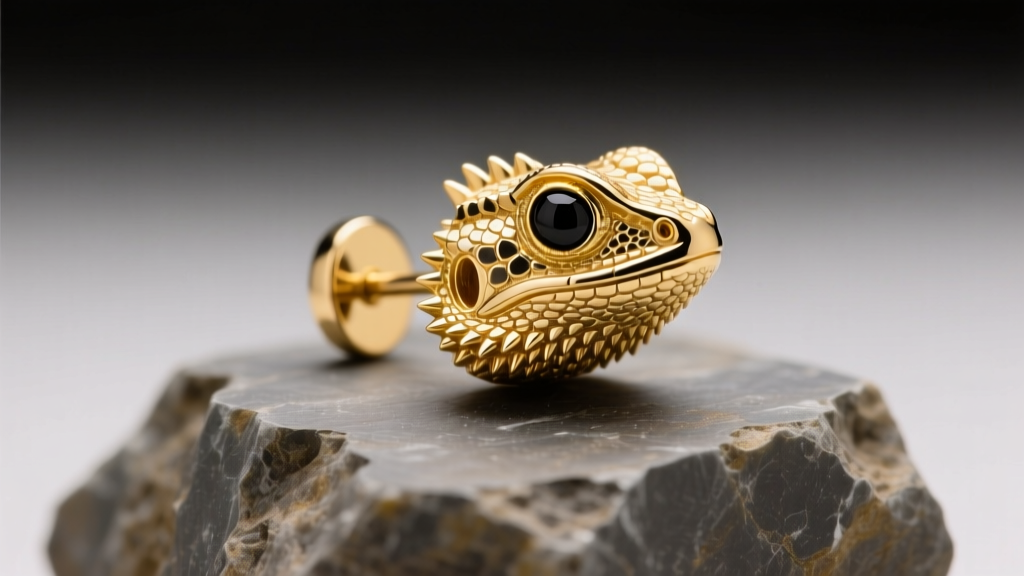
- Inspect the Prongs and Joints: If your bearded dragon earring features tiny gemstone eyes (like black onyx or tsavorite garnets), regularly check the prongs. Reptile claws can easily catch and bend delicate precious metal prongs, risking the loss of the stone.
Final Thoughts on Material Selection
Choosing the right bearded dragon earrings requires looking past the initial aesthetic appeal and scrutinizing the metallurgy and manufacturing processes. By investing in implant-grade titanium, vitreous enamel, or anodized niobium, you ensure that your jewelry remains a safe, hygienic, and durable expression of your passion for herpetology. Skip the porous resins and cheap alloys; your piercings—and your bearded dragon—deserve better.


