Beau Jewels Earrings: 2026 Trend Analysis & Styling Guide
Discover how Beau Jewels earrings are defining 2026 ear curation trends. Explore styling frameworks, material grades, and stacking.

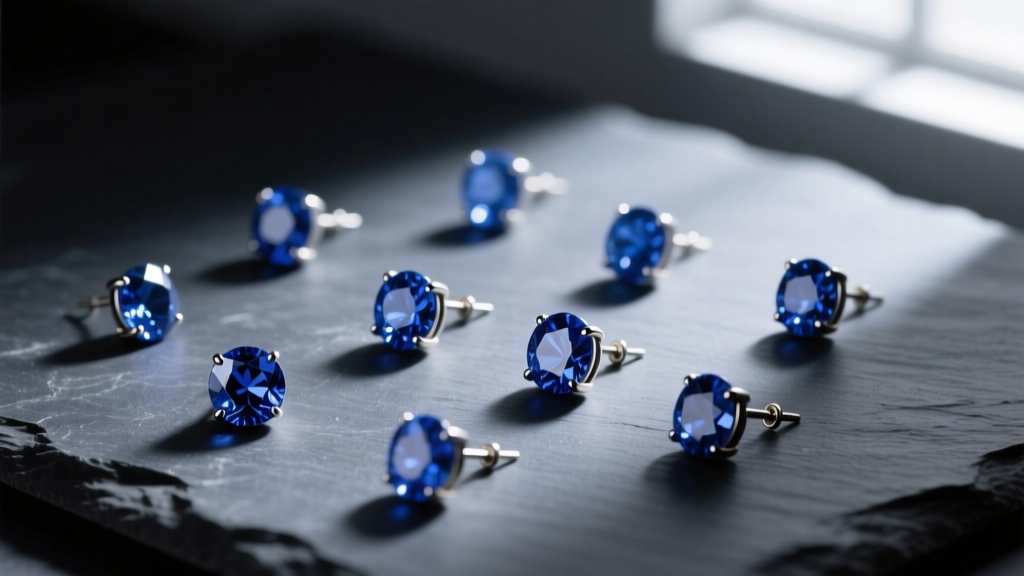
The Shift to Raw Luxury: Understanding the Beau Jewels Aesthetic
The landscape of fine ear jewelry has undergone a massive paradigm shift as we move through 2026. Moving away from the hyper-polished, flawless brilliant cuts that dominated the early 2020s, contemporary collectors are gravitating toward the "wabi-sabi" philosophy of raw luxury. At the absolute forefront of this movement is the Beau Jewels aesthetic. Known for their uncut, ethically sourced gemstones and modular threadless designs, Beau Jewels earrings have become the cornerstone of modern ear curation. But beyond the striking visual appeal of a raw, uncut tourmaline or a salt-and-pepper diamond, what actually makes these pieces technically superior for long-term cartilage and lobe wear?
This comprehensive trend analysis breaks down the metallurgy, gemological durability, and precise anatomical styling frameworks required to integrate Beau Jewels into your personal rotation. Whether you are curating a multi-piercing helix stack or looking for a singular, statement-making conch piece, understanding the technical specifications of these earrings is crucial for both aesthetic harmony and tissue health.
Metallurgy and Post Engineering: Beyond the Surface
A common misconception in the fine jewelry space is that the decorative end dictates the quality of the earring. In reality, the post—the part that actually interacts with your fistula—is where tissue health is won or lost. Beau Jewels utilizes a two-piece modular system that separates the decorative end from the structural post, allowing for unparalleled customization and anatomical precision.
The posts are milled from ASTM F136 implant-grade titanium. According to the Association of Professional Piercers (APP), ASTM F136 titanium is the gold standard for body jewelry due to its biocompatibility, lack of nickel, and MRI safety. By utilizing titanium for the post and reserving 14k or 18k solid recycled gold for the decorative Beau Jewels ends, wearers avoid the allergic contact dermatitis often triggered by lower-karat gold alloys or silver posts, while still achieving the warm, luxurious aesthetic of high-karat gold on the exterior of the ear.
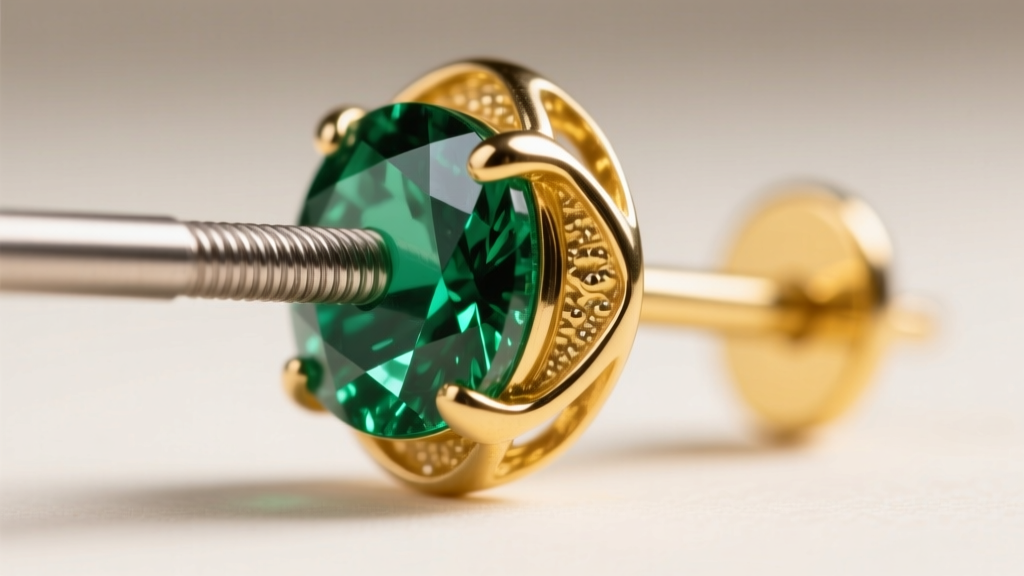
Threadless vs. Internally Threaded Mechanisms
Beau Jewels primarily employs a threadless (push-pin) mechanism for their cartilage studs. Unlike internally threaded jewelry, where a screw mechanism passes through the piercing channel, threadless jewelry relies on the tension of a slightly bent pin sliding into a hollow post. This offers three distinct advantages:
- Zero Tissue Trauma: There are no sharp threads to catch or tear the delicate epithelial lining of the fistula during insertion or removal.
- Customizable Fit: The pin can be bent slightly more or less by the wearer or piercer to adjust the tension, ensuring the decorative end sits flush against the helix or conch without spinning.
- Security: When properly tensioned, threadless ends are incredibly secure, requiring a specific pinch-and-pull motion to remove, making them ideal for sleepers or active lifestyles.
The 2026 Ear Curation Matrix: Styling Beau Jewels
Styling Beau Jewels requires an understanding of visual weight and anatomical real estate. The 2026 trend favors "intentional asymmetry"—pairing a heavy, raw-stone statement piece in one ear with a minimalist, micro-bezel arrangement in the other. Below is a structural framework for mapping Beau Jewels styles to specific piercing locations.
| Piercing Location | Recommended Beau Jewels Style | Post Gauge | Visual Weight |
|---|---|---|---|
| Standard Lobe | 5mm Raw Diamond Bezel Stud | 18g or 16g | Medium / Everyday |
| Helix / Flat | 8mm Asymmetrical Tourmaline Cluster | 16g | Heavy / Statement |
| Conch | 10mm Rose-Cut Sapphire Threadless | 14g or 16g | Maximum / Focal Point |
| Tragus | 3mm Bezel-Set Salt & Pepper Diamond | 16g | Micro / Subtle Accent |
| Daith / Rook | 4mm Raw Emerald Clicker Segment | 16g | Medium / Textural |
Gauge Sizing and Tissue Health: Avoiding the Cheese-Cutter Effect
One of the most critical mistakes consumers make when purchasing fine cartilage jewelry is defaulting to 18-gauge (1.0mm) or 20-gauge (0.8mm) posts to save money or because they assume thinner is more delicate. In the context of Beau Jewels' heavier raw gemstone ends, utilizing a gauge that is too thin can lead to the dreaded "cheese-cutter effect."
The cheese-cutter effect occurs when a thin wire bears the weight of a heavy decorative end, causing the jewelry to slowly migrate and slice through the cartilage over time. For any Beau Jewels end exceeding 4mm in diameter or featuring dense, raw boulder stones, a 16-gauge (1.2mm) or 14-gauge (1.6mm) titanium post is mandatory for helix, flat, and conch piercings. The increased surface area of a 16g post distributes the weight of the raw stone evenly across the fistula, preventing migration, rejection, and the dreaded "angry red bump" (hypertrophic scarring) caused by localized pressure.
Gemstone Durability: A Mohs Scale Reality Check
The defining characteristic of Beau Jewels earrings is their use of raw, uncut, and rose-cut gemstones. While visually breathtaking, raw stones behave differently than faceted gems. According to the Gemological Institute of America (GIA), a gemstone's durability is measured on the Mohs scale of hardness, which dictates its resistance to scratching and abrasion.
"When styling raw gemstone jewelry, one must account for the lack of protective facets. Raw stones with a Mohs hardness below 7 require protective bezel settings to prevent chipping against daily environmental hazards."
Here is how Beau Jewels addresses the Mohs scale in their 2026 collections:
- Raw Diamonds (Mohs 10): Often left partially exposed in open-prong or half-bezel settings. Their extreme hardness makes them virtually impervious to daily wear and tear, making them ideal for outer helix or lobe placements.
- Raw Sapphires & Tourmalines (Mohs 7-9): Typically set in low-profile, full bezels. The bezel acts as a bumper, protecting the raw, uneven edges of the stone from catching on hair or clothing.
- Raw Opals & Turquoise (Mohs 5-6): These softer, more porous stones are heavily recessed into thick 14k gold bezels. Beau Jewels explicitly advises against wearing raw opal cartilage studs while sleeping or showering, as the porous nature of the stone can absorb oils and lotions, dulling its natural play-of-color.
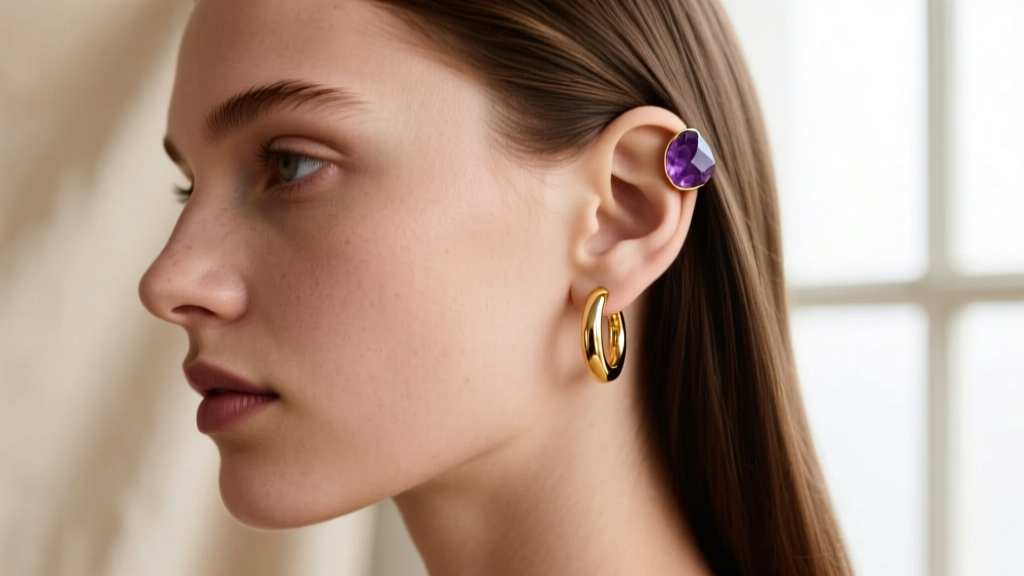
Price-to-Value Analysis: Are Beau Jewels Worth the Investment?
In the contemporary fine jewelry market, pricing can often feel opaque. Beau Jewels operates on a modular pricing structure that separates the cost of the titanium post from the decorative gold and gemstone end. This is highly advantageous for collectors who wish to build a versatile wardrobe without repeatedly purchasing the structural components.
As of 2026, a standard 16-gauge ASTM F136 titanium flat-back post retails between $35 and $45, depending on the length (ranging from 6mm to 10mm to accommodate different cartilage thicknesses). The decorative Beau Jewels threadless ends range from $120 for a 3mm micro-bezel salt-and-pepper diamond, up to $450 for a 10mm raw, ethically sourced sapphire cluster. Compared to legacy brands like Maria Tash or Anita Ko, where a single 14k gold cartilage stud can easily exceed $800, the Beau Jewels modular system offers a 30% to 40% cost savings while maintaining identical, if not superior, metallurgical standards for the post.
Final Verdict: Integrating Beau Jewels Into Your Rotation
Beau Jewels earrings represent the pinnacle of the 2026 raw luxury trend, successfully marrying the organic, unpredictable beauty of uncut gemstones with the rigorous, biocompatible engineering required for safe, long-term body modification. By prioritizing ASTM F136 titanium posts, utilizing secure threadless tension mechanisms, and respecting the Mohs scale through intelligent bezel engineering, Beau Jewels has created a line that is as technically sound as it is aesthetically groundbreaking.
For those looking to elevate their ear curation, the key to success lies in respecting the anatomy. Consult with an APP-certified piercer to map your unique cartilage folds, select the appropriate 16-gauge post length, and choose Beau Jewels ends that complement your natural ear real estate. When styled with intention and cared for properly, these pieces will not only define your personal aesthetic but will remain a durable, lifelong staple in your jewelry wardrobe.


