Earrings (Spanish: Pendientes) Technical Craft Guide
Explore traditional Spanish earrings, from Toledo damascene to Mallorcan pearls. A technical deep dive into materials, gauges, and heritage craftsmanship.

The Anatomy of Heritage: What Defines Spanish Earring Craft?
When navigating the global market for vintage and artisan earrings, Spanish heritage techniques represent a unique intersection of Moorish influence, Renaissance metallurgy, and modern material science. Unlike mass-produced contemporary jewelry, traditional Spanish earring making is deeply regionalized. To truly understand these pieces, one must look past the aesthetic and examine the metallurgical breakdown, structural engineering, and specific terminology that defines the craft.
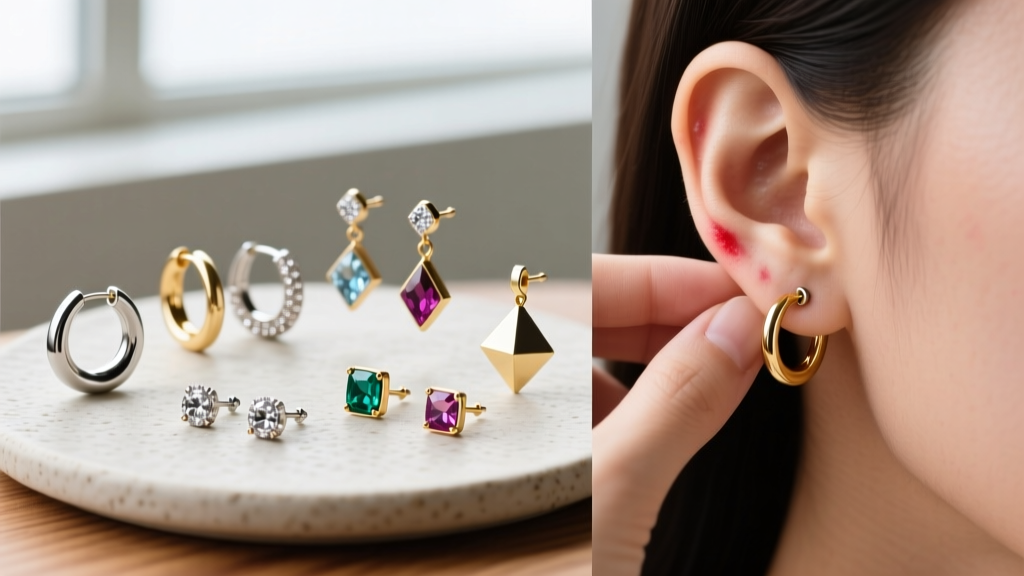
In Spain, the terminology itself offers clues to the structure of the earring. Pendientes generally refers to drop or dangle earrings that utilize a hook, leverback, or omega clip, relying on gravity and movement. Aretes (more common in Latin America but understood in Spain) typically refers to studs or fixed hoops. Understanding this distinction is critical when evaluating the hardware requirements for heritage pieces, as the weight distribution of a traditional pendiente demands vastly different structural support than a modern lightweight stud.
Toledo Damascene: Metallurgical Breakdown & Wearability
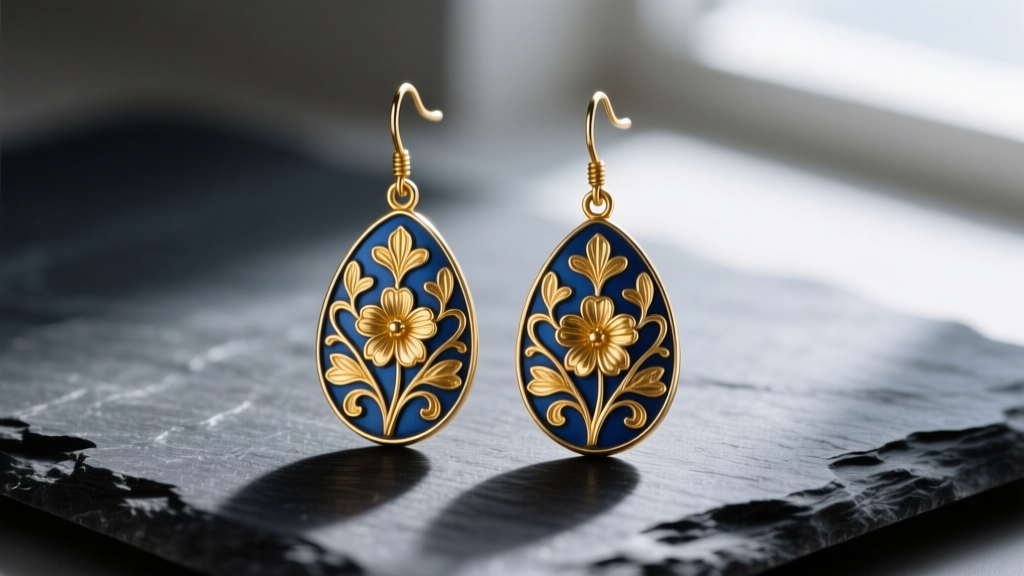
Toledo is globally renowned for taracea or damascening, a technique with deep roots in Islamic metalworking that was perfected by Spanish artisans in the 16th century. Authentic Toledo damascene earrings are not simply painted or plated; they are the result of a rigorous metallurgical process.
The base metal is typically high-carbon steel, which is heated to precisely 300°C to achieve a uniform blue-black oxide layer (magnetite/Fe3O4). Artisans then use a sharp burin to carve micro-grooves into the steel. According to the Encyclopedia Britannica, the traditional method involves hammering soft 24k gold or sterling silver wire (often drawn to a microscopic 0.2mm to 0.5mm diameter) into these grooves. The wire is locked in place by the burrs of the steel, requiring no solder or adhesive.
Technical Wearability Warning: Because the base is solid steel, Toledo drop earrings are exceptionally heavy. A standard 40mm Toledo drop can easily weigh 12 to 18 grams per earring. To prevent lobule tearing, authentic pieces must be fitted with 18-gauge (1.02mm) or 16-gauge (1.29mm) steel posts and wide, reinforced omega clips. Standard 20-gauge butterfly clutches will fail under the dynamic load of a swinging Toledo pendiente, leading to lost earrings and damaged tissue.
Mallorcan Pearls (Perlas de Mallorca): The Technical Reality
While natural pearls are organic gemstones, Mallorcan pearls represent a triumph of 20th-century biomimicry and material engineering. Originating from the island of Mallorca, the most famous manufacturer, Majorica, patented a process in the late 1800s that remains highly guarded today. As detailed by the Gemological Institute of America (GIA), coated pearls are a distinct category in gemology, and Mallorcan pearls are the benchmark for high-end imitation.
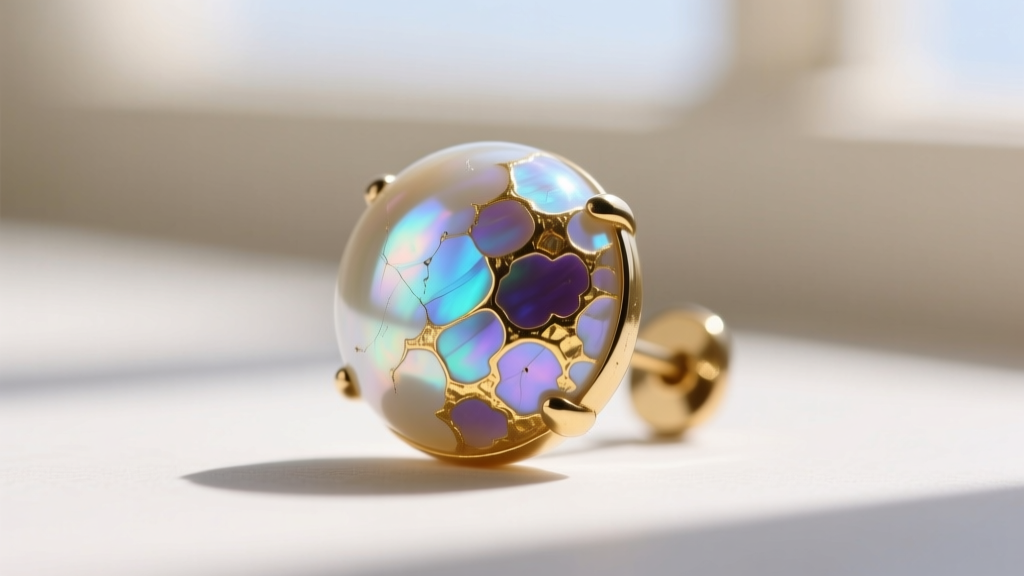
The core of a Mallorcan pearl is not plastic or shell, but high-density opaline glass, which provides a specific gravity (approx. 2.8 - 3.0) that mimics the heft of a natural saltwater pearl. The iridescence is achieved through multiple microscopic layers of essence d'orient. Historically, this was derived from guanine crystals extracted from fish scales; today, Majorica Official and other high-end labs utilize advanced bismuth oxychloride and synthetic guanine compounds suspended in a cellulose or lacquer binder. The pearls are then subjected to UV curing and gas-filled ovens to harden the coating, making them highly resistant to perspiration and cosmetics.
| Material Property | Mallorcan Pearl | Cultured Freshwater | Standard Imitation Glass |
|---|---|---|---|
| Core Composition | High-density opaline glass | Solid nacre (aragonite) | Soda-lime glass or plastic |
| Surface Coating | Bismuth oxychloride / Guanine | Natural nacre layers | Pearl paint or foil backing |
| Specific Gravity | ~2.8 - 3.0 | ~2.6 - 2.8 | ~2.2 - 2.5 |
| Luster Quality | Mirror-like, highly uniform | Deep orient, varied | Superficial, flat, chalky |
| Drilling Technique | Laser or diamond-bit (post-cure) | Standard mechanical drill | Molded or basic drill |
Andalusian Filigree & Flamenco Hoops: Structural Integrity
In Andalusia, the tradition of filigrana (filigree) is heavily tied to Flamenco culture and Romani heritage. These earrings are characterized by intricate lace-like patterns made entirely of precious metal wire. The technical challenge of Andalusian filigree lies in maintaining structural rigidity while using ultra-fine wire.
Master jewelers typically use a structural frame of 20-gauge (0.81mm) or 22-gauge (0.64mm) 925 sterling silver or 18k gold. The internal weaving and coiling are done with 26-gauge to 30-gauge wire. A specialized technique called granulado (granulation) is often employed at the solder joints, where microscopic spheres of metal are fused to the wire intersections using colloidal solder and a reducing flame, avoiding the use of bulk solder that would ruin the delicate lace aesthetic.
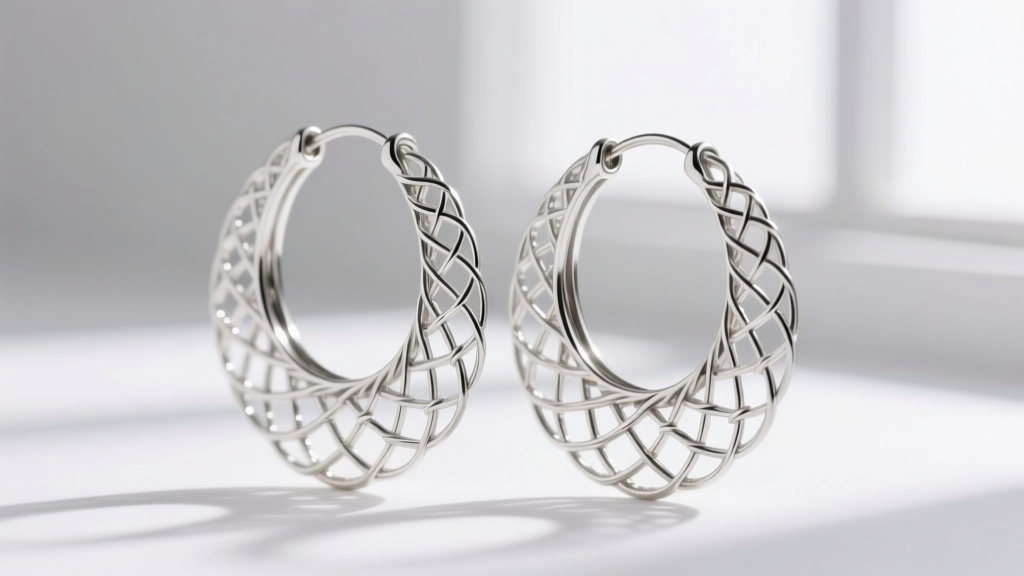
Failure Modes: The most common point of failure in vintage Andalusian filigree hoops is the hinge mechanism and the post junction. Because the earrings are essentially hollow wire frames, lateral pressure (such as sleeping in them or catching them on clothing) will easily crush the 26-gauge internal weave. When restoring these pieces, laser welding is mandatory; traditional torch soldering will melt the fine internal wires due to the rapid heat transfer through the silver frame.
Hardware & Post Specifications for Heritage Pieces
When evaluating or commissioning Spanish heritage earrings, the hardware must match the historical and physical demands of the piece. Modern standardized jewelry findings often fail when applied to traditional Spanish designs.
- Omega Clips (Clip-Omega): Essential for heavy Toledo damascene and large Cordoba gold drops. The wide surface area of the omega pad distributes the downward force across the lower lobule rather than concentrating it at the piercing fistula.
- Post Gauge: Heritage Spanish drops frequently require 18-gauge (1.0mm) posts. Attempting to force a standard 20-gauge (0.8mm) post through an 18-gauge piercing hole will cause friction, while inserting an 18-gauge post into a modern 20-gauge piercing requires careful tapering to avoid tissue blowout.
- Leverbacks (Cierre de Gancho): Commonly used in lighter filigree and pearl drops. High-quality Spanish leverbacks feature a 'V' shaped spring mechanism that snaps securely into a recessed notch on the front of the earring, preventing the accidental unhooking that plagues cheap, smooth-wire shepherd hooks.
Sourcing Authentic Pieces: Hallmarks & Makers
Spain has strict hallmarking laws governed by the Ley de Metales Preciosos. Authentic gold and silver earrings must bear the Contraste (assay mark). For 750/1000 (18k) gold, look for the stylized eagle head or the specific regional shield (such as the Barcelona or Madrid assay marks). For 925/1000 silver, the mark is typically a rampant lion or a specific geometric stamp depending on the year and region of assay. Toledo damascene, being primarily steel, does not carry precious metal hallmarks on the base, but the gold inlay may be stamped '750' or '24K' if the artisan is certified by the Toledo Damascene Guild. Always use a 10x loupe to inspect the recesses of the omega clip or the back of the post for these microscopic stamps.
Maintenance and Restoration Protocols
Caring for Spanish heritage earrings requires specific chemical knowledge. Never place Toledo damascene in an ultrasonic cleaner. The high-frequency vibrations can dislodge the mechanically locked gold wire from the steel grooves. Instead, clean damascene with a soft brush and mineral oil to preserve the blued oxide layer. For Mallorcan pearls, avoid all acidic cleaners, alcohol, and ammonia, which will strip the bismuth oxychloride coating and expose the dull glass core. Wipe them only with a damp microfiber cloth and store them away from harder gemstones to prevent surface scratching.
Conclusion
Spanish earring craftsmanship is not a monolith; it is a collection of highly specialized, regional material sciences. From the thermal oxidation of Toledo steel to the biomimetic coatings of Mallorca and the tensile engineering of Andalusian filigree, these pieces demand respect from both the wearer and the jeweler. By understanding the exact gauges, metallurgical processes, and structural limitations of these designs, collectors can preserve and wear these masterpieces with confidence and technical appreciation.