A Beginner's Guide to Buying Authentic Antique Amber Earrings
Learn how to identify, buy, and care for genuine antique amber earrings. Discover testing methods, era-specific styles, and pricing guides.

Entering the world of vintage and antique jewelry can feel overwhelming, especially when dealing with organic gemstones. Antique amber earrings offer a unique glimpse into history, carrying the warmth of fossilized tree resin that is tens of millions of years old. However, the market is flooded with imitations, from immature copal to early synthetic plastics like Bakelite. For a beginner, distinguishing a genuine Victorian-era treasure from a 1970s plastic reproduction requires a keen eye and a bit of scientific knowledge.
This guide will walk you through the essential frameworks for identifying, evaluating, and caring for authentic antique amber earrings, ensuring your first foray into historical resin jewelry is a successful one.
What Defines 'Antique' in Amber Jewelry?
In the gemological and jewelry trade, the term 'antique' strictly applies to pieces that are at least 100 years old. Therefore, as of 2026, an authentic antique amber earring must have been crafted no later than 1926. Pieces from the 1930s through the 1980s are classified as 'vintage.'
Most antique amber earrings found in Western markets feature Baltic Amber (Succinite), which formed approximately 44 million years ago and is renowned for its high succinic acid content (typically 3% to 8%). You may also encounter Dominican Amber, which is younger (15-20 million years) but highly prized for its exceptional clarity and rare blue fluorescence. When shopping, always ask the seller for the specific origin and estimated era of the piece.
Real Amber vs. Imitations: The Beginner's Testing Guide
Because amber is essentially hardened sap, it shares physical properties with several other materials. According to the Gemological Institute of America (GIA), the most common amber simulants include copal, glass, and early phenol-formaldehyde plastics (Bakelite). Here is how you can safely test your earrings without damaging them.
| Material | Age / Origin | Saltwater Float Test | UV Light Reaction | Thermal / Scent Profile |
|---|---|---|---|---|
| Genuine Baltic Amber | ~44 Million Years | Floats in saturated saltwater | Pale blue or milky green fluorescence | Pine/resin scent when gently warmed |
| Copal (Immature Resin) | Less than 2.5 Million Years | Often floats, but dissolves in alcohol | Chalky white fluorescence | Sweet, sticky scent; melts easily |
| Bakelite (Early Plastic) | 1920s-1940s (Vintage) | Sinks in saltwater | No fluorescence | Harsh formaldehyde/chemical smell |
| Glass / Crystal | Any Era | Sinks rapidly | No fluorescence | Cold to the touch; odorless |
The Saltwater Float Test
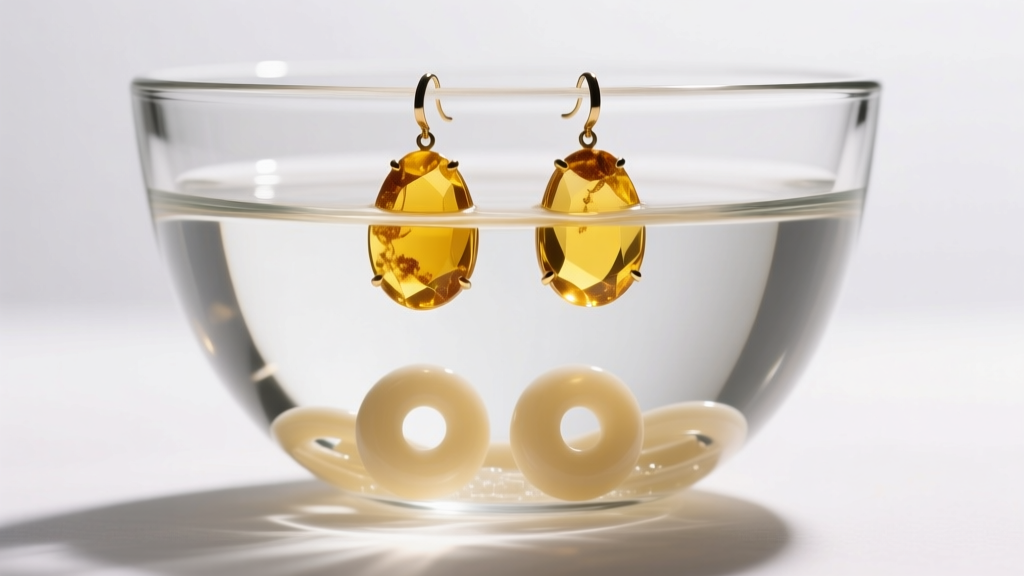
This is the safest and most reliable non-destructive test for loose stones or earrings with non-metal components. Mix one part table salt to two parts warm water in a glass. Stir until the salt is completely dissolved. Genuine amber has a specific gravity of 1.05 to 1.10, meaning it will float in this dense solution, while glass, most modern plastics, and heavy metal-heavy settings will sink. Note: If your earrings have heavy solid gold or silver wire wrapped tightly around the amber, the metal's weight may cause the piece to sink despite the amber being real.
The UV Flashlight Test
Shine a standard 365nm UV flashlight on the earrings in a dark room. Authentic Baltic amber will fluoresce a beautiful pale blue or soft greenish-yellow. Copal will glow a stark, chalky white, while plastics will show little to no reaction.
Popular Historical Eras for Antique Amber Earrings
Understanding historical jewelry design is crucial for authentication. As noted by the Lang Antiques University, the construction and stylistic motifs of earrings changed dramatically between the 19th and early 20th centuries.
Victorian Era (1837-1901)
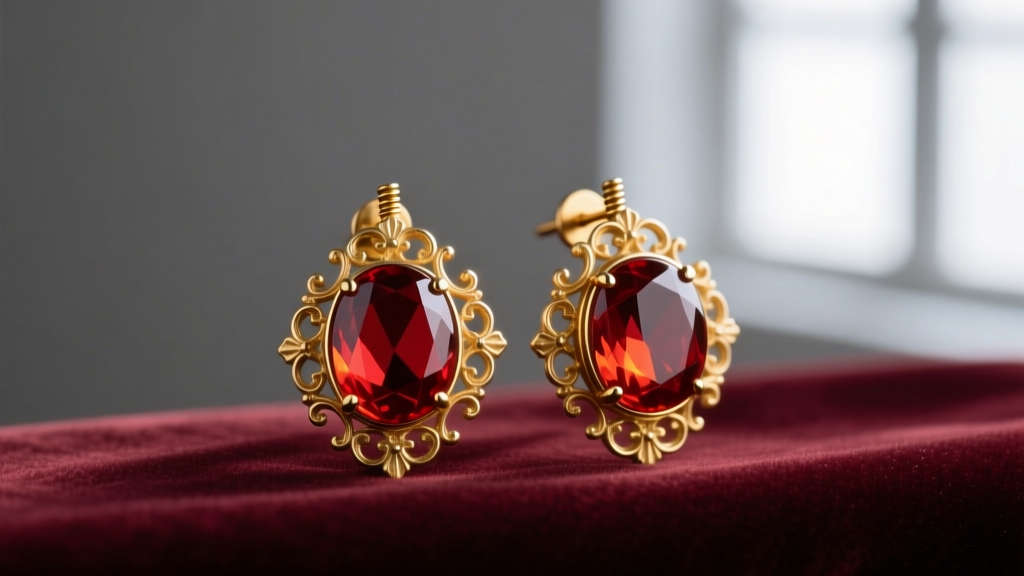
During the mid-to-late Victorian era, 'cherry amber' (a deep, opaque red-brown) became incredibly popular, particularly for mourning jewelry following the death of Prince Albert. Victorian amber earrings were often carved into cameos, roses, or simple cabochons. Because pierced ears were considered vulgar by some segments of high society during the mid-19th century, many early Victorian amber pieces were designed as clip-ons or screw-backs for non-pierced ears.
Art Deco Period (1920s-1930s)
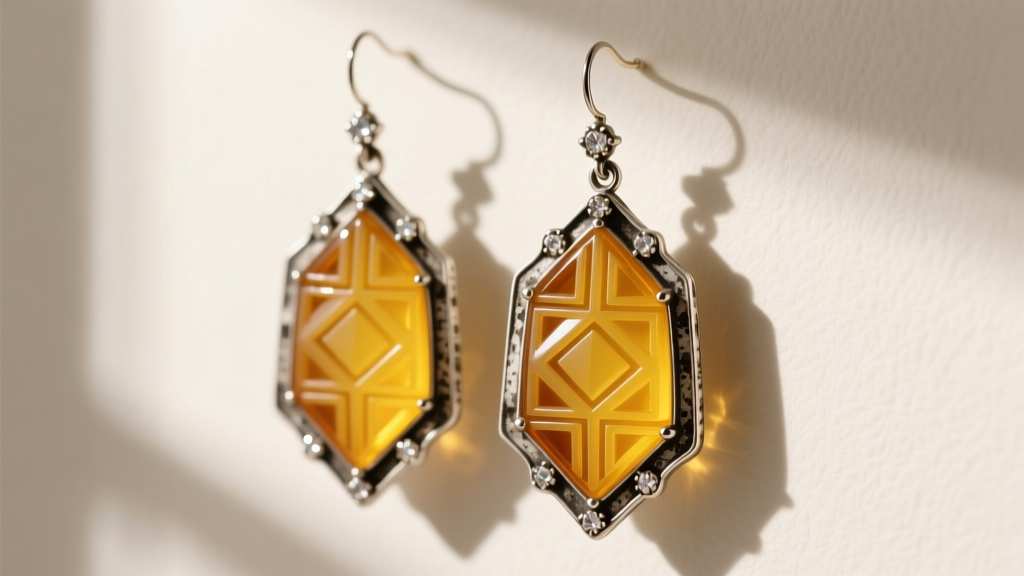
Art Deco amber earrings moved away from the somber tones of the Victorian era, favoring bright, translucent cognac and lemon-yellow amber. Designers carved the resin into sharp geometric shapes—long rectangles, stepped pyramids, and sweeping arches. These pieces were frequently paired with marcasite (iron pyrite) or sterling silver to create high-contrast, affordable luxury jewelry.
Hardware and Gauge: Authenticating the Findings
The metal hardware attached to the amber can tell you as much about the earring's age as the stone itself. Pay close attention to the following details:
- Screw Backs: The screw-back earring clutch was patented by James F. Kerr in 1894. If you find a pair of amber earrings with early, thick-threaded screw backs, they are likely from the late Victorian or Edwardian era.
- Leverbacks and Shepherd Hooks: Early leverbacks often lacked the modern 'safety catch' wire. Antique shepherd hooks were typically hand-forged and may show slight asymmetry or tool marks under a jeweler's loupe.
- Gauge Sizes: Modern standard earrings are usually 20-gauge (0.81mm) or 22-gauge. Antique earrings, particularly those from the early 1900s, often feature much thicker posts, ranging from 18-gauge (1.02mm) to 16-gauge (1.29mm), to support the heavier, hand-carved amber drops.
Pricing Guide: What Should You Pay?
Pricing for antique amber earrings varies wildly based on condition, era, and the presence of prehistoric inclusions (like trapped insects or flora). Here is a general market baseline for authentic pieces in good condition:
- Victorian Cherry Amber Studs (Screw-back): $150 - $350 per pair.
- Edwardian Carved Amber Drops (14k Gold): $400 - $900 per pair.
- Art Deco Geometric Amber & Marcasite Dangles: $250 - $600 per pair.
- Pieces with Verified Insects/Flora: $800 - $2,500+ depending on the rarity and visibility of the inclusion.
Care and Maintenance for Centuries-Old Resin
Amber is remarkably soft, registering only a 2.0 to 2.5 on the Mohs hardness scale. This means it can be easily scratched by a copper coin or even a fingernail if the surface is heavily weathered. To preserve your antique amber earrings, follow these strict care protocols:
- Never use ultrasonic cleaners. The high-frequency vibrations can shatter internal stress fractures common in ancient resin.
- Avoid chemicals entirely. Perfumes, hairsprays, and rubbing alcohol will permanently cloud the surface of the amber and dissolve copal imitations.
- Clean only with lukewarm water. Use a soft, lint-free microfiber cloth to gently buff the stones. Do not use commercial jewelry dips.
Expert Storage Tip: Never store antique amber earrings in a shared jewelry box where they can rub against diamonds, sapphires, or metal chains. Keep them in a dedicated, soft cotton pouch away from direct, prolonged sunlight, which can cause the resin to oxidize, craze (crack), and darken over time.
By combining historical knowledge with simple scientific tests, beginners can confidently navigate the market for antique amber earrings. These organic time capsules offer a warmth and character that modern, mass-produced jewelry simply cannot replicate.


