Trendy Earrings 2026: A Deep Dive Into Hypoallergenic Metals
Discover the best metals for trendy earrings in 2026. We compare titanium, niobium, and solid gold properties, grades, and pricing for sensitive ears.

The 2026 Shift: Why Material Matters More Than Ever in Trendy Earrings
As we navigate the jewelry landscape of 2026, the definition of trendy earrings has fundamentally shifted from purely aesthetic considerations to a rigorous focus on biocompatibility and material science. Consumers are no longer willing to compromise ear health for the sake of a viral silhouette. Whether you are investing in chunky ear cuffs, delicate threadless cartilage studs, or heavy statement dangles, understanding the metallurgical properties of your jewelry is non-negotiable. The modern jewelry market is saturated with misleading terms like 'hypoallergenic' and 'surgical steel,' which often mask high nickel content and micro-porosity issues. This guide cuts through the marketing fluff to provide a deep, technical comparison of the top metals dominating the high-end and custom piercing markets today.
Implant-Grade Titanium (ASTM F136) vs. Commercial Grades
When discussing high-quality titanium jewelry, not all grades are created equal. The gold standard for trendy earrings intended for fresh piercings or highly reactive ears is ASTM F136 (Ti-6Al-4V ELI). This is an Extra Low Interstitial alloy specifically designed for surgical implants. It boasts a highly polished surface finish that drastically reduces bacterial adhesion and tissue friction.
The Problem with 'Surgical Steel' and Pure Titanium
Many mass-market brands use ASTM F67 (Commercially Pure Titanium) or generic 'surgical steel.' While F67 is biocompatible, it is significantly softer than F136. This softness makes it prone to micro-scratches during insertion, which can harbor bacteria and cause flare-ups in cartilage piercings. Furthermore, generic 'surgical steel' (often 316L) contains up to 10% nickel. Over time, the saline environment of a healing piercing can break down the passive oxide layer on 316L steel, leaching nickel into the tissue and triggering severe contact dermatitis.
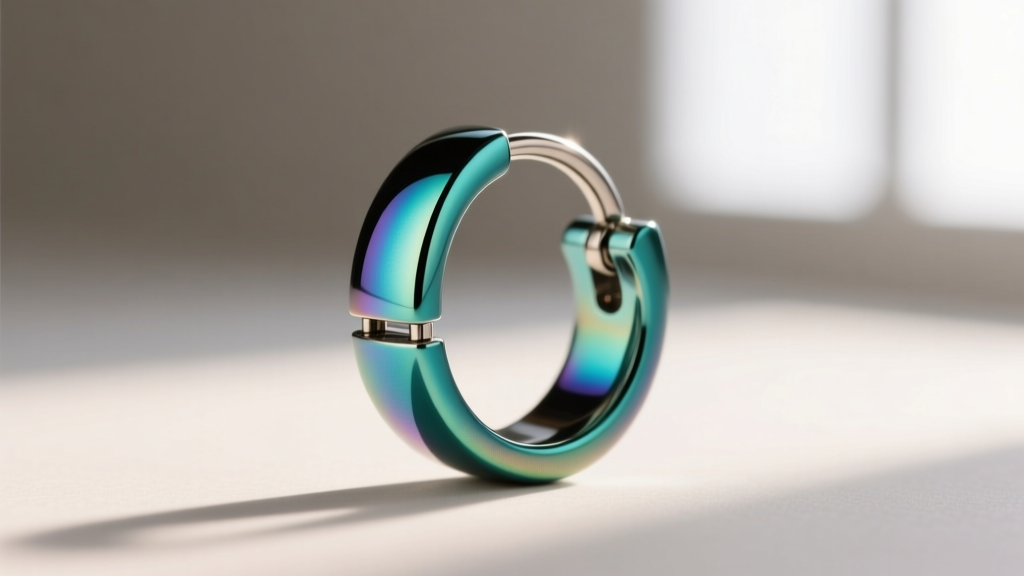
For 2026's most popular minimalist huggies and flat-back studs, demand F136 titanium. It can be safely anodized using a DC power supply to create vibrant, oxide-layer colors (like rose gold or deep teal) without introducing any external dyes or plating that could flake off inside the piercing fistula.
Niobium: The Unsung Hero of Cartilage and Ear Cuffs
Niobium is an elemental metal, meaning it is not an alloy and contains zero nickel or lead. According to the Association of Professional Piercers (APP), properly polished niobium is one of the safest metals for initial piercings and sensitive ears. Its unique metallurgical property is its extreme malleability.
Design Advantages and Limitations
- Ear Cuffs and Seamless Rings: Because niobium is highly pliable, it is the premier choice for trendy ear cuffs that require snapping onto the helix or conch without a hinge. It holds its shape once adjusted but can be gently squeezed to fit unique ear anatomies.
- Threading Limitations: Niobium is too soft to hold intricate machine-cut threads. Therefore, authentic niobium jewelry is almost exclusively manufactured as threadless (press-fit) or internally threaded. If you see 'externally threaded' niobium, it is likely a mislabeled alloy.
- Weight Considerations: Niobium is denser than titanium. For heavy, oversized trendy dangles, niobium might cause the 'cheese-cutter effect' in delicate 20g or 18g lobe piercings. It is best reserved for 16g or 14g structural pieces.
Solid Gold: Decoding 14k vs. 18k for Everyday Trendy Styles
Solid gold remains the ultimate luxury standard, but navigating alloy compositions is critical for sensitive ears. The Federal Trade Commission (FTC) strictly regulates gold purity, but it does not mandate the specific secondary metals used in the alloy mix.
White Gold vs. Yellow and Rose Gold
The most common culprit for gold-related allergic reactions is white gold. To achieve a silvery color, traditional white gold is alloyed with nickel. Even if rhodium-plated, the plating wears off over time (especially on high-friction areas like earring posts), exposing the nickel underneath. For trendy earrings in 2026, always seek out palladium-alloyed white gold, which is inherently nickel-free and maintains a naturally white hue without plating.
Yellow gold (alloyed with silver and copper) and rose gold (alloyed with a higher copper content) are generally safer, though individuals with severe copper sensitivities should monitor rose gold pieces. Furthermore, ensure your gold jewelry is machined or cast using high-quality investment methods to avoid micro-porosity—tiny surface pits that trap dead skin cells and bacteria, leading to persistent irritation bumps.
Comprehensive Material Comparison Matrix
Use this matrix to select the appropriate metal based on your specific piercing type, budget, and sensitivity level.
| Metal Grade | Nickel Content | Best For | Price Range (Per Stud) | Polish Quality |
|---|---|---|---|---|
| ASTM F136 Titanium | 0% | Fresh piercings, high friction | $35 - $85 | Mirror (Low bacterial adhesion) |
| Niobium (Elemental) | 0% | Ear cuffs, seamless hoops | $40 - $90 | High (Highly malleable) |
| 14k Yellow Gold | 0% (Usually) | Healed lobes, helix, tragus | $120 - $250 | Excellent (If machined) |
| 18k Palladium White Gold | 0% | Luxury cartilage, conch | $250 - $500+ | Superior (Dense, heavy) |
| 316L Surgical Steel | 8% - 10% | Fully healed, non-reactive lobes | $15 - $40 | Variable (Prone to scratching) |
The Trap of Plated Metals and PVD Coatings
A massive trend in 2026 is 'gold vermeil' or PVD (Physical Vapor Deposition) coated stainless steel. While PVD provides a highly durable, biocompatible titanium nitride surface layer that mimics gold, it is fundamentally a surface treatment. The core material is often still 316L steel. If the jewelry features moving parts (like a huggie hinge) or rough threading, the PVD layer will eventually micro-fracture, exposing the reactive steel core to your tissue. For long-term wear in cartilage or snug piercings, solid metals will always outlast and outperform plated alternatives.
Real-World Troubleshooting: When Trendy Earrings Cause Flare-Ups
Even with the correct metal, improper sizing can cause severe irritation. Here are the most common technical failure modes:
The Galvanic Reaction: Mixing two different metals in the same ear (e.g., a titanium flat-back stud next to a 14k gold hoop) in the presence of sweat or saline can create a microscopic galvanic battery. This electrical current accelerates metal ion release, causing sudden itching and redness. Stick to one metal type per ear cluster.
Post Length and Swelling: A standard 1/4-inch (6mm) post is often too short for a fresh helix piercing, causing the decorative end to compress the tissue and restrict lymphatic drainage. Always start with an 8mm or 10mm post and downsize after 4-6 weeks. Conversely, leaving a 10mm post in a fully healed, shrunken fistula allows the jewelry to pendulum back and forth, tearing the delicate epithelial lining.
Final Verdict: Matching Metal to Piercing Type
The landscape of trendy earrings in 2026 rewards those who prioritize material integrity. For fresh piercings, high-movement areas, and severe metal allergies, ASTM F136 Titanium remains the undisputed champion due to its strength and flawless polish. For custom-fitted ear cuffs and adjustable seamless rings, Niobium offers unmatched versatility. Finally, for heirloom-quality luxury pieces in fully healed piercings, 14k or 18k solid gold (specifically avoiding nickel-alloyed white gold) provides the ultimate blend of prestige and biocompatibility. Always verify the exact alloy and finishing methods with your jeweler before making a purchase.


