Troubleshooting Small Dangler Earrings: Snags, Tangles & Fixes
Stop your small dangler earrings from tangling and snagging. Expert troubleshooting for jump rings, earlobe fatigue, and hair catch prevention.

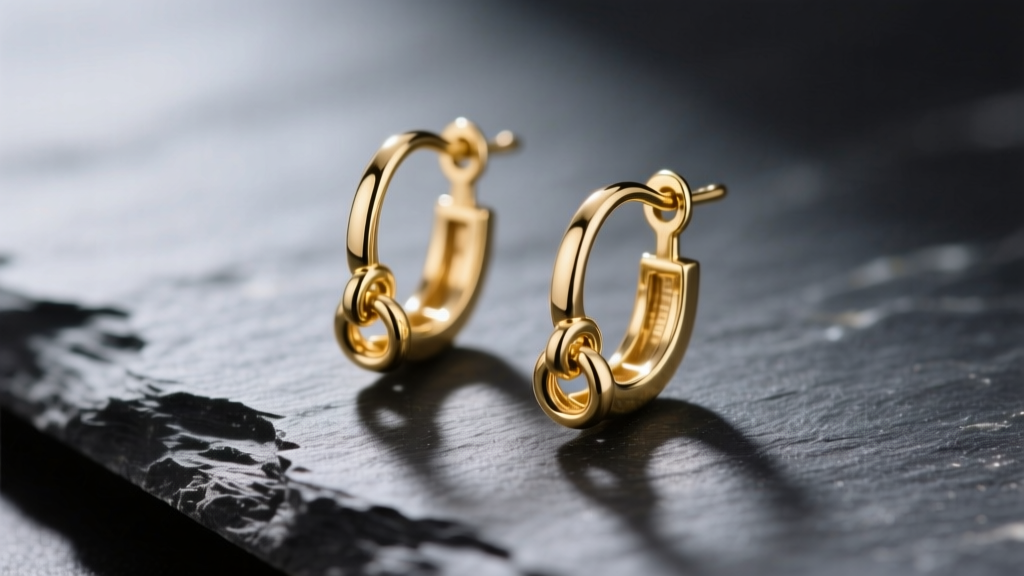
Small dangler earrings—typically defined by a drop length between 15mm and 30mm—are a cornerstone of versatile jewelry wardrobes. They offer the kinetic elegance of a drop earring without the dramatic, shoulder-grazing weight of chandelier styles. However, beneath their delicate aesthetic lies a minefield of micro-engineering flaws. From persistent hair snagging to premature earlobe fatigue, the mechanical realities of wearing small danglers often frustrate collectors and casual wearers alike.
As of 2026, advancements in laser-welding and 3D-printed casting have improved high-end jewelry manufacturing, but mass-market small danglers still suffer from legacy design issues. This comprehensive troubleshooting guide addresses the structural, metallurgical, and ergonomic failures of small dangler earrings, providing actionable, expert-level solutions to keep your jewelry secure, comfortable, and tangle-free.
The Hidden Engineering Flaws in Micro-Dangles
The primary issue with small dangler earrings is an unfavorable center of gravity. Many designs feature a lightweight, thin 20-gauge (0.81mm) wire post attached to a dense, heavy focal element—such as a 4mm cubic zirconia, moissanite, or solid gold geometric shape. When the focal point is heavier than the post and backing combined, the earring's center of gravity shifts downward and forward.
This causes the infamous 'forward droop,' where the earring post angles sharply downward, making the dangle point toward the floor rather than resting flush against the earlobe. Over time, this uneven weight distribution places asymmetric pressure on the fistula (the piercing channel), leading to discomfort and potential stretching. The immediate troubleshooting fix is to introduce a counterbalance. By adding a 1.5mm thick silicone O-ring or a specialized silicone earring lifter between the earlobe and the friction back, you shift the fulcrum point, forcing the post to remain parallel to the ground and allowing the small dangle to swing freely as intended.
Troubleshooting Hair Snags and Tangles
Hair snagging is the most frequently reported complaint among small dangler earring wearers. The culprit is almost never the gemstone or the post itself, but rather the microscopic connection points that allow the earring to articulate.
The Jump Ring Gap Problem
To connect the dangle component to the ear wire or post, manufacturers use jump rings. Standard machine-stamped jump rings are created by cutting a continuous metal coil, which leaves a bevel-cut gap. Even a high-quality stamped jump ring will have a tolerance gap of approximately 0.15mm to 0.25mm. Human hair ranges from 0.05mm to 0.1mm in diameter. When you move, your hair easily slips into this microscopic gap, becoming wedged as the jump ring shifts. This not only causes painful pulling but can also permanently bend the delicate wire of the dangle.
Soldered vs. Open Rings: The Ultimate Fix
To eliminate snags, the connection point must be completely seamless. According to manufacturing standards highlighted by Rio Grande Jewelry Supply, the gold standard for articulation is the soldered jump ring or a seamless continuous ring. If you are retrofitting existing small danglers, a bench jeweler can laser-weld the gap shut in seconds. For DIY troubleshooting, you must properly close open jump rings using two pairs of nylon-jaw pliers. Never pull the ring apart laterally; instead, twist the ends past each other in opposite directions and wiggle them back into perfect alignment to minimize the gap to under 0.05mm.
Solving Earlobe Fatigue from Dense Metals
There is a pervasive misconception that 'small' equates to 'lightweight.' In metallurgy, volume does not dictate mass; density does. A solid 18-karat yellow gold small dangle measuring just 20mm in length and 4mm in width can easily exceed 4.5 grams per earring. Wearing this concentrated weight on a standard lobe piercing for eight hours causes micro-tears in the tissue, resulting in a condition known as earlobe fatigue, characterized by redness, soreness, and gradual migration of the piercing hole.
To troubleshoot this, you must evaluate the specific gravity of the materials used in your jewelry. The Association of Professional Piercers (APP) strongly recommends considering both the biocompatibility and the physical weight of metals for long-term wear.
| Material Grade | Density (g/cm³) | Est. Weight (per earring) | Fatigue Risk (8+ Hours) |
|---|---|---|---|
| Tungsten Carbide | 15.6 | 6.2g | High |
| 18k Yellow Gold | 15.6 | 4.8g | Moderate-High |
| 14k Yellow Gold | 13.0 | 3.9g | Moderate |
| 925 Sterling Silver | 10.4 | 3.1g | Low-Moderate |
| ASTM F136 Titanium | 4.43 | 1.4g | Negligible |
If you own heavy, solid gold or tungsten small danglers, limit wear to under four hours, or switch to hollow electroformed designs and ASTM F136 implant-grade titanium, which offer the same visual profile at a fraction of the mass.
Fixing Clasp and Post Failures
The kinetic energy generated by a swinging dangle creates a unique mechanical stress on the earring's closure system. Every time you turn your head, the small dangle acts as a pendulum, generating micro-vibrations that travel up the post. Standard butterfly friction backs rely on static tension against a notched post. The continuous vibration of a dangle effectively 'walks' the friction back down the post, leading to lost earrings.
Upgrading the Closure System
To troubleshoot clasp failure on small danglers, abandon standard metal butterfly clutches. Instead, implement one of the following high-retention closures:
- Silicone Bullet Clutches: The high-friction coefficient of medical-grade silicone grips the post aggressively, dampening the kinetic vibrations of the dangle.
- La Poussière Locking Backs: These feature a mechanical disc that snaps into place behind the post, physically preventing backward movement regardless of vibration.
- Screw Backs: For 18-gauge or thicker posts, threaded screw backs offer the highest security, though they require precise manufacturing tolerances to avoid cross-threading.
Maintenance and Storage Framework
When not being worn, small dangler earrings are notorious for the 'spaghetti effect'—tangling with chains, other earrings, and themselves inside a communal jewelry box. The articulation points that make them beautiful also make them highly susceptible to permanent deformation when crushed under heavier items.
"Never store articulated jewelry in a soft pouch. The friction of the fabric combined with the pressure of other items will force the jump rings open and bend the delicate dangle wires. Always store small danglers in rigid, individual EVA foam slots or hang them from a dedicated perforated display stand to allow gravity to keep the wires straight."
For routine maintenance, inspect the jump rings and post notches monthly using a 10x jeweler's loupe. Look for signs of metal fatigue, characterized by microscopic stress fractures near the bend of the ear wire. According to gemological and metallurgical guidelines from the Gemological Institute of America (GIA), regular inspection of prong and connection integrity is vital not just for stone security, but for the structural longevity of the metalwork itself. By understanding the physics and metallurgy of your small dangler earrings, you can transform them from a frustrating nuisance into a flawless, everyday staple.


