Standard Earring Post Length Guide for Piercings
What is the standard earring post length? Discover exact sizes for lobe and cartilage piercings to avoid irritation, embedding, and ensure a comfortable fit.

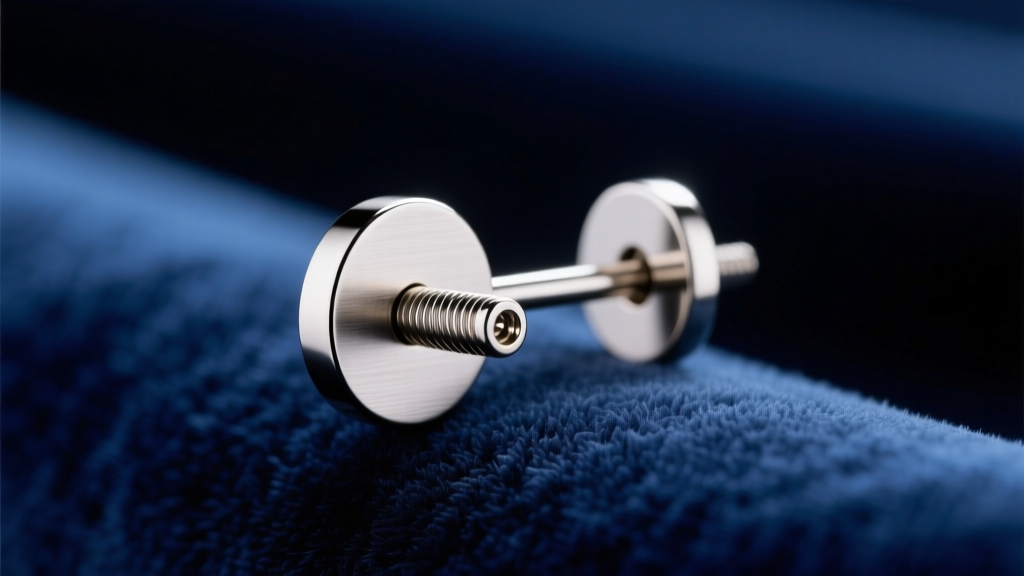
Why the Standard Earring Post Length Matters More Than You Think
When shopping for new jewelry, most beginners focus entirely on the decorative front—the gemstone, the gold detailing, or the unique shape. However, the unsung hero of comfortable, healthy piercings is the post itself. Understanding the standard earring post length for your specific anatomy is the difference between a piercing that heals beautifully and one that suffers from chronic irritation, embedding, or migration.
If a post is too short, the decorative end and the backing will compress the tissue. This restricts blood flow, traps bacteria, and can lead to tissue necrosis or the skin growing over the jewelry (embedding). Conversely, if the post is too long, the excess metal will slide back and forth through the fistula (the piercing channel). This constant friction introduces crusties and microbes into the wound, delaying healing and increasing the risk of snagging on hair or clothing. According to the Association of Professional Piercers (APP), finding the 'Goldilocks zone'—a post that allows for a flush fit with just enough room for natural tissue movement—is the baseline for proper piercing aftercare.
The Standard Earring Post Length by Piercing Type
There is no single universal measurement for all ear piercings. The standard earring post length varies drastically depending on the thickness of the tissue being pierced and the typical swelling associated with that specific placement. Below is a comprehensive breakdown of standard wearable lengths.
| Piercing Location | Standard Gauge | Healed Post Length | Initial Swelling Length |
|---|---|---|---|
| Standard Lobe | 20g - 18g | 6mm - 8mm (1/4" - 5/16") | 8mm - 10mm (5/16" - 3/8") |
| Helix / Outer Cartilage | 16g | 6mm (1/4") | 8mm - 10mm (5/16" - 3/8") |
| Tragus | 16g | 5mm - 6mm (3/16" - 1/4") | 8mm (5/16") |
| Conch | 14g - 16g | 6mm - 8mm (1/4" - 5/16") | 10mm (3/8") |
| Rook / Daith | 16g | 6mm - 8mm (Curved) | 8mm - 10mm (Curved) |
Standard Lobe Piercings
For standard earlobe piercings, the tissue is relatively thin and pliable. The most common standard earring post length for a fully healed lobe is 6mm (1/4 inch) or 8mm (5/16 inch). If you have thicker lobes, or if you are getting a fresh piercing that is prone to swelling, a professional piercer will typically start you with a 10mm (3/8 inch) post and recommend downsizing after 3 to 4 weeks.
Cartilage and Helix Piercings
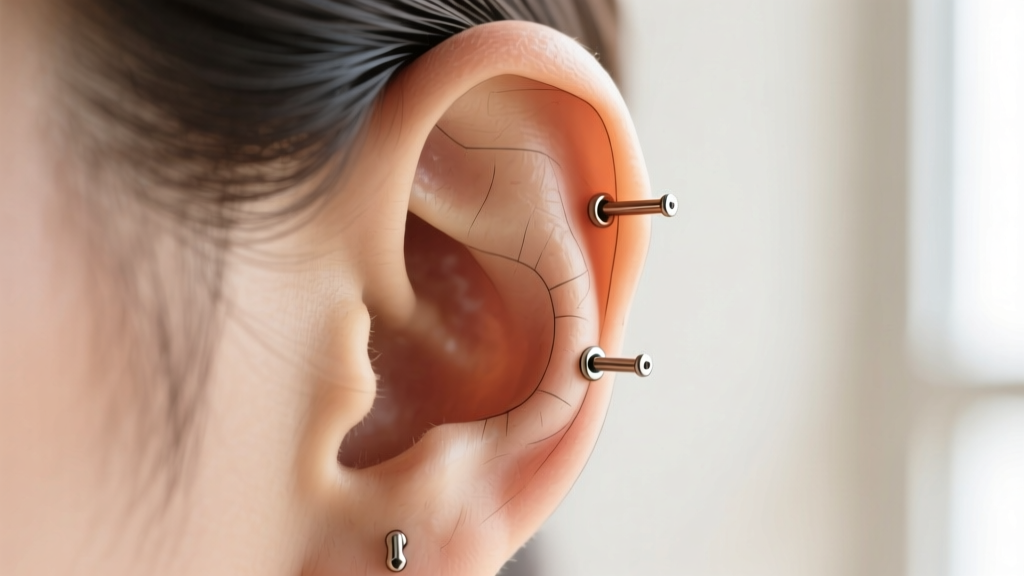
Cartilage tissue is dense and lacks the elasticity of the earlobe. Because of this, a snug fit is crucial once the initial swelling has subsided. The standard healed post length for a helix is usually 6mm (1/4 inch). However, cartilage is notorious for delayed swelling, which is why initial jewelry is almost always sized at 8mm or 10mm to prevent the jewelry from choking the tissue during the first few months of healing.
Decoding Gauge vs. Length: The Two Vital Measurements
A common beginner mistake is confusing the gauge (thickness) with the length. When you see a product labeled '16g 6mm', the 16g refers to the diameter of the metal shaft, while the 6mm refers to the wearable length of the post.
- 20 Gauge (0.81mm): Standard for basic department-store lobe earrings.
- 18 Gauge (1.02mm): Common for healed lobes and some delicate cartilage studs.
- 16 Gauge (1.29mm): The professional standard for most cartilage piercings (helix, tragus, conch).
- 14 Gauge (1.63mm): Used for thicker cartilage areas, industrial barbells, and some conch piercings.
Never force a thicker gauge into a smaller hole, and be aware that wearing a thinner gauge (like a 20g earring in a 16g hole) can cause the fistula to shrink, making it difficult to reinsert properly sized jewelry later.
How to Accurately Measure Your Current Earring Post
If you are shopping online and need to know your exact size, you must measure the wearable surface of your current jewelry. Do not measure the entire earring from the decorative front to the back of the clutch. Follow these steps for precision:
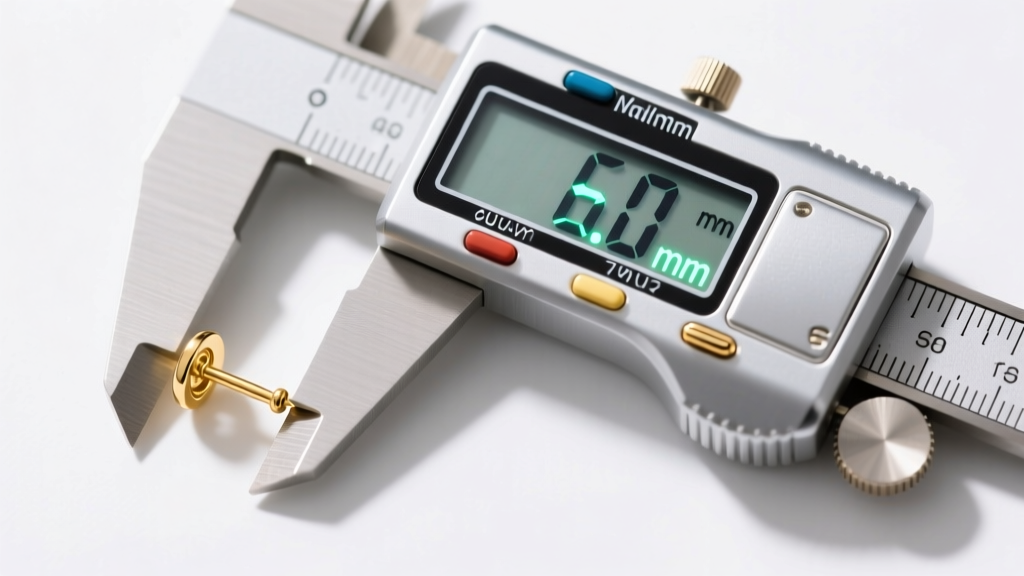
- Use Digital Calipers: A standard ruler lacks the precision needed for millimeter fractions. Invest in an inexpensive pair of digital calipers.
- Isolate the Shaft: For a flat-back labret, measure from the inside of the flat base plate to the end of the threaded pin (excluding the decorative gem top).
- Account for Butterfly Backs: If you are measuring a traditional push-pin earring with a butterfly clutch, measure from the back of the decorative head to the point where the clutch securely rests against your earlobe. This is your functional wearable length.
Flat Back vs. Butterfly: The Anatomy of the Post
The style of the post backing heavily influences how the length is perceived and how the jewelry behaves in the ear.
The Butterfly Clutch (Push-Back)
Traditional lobe earrings use a butterfly clutch. These are notorious for harboring dead skin cells, sebum, and bacteria in their tiny metal crevices. Furthermore, the clutch can easily be pushed too tight against the earlobe, artificially shortening the post length and causing indentations or embedding while you sleep.
The Flat Back (Labret Threadless or Internally Threaded)
In modern professional piercing, the flat-back labret is the gold standard for both lobes and cartilage. The smooth, flat disc rests flush against the back of the ear, eliminating pressure points and making it incredibly comfortable to sleep on. When buying flat-back jewelry, the listed standard earring post length is always the exact measurement of the smooth, wearable shaft.
Material Matters: Best Metals for Fresh and Healed Piercings
Even if you nail the perfect standard earring post length, poor material quality will trigger contact dermatitis and swelling, which alters how the jewelry fits. As of 2026, professional piercers and dermatologists universally recommend avoiding 'surgical steel' or 'stainless steel' for fresh piercings due to high nickel content.
Instead, look for these biocompatible materials:
- ASTM F136 Implant-Grade Titanium: The absolute best choice for fresh piercings and those with metal sensitivities. It is lightweight, completely nickel-free, and highly polished.
- Niobium: A highly reactive metal that is anodized to create vibrant colors without using toxic paints or plating. Excellent for sensitive ears.
- Solid 14k or 18k Gold: Must be alloyed for body jewelry (avoid gold-plated or gold-filled, as the plating will wear off and expose base metals). According to Healthline, ensuring high-quality, non-porous metals is a primary defense against piercing infections and allergic reactions.
Troubleshooting Common Post Length Issues
Even with careful measurement, you may encounter fit issues. Here is how to troubleshoot the most common post-length problems:
Issue: The Earring is Sinking into the Skin (Embedding)
The Cause: The post is too short for your current tissue volume, often due to unanticipated swelling or weight gain in the earlobe.
The Fix: Remove the jewelry immediately and replace it with a longer post (e.g., move from 6mm to 8mm). If the skin has already begun to grow over the flat back, visit a professional piercer or doctor to have it safely removed to prevent scarring.
Issue: The Earring Slides Back and Forth (Snagging)
The Cause: The post is too long. This is incredibly common in cartilage piercings after the initial 4-week swelling phase has passed.
The Fix: 'Downsize' your jewelry. Visit your piercer to swap the 10mm initial post for a 6mm or 5mm snug-fit post. This prevents the 'cheese-wire effect,' where a long, heavy earring slowly migrates through the cartilage due to gravity and snagging.
Issue: The Post Feels Tight, but the Tissue is Healed
The Cause: You may be dealing with a gauge mismatch, or the fistula has developed a small bump of hypertrophic scarring that takes up space inside the channel.
The Fix: Switch to a slightly longer post (e.g., 8mm instead of 6mm) to accommodate the internal scar tissue, and incorporate warm saline soaks to help soften and reduce the scar tissue over time.
Final Thoughts on Finding Your Perfect Fit
Mastering the concept of the standard earring post length transforms how you buy and wear jewelry. By understanding your specific gauge, measuring your wearable surface accurately, and opting for modern flat-back designs in implant-grade titanium, you set your piercings up for a lifetime of comfort. Remember that your body is dynamic; swelling, temperature, and tissue changes mean that your ideal post length might shift slightly over the years. Always listen to your body, and never hesitate to consult a certified professional piercer for a precise downsizing or upsizing adjustment.


