Brass Earrings Hoops: 2026 Trend Analysis & Patina Styling Guide
Discover the 2026 trends for brass earrings hoops. Learn how to style raw brass, manage patina, and choose the right gauge for your earlobe or cartilage.

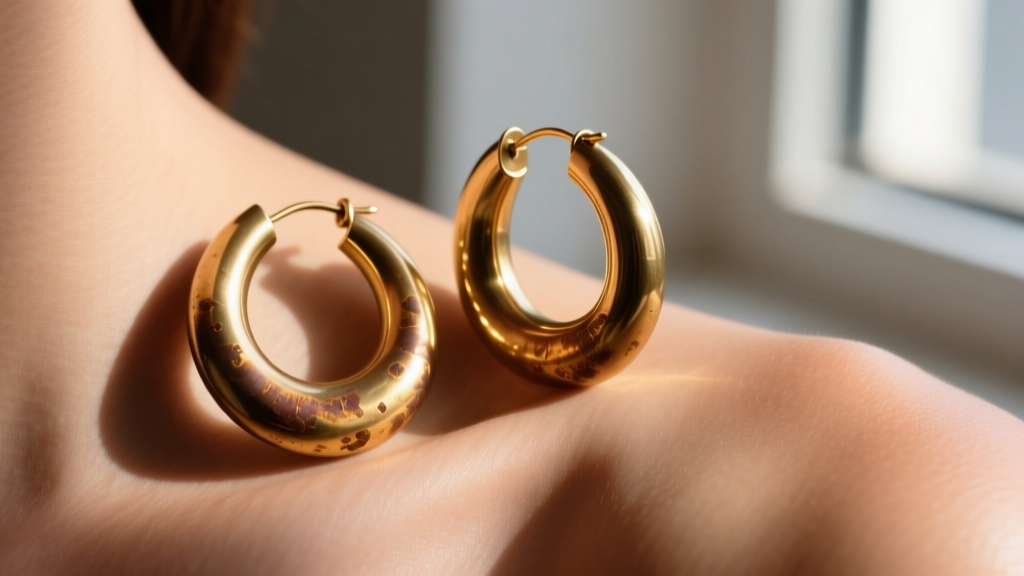
The jewelry landscape in 2026 has decisively shifted away from the hyper-polished, mass-produced aesthetics of the early 2020s. Today, discerning collectors and everyday wearers alike are gravitating toward materials that tell a story, age gracefully, and reflect a commitment to sustainable, artisanal craftsmanship. At the forefront of this movement are brass earrings hoops—specifically, raw, unlacquered variations that embrace oxidation as a design feature rather than a defect. As a living metal, brass offers a dynamic wearing experience that static precious metals simply cannot replicate.
In this comprehensive trend analysis, we dissect the metallurgy, structural mechanics, and styling frameworks defining the modern brass hoop earring. Whether you are navigating cartilage piercings or curating a curated lobe stack, understanding the nuances of this copper-zinc alloy is essential for the contemporary jewelry enthusiast.
The Metallurgy of Modern Brass Hoops
Not all brass is created equal. To understand why certain brass earrings hoops develop a rich, mahogany-toned patina while others turn chalky or brittle, we must look at the alloy's exact composition. According to data referenced by the Copper Development Association, jewelry-grade brass typically falls into two main categories:
- C260 (Cartridge Brass): Composed of roughly 70% copper and 30% zinc. This is the gold standard for high-quality hoops. It offers exceptional ductility, allowing artisans to cold-forge and hand-hammer the metal without it cracking. Its high copper content yields a warm, golden-yellow hue that closely mimics 14k or 18k yellow gold when polished.
- C280 (Muntz Metal): A 60/40 copper-zinc split. While cheaper and highly resistant to corrosion, it is significantly more brittle. Hoops made from C280 are prone to snapping at the clasp or hinge point if subjected to repetitive bending, making it a poor choice for continuous hoop designs.
In 2026, top-tier independent jewelers are increasingly transparent about their alloy grades, with many stamping or certifying their pieces as C260 to assure buyers of the metal's structural integrity and skin-safe properties.
The Patina Evolution: Wabi-Sabi in Jewelry
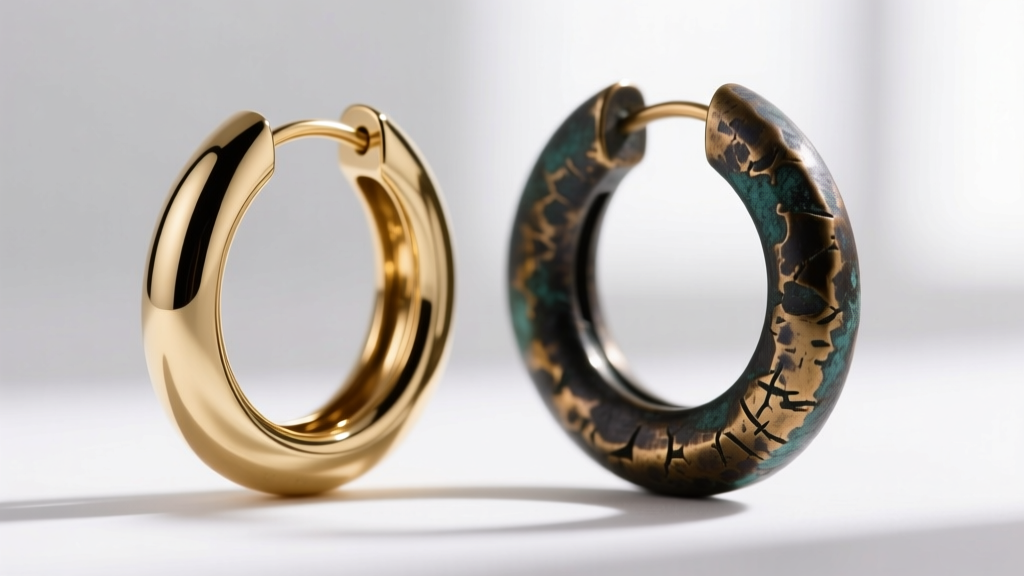
The most significant trend surrounding brass earrings hoops this year is the embrace of "wabi-sabi"—the Japanese philosophy of finding beauty in imperfection and the natural cycle of growth and decay. Unlacquered brass reacts with oxygen, moisture, and the natural oils in your skin to form a patina. This oxidation process creates a bespoke finish unique to the wearer's body chemistry and environment.
Controlling the Oxidation Timeline
While many buyers love the antique, darkened look of oxidized brass, others prefer the bright, sunlit yellow of freshly polished metal. Fortunately, brass is entirely reversible. Here is how you can manipulate the patina of your hoops:
- To Accelerate Patina: Submerge the hoops in a mixture of white vinegar and a pinch of salt for 10 to 15 minutes. The acetic acid and sodium chloride will rapidly strip the surface oils and force a dark, antiqued oxidation layer to form within hours.
- To Strip Patina (Restore Shine): Use a mild abrasive polish like Brasso, or create a paste from lemon juice and baking soda. Rub gently with a microfiber cloth to reveal the brilliant, mirror-like C260 underlayer.
- To Freeze the Patina: If you have achieved the exact shade of golden-brown oxidation you desire, apply a micro-crystalline wax (such as Renaissance Wax) to seal the surface and halt further chemical reactions.
"The modern consumer no longer views tarnish as a sign of neglect. In 2026, a well-worn patina on a heavy brass hoop is viewed as a badge of authenticity and a marker of artisanal, non-industrial production." — JCK Industry Trend Report
Gauge Sizing and Structural Tensile Strength
Because brass is a base metal with a different tensile strength and density than gold or platinum, gauge selection is critical. A hoop that is too thin will warp when pulled through the ear, while a hoop that is too thick can cause migration or tearing in delicate cartilage piercings. Below is the definitive 2026 framework for matching brass hoop gauges to specific piercing types.
| Gauge Size | Millimeter (mm) | Tensile Feel | Best Piercing Application |
|---|---|---|---|
| 12G | 2.0mm | Heavy, rigid, statement | Standard Lobe (Stretched or healed), Daith |
| 14G | 1.6mm | Substantial, durable | Standard Lobe, Conch, Rook |
| 16G | 1.2mm | Versatile, balanced weight | Helix, Forward Helix, Tragus, Nostril |
| 18G | 1.0mm | Lightweight, delicate | Second/Third Lobe, Snug, Septum (small diam) |
| 20G | 0.8mm | Flimsy, high warp risk | Standard Lobe (only if lightweight/small diameter) |
Expert Insight: For continuous (endless) brass hoops, never go thinner than 18G. Brass lacks the "memory" of titanium or niobium; if a 20G brass wire is bent out of its circular shape during insertion, it will remain permanently warped, ruining the seam alignment.
Managing the "Green Ear" Phenomenon
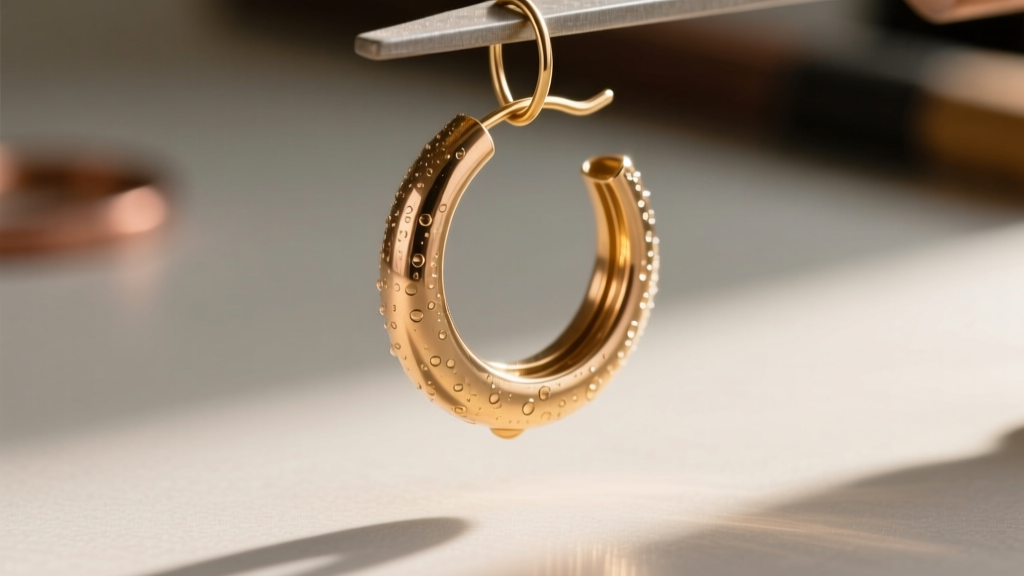
The most common deterrent for buyers exploring brass earrings hoops is the fear of the infamous "green ear." This is not an allergic reaction, nor is it a sign of toxicity. It is a simple, harmless chemical reaction. The copper in the brass alloy reacts with the salts, acids, and oxygen in human sweat to create copper chloride, a green compound that transfers to the skin.
Preventative Protocols for Sensitive Skin
If you love the aesthetic of brass but want to avoid the green residue, the Gemological Institute of America (GIA) and leading dermatologists recommend the following barrier methods:
- Nano-Ceramic Coatings: In 2026, many high-end brass jewelers are applying invisible, hypoallergenic nano-ceramic e-coatings. These provide a permanent barrier that prevents copper ions from reaching the skin without altering the metal's visual warmth.
- Rhodium Flashing: A micro-thin layer of rhodium (a platinum group metal) can be electroplated onto the interior wire of the hoop. This is common in hybrid designs where the exterior remains raw brass, but the post or wire touching the piercing is inert.
- The DIY Polymer Barrier: For vintage or raw artisanal finds, painting the post and inner wire with a flexible, medical-grade silicone sealant or clear polyurethane nail topcoat will provide a 2-to-3 week barrier before requiring reapplication.
Proportional Styling Framework: Face Shapes & Diameters
Because brass hoops carry a distinct visual weight—especially when featuring hammered textures or darkened patinas—matching the diameter to your facial geometry is crucial for achieving a balanced silhouette.
The 2026 Proportion Matrix
- Round Faces: Opt for elongated, oval-shaped brass hoops or geometric hexagonal hoops (25mm - 35mm in length). The angularity and vertical drop help elongate the jawline and cheekbones.
- Square Faces: Embrace medium-to-large circular hoops (30mm - 45mm) with a high-polish finish. The continuous curves of the brass soften strong mandibular angles.
- Heart-Shaped Faces: Teardrop or bottom-heavy brass hoops (20mm - 30mm) draw the eye downward, adding visual volume to a narrower chin.
- Oval Faces: The universal canvas. Experiment with extreme proportions, from micro-huggies (8mm) that sit flush against the lobe to massive, shoulder-grazing 80mm statement hoops featuring intricate brass filigree.
Final Thoughts on the Brass Renaissance
The dominance of brass earrings hoops in the 2026 market is a testament to a broader cultural desire for jewelry that feels grounded, sustainable, and deeply personal. Unlike static precious metals that demand constant polishing to maintain their value, raw brass invites interaction. It asks you to wear it, to let it react to your life, and to appreciate the shifting tones of the metal as it ages alongside you. By understanding the metallurgy, respecting the gauge requirements, and mastering the art of patina control, you can elevate this humble alloy into the cornerstone of your everyday jewelry rotation.


