Most Expensive Earrings in the World: A Beginner Guide
Discover the most expensive earrings in the world, exploring rare diamonds, platinum engineering, and auction secrets behind high jewelry.

Entering the Stratosphere of High Jewelry
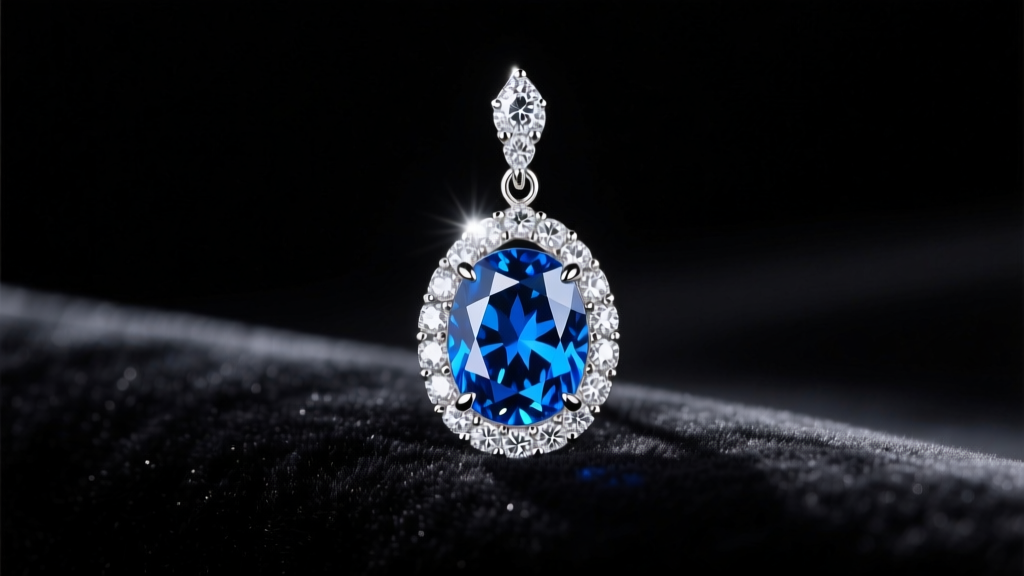
When beginners first search for the most expensive earrings in the world, they are often met with staggering price tags that rival the GDP of small nations. But as we evaluate the high jewelry market in 2026, it is crucial to understand that these astronomical valuations are not arbitrary. They represent the absolute pinnacle of geological rarity, master-level structural engineering, and historical provenance. High jewelry—often referred to as haute joaillerie—is not merely about accessorizing; it is about wearing a portable, wearable asset class.
This beginner-friendly explainer will demystify the world of eight-figure ear adornments. We will break down the exact gemological grades that command millions, the mechanical engineering required to keep heavy diamonds secure, and the hidden economics of the auction houses where these pieces change hands.
The Record Breakers: A Data Breakdown
To understand the ceiling of the earring market, we must look at verified auction records. The pieces below represent the zenith of colored diamond and historical gemstone jewelry.
| Earring Name / Moniker | Primary Gemstone Details | Metal & Setting | Realized Auction Price |
|---|---|---|---|
| The Apollo and Artemis (Memory & Dream of Autumn Leaves) | 14.54 ct Fancy Vivid Blue (Internally Flawless) & 16.00 ct Fancy Intense Pink | 950 Platinum & 18k Rose Gold | $57.4 Million (Combined) |
| Elizabeth Taylor’s Bulgari Emerald Drops | Colombian Emeralds (approx. 10-15 ct total) with Diamond Halos | Platinum and 18k Yellow Gold | $6.1 Million |
| The Marie Antoinette Pearl & Diamond Drop | Natural Saltwater Pearl (approx. 15.90 x 18.35 mm) with Diamond Cap | Silver-topped Gold (Historical) | $36.1 Million |
Note: The Apollo and Artemis diamonds were originally sold as separate lots to an anonymous buyer who requested they be paired together, creating the most expensive earring pairing in history.
The Gemology: Why These Stones Cost Millions
It is a common misconception that any large diamond is inherently valuable. In the realm of the most expensive earrings in the world, size is merely the entry ticket. The true value lies in microscopic chemical anomalies and strict grading parameters established by institutions like the Gemological Institute of America (GIA).
The Type IIa Phenomenon
Most diamonds contain trace amounts of nitrogen, which can impart a slight yellow or brown tint. However, the blue and pink diamonds seen in record-breaking earrings are often classified as Type IIa. These diamonds are chemically pure, containing virtually no nitrogen impurities. Type IIa diamonds account for less than 2% of all gem-quality diamonds mined globally. When a Type IIa diamond also exhibits a structural anomaly—such as the plastic deformation in the crystal lattice that causes a pink hue, or the presence of boron that causes a blue hue—it becomes a one-in-a-billion geological miracle.
Color Saturation: 'Fancy Vivid' vs. 'Fancy Intense'
In colored diamonds, the GIA color grading scale dictates the price per carat exponentially. A 'Fancy Light' blue diamond might fetch $100,000 per carat, while a 'Fancy Vivid' blue diamond of the exact same clarity can easily command over $3 million per carat. The Apollo diamond’s 'Fancy Vivid' designation means it possesses the highest possible saturation and tone, a critical factor for investors.
Engineering the Drop: Weight and Security
Beginners rarely consider the physics of wearing high jewelry. A 15-carat diamond weighs approximately 3 grams. While that sounds light on a scale, when suspended from the delicate tissue of an earlobe, it creates significant downward torque. If an earring tilts forward, the diamond's pavilion (bottom) faces the floor, completely destroying its light return and brilliance.
The 950 Platinum Standard
To combat this, master jewelers rely on 950 Platinum. Unlike 18k gold, which is an alloy containing 75% gold and 25% softer metals, 950 platinum is 95% pure platinum. It is incredibly dense, naturally white (which enhances diamond reflection without the need for rhodium plating), and possesses high tensile strength. The prongs holding a multi-million-dollar diamond are often hand-forged from platinum wire to ensure they never bend or snag.
Advanced Clasp Mechanics
You will never find a standard friction push-back on a high-jewelry earring. Instead, engineers utilize:
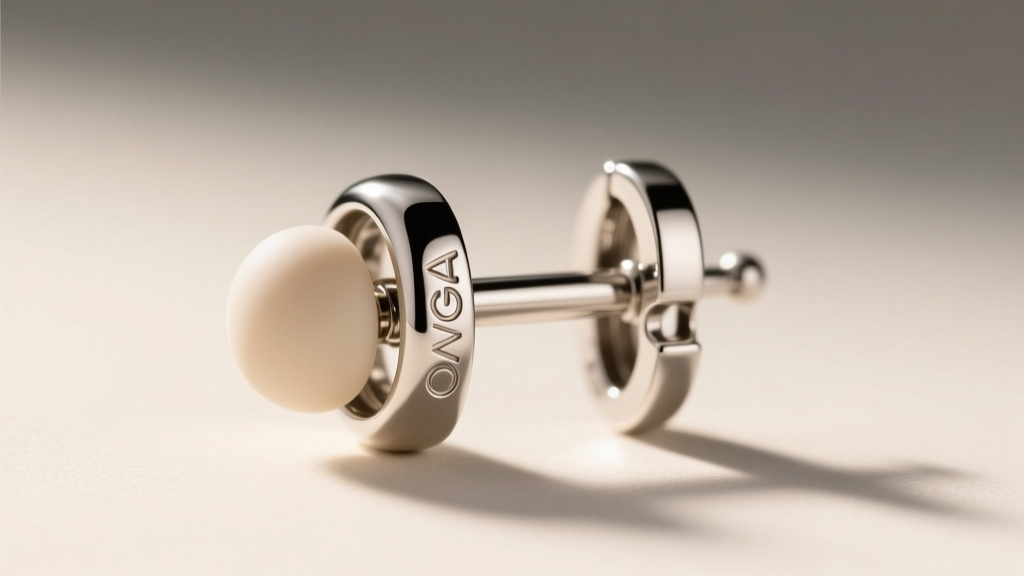
- Omega Backs: A hinged, curved wire that snaps over a sturdy post, distributing the weight across a wider surface area of the earlobe.
- Articulated Joints: Hidden micro-hinges that allow the earring to move fluidly with the wearer's head, preventing the metal from snapping under kinetic stress.
- Silicone Security Stoppers: Custom-molded, medical-grade silicone sleeves that slide over the post behind the omega back, providing a secondary fail-safe against loss.
Understanding the Auction House Ecosystem
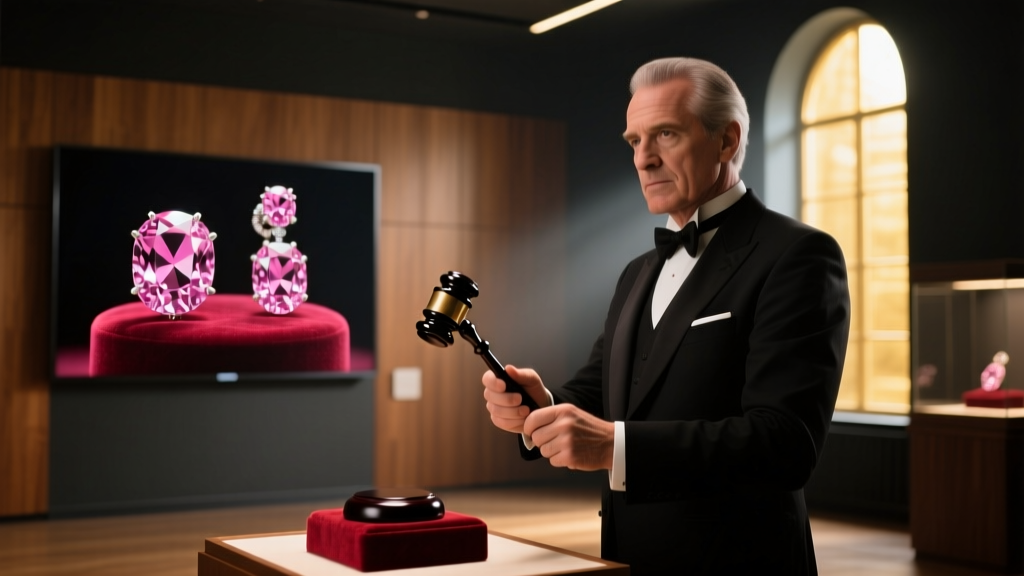
The most expensive earrings in the world rarely change hands in retail boutiques; they are sold through elite auction houses like Sotheby's and Christie's. For a beginner looking to understand this market, you must grasp the hidden costs and psychological drivers of these sales.
The Buyer’s Premium
The "hammer price" is only the beginning. Auction houses charge a Buyer’s Premium, a tiered commission added to the final bid. In 2026, this premium typically ranges from 15% to 25% on the first few hundred thousand dollars, scaling down slightly for amounts exceeding $4 million. Therefore, a $10 million hammer price actually costs the buyer closer to $12.5 million out the door.
The Power of Provenance
Provenance is the documented history of ownership. If a pair of diamond earrings was previously owned by a European royal, a Hollywood icon like Elizabeth Taylor, or a famous maharaja, the value increases by 15% to 40%. Collectors are not just buying carbon crystals; they are buying a tangible piece of history. The Marie Antoinette pearl drop is the ultimate example of this, where the historical narrative vastly outpaced the intrinsic value of the pearl itself.
How to Inspect High-Jewelry Earrings: A Beginner’s Checklist
If you ever find yourself at a high jewelry preview or an estate appraisal, use this professional checklist to evaluate the piece like an insider:
- Request the GIA Dossier: Never rely on an in-house jeweler's certificate for stones over $100,000. Demand the original GIA or Gübelin gemological report to verify the Type IIa status and color origin (Natural vs. Treated).
- Check the Prong Wear: Use a 10x jeweler's loupe to inspect where the metal meets the diamond's girdle. High jewelry should show zero rounding or thinning of the platinum prongs.
- Test the Articulation: Gently move the drop portion of the earring. It should swing freely and return to center without catching or scraping against the setting above it.
- Examine the Post Gauge: High-carat earrings require a thicker post (usually 18-gauge or 16-gauge) to prevent bending. If the post looks thin or warped, the structural integrity is compromised.
Final Thoughts for Aspiring Collectors
The allure of the most expensive earrings in the world lies in their dual nature: they are breathtaking works of art and fiercely guarded financial assets. While the $50 million price tags dominate the headlines, the true lesson for beginners is an appreciation for the meticulous science and engineering that occurs behind the scenes. From the absence of nitrogen in a Type IIa diamond to the precise calibration of a platinum omega clasp, every millimeter of high jewelry is designed to protect, showcase, and immortalize the earth's rarest treasures.


