2026 Budget Guide: Are Dripping Earrings Worth the Hype?
Discover if budget dripping earrings are worth your money in 2026. We analyze materials, gauge sizes, and hidden costs of liquid metal styles.

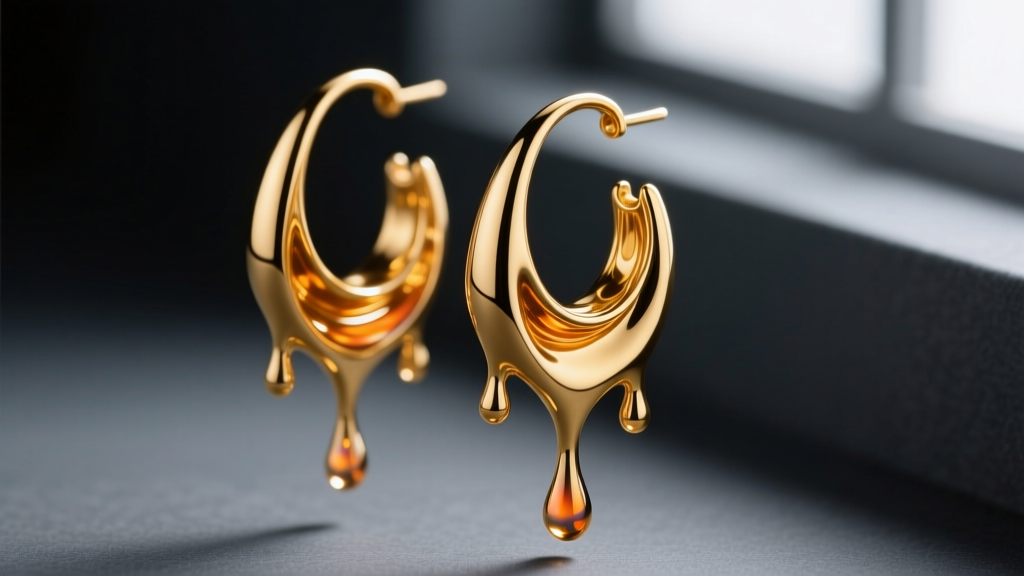
The "liquid metal" aesthetic has firmly cemented itself in contemporary jewelry, with dripping earrings leading the charge. Characterized by their molten, free-flowing silhouettes and high-reflectivity surfaces, these pieces offer an avant-garde edge that bridges the gap between minimalist daily wear and editorial statement pieces. However, as the trend matures into 2026, the market has become saturated. You can find dripping earrings ranging from $12 fast-fashion alloys to $2,500 solid 18k gold sculptures. For the budget-conscious collector, the critical question is no longer just about style—it is about structural integrity, material longevity, and true value. Are budget-friendly dripping earrings a smart investment, or a fast-tarnishing liability?
The Manufacturing Reality: Why Material Matters More for Drips
Unlike smooth, geometric studs or simple wire hoops, dripping earrings rely heavily on complex surface textures to mimic the look of melting or flowing metal. This texture is achieved either through CAD (Computer-Aided Design) milling or traditional lost-wax casting. In budget manufacturing, the organic "drips" are often cast in porous base metals like zinc or brass, then subjected to flash plating—a process that deposits a microscopic layer of gold or silver (often less than 0.1 microns thick).
The problem? Textured surfaces trap skin oils, cosmetics, and environmental moisture far more aggressively than smooth bands. According to the Federal Trade Commission's Jewelry Guides, terms like "gold plated" have specific thickness requirements, but ultra-cheap imports frequently bypass these standards. When flash-plated brass is subjected to the friction and oils trapped in a "molten" crevice, the plating wears off in weeks, leaving a dull, oxidized base metal that can cause contact dermatitis. For dripping earrings, you must prioritize thicker plating or solid metals to protect the intricate topography of the design.
2026 Market Pricing: The Budget vs. Value Matrix
To assess true value, we must break down the current market tiers for dripping earrings. A higher price tag does not automatically guarantee better craftsmanship, but certain material thresholds dictate the lifespan of the piece.
| Material Tier | Typical Price Range | Plating / Purity Specs | Expected Lifespan | Value Verdict |
|---|---|---|---|---|
| Fast Fashion Alloy | $10 - $25 | Flash plated (under 0.1 microns) over zinc/brass | 1 - 3 months | Poor (High tarnish & allergy risk) |
| Standard Gold Plated | $30 - $55 | 0.5 to 1.0 microns over brass or 925 silver | 6 - 12 months | Fair (Good for seasonal trends) |
| Heavy Gold Vermeil | $65 - $120 | 2.5+ microns of 14k/18k gold over 925 sterling | 2 - 5+ years | Excellent (The budget sweet spot) |
| Solid 10k / 14k Gold | $180 - $400+ | Solid alloy, no plating | Lifetime | High (Investment grade) |
For buyers seeking the best intersection of budget and longevity, heavy gold vermeil over 925 sterling silver is the undisputed champion in 2026. The sterling core ensures that if the textured crevices do eventually wear down, you are left with a valuable, easily polishable silver base rather than skin-staining brass.
Structural Weaknesses: Post Gauge and Solder Joints
The most frequent failure mode of budget dripping earrings has nothing to do with tarnish; it is mechanical failure. Molten drop designs are inherently bottom-heavy. A standard earring post is 20-gauge (0.81mm thick). When you suspend a 12-gram dripping earring from a 20-gauge wire, the center of gravity pulls the post downward, causing it to bend, droop, and eventually snap at the solder joint.
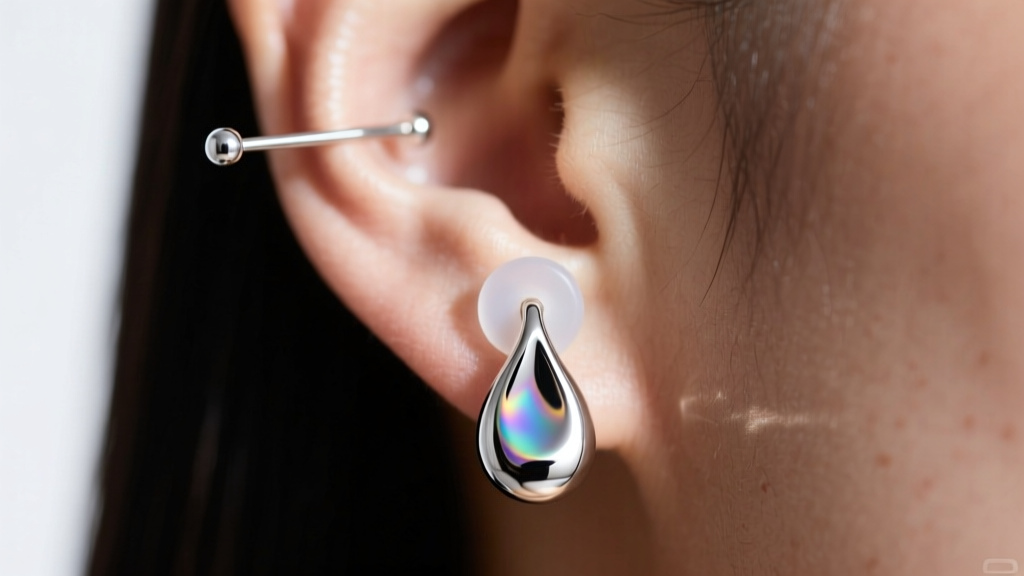
When evaluating budget options under $80, you must inspect the post thickness and the backing mechanism. Look for brands that utilize 18-gauge (1.02mm) or 16-gauge (1.29mm) posts. Furthermore, the solder joint—the tiny blob of metal connecting the post to the main body of the earring—must be smooth and generously applied. Cheap castings often suffer from "porosity" (tiny air bubbles trapped in the metal during casting) right at this stress point, leading to clean breaks after minimal wear.
The Earring Back Equation
A heavy dripping earring requires more than a standard butterfly clutch. To prevent the earring from drooping and stretching your earlobe, seek out budget brands that include:
- Jumbo Silicone Discs: These distribute the weight across a wider surface area of the earlobe.
- La Pousette Backs: A secure, locking mechanism that grips the post tightly, preventing the heavy drop from sliding off.
- Flat Disc Clutches: Metal backs that provide a rigid, wide base against the ear.
How to Spot High-Value Budget Drips (A Buyer's Checklist)
When shopping online or in-store, use this rapid assessment framework to filter out low-quality imitations from genuinely valuable budget pieces:
- Check the Sprue Marks: In lost-wax casting, the "sprue" is the channel where molten metal enters the mold. High-end brands file and polish this away seamlessly. Budget brands often leave a visible, flat grinding mark on the back or bottom of the drip. If the illusion of liquid metal is broken by a harsh file mark, walk away.
- Verify the Hallmark: Legitimate vermeil and sterling pieces will be stamped with "925". According to gemological and industry standards, a missing hallmark on a piece claiming to be silver is a major red flag for undocumented base metals.
- The "Tap" Test: Gently tap the earring against your fingernail. Solid silver and thick vermeil produce a dense, muted clink. Hollow-cast or thin-shell alloy earrings will produce a high-pitched, tinny sound, indicating a lack of structural density.
- Examine the Crevice Depth: If the "drips" are too deeply undercut, they will be impossible to clean without specialized tools. Opt for designs with flowing, sweeping curves rather than sharp, deep crevices.
Maintenance Costs: The Hidden Tax of Textured Metals
Even the best budget vermeil dripping earrings require specific maintenance. The uneven surface area means you cannot simply wipe them down with a standard flat polishing cloth. The cloth will glide over the "peaks" of the drips while ignoring the oxidized "valleys."
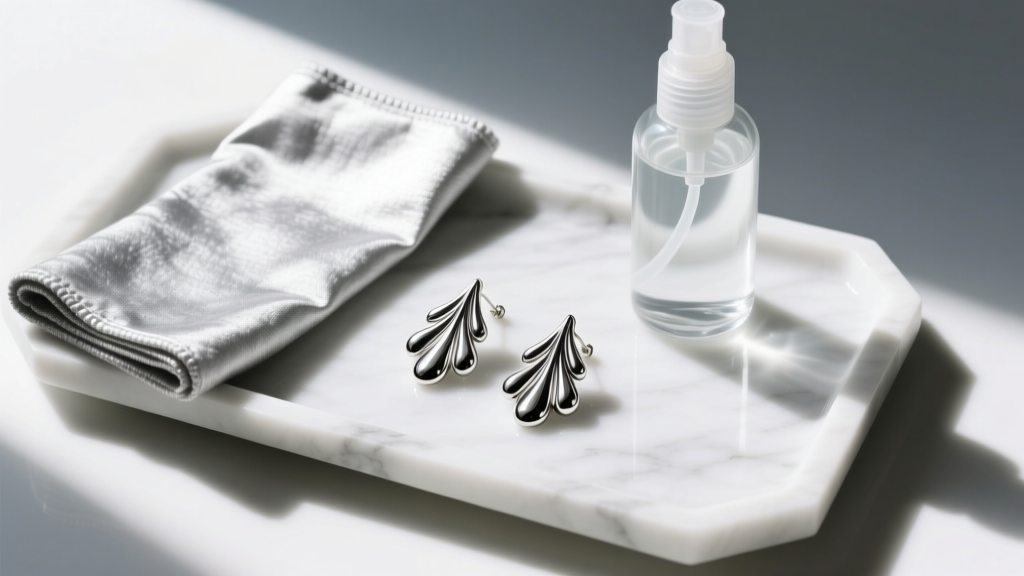
To maintain budget dripping earrings without destroying the plating, invest in a liquid jewelry dip formulated for vermeil (ensure it is ammonia-free, as ammonia strips gold plating). Alternatively, use a soft-bristled baby toothbrush with a drop of mild dish soap and warm water to gently agitate the crevices, followed by an immediate and thorough drying with a microfiber cloth. Never put budget vermeil dripping earrings in an ultrasonic cleaner; the high-frequency vibrations can easily shatter the delicate solder joints on heavy, bottom-weighted drops.
Final Verdict: Where Should You Spend Your Money?
Dripping earrings are absolutely worth the investment, provided you avoid the ultra-cheap alloy trap. In 2026, the sweet spot for budget buyers lies in the $65 to $110 range. At this price point, you can reliably secure 2.5-micron gold vermeil over solid 925 silver, featuring reinforced 18-gauge posts and thoughtful weight distribution. By prioritizing structural integrity and plating thickness over fleeting fast-fashion discounts, you can acquire liquid metal masterpieces that flow beautifully and endure for years.


