Solid Gold Rectangle Earrings: The Ultimate Buying Guide
Discover what to look for when buying solid gold rectangle earrings. Learn about karat weights, gauge sizes, weight distribution, and face shape pairing.

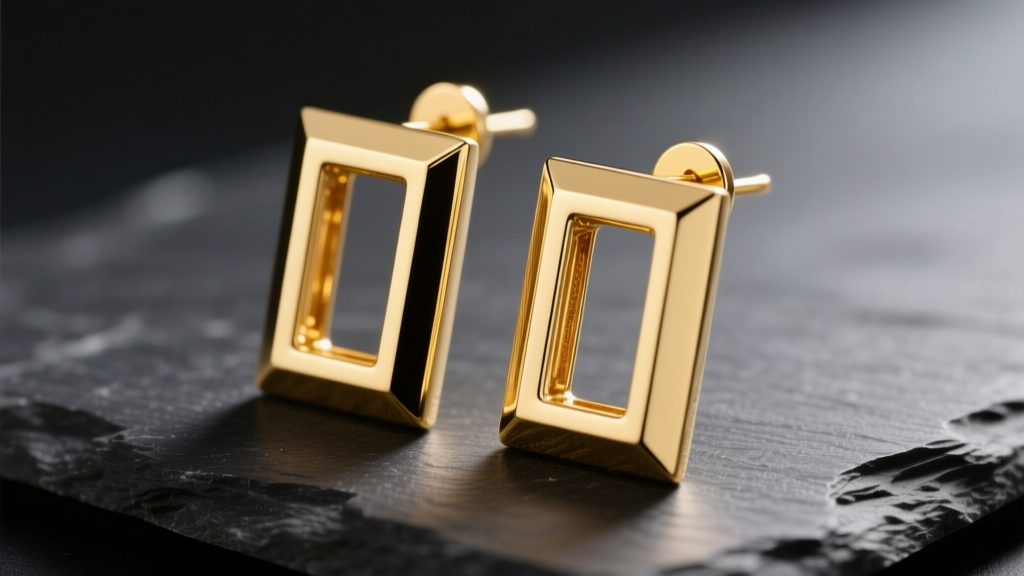
The Architectural Appeal of Geometric Gold
Geometric jewelry has transcended fleeting seasonal trends to become a cornerstone of modern capsule wardrobes. Among these silhouettes, gold rectangle earrings offer an architectural elegance that bridges the gap between minimalist boardroom attire and bold evening statements. However, buying rectangular earrings requires a much deeper understanding of structural physics and metallurgy than purchasing simple round studs or hoops. The sharp corners, elongated centers of gravity, and flat planes of rectangular designs introduce unique failure modes and wearability challenges. This definitive buying guide will walk you through the exact specifications, material grades, and structural considerations you need to evaluate before investing in your next pair of gold rectangle earrings.
Karat Purity vs. Structural Integrity
When evaluating gold rectangle earrings, the karat weight dictates both the hue and the structural viability of the piece. According to the Gemological Institute of America (GIA), pure 24k gold is far too malleable for daily wear jewelry. Therefore, gold is alloyed with metals like copper, silver, and zinc to increase its tensile strength. For geometric shapes with sharp, thin edges, the alloy ratio is critical.
14k Gold (58.5% Pure Gold)
14k gold is the undisputed champion for elongated, thin rectangular drops and wire-framed geometric designs. Because it contains a higher percentage of strengthening alloys, 14k gold possesses superior rigidity. If you drop a pair of thin 14k rectangular earrings on a hardwood floor, they are highly likely to retain their sharp 90-degree corners. Furthermore, 14k gold is more resistant to surface scratching, keeping the flat, mirrored planes of rectangular block studs looking pristine over years of daily wear.
18k Gold (75% Pure Gold)
18k gold offers a richer, deeper yellow hue that many collectors prefer. However, it is noticeably softer than 14k. If you are buying 18k gold rectangle earrings, opt for chunky, cast designs, solid block studs, or thick rectangular huggies where the mass and volume of the metal provide the necessary rigidity. Thin, elongated 18k rectangles are prone to warping and bending at the corners if subjected to pressure or accidental impacts.
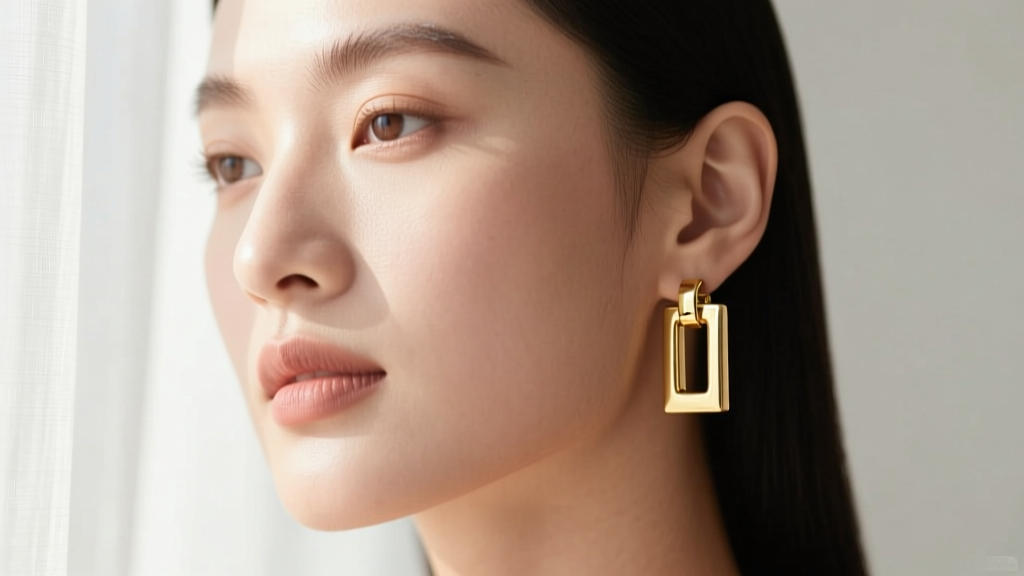
Dimensions, Weight, and the Physics of the Lobe
The most common mistake buyers make with gold rectangle earrings is ignoring the center of gravity. Unlike a round stud that sits flush against the ear, a rectangular drop acts as a lever. The post is located at the top, while the bulk of the metal's weight is distributed down the vertical axis. This creates a downward pull that can stretch the earlobe piercing over time.
The Association of Professional Piercers (APP) frequently warns against heavy jewelry causing tissue migration and lobe tearing. To prevent the dreaded "cheese-cutter" effect—where a thin post slowly slices downward through the earlobe tissue—you must match the earring's weight to an appropriate post thickness and backing mechanism.
| Earring Style | Ideal Dimensions (L x W) | Max Weight per Ear | Recommended Post Gauge |
|---|---|---|---|
| Elongated Rectangle Drops | 40mm x 5mm | 6.0 grams | 20g (0.81mm) |
| Chunky Block Studs | 15mm x 12mm | 8.5 grams | 18g (1.02mm) |
| Rectangular Huggies | 20mm x 8mm | 5.0 grams | 18g (1.02mm) |
| Oversized Geometric Dangles | 60mm x 15mm | 10.0 grams | 16g (1.29mm) or French Wire |
Post Gauge and Backing Mechanisms
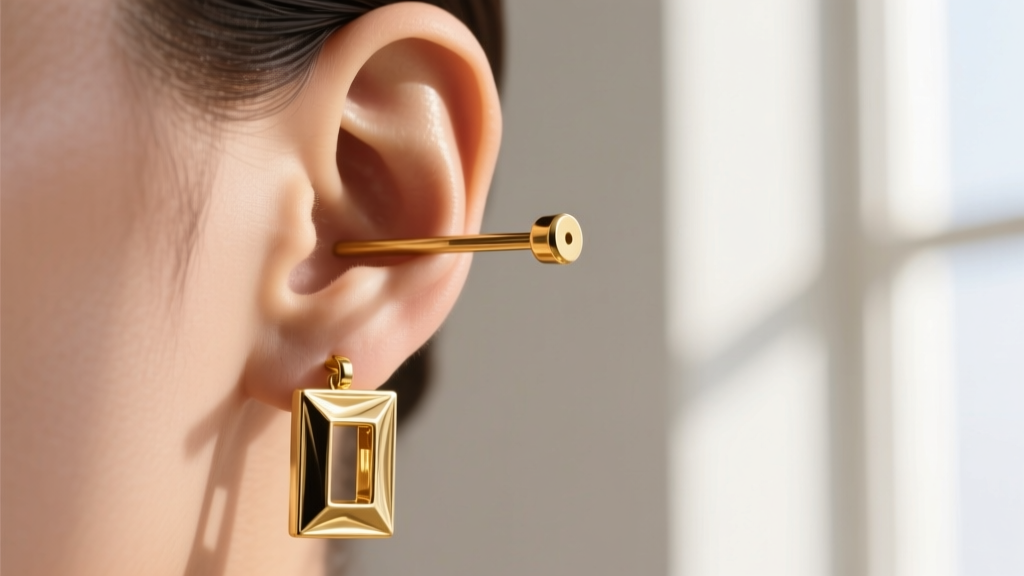
Standard earring posts are typically 20-gauge (0.81mm thick). While this is perfectly adequate for lightweight drops, a solid gold rectangular block stud weighing 9 grams will cause a 20g post to bend under its own weight, leading to an awkward forward tilt and eventual lobe strain. When shopping for substantial gold rectangle earrings, actively look for jewelers who fabricate their posts in 18-gauge (1.02mm) or even 16-gauge (1.29mm) thicknesses. This added millimeter of width drastically increases the post's load-bearing capacity and provides a much more comfortable, secure fit in the ear.
Additionally, the backing mechanism must be upgraded. Standard butterfly friction backs offer a tiny surface area of support against the back of the earlobe. For heavy rectangular designs, you must utilize jumbo silicone disc backs (at least 10mm in diameter) or specialized locking clutches. These wider backings distribute the weight of the rectangle across a broader area of the posterior earlobe, neutralizing the downward pull.
Face Shape Pairing for Rectangular Silhouettes
Because rectangles are defined by their linear, directional geometry, they interact very specifically with different facial structures. Understanding these visual dynamics will help you choose the exact proportions that flatter your unique features.
- Round Faces: Elongated, narrow gold rectangle earrings (e.g., 45mm long by 4mm wide) are incredibly flattering. The sharp vertical lines create an optical illusion that elongates the face and slims the cheeks, providing a striking contrast to soft, curved facial features.
- Square Faces: A strong jawline benefits from rectangles that feature slightly beveled, softened, or rounded corners. Wide, horizontal rectangular studs or medium-length drops with brushed gold finishes help offset the angularity of the jaw without competing with it.
- Oval Faces: The universal face shape can carry any proportion of gold rectangle earrings. You can confidently experiment with extreme architectural shapes, including asymmetrical rectangles or wide, blocky geometric hoops.
- Heart-Shaped Faces: Opt for rectangular drops that are wider at the bottom than at the top (trapezoidal or inverted rectangles). This adds visual weight to the lower half of the face, beautifully balancing a narrower chin.
Real-World Troubleshooting: Preventing the Forward Tilt
The most frequent complaint from buyers of heavy gold rectangle drop earrings is the "forward tilt." This occurs when the center of gravity of the rectangular drop sits too far below the piercing hole. The weight of the bottom of the earring pulls downward, which in turn leverages the top of the post upward, causing the earring to point awkwardly at the floor rather than hanging flush against the neck.
Pro Styling Tip: If you already own a pair of rectangular drops that suffer from the forward tilt, do not discard them. Simply slide a tiny rubber "O-ring" (available at any hardware or craft store) onto the post before attaching the backing. The O-ring acts as a spacer and a shock absorber, forcing the earring to sit at a perfect 90-degree angle against the earlobe.
Pricing Tiers: Hollow vs. Solid Cast Gold
When shopping for gold rectangle earrings, you will notice massive price discrepancies between pieces of the exact same dimensions. This is almost always due to the manufacturing method.
Electroformed and Hollow Gold ($150 - $350)
Many large, oversized rectangular hoops and dangles are made using electroforming or hollow-casting techniques. This creates a massive, visually impressive earring that is incredibly lightweight. While comfortable for all-day wear, hollow gold is highly susceptible to denting. If a hollow rectangular earring is squeezed in a jewelry box or dropped, the flat planes will crease irreparably.
Solid Cast and Stamped Gold ($450 - $1,200+)
Solid gold rectangle earrings are either cast from a wax mold or stamped and soldered from thick gold sheet metal. These pieces carry a satisfying, premium heft and will last for generations. While they require the structural support of thicker gauge posts and jumbo backings, solid gold geometric pieces are heirloom-quality investments that will never dent, warp, or collapse under pressure. Always check the product specifications for the exact gram weight to ensure you are paying for solid metal, not hollow air.


